If you don’t live in the vast eastern Australian coastal region, the chances are that you won’t have heard of Darby Maguire. That, however, may soon change, because this young Aussie has all the hallmarks of a future ultramarathon world champion, writes mind coach Dr Stephen Simpson
Any form of continuous running requires mental strength and stamina to succeed, but Darby Maguire is not just another long-distance runner. At the age of 21, he’s already accomplished feats that push the limits of human endurance and has redefined what is possible in the world of ultra-running.
And he’s only just getting started.
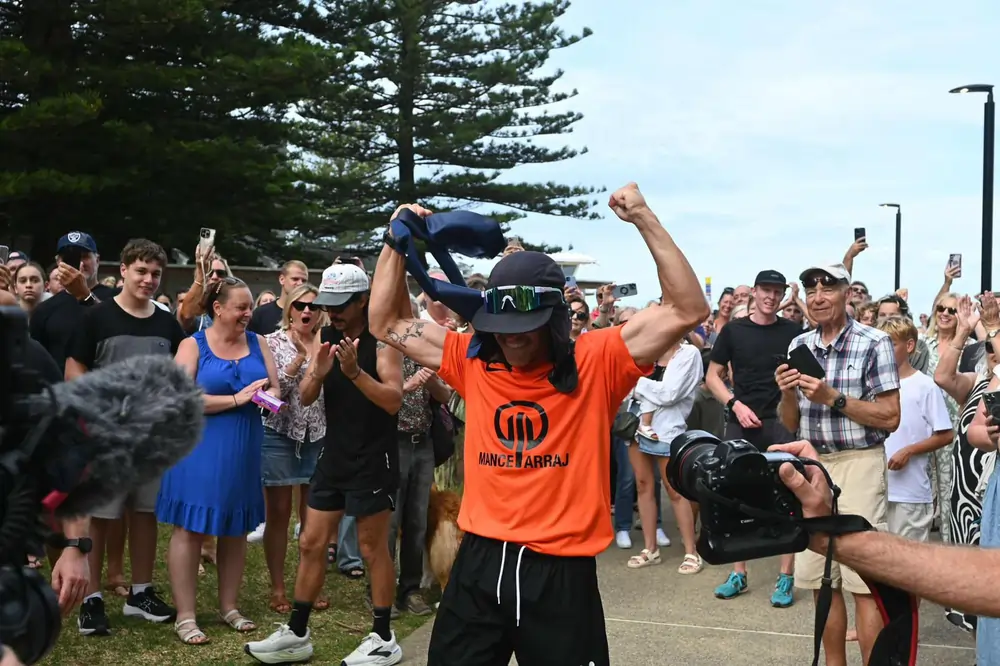
On 10th January this year, Darby completed an audacious challenge: a 900km (560-mile) solo ultramarathon from Coolangatta, Queensland, to Cronulla in Sydney, New South Wales.
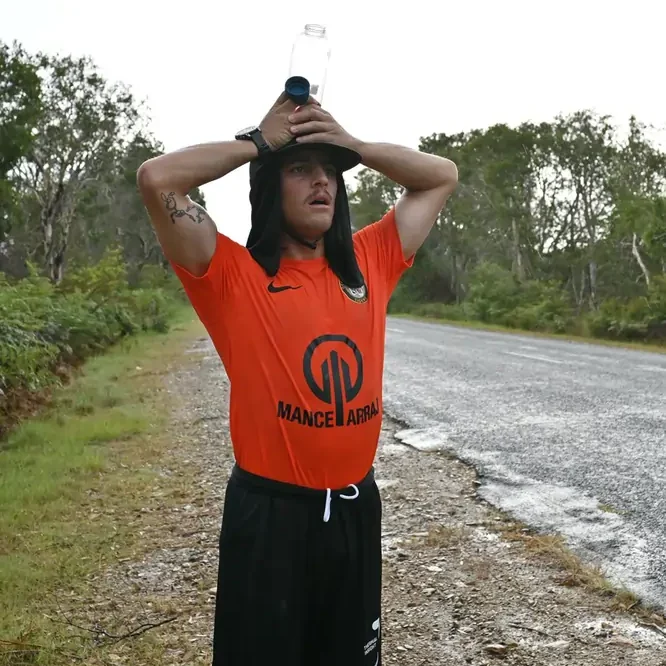
He ran 60km (37 miles) each day for 15 days, and did so in the scorching Australian summer heat, where temperatures soared above 40°C. And he did it with barely a year of running experience to his name, without a professional crew, and without any high-tech gear meticulously tracking his every step. – raising more than $40,000 AUD (£20,000) for Australian youth mental health charity Find Ya Feet, a cause close to the heart of the trainee school teacher, in the process.
Darby’s remarkable story begins, as many great adventures do, with a twist of fate.
“I was never really a runner growing up. Played a bit of footy, but nothing serious,” he tells me. “Then, one summer, a mate convinced me to join him for a trail run. It was only supposed to be a short one, but we got lost and ran for hours! “I was exhausted, obviously, but there was also this weird sense of accomplishment. Like I’d tapped into something I didn’t know I had in me. After that, I was hooked.”
His progress has been rapid, going from short-trail races to marathons within a few short months and, finally, to ultramarathons, embarking on the Coolangatta to Cronulla 900km run just after Christmas, on 27th December – all driven by an insatiable curiosity to explore every ounce of his own potential. The gruelling journey would test the mettle of the most seasoned runner. But Darby pulled it off thanks to his unique approach and philosophy. Unlike most runners, who implement the latest science and technology into their training schedules, Darby relies entirely on intuition and the guidance of his coach.
“I leave the running science to the freaks who are obsessed with it,” he admits with a grin.
This unique approach was put to the ultimate test during his 900km last December. Aside from the oppressive Australian heat, he faced a barrage of physical challenges: a suspected stress fracture, agonising shin splints, and relentless blisters.
Despite this, he describes the physical toll with nonchalance: “I had no pinky toenails or anything.…it was pretty bad.”
But it was the mental battle – the relentless waves of doubt, isolation, and the overwhelming urge to quit – that proved to be the most formidable adversary.
“My mind was pretty terrible at that point,” Darby confesses, recalling a particularly dark moment during the run.
“I was in a very negative space. I pretty much just wanted to stop.”
It was while he was at his lowest ebb that I got the chance to meet with him. Like you, I’d not heard of Darby before, and truth be told, my involvement in his incredible achievement was unexpected. I was visiting my daughter, Lucy, in Australia when a former colleague of hers, Darby’s mother, Joanne, messaged to say her son was deep into his challenge and struggling.
Lucy was brilliant, immediately stepping into action and arranging for local runners to join him on a stretch of the run to help ease his isolation, as well as helping to secure a last-minute physiotherapy session to tend to his worsening injuries.
But they were only sticking plasters. When Lucy told me his story, I was deeply moved and wanted to help. I’ve spent my career helping people navigate extraordinary challenges, and I sensed that Darby was someone special. I offered to meet him.
That night, in a packed room, a physically drained Darby arrived straight from his physio appointment. It was late, and he was facing yet another early start the next day. There was no time for a lengthy psychological deep-dive, but I knew he needed something beyond willpower. And so, I asked him one simple question: “Are you creative?”
The shift was immediate. His expression changed, his posture relaxed. My query had, as I’d hoped, unlocked something profound which had always been within him.
“This simple question hit me like a thunderbolt with the instant realisation that I was trying to push through this like an athlete,” he recalls.
“It made me realise that I wasn’t an athlete, and I won’t be able to get through this like one, so I may as well start getting through it creatively, not trying to win the race or be the fastest but to get through it my way.
“I ended up getting into this state where these terrible moments were still happening but there was almost an embracing of that part of my mind – because that part of my mind was still me.”
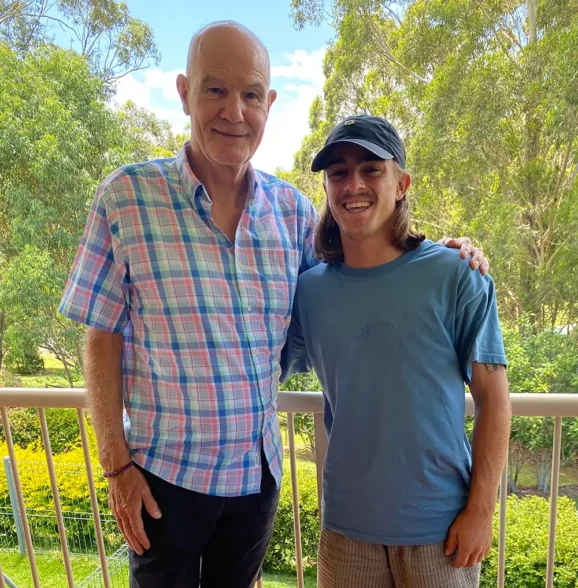
Instead of succumbing to despair, he stopped seeing pain as an enemy and instead allowed it to be part of the experience. Darby had found a way to transform these moments of crisis into opportunities for growth, tapping into his creative self, finding beauty in the struggle, and even welcoming the hallucinations and delusional states that arise from extreme fatigue.
This ability to reframe challenges, to find strength in vulnerability, is the key to a resilience not usually found in people of his age.
“People think that I’m a fighter,” he says. “I think I’m much more like a monk. It’s a lot more meditative and spiritual.”
Despite his fiercely independent mindset, Darby has his own personal support team to lean upon, led by his partner Aimee, his mother, and her partner Terry Whittaker, who together help give him the motivation to keep on going. And he has the potential to go very far indeed. His calendar is already packed with further ultramarathon challenges stretching into 2026. Participation in world championship events like the Comrades Marathon in South Africa or the 246km Spartathlon in Greece surely can’t be far behind.
“I’m no different to anyone else,” he insists. “I wear board shorts, I go surfing. I just want to push.”
But he is different. Not because of his physical capabilities, but because of the way he approaches suffering, embraces the unknown, and turns obstacles into opportunities.
We could all learn from his approach in facing challenges head-on rather than fearing them, and with his star firmly on the ascendancy, I’m confident that we’ll have plenty of chances over the coming years to see exactly how Darby’s gold-medal mentality leads to great success.
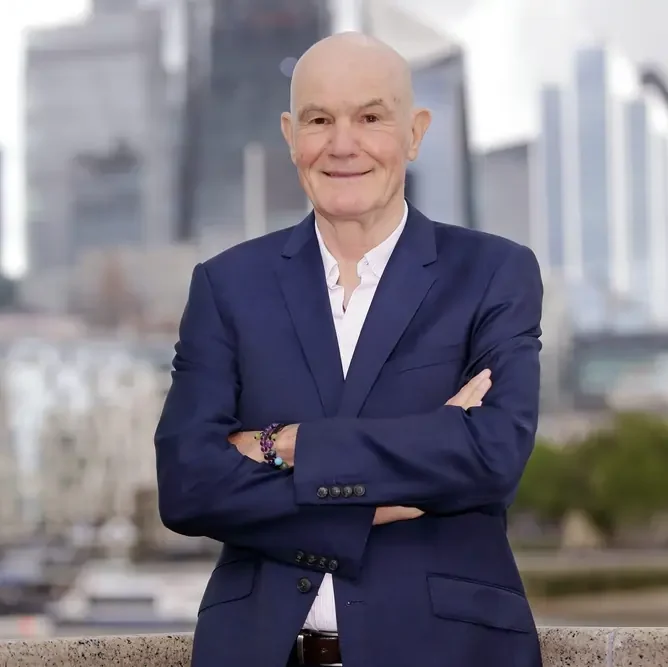
Dr. Stephen Simpson is an internationally acclaimed mind coach, TV and radio presenter, hypnotherapist, TEDx speaker, bestselling author, business consultant, and Fellow of the Royal Society of Medicine. With nearly 40 years as a practicing physician and extensive experience in elite performance coaching, mental health, hypnosis, and NLP, he has worked with top athletes on the PGA European Golf and World Poker Tours. Dr. Simpson holds an MBA from Brunel University and has served as Regional Medical Director for Chevron, contributing to global health initiatives with leaders like Bill Clinton and Bill Gates. He hosts popular shows such as “Zen and the Art of NLP,” and his YouTube channel boasts over 260 videos and 350,000 views. His latest book, “The Psychoic Revolution,” encapsulates his innovative methods for achieving peak performance.