AI promises greater prosperity and more time with loved ones, but a future without meaningful work could leave millions struggling to find purpose. Governments and the technology industry must ensure people still have opportunities to contribute and feel needed, says Dr Stephen M. Whitehead
On Saturday, 17 October, in Bangkok, a day’s drive from my desk in Hat Yai, Anthropic co-founder Jack Clark stood before the world’s finance ministers and central bankers and told them the singularity has begun – the point at which AI accelerates scientific and technological progress faster than humans can keep up.
The occasion was the Per Jacobsson Lecture at the International Monetary Fund (IMF) and World Bank Annual Meetings, and Clark did not hold back. AI, he argued, is beginning to accelerate discovery itself, and one of his company’s economic models put United States output at US$44 trillion by 2030, assuming rapid advances in AI and its adoption.
To his credit, Clark was not selling a fairy tale. He warned of misuse, of biological and cyber weapons, and he urged governments to cooperate on what he called “unusual and serious rules” while there’s still time. That is more candour than we usually hear from the people building these machines.
But somewhere in the list of benefits, between healthier lives and new infrastructure, he slipped in a phrase. AI, he said, would allow us to “spend more time with our loved ones”.
Most listeners will have let it pass. Why wouldn’t they? We have heard it a thousand times. It’s the line politicians use when they resign, the promise of every retirement brochure, the reward dangled at the end of a working life. It sounds warm and kind. It’s also, I believe, one of the most quietly dangerous assumptions in the whole conversation about where AI is taking us.
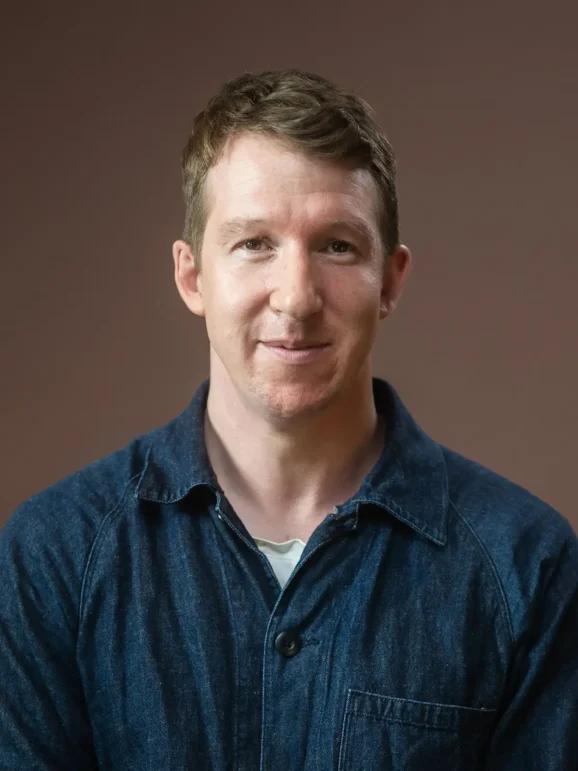
Over recent months I’ve been interviewing 20 men in their 60s, 70s and 80s for a book on what I call ‘the last masculinity’. These are men who have stopped: stopped working, stopped running things, stopped being needed in the way they once were. Their experiences offer a warning about what happens when work no longer structures our days.
They love their wives, husbands and partners and don’t want to be apart from them. But not one of them told me that more time with the people they love is what gives their days meaning.
Nor did they go back to fathering. I expected some would. The dominant story of old age tells us that grandchildren fill the space work leaves behind. For these men that story barely registered. Where the grandfather role arrived, most took it on out of obligation rather than joy. Those without children or grandchildren expressed no regret at all.
What the men who are doing well have in common is something else entirely. They restarted. Two have launched technology start-ups while others took up songwriting, painting, cooking, writing, even farming. Eddy, at 82, is still running a company, and he wakes each morning optimistic about what the day might bring. The men faring best into their late 70s and 80s combine two things: optimism and something to do that matters to someone other than themselves.
What these men need, what all of us need, is purposefulness: the feeling that we contribute, that something or someone depends on what we do, and that our effort lands somewhere beyond our own front door.
Work has always been the most reliable source of that. Not because work is noble – much of it is tedious – but because it places us in a web of expectation. Someone is waiting for the report, the delivery, the repair, the lesson. A career gives purpose a shape over decades. Yet even a casual job, done remotely from a spare bedroom, can supply it. So can a business started at 70, or a song written for strangers to hear.
Being with your husband or wife does not generate that – not for most of us. Love sustains, comforts and steadies, but it’s not the same as purpose, and asking a marriage to provide both is asking too much of it. The best relationships I have seen, in my research and in my life, are those where each partner brings something in from outside: news, friends, problems solved, a day lived. Two people with nothing to fill their days but each other are not living the dream. They are, more often than not, slowly running out of things to say. This is why Clark’s phrase troubles me: it confuses the reward for a life of purpose with purpose itself.
Over the same weekend, Europe was burning, in places literally. In France, some 550,000 people marched against rising living costs, according to the interior minister. By Sunday evening, more than 2,400 arrests had been reported. Public buildings were attacked and shops looted, although most demonstrators marched peacefully. Smaller protests took place in Belgium, Italy and Portugal on Saturday, while in Albania people rallied against perceived corruption, joblessness and poor education standards.
These protests are not about AI, and I won’t pretend they are. They are, instead, about prices, classrooms and public services. The French mobilisation grew out of student protests that began last month over school conditions. In Brussels, too, young people have taken to the streets over education costs and access.

A lack of opportunity is purposefulness denied. Young people who cannot see where they will fit, what they will contribute or who will ever need them do not settle quietly for more time with their families. Their anger should trouble anyone planning a future in which machines do more of the work. We may be catching a glimpse, on those streets, of what a society looks like when large numbers of people feel they aren’t required.
Clark envisages new industries and more powerful human scientists. More time outside work need not mean losing meaningful work altogether. My concern is what happens to those whose roles disappear. For them, the future could amount to retirement at any age, perhaps at 25.
Among the men I have interviewed, those who have made new purposes for themselves have often done so against the odds and with little money. Those who struggle are not short of loved ones but of a sense of being needed.
None of this is an argument against AI. Instead, I am challenging the lazy assumption sitting at the centre of the AI story: that if machines take our work, human fulfilment will simply flow into the space left behind. It won’t. Something has to be built in that space, deliberately, by governments, communities and the industry itself.
So here is a question for Jack Clark, and for the finance ministers who listened to him in Bangkok. When AI has done the work, what will people do that matters? Not to fill their time but to fill their lives.
Until there is a serious answer to that, the singularity may make (some of) us richer, but it will not make us whole. And I very much doubt it will make us happier and more content.
Dr Stephen M. Whitehead is a British gender sociologist and the author of more than 20 books, published by Routledge, Polity, Oxford University Press and Random House. A foundational figure in masculinity studies with over 35 years of research, he co-developed the concept of toxic masculinity and originated the frameworks of Total Inclusivity and healthy self-love. He was Senior Lecturer at Keele University from 1997 to 2015. He currently leads the Global AI Intimacy Study, an international investigation into how AI is reshaping human relationships, with fieldwork across Latin America and India. His next book, Where Have All the Good Men Gone? The Reordering of Intimacy, co-authored with Constanza Fernández Arce, will be published in 2027. He is The European’s Leadership and Organisational Culture Correspondent and lives in Thailand.
READ MORE: AI threatens the careers our schools still teach children to expect. AI is disrupting routes into work, putting the identity and security built around employment at risk. Schools must help children develop self-worth that can withstand an uncertain working future, says Dr Stephen Whitehead.
Do you have news to share or expertise to contribute? The European welcomes insights from business leaders and sector specialists. Get in touch with our editorial team to find out more.
Main Image: Fagner Silva / Pexels