Last week, Thailand’s Queen Suthida made headline news after flying a Gripen fighter jet solo. Her historic achievement challenges long-held assumptions about women, technical competence and military authority, says Dr Stephen Whitehead
The sky above Hat Yai is rarely quiet. Airliners climb out towards Bangkok, Kuala Lumpur and Singapore, and every so often something faster and far louder cuts across them from the Royal Thai Air Force base that shares the city’s runway. I’ve lived in Thailand since 2009, and here in Hat Yai, the commercial heart of the deep south, for the past year or so, so I’ve grown used to that noise. What I hadn’t expected was that a woman born not far from me would take one of Thailand’s front-line fighters into the sky alone.
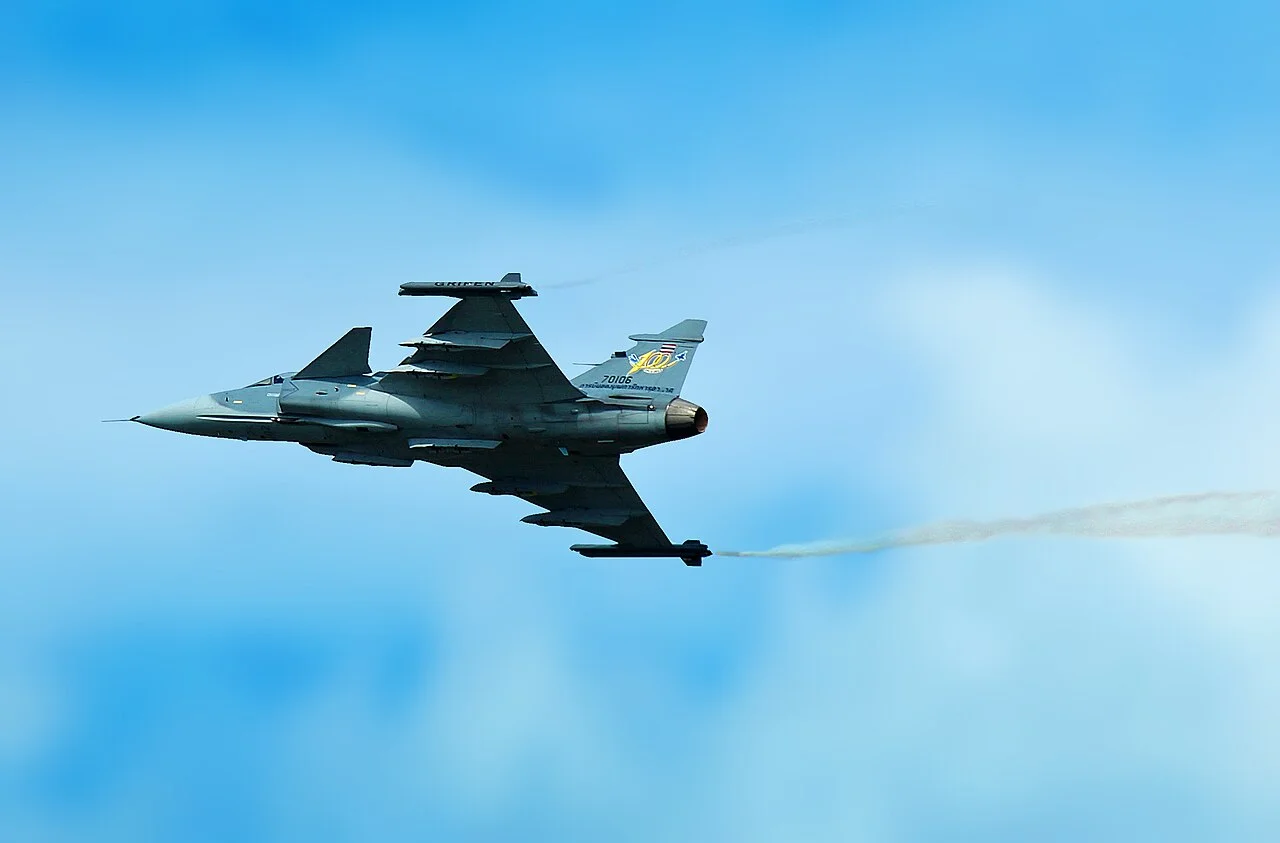
She is Queen Suthida of Thailand. On October 8, the 48-year-old she flew a Saab JAS 39 Gripen solo. The single-seat Swedish fighter forms the sharp end of the Royal Thai Air Force. Defence Industry Europe describes her as the first queen to pilot a fighter jet on her own.
She was born Suthida Tidjai on June 3, 1978, to Kham and Jangheang Tidjai, and she went to school at Hatyaiwittayalai Somboonkulkanya, a secondary school in the city. Anyone who knows Hat Yai will recognise something of the place in what followed. This is a trading town, a border town, a city of markets, railway lines and roads running south to Malaysia. People here are practical, outward-looking and not much impressed by ceremony. You get on, you work and you make your own way.
She made hers to Bangkok, graduating from Assumption University in communication arts in 2000. Then she took to the air, though not yet at the controls. She worked as a flight attendant, first with JALways, the Japan Airlines subsidiary, and then with Thai Airways. It is a detail I find quietly telling. Her first experience of aviation was in the cabin, serving others, watching the cockpit door from the other side.
The next chapter was the military. She joined the armed forces and rose with remarkable speed. In 2014 she was appointed deputy commander of the then Crown Prince’s household guard, and she went on to attain the rank of general. On May 1, 2019, she married King Maha Vajiralongkorn, and on May 4 she was crowned Queen during his coronation in Bangkok.
It is worth pausing on how unusual that journey is. Royal consorts, in Europe as much as in Asia, have traditionally arrived from aristocracy, diplomacy or high society. Queen Suthida arrived from a provincial school, an airline galley and a parade ground. Rank, in her case, was something earned before it was conferred.
What has caught the world’s attention this year, though, is the flying. And here I want to be clear: this is serious aviation training.
Queen Suthida has completed aviation courses with both the Royal Thai Air Force and the Royal Thai Army. She went on to train in Germany, earning a European private pilot’s licence, followed by a commercial pilot’s licence with a Boeing 737 type rating. She holds an Airline Transport Pilot Licence from the Civil Aviation Authority of Thailand, the highest civil qualification there is, and she has served as co-pilot on the royal Boeing 737-400 and 737-800. On the state visit to Bhutan in April 2025, the King, himself a certified military and civilian pilot, flew the royal aircraft with the Queen beside him as co-pilot, both on the way in and on the way home. Together they landed at and took off from Paro, an airport squeezed into a narrow Himalayan valley, with mountains close on every side and an approach flown largely by eye. It’s widely regarded as one of the most difficult airports in the world; the King prepared extensively for it, and a Drukair pilot who knew the approach sat on the flight deck to assist.
Then came jets. She trained on the L-39 advanced jet trainer at the Air Force’s Flying Training School at Kamphaeng Saen. She then spent two residential stints at Wing 7 at Surat Thani, the home of Thailand’s Gripen fleet, working through the Air Force’s standard stages under its own instructors, and logged just over 10 hours in the two-seat JAS 39D.
On the morning of October 8, the King flew down to Wing 7. He watched her take off in a single-seat JAS 39C and bring the jet back down. When she climbed out, he presented her with flowers and pinned on the Gripen Order Golden Patch, the gold-embroidered badge given to those who have flown the aircraft. The Nation described the flight as flawless.
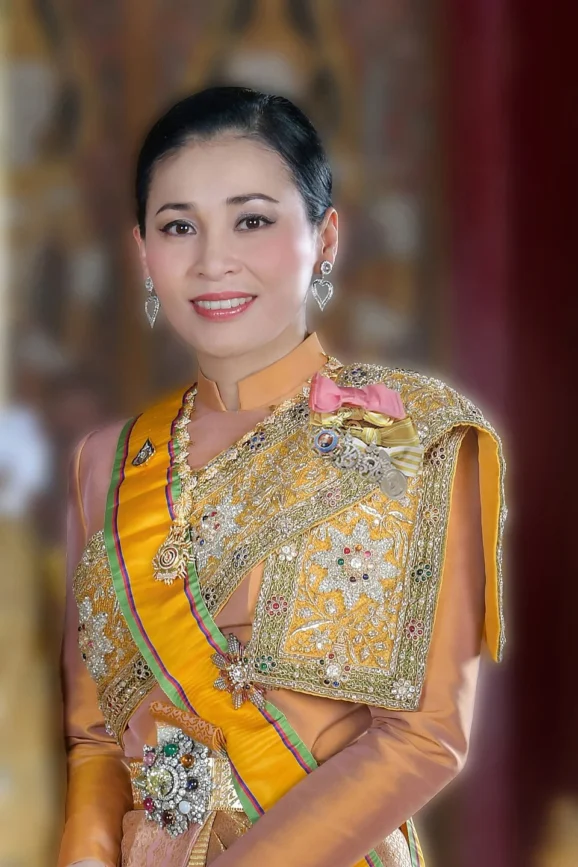
By the day of that solo, palace figures put her flying time at more than 1,188 hours across every aircraft she has flown, over 450 of them in the Boeing 737-800. That is years of disciplined, incremental, examinable work. Licences are not awarded for status, and no instructor worth the name signs off a pilot on a supersonic fighter as a courtesy. The Gripen is a demanding aircraft. It asks for physical resilience, fast and calm decision-making and a mastery of systems that most of us could not begin to absorb. To fly one alone at 48 says as much about character as it does about skill.
As a sociologist who’s spent more than 35 years studying gender, I can’t look at this without asking what it means. Few domains are as heavily coded masculine as military aviation. The fighter pilot has long been one of the defining icons of traditional masculinity: the lone hero, the steel nerve, the swagger in the flight suit. Hollywood built a franchise, Top Gun, on it. Air forces across the world, Thailand’s included, have historically been built around it.
When a woman takes that seat, the old script wobbles. When the woman in question is the Queen, it’s rewritten in public, at the highest level a society has to offer.
I have written elsewhere about independent femininity: women who define themselves through their own competence, their own ambition and their own chosen paths, rather than through roles handed to them. Queen Suthida carries every formal duty of her position, the ceremonies, the patronages, the royal projects. But she’s added to that role something entirely her own, a professional identity measured in licences, flying hours and ranks. Here is someone who is drawn to the unexpected, and who doesn’t ask permission of convention.
The significance of this is not confined to Thailand. Across Asia, and indeed in Europe, girls still grow up absorbing the quiet message that certain doors are not for them: engineering, command, the cockpit. Every visible exception weakens that message.
I think often about the girls now sitting in the classrooms of Hatyaiwittayalai Somboonkulkanya, the same school Suthida Tidjai left more than 30 years ago. Many of them will have grown up hearing the military jets over the city, as I now do each morning. Some, I suspect, are looking up at that sky rather differently this year.
There has never been a queen quite like her, and I doubt there’ll be another – though I have a feeling a few young women in Hat Yai are already planning to prove me wrong.
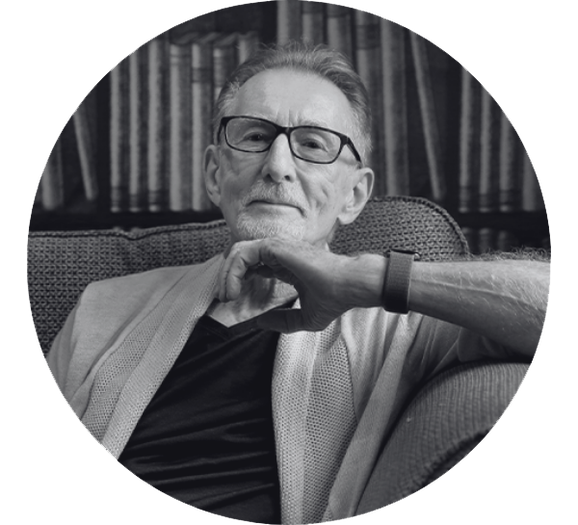
Dr Stephen Whitehead is a gender sociologist and author recognised for his work on gender, leadership and organisational culture. Formerly at Keele University, he has lived in Asia since 2009 and has written 20 books translated into 17 languages. He is based in Thailand, where he leads the Global AI Intimacy Study. His forthcoming book, co-authored with Constanza Fernández Arce, is Where Have All the Good Men Gone?
READ MORE: Strong leaders know when to make a U-turn. From the Thai Government’s recent reversal on drug policy to PM Andy Burnham’s rethink on Brexit, changing course can look like weakness. But sticking with a failing decision is often worse – and credible leadership means knowing when to turn, says Dr Stephen Whitehead.
Do you have news to share or expertise to contribute? The European welcomes insights from business leaders and sector specialists. Get in touch with our editorial team to find out more.
Main Image: Por Khan / Wikimedia Commons / CC BY-SA 3.0