Some TV performances become so definitive that they live on decades after the cameras stop shooting. The European’s Television Production & Generational Affairs Correspondent, veteran TV producer Pip Burley, explains why the greatest roles are built not on star power alone but on creative collaboration
There comes a moment in some performances when an actor no longer appears to be playing the character. Rather, the two become inseparable. Other actors may once have been considered for the role, but a definitive performance can make every alternative seem impossible.
One of Britain’s best-loved stars, David Jason, achieved exactly that rarest of television feats not once, not twice but three times.
First, he made the role of Del Boy in Only Fools and Horses his own. It’s hard to imagine now, but he wasn’t the original choice for Del Boy. Enn Reitel was considered first, followed by Jim Broadbent, who was unavailable because he was appearing in the West End at the time. Broadbent – who would eventually enter Del Boy’s world as the thoroughly unpleasant policeman DI, later DCI, Roy Slater – later joked that turning down Del Boy was his greatest contribution to British culture!
Then David did it again as Pop Larkin in The Darling Buds of May. When we developed the show for ITV, we originally had Bob Hoskins (amongst others) in mind for Pop. However, Yorkshire Television, keen to find another vehicle for David after comedy-drama series A Bit of a Do, had other ideas. Once mooted, he became everyone’s number one choice.
And even while The Darling Buds of May was still airing, David scored a hattrick with his portrayal of Detective Inspector Jack Frost in A Touch of Frost.
The three characters could hardly have been more different: a fast-talking South London market trader, a warm country patriarch and a rumpled, widowed policeman. Yet each seemed to belong to David alone.
But why is that? All other things being equal in quality – the writing, the staging, the directing, the music – why do some actors manage to take all the right ingredients and like an alchemist deliver TV gold?
A reflection on David’s approach gives us the answer. He had that rare acting gift for finding the humanity beneath each character’s surface. Del Boy’s schemes were driven by optimism as much as greed; Pop’s lawlessness was softened by generosity and family loyalty; Frost’s untidiness concealed a sharp mind and an unwavering moral purpose.
Beneath the roles lay meticulous construction and immense technical skill. David could make a performance feel natural whilst making the work behind it invisible.
The difficulty of following such a performance was evident when Bradley Walsh played Pop Larkin in The Larkins, the 2021 remake. Walsh gave a capable performance but he was not merely being compared with another actor. He was being measured against David Jason’s definitive version – one that had already become legendary in the public imagination.
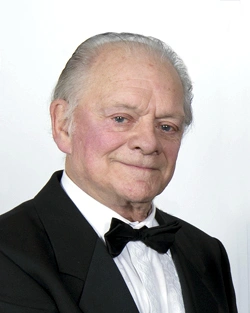
A Touch of Frost, which came to our screens in 1992, one year before the end of Darling Buds, gave David the chance to do something very different.
David had spent so long playing a lovable rogue, generally created by the genius of sitcoms John Sullivan, trying to stay one step ahead of the law. Now he wanted to be on the other side of it, playing a law-abiding straight policeman.
I think his comic clashes with Broadbent’s DCI Slater on Only Fools and Horses might have played a part. Slater was everything you didn’t want a policeman to be: crooked, bullying and liable to nick you whether you’d done anything or not.
I think playing opposite a character like that only fuelled David’s long-standing ambition to play a detective himself. David had spent years as Del Boy being chased by bent coppers like Slater, so there was something rather lovely about him finally wanting to be the policeman himself – just a law-abiding, straight one the audience could root for.
And the policeman he always came back to was Columbo, played by Peter Falk. David absolutely loved Peter Falk – that scruffy, slightly chaotic appearance hiding somebody incredibly sharp and completely dedicated to catching the bad guy.
He didn’t want to imitate Falk but, rather, wanted to reshape that contradiction for a different actor, country and drama: humour with seriousness, apparent disorganisation with absolute determination.
Fuelled by David’s enthusiasm, my researchers found writer R. D. Wingfield’s little-known Frost novels. The difficulty was that Wingfield’s chain-smoking Jack Frost could be crude, abrasive and difficult to like.
We knew David wouldn’t want to play someone like the original character of Jack Frost, so we softened the character for TV. We then took elements of Columbo’s persona and traits and built them into Frost, so David finally got to play the part he always dreamed of.
Though elements of Columbo’s persona were incorporated into Frost, the result was far from a transplant. We also created a different world around him, with David supplying the humanity, humour, instinct and vulnerability that made Frost come alive onscreen.
The television version of Jack Frost was created especially for Jason, but not by him alone. That distinction may explain why it worked, and why, more broadly, some actors’ performances are remembered fondly even decades later. David knew what he wanted yet collaboration allowed the character to become larger than his original ambition.
That is the secret of what makes some actors’ passion projects into signature, definitive performances. Those who go on to create a role that becomes the very definition of iconic understand one thing above all else: ownership is not the same as authorship. An actor can become inseparable from a role without trying to claim sole ownership of it. The strongest performances often emerge when a performer’s instincts guide the character but remain open enough to be challenged and enlarged by others in the team.
David Jason’s Frost has a modern parallel in Slow Horses, widely praised as a modern spy thriller masterpiece. Gary Oldman’s Jackson Lamb is almost the opposite of Frost in temperament. Lamb is slovenly, rude, politically abrasive and apparently indifferent to the rules of professional conduct. Yet beneath the bad manners lies a formidable intelligence, a deep knowledge of espionage and a fierce, if carefully concealed, loyalty to the people under his command.
Oldman has made Lamb so completely his own that it is difficult to imagine the character without him: the stained clothes, the exhausted posture, the muttered insults and the air of a man who has long since stopped caring whether anybody approves of him.
But the performance also works because Lamb is not merely a collection of Oldman’s eccentricities. The writing gives shape and true dramatic purpose to them. His dishevelment becomes camouflage, his rudeness a weapon and his apparent cynicism a defence against responsibility and loss.
Consequently, like Frost, Lamb is underestimated by people who mistake his untidiness for incompetence. Both characters use disorder as a disguise, though Lamb’s is more aggressive and self-conscious. And like David did, Oldman found a way to make a distinctive performance inseparable from the character rather than his public persona.
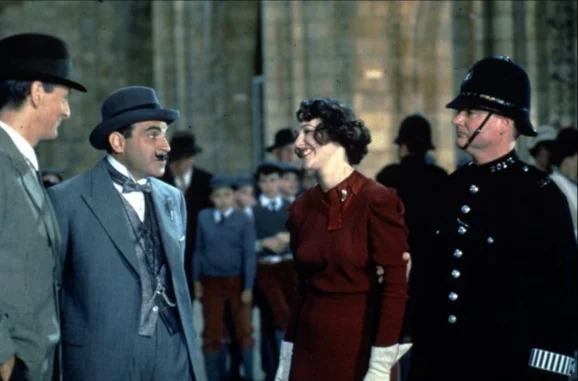
David Suchet’s Hercule Poirot is likewise held up as the definitive TV rendition of Agatha Christie’s Belgian detective. Christie’s family had recommended him for the part but Suchet became its most devoted custodian. He read the complete Poirot canon and compiled a detailed dossier of the character’s habits, appearance, movements, beliefs and eccentricities. The voice, walk, clothes, moustache and precise arrangements all grew from close study of Christie’s writing.
Over nearly a quarter of a century, his determination became a mission to film every Poirot story. Other actors had played the detective before him, and others will do so again, but for millions Suchet did not just play Poirot – he was Poirot. He made the character his own by being faithful to the author’s creation.
In all these examples, the actors imposed an extraordinary degree of personal discipline on their performances but never treated the role as wholly theirs. In each case, the actor’s authority came from serving the character rather than merely displaying their acting skills.
TV producers who are worth their salt know that casting is not a reward for past success but a meeting of actor, character, writing and audience. The greatest performers likewise understand this distinction. They may know precisely what they want to do but they also recognise the importance of writers, producers, directors and fellow actors.
A Touch of Frost would run for 15 series between 1992 and 2010, attracting audiences of up to 18 million viewers. No doubt it could have continued, but even though he loved the role, David knew when it was time to call it a day. I remember him saying to me, “You wouldn’t want me to play Frost in a wheelchair, would you? Frost is getting a little long in the tooth. I still enjoy doing it and it’s a great part, but I just think he’s got to retire. It’ll be a sad day.”
And when he did ultimately hang up Frost’s tweed trilby hat, it was indeed a sad day, but in those 42 episodes, he’d cemented the show’s place in the annals of TV history – just like Oldman, just like Suchet and just like other actors’ actors who know that in TV land, success is almost always a team effort.
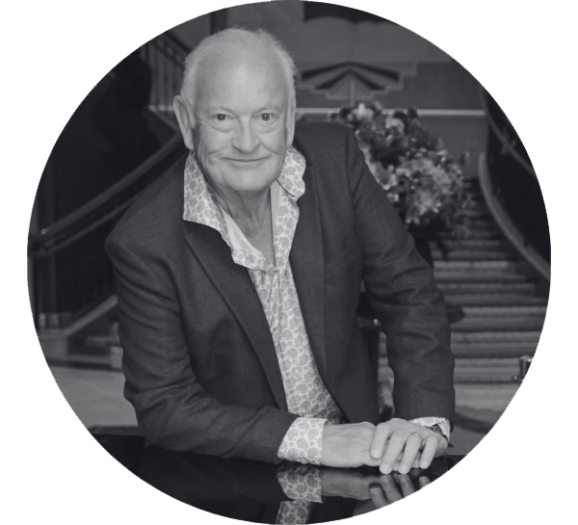
Pip Burley is a veteran television producer and creative industries expert whose career has spanned more than six decades across television, music, theatre, advertising, publishing, business and writing. He founded television production company Excelsior and produced some of Britain’s best-known dramas, including The Darling Buds of May, A Touch of Frost and My Uncle Silas. He also composed the theme music for The Darling Buds of May, receiving an Ivor Novello Award in 1992.
READ MORE: ‘Darling Buds and A Touch of Frost producer warns BBC ‘must rediscover its appetite for risk’‘. As former Google executive Matt Brittin takes charge as BBC director-general, Pip Burley, the producer behind The Darling Buds of May and A Touch of Frost, argues that the corporation faces a defining choice about its future. With Netflix, Amazon, Disney and YouTube changing how audiences consume content, and with the licence fee under growing pressure, he tells The European how the BBC must rethink its priorities, reduce its dependence on news and recover the confidence to back popular drama and comedy drama that can bring viewers back.
Do you have news to share or expertise to contribute? The European welcomes insights from business leaders and sector specialists. Get in touch with our editorial team to find out more.
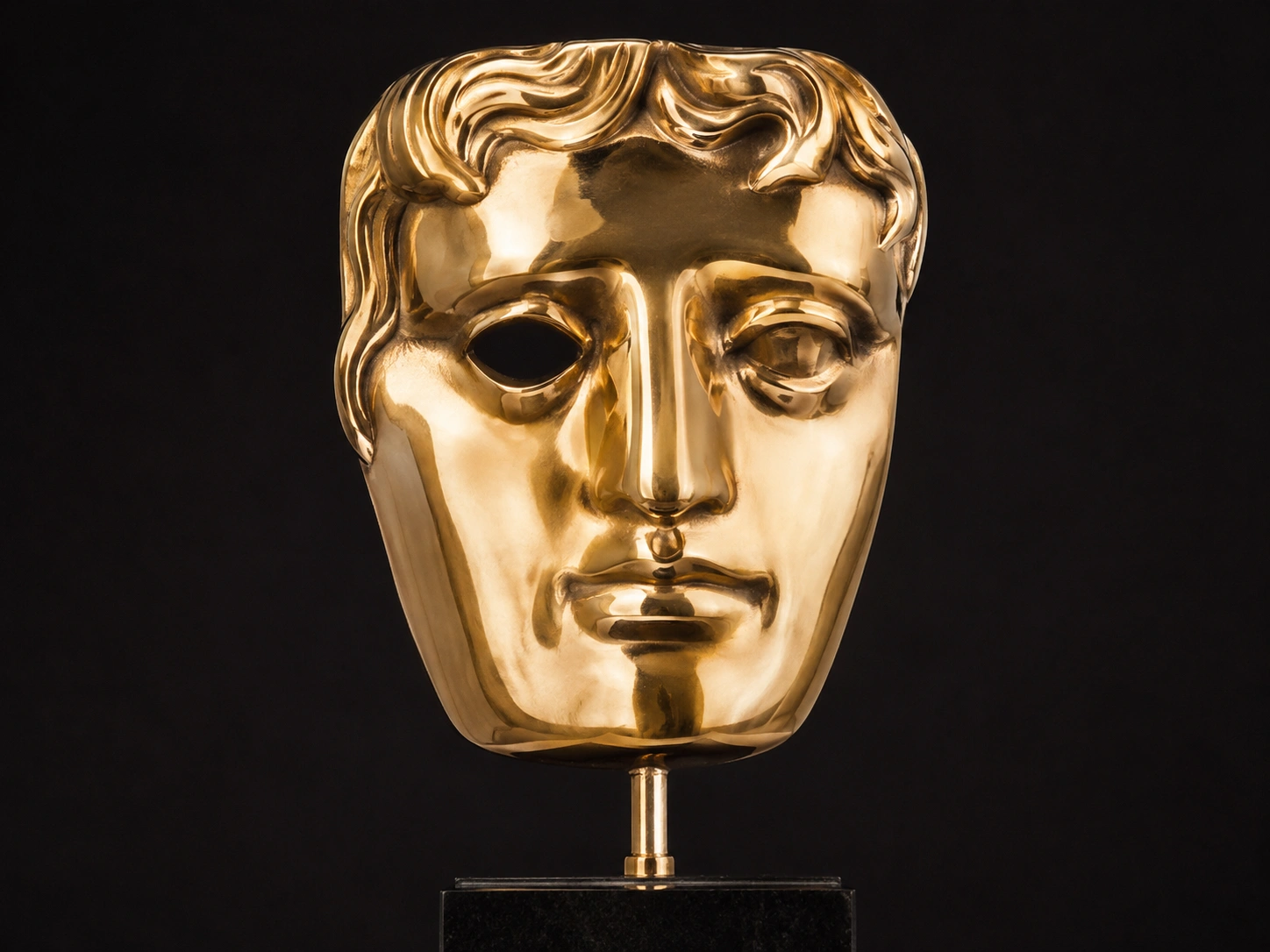
Main Image (BAFTA): The BAFTA mask, synonymous with excellence in British television and film. Pip Burley argues that the performances which become truly iconic are rarely the product of star power alone, but of collaboration between actor, writer, producer and director. Credit: AI-generated image / The European