Cyprus is muscling into Europe’s defence race with plans to build drones, electronics and battlefield technology. Andrea Busfield reports on how the continent’s smaller nations are fighting for a place in the biggest rearmament drive since the Cold War
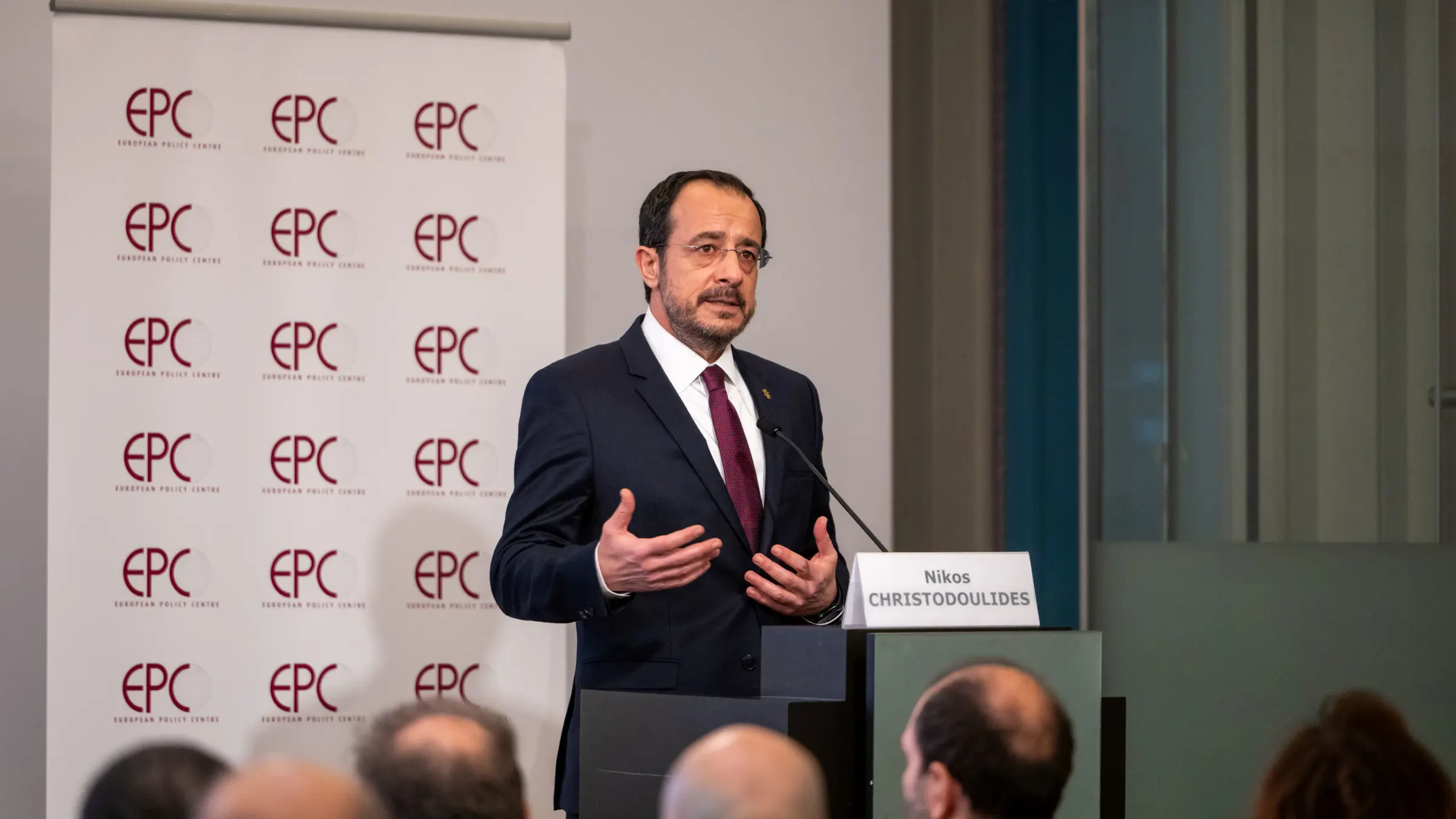
Europe is rearming at its fastest pace since the Cold War, and in Athens earlier this month Cypriot President Nikos Christodoulides added his voice to a growing consensus that the continent can no longer outsource its own defence.
“A Europe that does not invest in its defence and security is a Europe that remains dependent,” he said.
Speaking at DEFEA 2026, he argued that Europe must strengthen its own defence capabilities amid rising geopolitical instability, while also declaring Cyprus ready to join NATO “when political conditions allow”.
For one of Europe’s smaller states, it is a striking signal that the continent’s defence surge is no longer being shaped solely by its major powers, but increasingly by nations seeking strategic relevance through autonomy, integration and specialisation.
While much of the focus remains fixed on Europe’s major military powers – France, Germany and Poland – the continent’s smaller states are also stepping forward.
From Cyprus to Estonia and Luxembourg, a growing number of Europe’s smaller nations are embedding themselves in the defence industrial ecosystem, specialising in technologies such as cyber defence, drones, satellite communications, electronic warfare, and advanced electronics.
In a security landscape increasingly defined by innovation rather than sheer scale, these nations are finding new ways to exert outsized strategic influence.
One of the clearest examples of this shift is emerging in Cyprus, where the government is attempting to transform the island from a consumer of defence systems into a niche contributor to Europe’s expanding security architecture.
Long known as a centre for shipping, tourism and financial services, the island is now seeking to develop a technologically focused defence industry embedded in European supply chains.
At the opening of the Battlefield ReDEFiNED 2026 conference in Nicosia earlier this year, President Nikos Christodoulides framed the ambition clearly.
Over the past five years, he said, the Cyprus defence industry had shown “remarkable growth and resilience”, emerging as a “strategic pillar” of national security and industrial policy, and evolving from participant to “meaningful contributor” within Europe’s defence and dual-use ecosystem.
Christodoulides also revealed that the sector’s contribution to GDP could reach double digits in the years ahead, setting out a vision for Cyprus to “move beyond being a consumer of defence solutions and become a producer”.
It’s a transformation that has deeper roots than might first be apparent.
“Although Cyprus has appeared as an organised defence industry only in the last five years, many of the companies involved are more than 20 years old,” explains Tasos Kounoudes, chairman of the Cyprus Defence Industry Cluster.
“The sector evolved from dual-use technologies, and today we are not only developing technologies, but also moving into manufacturing and exports with strong governmental support.”
Kounoudes describes the ecosystem as a pipeline of companies at various stages of development.
“We have companies at different levels of maturity – some entering the sector now, others with 30 years of experience. It is like a pipeline, and in the last five years it has grown rapidly.”
Rather than competing with Europe’s heavy industrial giants in shipbuilding or fighter aircraft manufacturing, Cypriot firms are focusing on smaller, but technologically sophisticated components.
“We are not developing heavy industrial platforms like frigates or fighter aircraft,” Kounoudes says. “Our strength is in advanced technologies – communications, materials, electronics and smart autonomous systems.”
That specialisation reflects a broader shift in how modern military systems are built. Today’s weapons platforms are assembled through complex international supply chains in which different countries contribute subsystems rather than complete end products.
“Cypriot companies are now involved in around 57 European defence projects, designing and delivering subsystems for next-generation European systems,” Kounoudes reveals. “These programmes represent roughly €860m in contracts, with about €50m already directed to Cypriot firms.
“Our goal is to place Cyprus on the map of the European defence industry.”
In northern Europe, Estonia offers a different model of small-state influence, one built around cyber capability, digital resilience and export-driven innovation.
“Estonia integrates its cyber and digital defence capabilities into wider EU and NATO ecosystems through institutional cooperation, multinational research frameworks, and export-oriented defence innovation,” explains Eleka Rugam-Rebane, media adviser in the Strategic Communications Department at Estonia’s Ministry of Defence.
A key pillar of that approach is Tallinn’s role as host of NATO’s Cooperative Cyber Defence Centre of Excellence, a multinational research and training hub bringing together experts from across the alliance.
“The centre conducts joint research, exercises and training to enhance cyber-defence interoperability across the Alliance and strengthen collective capability development,” Rugam-Rebane says.
Estonia is also active in collaborative EU defence programmes funded through initiatives such as the European Defence Fund, linking domestic companies and research institutes into multinational development projects.
“Such projects embed Estonian companies and research institutes within broader European defence supply chains rather than confining them to national markets,” Rugam-Rebane says, adding that the country’s defence industry policy is deliberately outward-looking.
“Approximately two-thirds of Estonian defence industry output is exported, reflecting a deliberate strategy to integrate domestic firms into global NATO and EU defence supply chains.”
Officials argue that this model shows how smaller states can shape Europe’s security architecture through specialisation rather than scale.
“Smaller states can gain strategic advantages in European defence industrial cooperation by focusing on niche technological strengths rather than attempting to replicate the full spectrum of large-scale defence manufacturing,” Rugam-Rebane says.
Luxembourg represents another version of the small-state model, this time built around space infrastructure.
Despite its size, the country has developed a sophisticated satellite communications sector and plays a role in secure government and military communications through LuxGovSat, the public-private venture created with SES.
In an era when space assets underpin navigation, surveillance, intelligence and communications, such capabilities offer small states a route to strategic relevance.
Lithuania, by contrast, is pursuing a more traditional industrial resilience agenda.
Since Russia’s invasion of Ukraine, it has accelerated efforts to strengthen ammunition production, defence partnerships and domestic manufacturing capacity.
Its approach reflects the priorities of frontline states that see defence industry not just as an economic opportunity, but as a matter of national readiness.
Malta, while militarily smaller and more constrained, illustrates another strand of this trend: the growing importance of logistics, maritime surveillance and critical infrastructure in a European defence landscape that increasingly extends beyond tanks and artillery.
For all their promise, smaller defence ecosystems face obvious structural constraints.
“One of our disadvantages is geography,” Kounoudes admits. “We are far from Europe’s main industrial centres, so logistics and supply chains can be more complicated.”
That means countries such as Cyprus cannot easily compete on cost. Instead, they must compete on innovation, speed and specialisation.
“We have to compete through quality and technology, not price,” he said.
Access to finance has long been another obstacle.
“For many years defence companies could not access financing,” Kounoudes says. “Banks simply closed the door because defence technology was considered too high risk.”
That is beginning to change as Brussels puts more money behind the sector through the European Defence Fund and related instruments, while the European Investment Bank has shifted its stance on support for defence-related technologies.
The strategic shock of Russia’s war in Ukraine has accelerated the process, exposing both Europe’s dependence on external suppliers and the vulnerability of overstretched industrial supply chains.
“For many years Cyprus was 100 per cent dependent on foreign defence supply chains,” Kounoudes says. “The aim now is to change that.”
Cyprus’s location in the Eastern Mediterranean also exposes it to the region’s evolving security risks. A drone attack at the start of the US-Israeli assault on Iran that hit RAF Akrotiri – part of the UK’s sovereign base areas on the island – highlighted how low-cost unmanned systems are reshaping modern conflict.
“We are located in the middle of a very complex region, so we see clearly how new technologies like drones and low-cost systems are changing warfare,” says Kounoudes, adding that Cypriot companies are working with European partners on technologies designed to address such threats.
Across Europe, a pattern is emerging in which smaller states are focusing on specialised capabilities rather than attempting to replicate the large-scale defence industries of bigger powers.
Cyprus is focusing on advanced electronics, autonomous systems and dual-use technologies. Estonia has built influence through cyber defence and digital resilience, while Luxembourg is investing in satellite communications and space infrastructure. Lithuania, meanwhile, has concentrated on ammunition production and industrial readiness.
“We have cooperation agreements with defence industry associations in Greece, France, Poland, the Czech Republic and Italy, and we are in the process of signing agreements with other countries such as the UK and Indian defence industry associations,” Kounoudes says.
“Our goal is to integrate Cyprus into European defence networks. Small states cannot compete in scale, but they can compete in innovation.

Andrea Busfield is an international bestselling author and journalist. Her books include Aphrodite’s War and Born Under a Million Shadows. She has held senior editorial roles across the British press and reported from conflict zones including Afghanistan, where she later worked as a civilian editor with NATO/ISAF. She currently resides in Ireland.
READ MORE: How Japan’s beer-and-ski city became a global testbed for green AI. As the energy demands of artificial intelligence intensify, Japan’s northern city of Sapporo is emerging as a proving ground where renewable power, advanced infrastructure and government policy converge to test whether large-scale AI growth can align with decarbonisation, writes Andrea Busfield.
Do you have news to share or expertise to contribute? The European welcomes insights from business leaders and sector specialists. Get in touch with our editorial team to find out more.
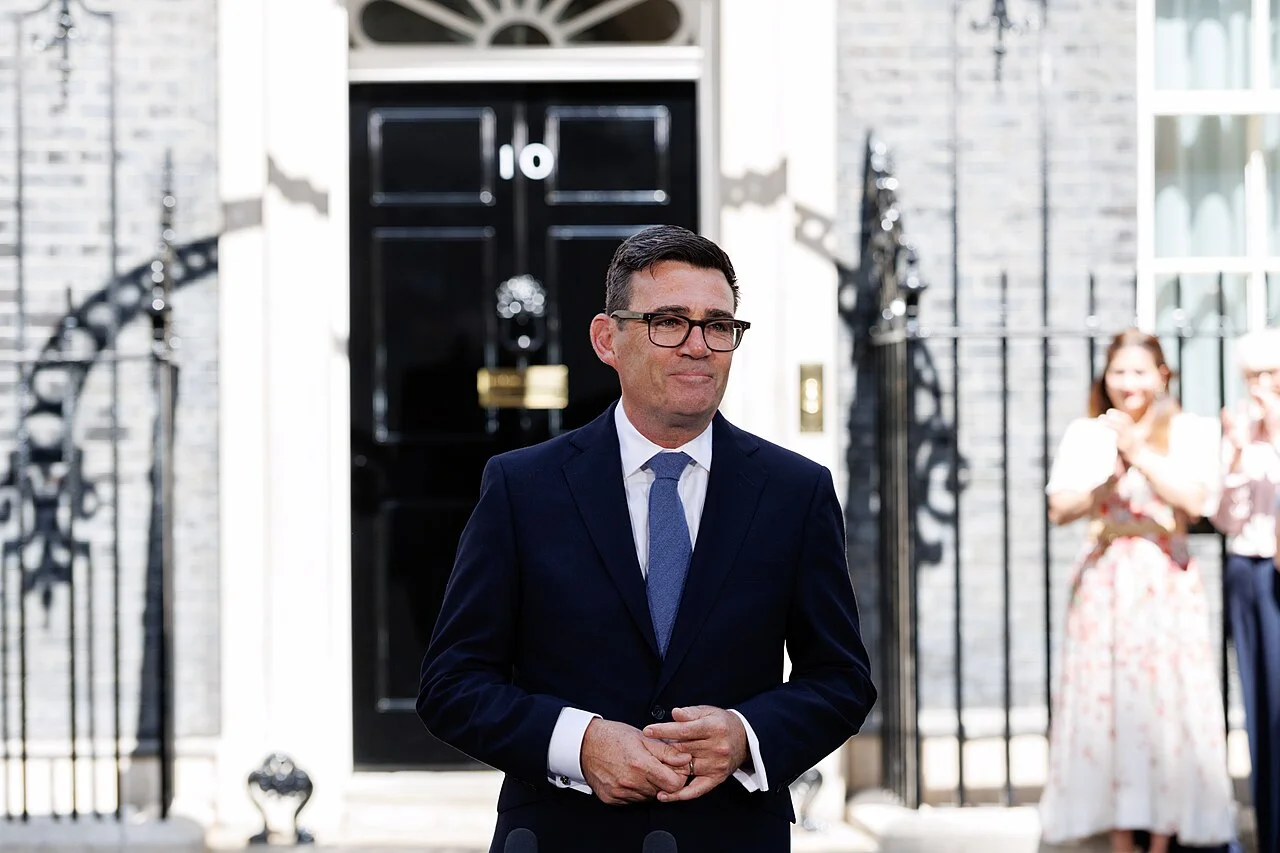
Main image: Cyprus President Nikos Christodoulides speaking at the European Policy Centre in Brussels, where he said Europe must strengthen its defence and security capabilities. Credit: Cyprus Presidency of the Council of the EU 2026