When an anonymous police officer wrote to Phil Cleary describing a child protection case that went tragically wrong, it raised a question still unanswered: what could have been done differently? Cleary, a former policeman himself, asks whether austerity and political neglect, rather than race or culture, lie at the root of Britain’s grooming scandal
Since writing in The European about government accountability and the moral consequences of policy neglect, I have received a number of private messages from readers working within the system. They include police officers, social workers and NHS staff who describe the same underlying frustration: that those on the front line are being blamed for structural failures they neither caused nor controlled.
One recent message, sent anonymously but clearly from a serving or former police officer, stood out. He was not attempting to defend those whose handling of the grooming scandal amounted, in his words, to “criminal negligence”. Instead, he described an incident from his own experience to pose a simple question: what more could we have done?
In his account, he and a female colleague were called to a house in 2010 after a workman reported seeing a young girl inside with several older men of Pakistani origin. “One of them reassured us that nothing was amiss,” he writes, “but we insisted on entry.” Inside, they found a girl “about 15, with a fag in her hand and obviously tipsy”, surrounded by half a dozen men. When questioned, she claimed one was her boyfriend and that the others were relatives.
Believing she was at risk, they removed her under emergency protection powers. “She resisted violently,” he recalls, “so we had to restrain her for her and our own safety.” Hours later, a social worker arrived — “totally worn out”, the officer says — and identified the girl as a missing person from care who had recently turned 16. She refused to make a complaint and was returned to her home, only to abscond within half an hour.
The officer concludes: “She was clearly vulnerable. These men made her feel wanted — for their own evil purpose. But can someone explain what we or the social worker could do differently? Is there a gap in the law? No doubt the police or social services will be blamed, but maybe politicians should look at themselves in the mirror.”
Does the officer have a case? Could the lack of investment in our essential services — including Social Services, police, and mental health professionals — lie at the root of the child grooming scandal? Were resources stretched so thin that social workers and police officers had to prioritise their efforts on those vulnerable people who either sought help or were receptive to the offer of help?
I will not engage here with the claim that “blind eyes were turned” for fear of being called racist. I have no direct evidence to support that and will leave it to the forthcoming inquiry to determine. What the officer asks, instead, is what more he could have done. So let us, for a moment, imagine the same event in 2010 — but in a country where both the police and social services were properly resourced.
In that version of events, a child discovered with several adult men would trigger an immediate multi-agency response under the Children Act 1989. The police would remove her to a place of safety and secure the scene, acting on reasonable grounds to suspect significant harm. Specially trained child protection officers would gather and record evidence in accordance with Achieving Best Evidence (2006) guidelines, while social services would be alerted without delay.
The men present would be arrested under PACE 1984 on suspicion of indictable offences under the Sexual Offences Act 2003 — sections 48 to 50 concerning the arrangement or facilitation of child sexual exploitation, carrying penalties of up to 14 years’ imprisonment, or sections 16 to 24 relating to abuse of trust, punishable by up to seven years. Forensic teams would secure physical and digital evidence, from DNA and mobile phones to scene observations and call data.
The young person’s reluctance or fear to make a formal complaint would not halt proceedings, since CPS 2010 guidance already prioritised public-interest prosecutions supported by corroborative evidence such as digital records and witness statements. The suspects would either remain in custody or be released on bail subject to strict no-contact conditions.
Within hours, social services would initiate a Children Act 1989 enquiry via the Local Safeguarding Children Board (LSCB), in line with Working Together to Safeguard Children (2010). A dedicated social worker, supported by properly funded Child Sexual Exploitation (CSE) specialists — for instance, those from Barnardo’s — would assess the young person’s immediate and long-term risks, arrange medical examinations, and secure psychological and advocacy support. Where necessary, an emergency protection order could be sought from the Family Court.
A multi-agency strategy meeting, convened within 24 to 48 hours, would bring together the police, social services and health professionals, supported by the Child Exploitation and Online Protection Centre (CEOP) in cases suggesting organised abuse. The young person, recognised as a vulnerable witness under the Youth Justice and Criminal Evidence Act 1999, would receive special measures — including the option of pre-recorded video testimony — should the case proceed to trial.
Longer term, a comprehensive child protection plan would be implemented to monitor and support her safety, while Child Abduction Warning Notices or Sexual Offences Prevention Orders (SOPOs) would be used to restrict the suspects’ access to children. With adequate staffing, training and digital forensics capacity, this kind of coordinated response would have closed the gaps that existed in 2010: the delays caused by austerity, the lack of CSE awareness, and the chronic under-resourcing of safeguarding boards. It would have ensured swift protection, rigorous investigation and the likelihood of prosecution — all without the need for new legislation.
That is what should have happened. But in the case described in the officer’s note, the reality was very different — and understanding why may be key to understanding the wider scandal.
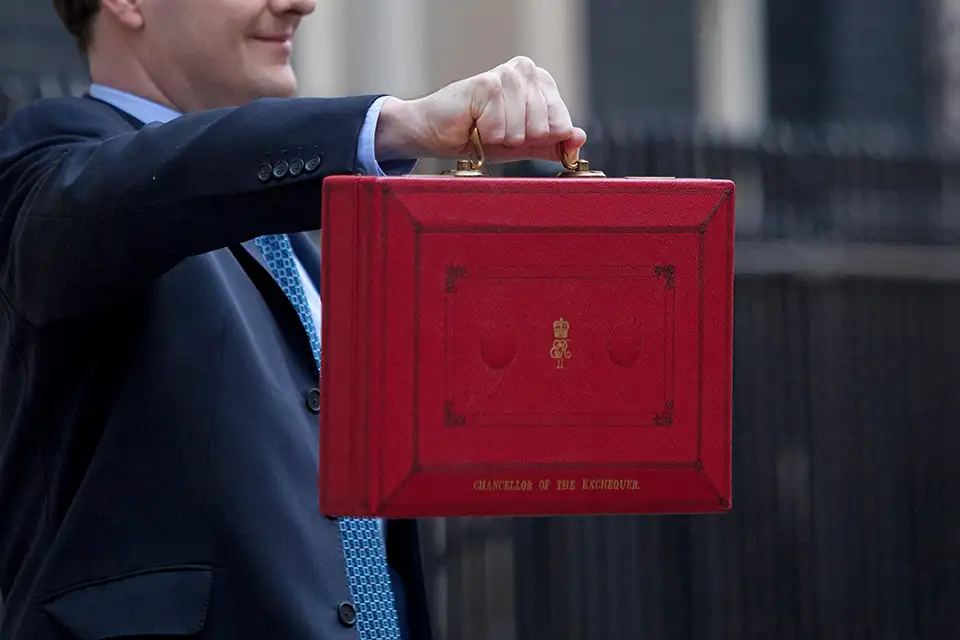
Although the Casey Report provided evidence of child grooming as far back as the 1960s, the problem was exacerbated by austerity cuts implemented by Chancellor George Osborne after 2008, which reduced Local Authority Children’s Services budgets by ~20% (£2 billion nationally, per the Local Government Association). Social workers were left with caseloads of 30 or more, and many enquiries were delayed or missed altogether.
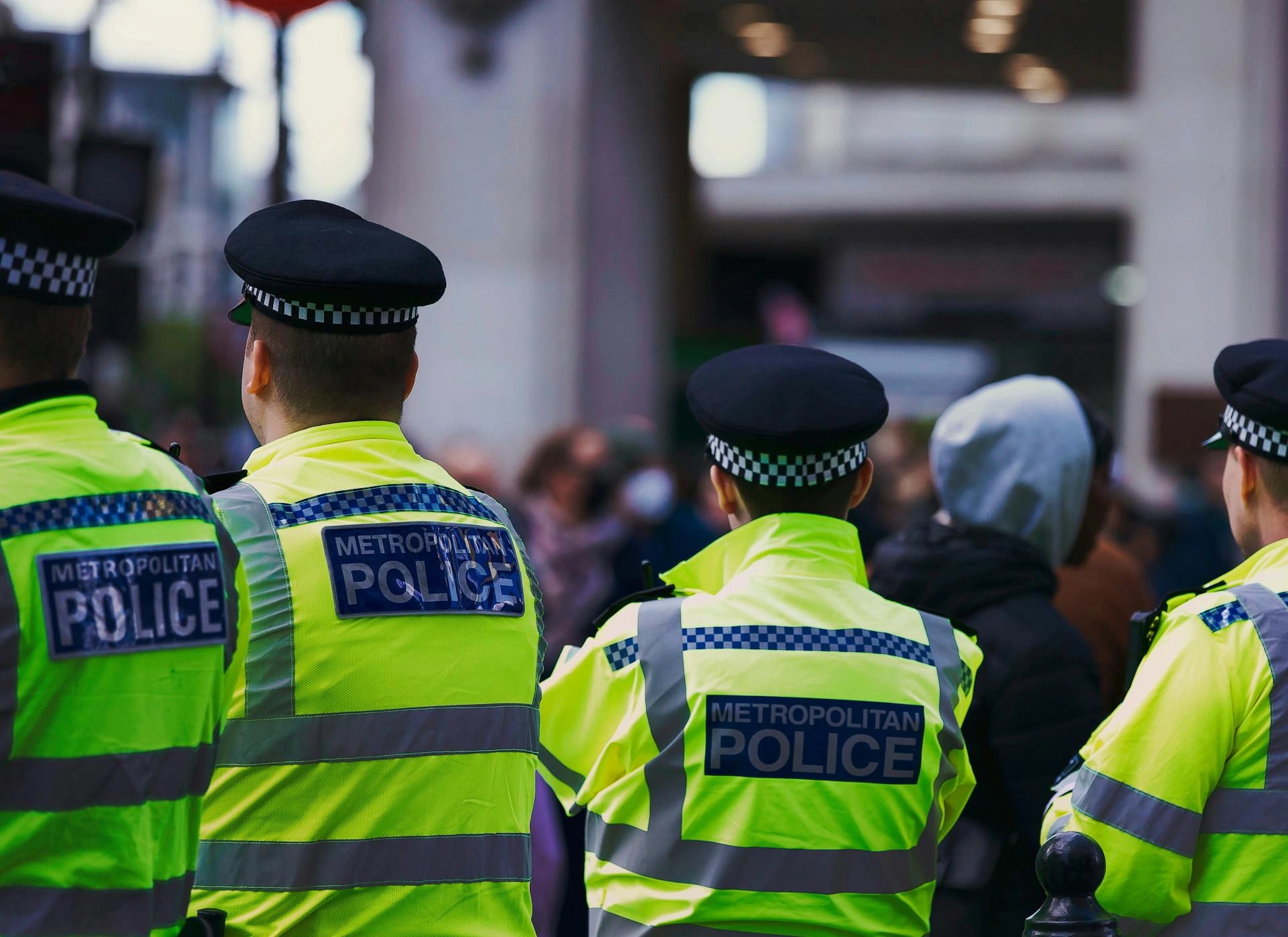
Police forces were hit hard, too. Between 2010 and 2018, the Home Office budget for policing fell by 19% in real terms, resulting in the loss of over 20,000 officers nationally. Specialist units — including those focused on child protection and exploitation — were often the first to be scaled back. Response teams were stretched thin, and officers lacked the training, time, and support to identify grooming patterns or pursue complex safeguarding cases. In many areas, child sexual exploitation wasn’t even recognised as a distinct threat until high-profile scandals forced a reckoning.
Fast forward to 2025. Despite recent reforms, the Government is investing less than £500 million in child protection. Experts estimate that to meet best-practice standards — reduced caseloads, fully staffed safeguarding teams, timely interventions — would need £1.7–£2 billion annually. That leaves a shortfall of at least £1.2 billion every year.
With a new budget on the horizon, there is an opportunity for a reset. And surely, with the heat being generated about the child grooming scandal within Parliament, there will be no opposition to an increase in funding of £1.2 billion annually?
With £15.3 billion earmarked for overseas development, who could object if the Government skimmed off a mere £1.2 billion to look after our own children properly?
Anyone?

Phil Cleary is one of the UK’s leading technology entrepreneurs and a former covert operations specialist in British policing. He is the co-founder and former CEO of The SmartWater Group (now DeterTech), the world’s foremost forensic marking company, whose technologies are used by millions across more than 20 countries. A Fellow of the Royal Society of Arts and a recognised expert in security and modern warfare, Phil also holds a Master’s in Military History. His debut political thriller, Elixir, has received critical acclaim for reimagining humanity’s quest for immortality as a global threat greater than AI.
READ MORE: ‘Britain’s free speech crisis: the weaponisation of complaints and the erosion of police discretion’. Arrests over “offensive tweets” have left officers paralysed by the fear of oversight investigations and activists exploiting the law. What was meant to safeguard the vulnerable is now stifling free expression and eroding the discretion on which policing by consent depends, argues former police officer Phil Cleary.
Do you have news to share or expertise to contribute? The European welcomes insights from business leaders and sector specialists. Get in touch with our editorial team to find out more.
Main image: Bob Jenkin/Pexels