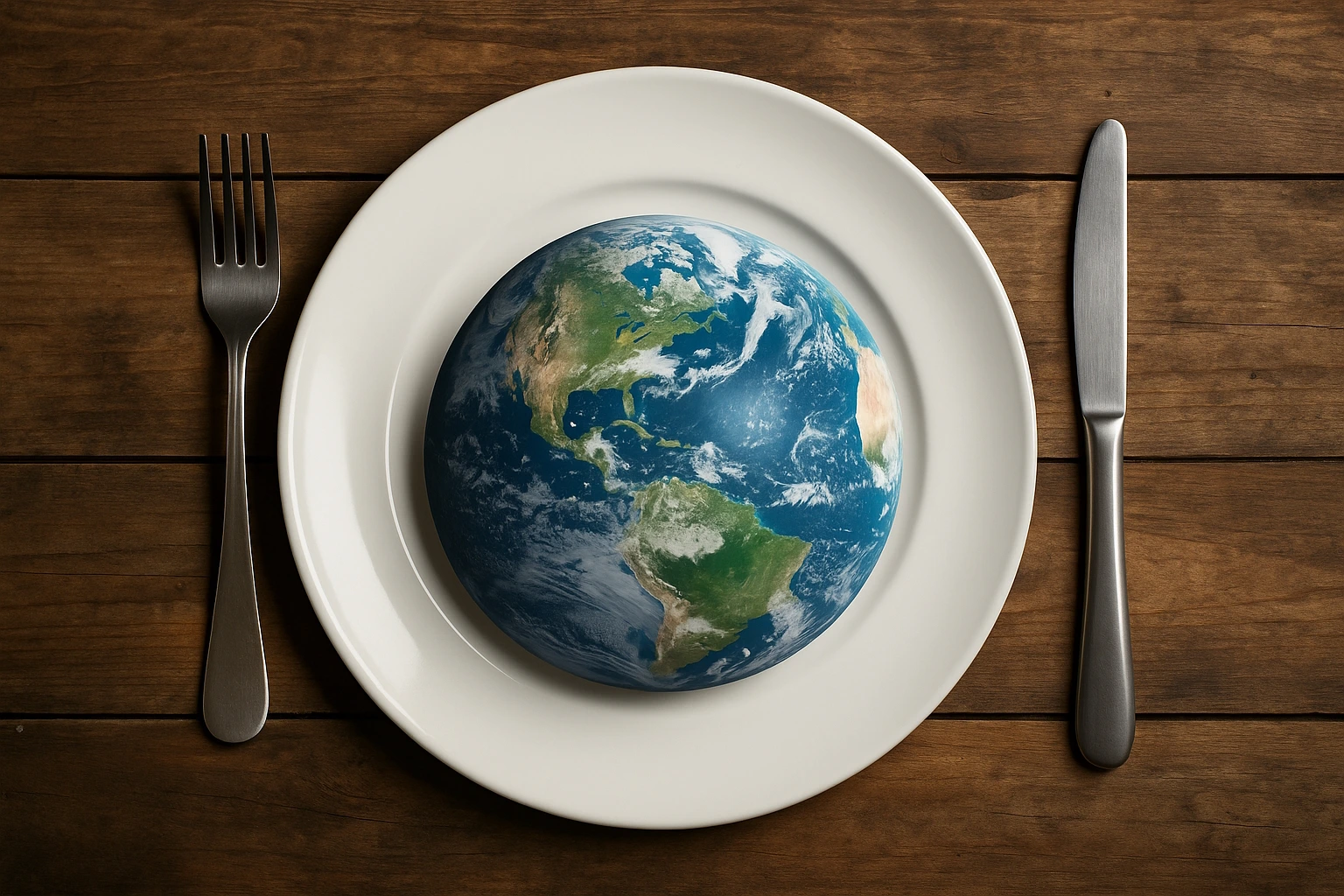
Professor Tim Coulson never met the war hero whose sacrifice helped secure the world he inherited. Now, in the face of climate breakdown, he’s changing how he eats, drinks and lives — one steak and imported banana at a time — in the hope of becoming a good ancestor too
My paternal grandfather was a member of the 1st Battalion of the Cambridgeshire Regiment. He was sent to Asia to fight not long after the outbreak of World War II, and was taken prisoner of war in early 1941. He was held in Burma along with many others in his regiment. Many of them died, but he returned to Cambridge at the end of the war where he met his young son — my father — for the first time.
My grandfather died when I was about one year old, having never recovered his health following his experience building the Burma railway as forced labour. I do not know much about my paternal grandfather, but he is a fantastic ancestor. He was prepared to sacrifice his life for the future that I enjoy.
He is not alone. Thousands of families have similar stories. Sacrifices of life, health or mental well-being — such as those my grandfather made — contributed to a prolonged period of peace, economic growth, and prosperity, at least in much of Europe and other parts of the developed world. If my grandfather’s generation had not been prepared to be good ancestors for their unborn descendants, the world might look very different.
I am now 56, and I have not had to make any sacrifices that come close to those of my grandfather. My parents are in the same boat as me. They worked hard, provided me and my sister with endless opportunities, and the generations born during the war that are now nearing the end of their lives have helped build the modern world. They too have been good ancestors, but in a different way.
The developed world they have built is remarkable. The creature comforts we have, the access to education and welfare, and our ability to buy and consume on demand is staggering. The lamb sausages I had for dinner lived, briefly, in New Zealand. I paired them with a delicious Chilean Shiraz. The greens were grown in heated greenhouses in the UK, with the polenta shipped in from Northern Italy. I had a banana from Central America, some American ice cream for dessert, a Spanish cheese biscuit with French brie to finish, all followed by a glass of 12-year-old Scottish Laphroaig whisky. My coauthor and Science of the Times podcast co-host, the distinguished biochemist Syma Khalid, had an equally cosmopolitan meal while dining out with her research group.
But this consumption is having a negative impact on the planet — and it is not sustainable. It is time that I stand up to be a good ancestor by changing my behaviour.
The remarkable modern world, and the wonderful lives that those of us in the developed part of it live, have generated some staggering numbers. There are now more Lego people — possibly as many as 10 billion — than there are living people, and, being made of durable plastic, each of these tiny figurines will outlast us.
We have produced so much plastic that, if we were to turn it all into clingfilm, we could wrap the globe; and if we were to spread out the concrete we have made, it would produce a 2mm-thick layer covering all the land and the sea.
In every year since 1950, humans have moved more earth, soil and rock than natural processes such as tides, mudslides and rivers — and we have extracted and burned millions of tonnes of coal and oil. We have changed our climate and driven hundreds of species extinct to feed our desires. Comfortable modern lives have come at a cost.
On the latest episode of the Science of the Times podcast, Syma and I interviewed Professor Paul Behrens. He might be an unfamiliar name to you, but he is someone you should read. He started life as a physicist, before turning his sights to astronomy, and then pivoting again to research our current impact on the natural world — and what we can do about it.
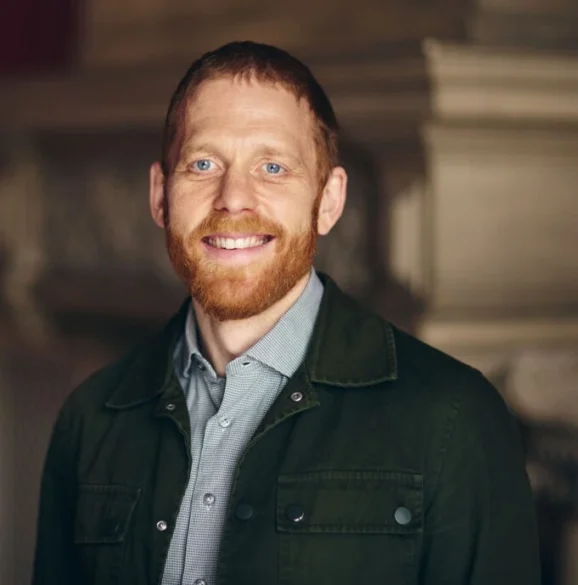
He is very definitely not the long-haired, pot-smoking, save-the-planet hippy some associate with the environmental movement. Instead, he is deeply knowledgeable across fields as diverse as energy supply, economy, and food production — and he is clearly a scientist, not a protestor.
After talking to him, and after several decades working as a biologist trying to understand the natural world, I finally questioned my choice of lamb, Southern-Hemisphere red wine, and dessert and whisky as a weeknight supper. Behrens makes the compelling case that all of us should eat more sustainably and burn less carbon. If we do, perhaps our great-grandchildren will read this article and see us as a good ancestor.
If we don’t make these changes, civilisation may collapse in the coming decades — and this article may become lost to history.
In our interview, and in his highly readable book The Best of Times, the Worst of Times: Futures from the frontiers of climate science (Indigo Press), Behrens outlines the challenges that humanity faces in transitioning from the polluting consumer lifestyles of the developed world to a more sustainable existence.
He also explains how this can be done. The crazy statistics about the quantities of Lego men, plastics and concrete our civilisation has produced are beautifully described in his book, along with many other incredible statistics. Neither the book nor his interview is emotive — both are rooted in up-to-date scientific knowledge. They explain what would happen if we were to continue on our current trajectory. Although Behrens won’t be drawn on exactly when modern-day civilisation might collapse, he talks about a timescale of decades rather than centuries. My children could still be alive when civilisation unravels, due to a breakdown in food supply leading to widespread civil unrest — if we don’t change our ways.
Despite such warnings, Behrens clearly and convincingly argues that we can avert such future disasters by acting now. It will take people like me changing our diets to be more sustainable — containing more plants and less meat.
It will also require governments investing in a sustainable future. I am prepared to do this, and I hope scientists can provide breakthroughs that help us transition to a more sustainable civilisation than the one we live in now.
Behrens lays out the facts rather than attempting to scare. He is neither a pessimist nor an optimist but a scientific realist. He wants to be a good ancestor — following in the footsteps of people like my grandfather — and he has persuaded me, a sceptic, to do so too. If we act now, our sacrifices will be trivial compared to those of past generations. I will burn less carbon, eat less meat and drink local beer rather than wines made on other continents.
That is a small sacrifice to pay compared to the years in a prisoner-of-war camp and decades of poor health my grandfather endured. It is not too hard for me to be a hero for my unborn grandchildren. And you can be that wonderful ancestor too.
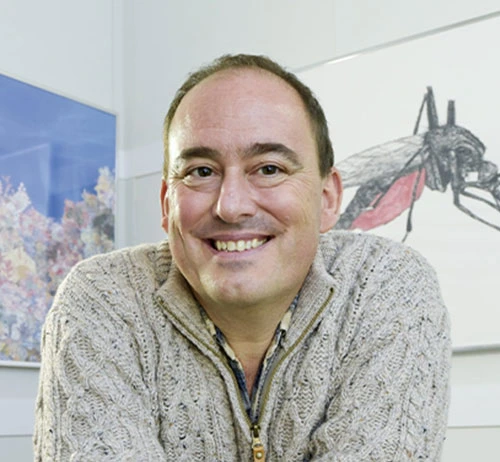
Professor Tim Coulson is a biologist at the University of Oxford, where he has led both the Zoology and Biology departments. He previously headed Population Biology at Imperial College London and held positions at Cambridge University and the Institute of Zoology London. A highly decorated scientist with awards from major institutions including the Royal Society, he has edited leading journals and served on Government advisory boards. His first book for general readers, “A little History of Everything: from the Big Bang to you” (Penguin Michael Joseph), traces the 13.8-billion-year story from the Big Bang to human consciousness and is available to buy on Amazon. He is co-host of the Science of the Times Podcast.
Main image: Courtesy, TDA