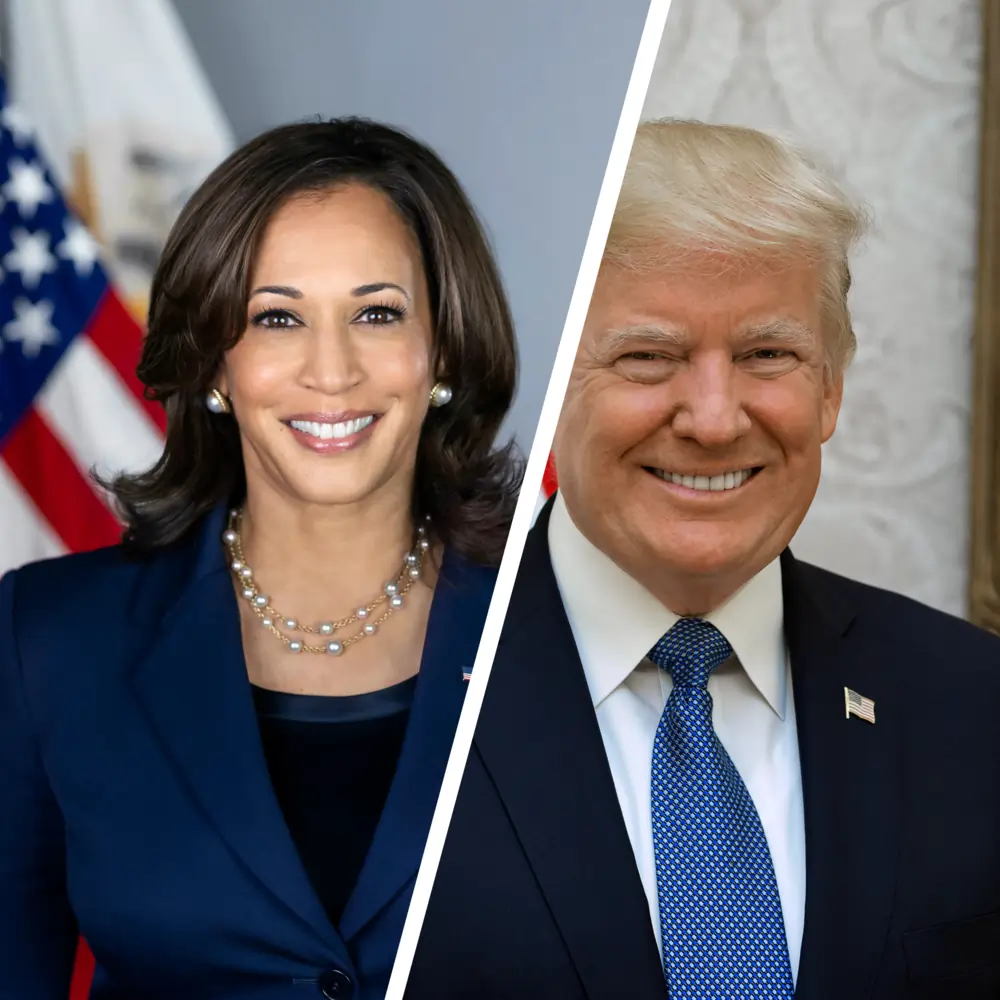
The presence of Black leaders in U.S. politics is often hailed as progress. But as many Black Americans begin to question whether the Democratic Party truly represents their interests, the gap between real diversity and vote-winning tokenism is becoming harder to ignore. TED Global Fellow and journalist Yasin Kakande explores the growing disillusionment among Black voters and explains why many are turning to Donald Trump for solutions
In May last year, while attending a conference in Boston, US, I found myself in a situation that was all too familiar to Black professionals. During one of the presentations, an organiser approached me, asking if I could stay behind for photos. I agreed without hesitation, focusing on the event. When the presentation ended and the photo session began, I was told to wait until I was called to join. As I observed, it became clear that the photos were being taken mainly of white colleagues, most of whom were presenters or part of the organising team. As an attendee, like many others who had already left, I quickly realised that my purpose in this scenario was not professional acknowledgment—it was to serve as a symbol of “diversity” for the camera. And in that moment, I decided to walk away.
When Kamala Harris was selected to lead the Democratic ticket in the presidential campaign, many media outlets hailed the moment as a historic milestone—the first Black woman poised to potentially become President of the United States. Amidst the celebrations, I couldn’t help but reflect on my own experience of being asked to appear in a photo with white organizers, as if my presence alone was enough to signify inclusion. It made me question whether the increasing visibility of Black faces in politics truly translates into meaningful representation for Black people.
How often does the symbolism of diversity mask a deeper absence of real power? Does the image of a Black person in leadership actually lead to policies and actions that serve the broader Black community, or is it simply a gesture—a nod to optics without substance? These are the questions we must ask when assessing the significance of representation in politics. Representation should be more than just faces on campaign posters; it should be about the policies that uplift and empower those communities. And too often, that promise remains unfulfilled.
For a long time, the political landscape in the U.S. was clear: Republicans were known as the party of big business and conservative values, while Democrats championed the interests of minorities, including Black communities, and the working class. It was the Democratic Party that brought us the first Black president, Barack Obama, and now they stand at the brink of potentially delivering the second—a Black woman. Historically, Black voters have been a cornerstone of the Democratic base, offering unwavering support in elections. However, this relationship appears to be shifting.
Many Black Americans are beginning to recognize that the Democratic Party, much like the Republicans, increasingly represents the interests of the ultra-wealthy and corporate elites, leaving the concerns of everyday voters by the wayside. While Democrats lean heavily on Black communities for their electoral victories—mobilizing their votes and counting on their loyalty—their commitment seems to wane once the ballots are counted. After the power is secured, the issues that matter most to Black voters—inequality, justice, and economic opportunity—are often pushed to the margins, overshadowed by policies that cater to the 1%.
The perception that the Democratic Party has shifted away from truly representing Black interests isn’t confined to whether the party’s figurehead is Black or white. Even during Barack Obama’s presidency, this sentiment was apparent. When questioned about why his policies were failing to specifically uplift Black communities and their businesses, Obama famously replied, “I’m not the president of Black America. I’m the president of the United States of America.”
This response, while emphasizing a commitment to unity, left many Black Americans feeling sidelined. It underscored the broader issue: even when a Black leader is at the helm, the party’s promises of addressing racial inequities often fall short. Black voters continue to find themselves used as political leverage during campaigns, only to be told their concerns are secondary once power is achieved. This disillusionment with the party runs deep, signalling that the face of the party alone isn’t enough—it’s the follow-through on policy that truly matters.
President Joe Biden, like his Democratic predecessors, relied heavily on the support of Black voters during his campaign and subsequent victory. In his victory speech, he expressed heartfelt gratitude: “And especially for those moments when this campaign was at its lowest—the African American community stood up again for me. They always have my back, and I’ll have yours.” However, despite these promises, Black communities have largely been left behind in Biden’s economic policies. While his administration has touted progress and recovery, many Black Americans continue to face systemic barriers, with little direct benefit from the economic initiatives he promised would uplift them. The gap between campaign rhetoric and real, impactful change remains a glaring issue.
Even President Biden’s “Build Back Better” plan, initially presented as a framework to rebuild America’s middle class, including Black communities, has fallen short. The promised benefits of “Bidenomics” have yet to materialise for many Black Americans. Over the past four years, inflation in the United States has surged to levels significantly higher than usual, driving up the cost of essentials like food and energy. Under Biden’s administration, grocery prices have risen by 20.3%, while overall prices have increased by 17.6%. In response to this inflation, the Federal Reserve has raised interest rates, which has only compounded the burden on Black households by making housing, transport, and education even more expensive. Mortgage rates have hit a 20-year high, and rent has soared by 14% during Biden’s tenure in office, disproportionately affecting Black families already struggling to keep up.
The financial struggles facing Black communities have, in many ways, bolstered Trump’s image as a “political outsider” who promises to break from the status quo. This perception is gaining traction among some Black voters, particularly younger men. A recent NAACP poll revealed that one in four younger Black men are now backing Trump in the upcoming election. The survey, conducted with HIT Strategies and Hart Research, shows that while 63% of Black voters overall support Kamala Harris, 13% have turned to Trump, reflecting growing disillusionment with the Democratic Party’s ability to address their economic concerns.
The Democratic Party faces a crucial choice: it can either stand with its loyal base—working-class, middle-class, and Black Americans—or continue catering to the wealthy elite and corporate interests. Featuring Black candidates on their tickets, while symbolically important, will not be enough if the broader Black community continues to be overlooked. Real change means uplifting all Black Americans, addressing their economic and social concerns. If the party fails to act, it risks driving even more of its traditionally loyal Black voters towards unorthodox and right-wing politicians. The time for choosing whom to truly represent is now.

Yasin Kakande, pictured, is an international journalist, a TED Global Fellow, and the author of a number of critically acclaimed non-fiction books offering a fresh perspective on immigration and geopolitics, including Why We Are coming, and Slave States. As a migrant from Uganda now based in the US. following asylum, his journalism career spans international outlets including The New York Times, Thomson Reuters, Al Jazeera, The National, and The Boston Globe. His latest book, A Murder of Hate, is out now.
Main image: Whitehouse/Whitehouse Archives