The sentencing of entertainer Russell Brand and Jensen Huang’s resignation as Nvidia chief executive were two very different public falls. But why do some powerful men go unchallenged for so long? When power shields men from criticism and consequences, they can keep behaving badly because they’ve never had to grow up, argues Dr Stephen M. Whitehead
Russell Brand was sentenced to 10 years and six months in prison at Southwark Crown Court last week. He was found guilty of one count of rape and three counts of sexual assault against four women. He denied the charges and was acquitted of two other counts of rape and one of attempted indecent assault. In his sentencing remarks, Mr Justice Bennathan told Brand that his status had protected him until journalists brought the allegations to light in 2023.
Two days later, Nvidia’s board accepted the resignation of its founder and chief executive, Jensen Huang. The company announced his departure on November 12. Huang had apologised in an email to staff for being unfaithful and pledged to co-operate with the board’s inquiry. The independent directors hired outside lawyers to investigate after news reports raised national security concerns. The board said at the outset it had no reason to believe national security or company secrets had been compromised.
In the same week, a three-year investigation by ITV News and The Guardian accused David Walliams, the comedian and bestselling children’s author, of preying on teenage girls and young women, some as young as fifteen, from 2003 onwards. Walliams denies all the allegations and has not been charged with any crime. He had tried, and failed, to stop the investigation being published. On November 13, the Metropolitan Police confirmed it was investigating separate allegations.
The familiar explanation is that power corrupts, that it damages the empathy and judgement of men who once had them. I think something else is going on. Wealth, power and status can spare men the very experiences that would make them grow up. Most men mature, if they mature at all, the hard way – through failure, loss, illness, being told no by people they cannot sack or buy. For a man accustomed to getting his way, even being told that he’s making a fool of himself can be a lesson he seldom gets.
We assume that the men who rise to the top must be the most capable among us. In narrow terms, perhaps they are. Huang built a remarkable company. But technical brilliance and commercial success are not emotional maturity and they never were.
Think of the friend’s honest word or the colleague who tells you you’re making a fool of yourself. That colleague has more to lose if you’re the one who decides whether they get promoted. What looks from the top like agreement may be a roomful of people who have learned to keep their doubts to themselves. The more a company or a broadcaster comes to depend on one man, the easier it is for everyone around him to find a reason to let things pass.
At Brand’s sentencing, Mr Justice Bennathan recalled evidence that one of Brand’s companions laughed after a woman pushed him away. The judge said Brand’s companions may have seen the assault as ‘laddish’ behaviour that only he could get away with.
In my research on masculinity over 35 years I’ve seen this pattern many times. Traditional masculinity teaches boys that worth is measured in conquest – of rivals, of markets, of women. Wealth does not soften that lesson but instead amplifies it. These men are the products and the beneficiaries of a capitalism that has become unsustainable, undesirable and broken. It concentrates extraordinary wealth in very few hands and then insulates those hands from consequence.
The reporting on Walliams brought allegations into public view. The women who came forward in Brand’s case put evidence before a court, and the court imposed a sentence. Huang’s resignation changed who was in charge at Nvidia while the board’s inquiry still had questions to answer. In his message to Nvidia staff, he wrote, “My family bears no responsibility for my choices. I do.” Whether these are the first words of a grown man or the careful words of a corporate apology, only time will tell. But they are at least the right words.
A public fall can make a man answerable for his actions. It may be the first time in years that anyone has said no and made it stick. But a fall is humiliation, and humiliation is not humility. Some men harden after a fall.

For the past year I’ve been interviewing older men for research on what I call ‘the last masculinity’, the masculinity of ageing. Some positive signs are emerging. Many of these men have let go of the need to win and to accumulate. They speak of their partners, children and friends with a tenderness that gives me grounds for hope.
Fathering is not fatherhood. A man can father children and never do the slow, unglamorous, daily work of raising them, which is precisely the work that makes a man grow up.
Age alone doesn’t do it. Money can hire the doctors and the flatterers, but it cannot stop the body failing or the mirror telling the truth. What matters is whether a man is ever forced to face himself without an entourage to absorb the blow. The men with the most power over our future may be the least likely ever to grow up.

Dr Stephen M. Whitehead is a British gender sociologist and the author of more than 20 books, published by Routledge, Polity, Oxford University Press and Random House. A foundational figure in masculinity studies with over 35 years of research, he co-developed the concept of toxic masculinity and originated the frameworks of Total Inclusivity and healthy self-love. He was Senior Lecturer at Keele University from 1997 to 2015. He currently leads the Global AI Intimacy Study, an international investigation into how AI is reshaping human relationships, with fieldwork across Latin America and India. His next book, Where Have All the Good Men Gone? The Reordering of Intimacy, co-authored with Constanza Fernández Arce, will be published in 2027. He is The European’s Leadership and Organisational Culture Correspondent and lives in Thailand.
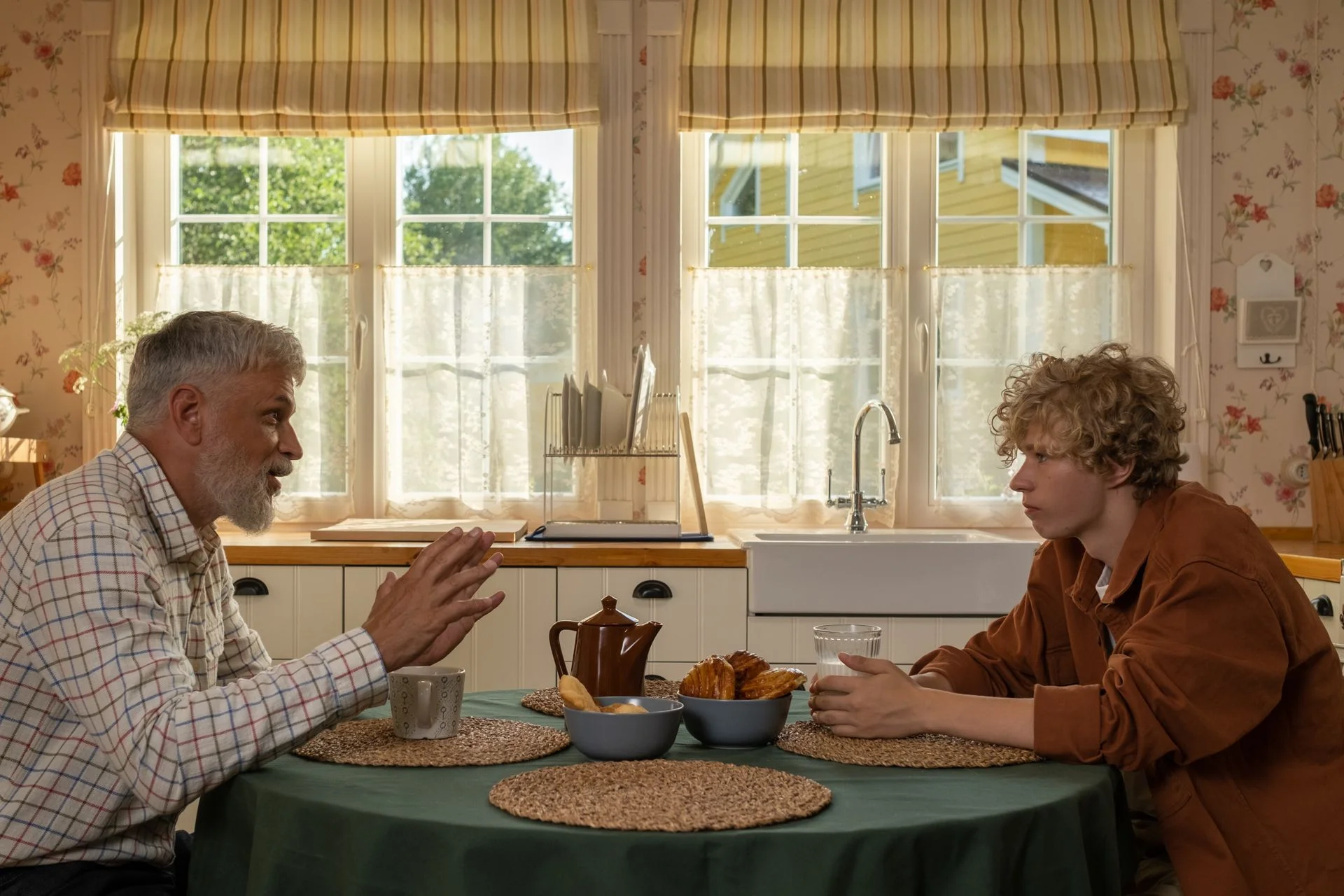
READ MORE: Grandfathers can play vital role in preventing boys being brainwashed by the manosphere. The manosphere sells boys an ideal of male dominance that leaves little room for vulnerability or dependence as they get older. Grandfathers should share their experiences of ageing and regret to help boys understand the lasting value of female relationships, says sociologist Dr Stephen M. Whitehead.
Do you have news to share or expertise to contribute? The European welcomes insights from business leaders and sector specialists. Get in touch with our editorial team to find out more.
Main Image: Gage Skidmore / CC BY-SA 4.0.