Russia’s greatest threat to NATO may lie far beyond the battlefield. Writing exclusively for The European, Roberts Rasums, a security analyst at the Northern Europe Policy Center and an officer in the Latvian National Armed Forces, argues that Moscow is waging a calculated campaign of sabotage, intimidation and political manipulation to fracture the alliance, undermine European security and force the West into concessions over Ukraine
German military theorist Carl von Clausewitz famously argued that war is a continuation of politics by other means. It is, in my view, an idea central to Russia’s hybrid strategy. To understand how a war-battered, technologically lagging and economically frail Russia plans to undermine NATO, the political perspective is far more important than the military one.
In Moscow’s eyes, the war in Ukraine forms part of a much wider confrontation with NATO, with victory on the battlefield just one element of Russia’s broader strategic ambitions. To understand this, one must look back to December 2021, shortly before the full-scale war began in Ukraine, when Russia issued an ultimatum demanding that NATO and the US dismantle the alliance’s military infrastructure in member states that joined after 1997, including the Baltic states.
Undermining NATO’s presence in Eastern Europe is a central element of Russian policy, and the wave of seemingly unrelated unconventional attacks on Europe must be viewed in this context. Seemingly minor official information operations, such as those surrounding the closure of the Russian–Estonian border at Narva, reported by Anadolu Agency, are causing public alarm, compounded by evidence reported by Radio Free Europe/Radio Liberty that Russia could be sending newly produced tanks for long-term storage near NATO’s borders.
Simultaneously, the pressure from irregular migration orchestrated by Russia and Belarus on the borders of Latvia, Poland and Lithuania drains these countries’ resources and creates opportunities for rapid escalation. A disturbing example is an incident on October 5 on the border between Belarus and Latvia, where an unidentified armed person reportedly threatened a Latvian soldier and attacked border infrastructure the following day. A day later, according to Latvian Public Broadcasting, the incident became part of a broader information operation that raised alarm about the involvement of pro-Russian terrorist organisations. The political sensitivity of this border issue makes it fertile ground for provocations designed to create a political crisis stretching from Riga to Brussels.
Russia organises unconventional operations across Europe through a network of saboteurs and provocateurs recruited on TikTok and Telegram, according to reports. For now, European justice systems are powerless against this network. Criminal networks linked to Russian intelligence services reportedly operate openly in Germany, according to Deutsche Welle, Romania, according to the Romanian Intelligence Service, Turkey, according to Turkish Minute and elsewhere in Europe. Only last month, Poland said it had thwarted a Russian sabotage plot on its territory
The attacks organised by Russia are in my view becoming increasingly dangerous and pose an ever more direct threat to European citizens. Attacks on civil aviation infrastructure in Germany, escalating tensions between Muslims and Christians in France and cyberattacks across Europe could claim lives. Research by the International Institute for Strategic Studies examines the scale of Russian sabotage operations.
I believe hybrid attacks are weakening Western societies’ trust in their governments, and that Moscow is counting on growing public fear over threats to individual NATO member states to pressure their governments into adopting a more conciliatory approach towards Russia.
The line between political and social pressure is precariously thin. A striking example is the complex threat posed by Russia’s instrumentalization of migration on the Latvian, Lithuanian and Polish borders. By combining humanitarian tragedy with explicit narratives about security threats, Russia retains the ability to inflame sentiment among both liberal and nationalist constituencies.
Many migrants crossing these borders are seeking better economic opportunities or safety. However, I believe Russia and Belarus are exploiting the situation to create security threats, including attacks on border infrastructure and provocations aimed at NATO personnel. Such incidents risk escalating tensions along the alliance’s eastern frontier. On NATO’s eastern border, Russia currently retains the initiative and can, at an opportune moment, rapidly escalate the situation into bloody clashes like those in Ceuta.
Military threats are part of that spectrum. A ‘limited’ military confrontation with Russia, for example in the Estonian border city of Narva, the strategically important Suwałki corridor between Poland and Lithuania, or the eastern Latvian region of Latgale, is one possibility. However, focusing solely on the military threat risks overlooking Russia’s broader objectives.
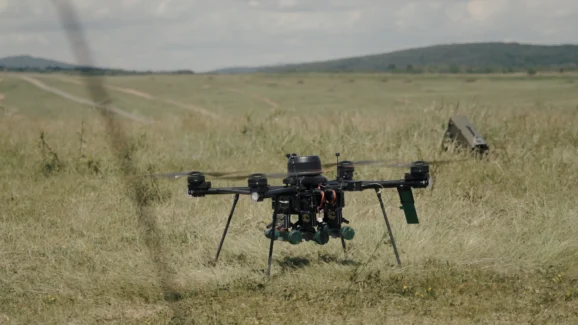
Military exercises and the restocking of operational-level long-term storage depots along the borders with the Baltic states and Finland lay the groundwork not only for potential aggression but also for issuing threats and sowing panic. This is compounded by the threat of Russian drones and the ever-present nuclear threat, Russia’s ultimate military argument.
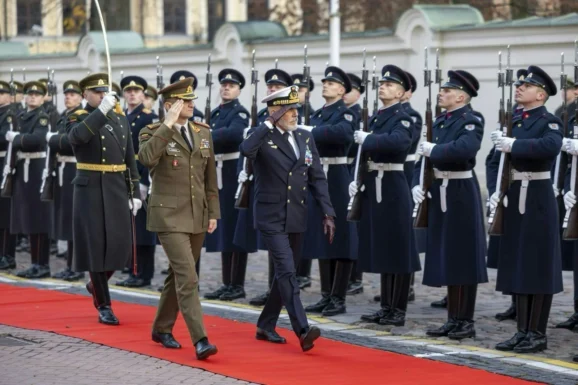
Just as war is a continuation of politics, foreign policy is a continuation of domestic politics. The aforementioned range of threats is an inseparable part of Russia’s political influence operation in that it divides the public and creates concern and uncertainty about the future among citizens, within governments and even across the alliance as a whole. This is particularly significant given that NATO’s collective decisions, including those concerning its response to an armed attack under Article 5, require consensus among all member states.
Doubt and uncertainty are, therefore, central to this strategy. I believe Russia’s immediate objective is neither NATO’s collapse, Ukraine’s unconditional surrender nor the annexation of the Baltic states. Rather, Moscow is seeking to undermine the alliance’s unity while pursuing diplomatic concessions on issues that may appear relatively minor but carry far-reaching strategic consequences. Against a backdrop of worsening economic conditions linked to conflicts in the Middle East, Russia is demonstratively seeking to use its oil and natural gas resources as leverage in negotiations, offering access to energy supplies in exchange for concessions on its foreign-policy demands.
Russia is presenting NATO’s withdrawal from its borders as a reasonable diplomatic demand. NATO member states cover approximately one-sixth of the world’s land area, and I believe those furthest from the alliance’s eastern flank, particularly those facing significant domestic political challenges, may be more inclined to seek a negotiated settlement with Moscow. This could make them increasingly receptive to compromises involving NATO’s military presence in Eastern Europe.
Ukraine is, of course, a catalyst for discussion in this context. The role of NATO and EU states in mediating in the Russia–Ukraine war allows the Kremlin to link the Ukrainian issue to NATO’s supposedly excessive military presence in Eastern Europe. Moscow signals to Western European nations that a settlement of the war in Ukraine will come sooner if they heed Russia’s supposedly justified concerns over the deployment of NATO infrastructure and battlegroups in member states that directly border Russia.
In both its official rhetoric and bilateral contacts with Western countries, Russia signals that a formal or informal NATO commitment to reduce the alliance’s presence in Finland, the Baltic states and Poland would create a favourable international climate for Russia to accept a compromise settlement of the war with Ukraine.
The NATO commander made it clear in Warsaw on October 12 that NATO must be ready to fight today. But by the time any shooting starts, it may already be too late. Moscow’s intention is not to have its demands met immediately, but to sow discord among Western allies by prompting debate over them within NATO and the EU. As incidents in Eastern Europe suggest, even discussions about the role of NATO’s Article 4 may cast doubt on the alliance’s unity.
Concerns about the risk of war, the need for peace, the domestic cost of supporting Ukraine and NATO’s military presence in Eastern Europe are already featuring in political debates across the alliance. I believe these issues will become increasingly prominent during next year’s elections in France, Estonia, Slovakia, Italy and elsewhere. This is a long-term game in which NATO must marshal all available resources, both on the alliance’s eastern border and in Brussels and Paris.
Russia’s demand that NATO withdraw its enhanced Forward Presence (eFP) battlegroups from its eastern member states is particularly significant. Moscow regards these deployments as part of NATO’s expansion towards its borders, although their withdrawal would not, in itself, remove Eastern European countries from the alliance or compromise their sovereignty.
Similarly, any restrictions on Ukraine’s political independence could open the door to further demands from Moscow. I believe such concessions would encourage renewed debate over the risks of appeasement and the possibility of a wider geopolitical agreement, drawing troubling parallels with the arrangements that allowed the Soviet Union to dominate Poland, the Baltic states and much of Eastern Europe.

Roberts Rasums is a security analyst at the Northern Europe Policy Center and an officer in the Latvian National Armed Forces. His areas of expertise include civil-military relations, hybrid threats, lawfare, and the role of information technology and artificial intelligence in deterrence and national resilience.
He holds a bachelor’s degree in Political Science and a master’s degree in History from the University of Latvia, where he also pursued doctoral studies at the Faculty of History and Philosophy.
His research interests include the Latvian War of Independence, international relations, democratic peace theory and military history, particularly Napoleonic warfare and ancient weaponry. His academic work includes a master’s thesis on Operation Bitzschlag, and he has published research on platforms including Academia.edu.
READ MORE: EU to join Ukraine–Russia peace talks as von der Leyen warns of escalating Black Sea attacks. European officials will attend US-led negotiations in Abu Dhabi alongside Britain, France and Germany, as Brussels backs calls for a ceasefire to protect Ukraine’s food and energy supplies.
Do you have news to share or expertise to contribute? The European welcomes insights from business leaders and sector specialists. Get in touch with our editorial team to find out more.
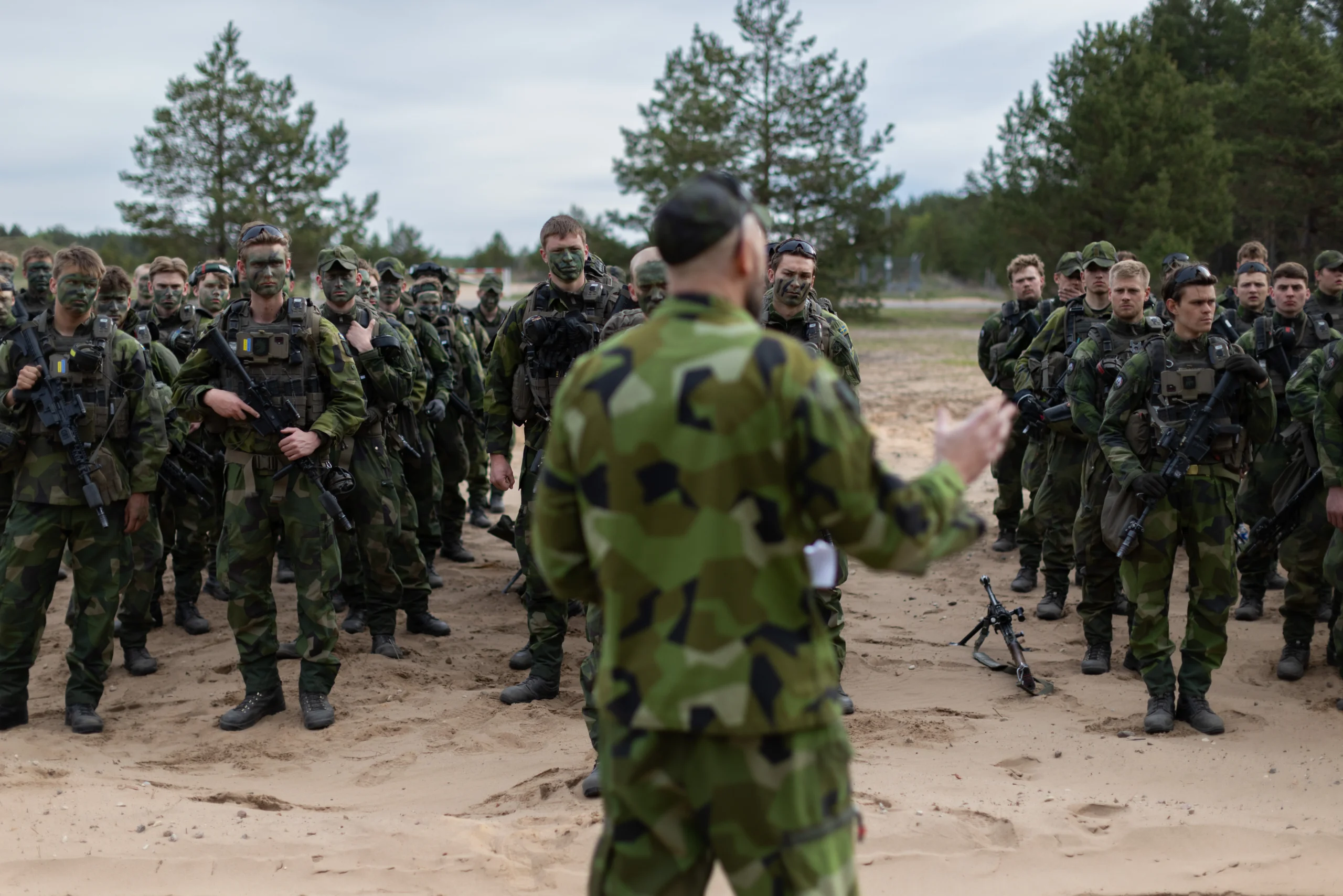
Main image: A Swedish Army soldier briefs troops ahead of a training exercise at Camp Ādaži in Latvia during Aurora 26, a Swedish-led military exercise involving more than 18,000 personnel from 13 countries and designed to test NATO’s ability to reinforce its allies in a crisis. Credit: NATO