Humans have evolved an extraordinary patchwork of body hair, yet we spend much of our lives cutting, plucking and shaving it away. A fascinating new book, Anxious and Hairy, explores the science and cultural anxieties behind our curious relationship with hair, although some evolutionary mysteries remain unresolved, says Oxford zoologist Tim Coulson
Many years ago, on the instruction of his then girlfriend, a good friend of mine covered his derriere with her hair-removal cream. My friends and I had so many questions. Just how hairy was his backside? We imagined he might have the sort of hairy backend you might find on a highland cow. Was he now sporting a Manzilian, the male equivalent of a Brazilian? And why had he told us?
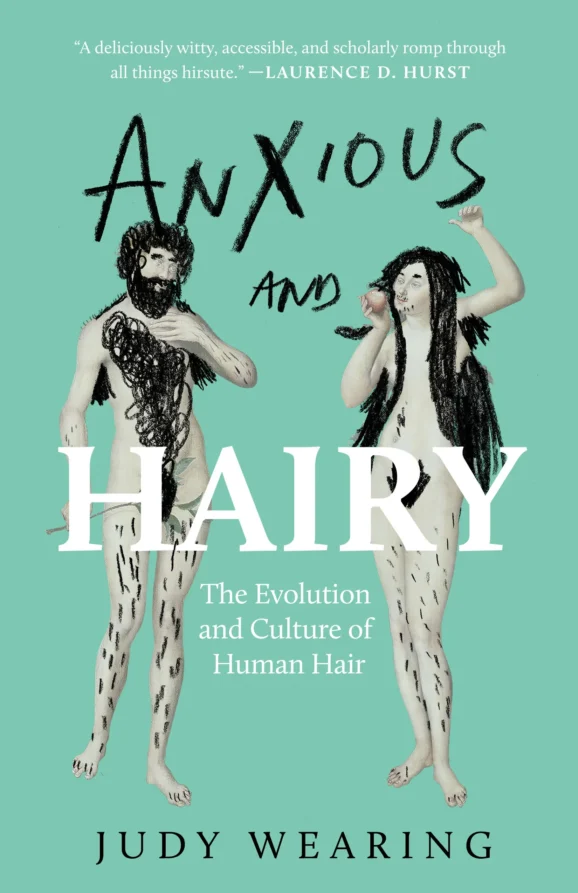
But we’d missed the obvious question. Humans are very strange mammals in that our hair is distributed across our bodies very unevenly, with patches on our head, under our arms, above our eyes, around our genitals, and sometimes on our chests. Why are we such unusual mammals, and why are we often so concerned about our hair, to such an extent that we cut, colour and curl it, and in some cases, even get our partners to remove it from their backsides? These are the questions that Judy Wearing addresses in her fascinating new popular science book, Anxious and Hairy: The Evolution and Culture of Human Hair.
Wearing is a double doctor, with her first PhD being in evolutionary biology and her second in education. She brings this expertise together beautifully in her quirky but fun book, taking the reader on an informed and fascinating journey of why humans have such peculiar hair.
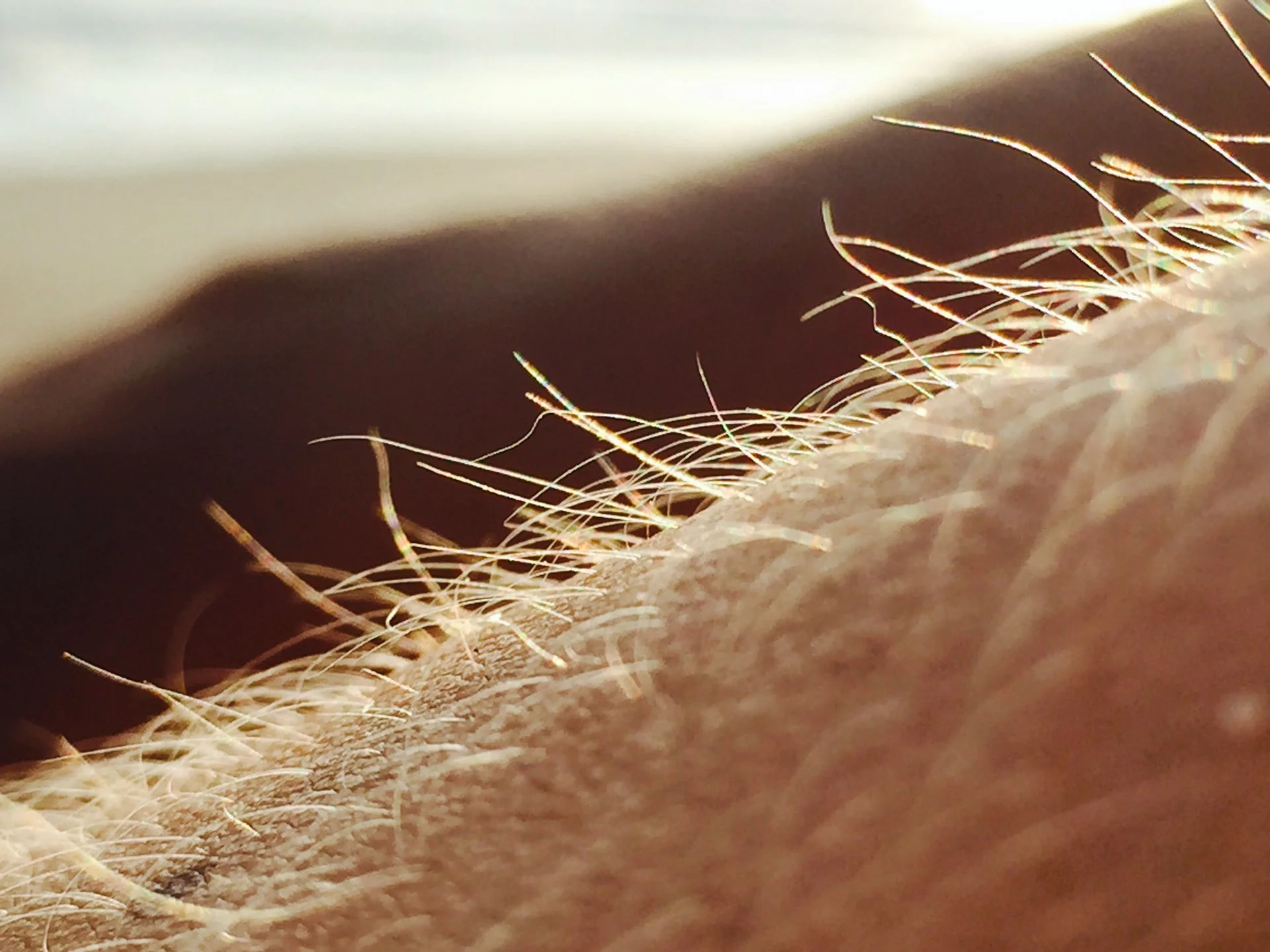
You quickly learn something remarkable. You have as many hair follicles as a chimpanzee, but on most of your body these produce thin, sparse hairs. In other places you have many more producing much tougher and longer strands. Regardless of which hair you examine, it is all made of keratin, the same compound from which fish scales and rhino horn are made. Wearing then takes the reader on a tour of the human body, from the head to the genitals, covering eyebrows, underarm hair, head hair, beards and pubic hair.
Hair is a topic that Wearing has long been interested in. During her first PhD at the University of Oxford, she failed to get a satisfactory answer from the faculty when she quizzed them about why the distribution of human hair was so unusual. So, she started collecting hair from her colleagues, examining it under microscopes, to try to answer the question. Despite many of her peers giving her hairs from all over their bodies, her greatest disappointment was failing to find any eyebrow mites, but it started a thirty-year journey which eventually culminated in this book.
Wearing has good explanations for many, but not all, of our strange patches of hair, and many of these are enthralling. I had long thought our eyebrows were simply to keep sweat from our eyes, but it turns out we also use them for signalling to one another. We are continually flashing our eyebrows at each other, communicating emotion and dominance. Big bushy eyebrows go hand-in-hand with dominance, and we may pluck and thread our eyebrows to obscure that signal. But not all cultures did that. The ancient Romans and Greeks were not as obsessed with manicured eyebrows as us. But other cultures appear to have been even more obsessed with hair removal than we are, with several meticulously plucking hairs to create truly naked apes.
As well as taking us on a tour of the more hirsute parts of our anatomy, Wearing also considers why we are so fixated on hair and why its presence and look can make many of us anxious. She argues that our desire to remove it arises because it reminds us that we are animals, a thought that many of us might find a little revolting. It is a good suggestion and could explain why all cultures so far studied pluck, shave or manicure their hair. But if this was true, we might expect such a strong cultural drive to select for baldness or a more general lack of body hair, yet it does not seem to. There are genetic conditions, such as Alopecia Universalis, which generate an autoimmune attack on hair follicles, destroying them. People with it have a normal life expectancy and are otherwise healthy, which reveals we can live without hair, but there is no evidence that the frequency of people with hairless conditions is increasing over time. If a lack of hair was so desirable, this is what we would expect. In addition, people who cannot grow hair do not appear to have been revered in any culture, even among groups like the ancient Egyptians where high-ranking priests and royal families deliberately removed their head and body hair. Humans do not appear to be on a journey to complete baldness, and this raises the question of why our hair has thinned across much of our body, a topic Wearing touches upon while devoting many more words to the bits of hair we have retained.
As with most books on a single aspect of evolution, there are quite a few theories that are difficult, or unethical, to test, including why our hair makes us so anxious. That means that sometimes evidence in support of an explanation for why we have a particular patch of hair is lacking. Nonetheless, Wearing is honest about what is known, and what is not known, and she explains which theories she favours, and she does so in engaging prose.
The book is erudite and witty and an easy and informative read. I can highly recommend it. But despite its breadth and depth, I still do not know why my friend spread depilatory cream across his backside. And perhaps that is for the best.

Professor Tim Coulson FRS is Professor of Zoology at the University of Oxford and a leading researcher in ecology and evolutionary biology. He has worked with wolves, lions and other predators, and has published more than 200 scientific papers. His highly acclaimed first popular science book, A Little History of Everything from the Big Bang to You was published by Penguin Michael Joseph in 2024. His next book, Predators: How Animals that Kill Have Shaped Life on Earth will be published by Headline Press in March 2027. It can be pre-ordered here.
READ MORE: In search of Vancouver Island’s sea wolves. In a secluded corner of Vancouver Island, a remarkable population of wolves has adapted to life on the Pacific coast, feeding almost entirely on food from the ocean. Professor Tim Coulson and his wife Sonya travelled to a remote wilderness camp to join sea wolf expert Tom McPherson in search of one of North America’s most elusive predators.
Do you have news to share or expertise to contribute? The European welcomes insights from business leaders and sector specialists. Get in touch with our editorial team to find out more.
Main Image: Henry Ry / Pexels