Europe’s solar boom set for two-year slowdown after record growth
John E. Kaye
- Published
- MICE, News, Sustainability

Installations are expected to decline in 2026 and 2027 before growth resumes as the industry turns increasingly to batteries, EV charging, heat pumps and AI-controlled energy systems
Europe’s solar boom is set for a two-year slowdown after years of rapid growth, according to a new industry report.
The EU market is expected to contract in 2026 and 2027 before expanding again from 2028, with annual installations reaching around 67 gigawatts by 2030 – roughly the combined peak of 67 large power stations.
The slowdown follows a decade of rapid expansion, with the EU adding 65.1 gigawatts of new solar capacity in 2025, slightly below the 65.6 gigawatts installed the previous year.
Solar supplied around 13 per cent of the bloc’s electricity last year, while wind and solar together generated 30 per cent compared with 29 per cent from fossil fuels.
Worldwide, a record 664 gigawatts of solar capacity was installed in 2025 – equivalent to the combined peak capacity of more than 600 large power stations – taking the global total past three terawatts in early 2026.
Solar also generated more electricity than wind globally for the first time.
A new white paper from The smarter E Europe, an international exhibition and conference platform for the renewable energy sector, says the next phase of solar development will focus on making electricity available around the clock, rather than only when panels are generating.
Solar panels usually produce the most electricity in the middle of the day, when demand and prices may be lower, with households and businesses typically using more power during morning and evening peaks.
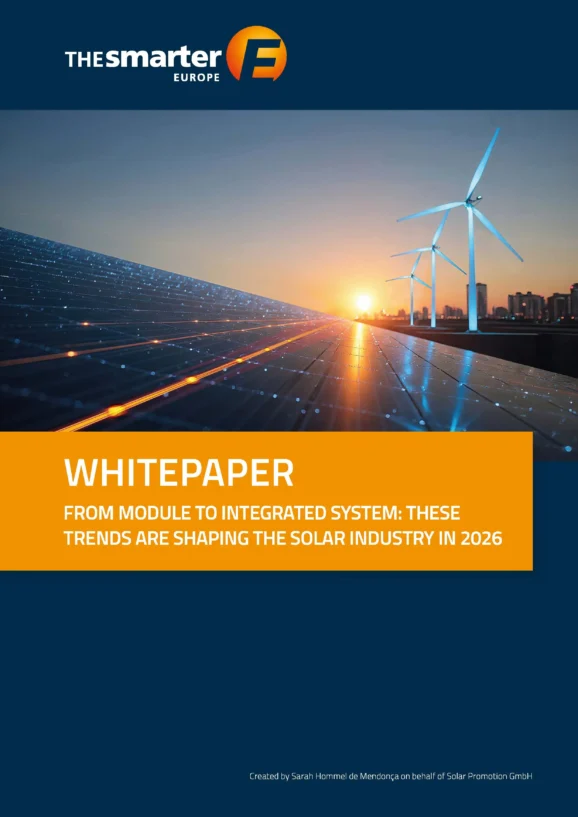
The report, which draws on forecasts from SolarPower Europe, the European solar energy industry association, and can be viewed in full here, says round-the-clock renewable electricity will increasingly depend on sophisticated batteries, electric-car chargers and heat pumps.
These are expected to work alongside energy-management software and AI systems that predict demand and determine when electricity should be stored, used or fed into the grid.
Horst Dufner is the project manager of Intersolar Europe, one of the world’s leading exhibitions for the solar industry, and head of The smarter E Europe.
He said the most important development at this June’s Intersolar Europe exhibition, held in Munich, Germany, was the industry’s progress towards a 24/7 renewable energy supply.
The greatest opportunities for innovation and new business models lay in technologies allowing solar power to be used beyond the moment it is generated, he added.
“Without a doubt, it was the role of solar energy embedded within the broader theme of a 24/7 renewable energy supply – its technical feasibility, societal benefits, and economic advantages,” he said.
“The greatest potential for innovation and new business models is directly linked to this: Solutions are emerging that no longer revolve solely around generating kilowatt-hours, but around unlocking the value of solar power beyond the moment of generation.”
READ MORE: Europe adds enough new wind power for 7m homes as record year beckons. New turbines capable of replacing fossil-fuel imports equivalent to 25 LNG tankers a year were installed in the first half of 2026 – but industry leaders warn planning and grid delays could halt the boom.
Do you have news to share or expertise to contribute? The European welcomes insights from business leaders and sector specialists. Get in touch with our editorial team to find out more.
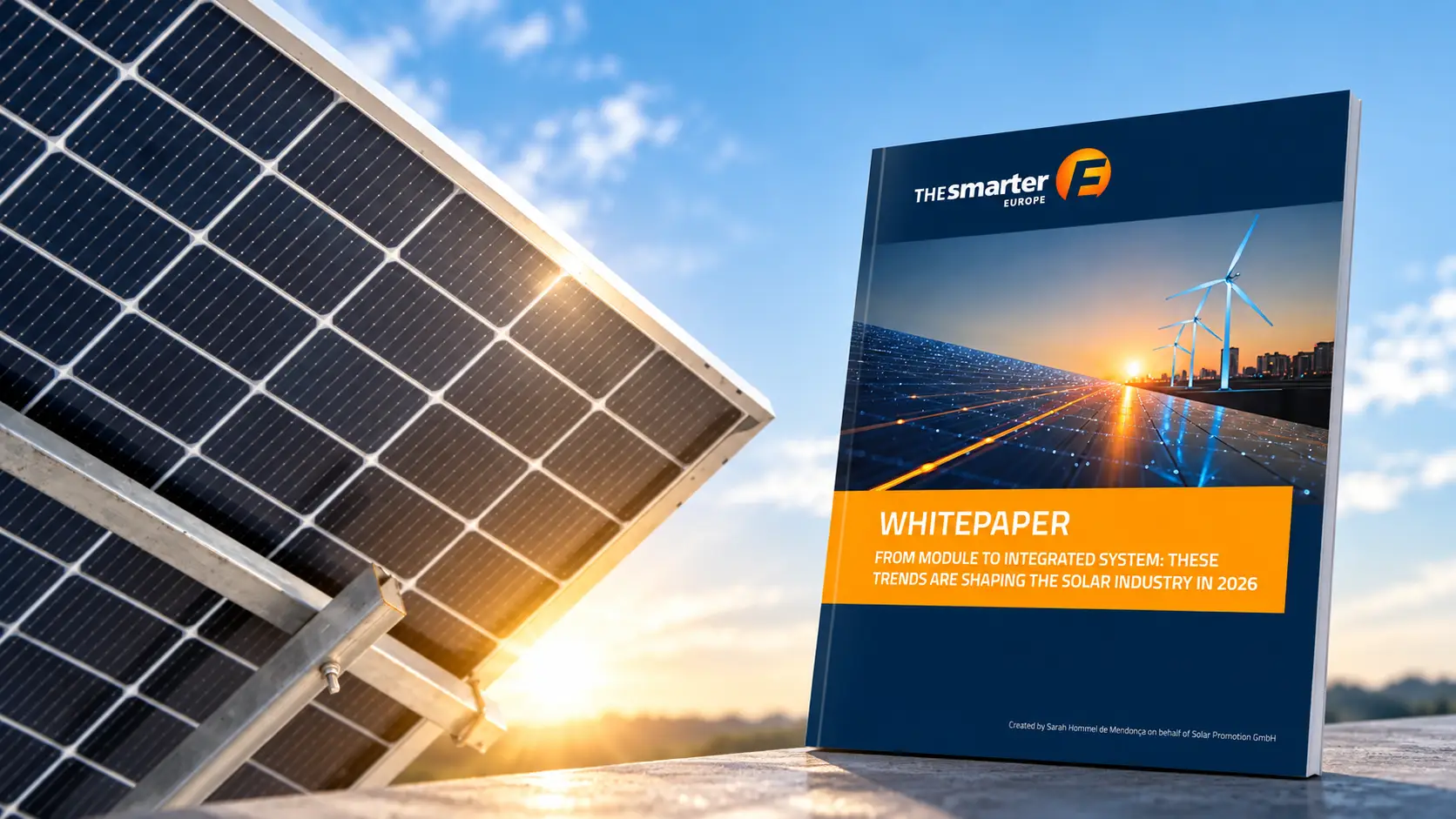
Main image: The smarter E Europe’s latest white paper highlights the next phase of the solar market, as the industry moves from rapid panel deployment towards round-the-clock power supported by storage, smart energy systems and other integrated technologies. Credit: Photo by Dhruvan Patel via Pexels / The European
TOP STORIES
-
Is this £525,000 Ferrari really worth the money? I drove it 1,000 miles to find out -
Liechtenstein’s century-old framework for modern wealth -
Businesses risk losing staff trust over poorly explained AI plans -
Monty Python filmmaker claims to have found the Garden of Eden -
First class delivery: China's postal service puts humanoid robots to work across eight cities -
AI set to transform university librarians' jobs as 95% predict surge in demand -
Washington Dulles unveils new concourse as $20bn airport expansion takes off -
The short and the short of it: children's fiction is shrinking -
Grandfathers can play vital role in preventing boys being brainwashed by the manosphere -
Landlord tax rises risk pushing rents higher -
The European Autumn 2026 edition – out now -

WATCH: Greenpeace drops giant David Attenborough boulder into North Sea – on site of £12bn windfarm -
Himalayan nations demand urgent action as UN warns of irreversible glacier losses -
6,000 march against ‘monstrous’ AI data centres as Scotland faces building boom -
Shop till Ai drop? AI agents set to buy for us as tech boss warns of retail revolution -
Specs appeal: Welsh Parliament bans smart glasses -
European motoring legends behind Mercedes, BMW and McLaren to enter Hall of Fame -
Why Britain must put Black women at the heart of its public art -
Trumpism will survive the Democrats' midterm victory -
Putin 'plotting to break NATO without firing a shot', Latvian military analyst warns -
How Putin plans to break NATO without going to war -
British AI chip startup hits £5bn valuation as government backs bid to challenge global tech giants -
World's biggest military airshow moves to ‘Britain’s Area 51’ after Iran war disruption at RAF Fairford -
Lisa Nandy threatens crackdown on entertainment industry after David Walliams allegations -
The scuba diving project helping to protect Cornwall’s lobster population
Europe’s solar boom set for two-year slowdown after record growth
John E. Kaye
- Published
- MICE, News, Sustainability

TOP STORIES
-
Is this £525,000 Ferrari really worth the money? I drove it 1,000 miles to find out -
Liechtenstein’s century-old framework for modern wealth -
Businesses risk losing staff trust over poorly explained AI plans -
Monty Python filmmaker claims to have found the Garden of Eden -
First class delivery: China's postal service puts humanoid robots to work across eight cities -
AI set to transform university librarians' jobs as 95% predict surge in demand -
Washington Dulles unveils new concourse as $20bn airport expansion takes off -
The short and the short of it: children's fiction is shrinking -
Grandfathers can play vital role in preventing boys being brainwashed by the manosphere -
Landlord tax rises risk pushing rents higher -
The European Autumn 2026 edition – out now -

WATCH: Greenpeace drops giant David Attenborough boulder into North Sea – on site of £12bn windfarm -
Himalayan nations demand urgent action as UN warns of irreversible glacier losses -
6,000 march against ‘monstrous’ AI data centres as Scotland faces building boom -
Shop till Ai drop? AI agents set to buy for us as tech boss warns of retail revolution -
Specs appeal: Welsh Parliament bans smart glasses -
European motoring legends behind Mercedes, BMW and McLaren to enter Hall of Fame -
Why Britain must put Black women at the heart of its public art -
Trumpism will survive the Democrats' midterm victory -
Putin 'plotting to break NATO without firing a shot', Latvian military analyst warns -
How Putin plans to break NATO without going to war -
British AI chip startup hits £5bn valuation as government backs bid to challenge global tech giants -
World's biggest military airshow moves to ‘Britain’s Area 51’ after Iran war disruption at RAF Fairford -
Lisa Nandy threatens crackdown on entertainment industry after David Walliams allegations -
The scuba diving project helping to protect Cornwall’s lobster population