From the Thai Government’s recent reversal on drug policy to PM Andy Burnham’s rethink on Brexit, changing course can look like weakness. But sticking with a failing decision is often worse – and credible leadership means knowing when to turn, says Dr Stephen Whitehead
It’s been a good few weeks for changing your mind. One government did a U-turn just last month while another, on the other side of the world, opened the door to doing so. An old friend of mine did too, after 65 years. Only one of them, however, has no face to save.
On September 22, Thailand’s Cabinet approved a bill that will confine cannabis to medical use, four years after the country became the first in Asia to decriminalise it. A week later, in Liverpool, Prime Minister Andy Burnham told the Labour conference that Brexit had done more harm than good, and declined to rule out any option for Britain’s future relationship with Europe.
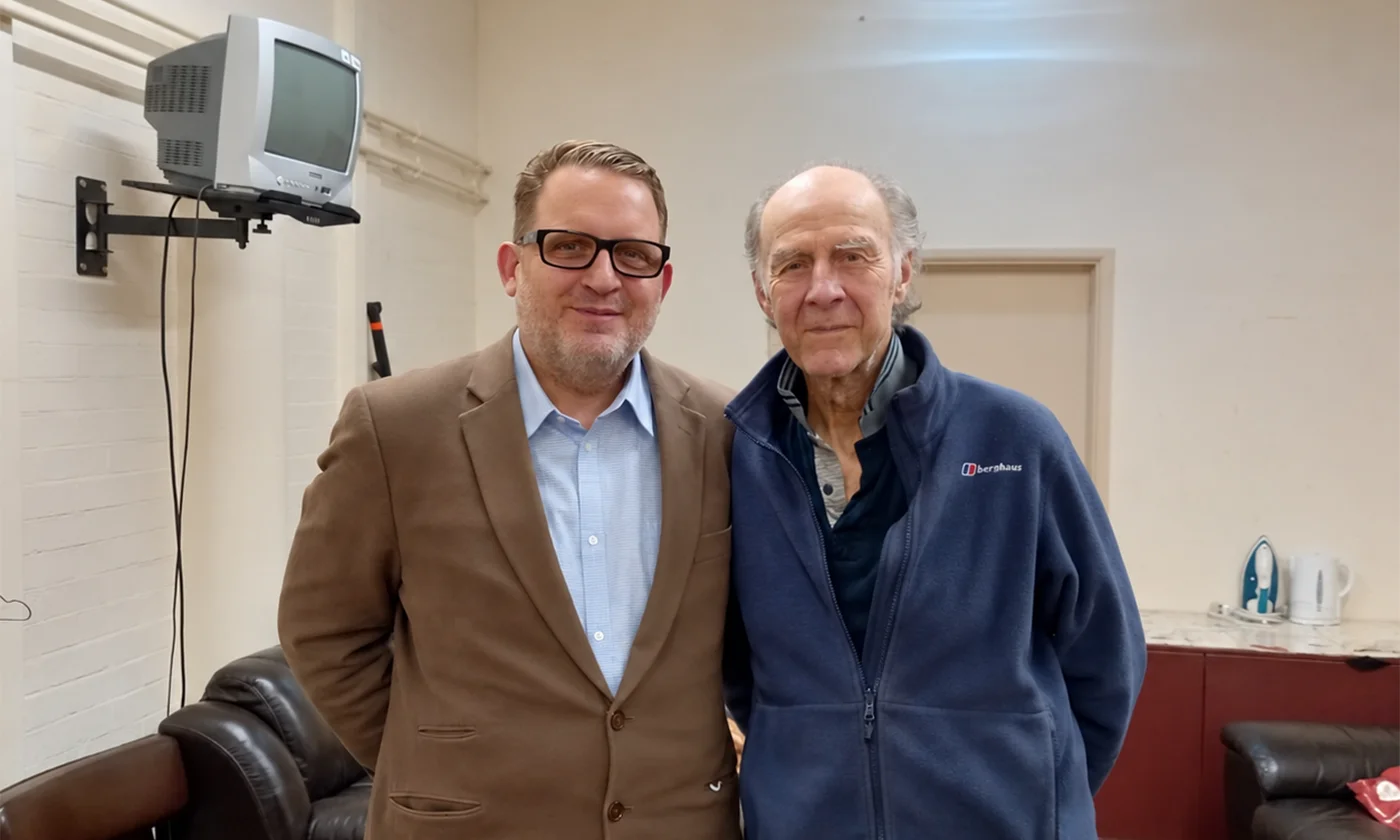
And somewhere in between, an Australian friend of mine, now in his late 70s and living in the Algarve, where possession for personal use has been decriminalised, quietly gave up the cannabis he’d smoked since he was 16.
Three cases, then: a government undoing its own policy, a government considering undoing its predecessor’s, and a man undoing a lifetime’s habit. Between them they say a good deal about what separates a credible U-turn from a humiliating one.
British political culture has never forgiven the U-turn. Margaret Thatcher’s “the lady’s not for turning”, delivered at her party conference in 1980, set the standard by which leaders have been judged ever since. Change your mind and the headlines write themselves: ‘climbdown’, ‘retreat’, ‘humiliation’.
Yet anyone who has studied how organisations fail knows that the greater danger lies in the opposite direction. The psychologist Barry Staw called it escalation of commitment: the tendency of leaders to keep investing in a failing course of action precisely because they chose it. His 1976 paper on the subject was titled Knee-Deep in the Big Muddy, echoing Pete Seeger’s Vietnam-era protest song Waist Deep in the Big Muddy, and with good reason.
Richard Nixon entered the White House in 1969 promising to end the Vietnam War. Instead he prolonged it for four more years, extending it into Cambodia and Laos in pursuit of what he called peace with honour. More than 20,000 Americans died on his watch, along with vastly greater numbers of Vietnamese, Cambodians and Laotians, for terms many historians regard as little better than those on offer when he took office. He could not bear to be the president who lost.
Vladimir Putin offers the contemporary case. More than four and a half years after he sent his army into Ukraine expecting a swift victory, the war grinds on. By Ukraine’s count, Russian casualties have now passed 1.5 million. Every life lost makes stopping harder, because stopping would mean admitting what those lives were spent on. The sunk cost becomes a reason in itself.
Admitting error feels like weakness, so the error compounds. I’ve watched the same dynamic, at mercifully lower stakes, in universities, in companies and in governments. The leader who cannot turn is simply stuck.
The million-dollar question, then, is how a leader should reverse course.
Thailand’s cannabis experiment began in 2022. The shops arrived at astonishing speed, more than 18,000 licensed outlets at the peak. The policy had been pitched on medical and economic grounds and recreation boomed in the regulatory gap. In June 2025 the government reclassified cannabis flower as a controlled herb and required a prescription to buy it. By February this year around 7,300 shops had closed. The new bill goes further, requiring every farm to be registered, toughening penalties and turning shops that want to survive into medical facilities with a doctor on the premises.
What makes this reversal striking is who’s leading it. The architect of decriminalisation was Anutin Charnvirakul, then health minister, whose Bhumjaithai Party campaigned on it. Anutin is now prime minister, and it’s his government dismantling the policy he built.
That’s the hardest U-turn in leadership: reversing yourself. The government has handled it by presenting the bill as a return to the medical purpose the policy was always meant to serve. It’s a correction rather than a confession. That framing saves face, and it may even be partly true. But it also avoids the one sentence that would have made the reversal fully credible: we got this wrong.
Burnham’s task is in one sense easier. The red lines he’s abandoning weren’t his. His predecessor, Sir Keir Starmer, had ruled out rejoining the EU, the single market or the customs union, and Labour’s 2024 manifesto did the same. Burnham can reverse them while blaming nobody in the room.
He’s also chosen his framing well. His speech was built around honesty: saying the things politicians usually avoid. That turns the U-turn from a retreat into an act of candour, which is exactly how a leader should present one.
But notice what he hasn’t yet done. His conference speech gave no indication of whether the options would stretch to a customs union, the single market or full membership. Only afterwards, in a BBC interview, did he refer more explicitly to rejoining. He’s said in the past that he hoped to see Britain back in the EU in his lifetime, and later that he wouldn’t rerun the arguments of 2016. So far he has opened a door rather than walked through it.
Critics will say that reopening the question revives the divisions of the past decade and sets aside a democratic vote. Supporters will say that honesty about consequences is what democracy requires. Either way, the test of his leadership comes when those options have to become a decision.
My friend’s reversal came with no press conference. For decades his evenings had followed the same ritual: at 5pm or 6pm he would light up his cannabis joint. One evening, rolling and lighting that joint, he realised he was doing it out of nothing more than habit, and asked himself the obvious question: what’s the point? So he stopped. He gave the rest away and hasn’t missed it. He sleeps better, goes to bed earlier and has more energy in the day than he has had in years.
There was nobody to announce it to and no face to save. He didn’t reframe the previous 65 years as a misunderstanding and nor did he flagellate himself over them. He simply looked at the evidence of his own life, concluded that the habit no longer served him, and acted. “Enough is enough,” as he put it.
It is, I think, the purest form of the U-turn, and a useful benchmark for the other two. Set the three side by side and a simple test emerges, with a credible reversal having three features.
First, it’s driven by evidence rather than embarrassment. Thailand’s reversal rests on four years of visible consequences; Burnham points to a decade of economic damage; my friend points to his own sleep and energy. All three pass.
Second, it’s owned. Here the three diverge. My friend owns his completely. Burnham could own a reversal more easily, because the original decision belonged to others. Anutin’s government owns its reversal only partially, dressing it as a return to first principles.
Third, it’s clear about what comes next. Thailand has a bill, my friend has a changed evening and Burnham, for now, has options.
The same principle applies to organisations. Every chief executive who’s persisted with a failing strategy. and every board that’s defended a bad appointment long after the evidence came in, faces the same choice. The cost of changing your mind is a few bad headlines. The cost of refusing to do so, though, is usually far higher, and it’s paid by other people.
Thatcher’s line has lasted 46 years because it flatters an instinct we all share. But the leaders worth following are the ones who can turn, and who can explain why.

Dr Stephen Whitehead is a gender sociologist and author recognised for his work on gender, leadership and organisational culture. Formerly at Keele University, he has lived in Asia since 2009 and has written 20 books translated into 17 languages. He is based in Thailand, where he leads the Global AI Intimacy Study. His forthcoming book, co-authored with Constanza Fernández Arce, is Where Have All the Good Men Gone?
READ MORE: The five types of masculinity and what they reveal about modern men. Men are increasingly discussed as though ‘masculinity’ is a single condition with a single problem. But according to sociologist Dr Stephen Whitehead, there are five masculinities, reflecting men responding very differently to profound changes in work, relationships and ageing. And each masculinity, he says, demands a different type of response.
Do you have news to share or expertise to contribute? The European welcomes insights from business leaders and sector specialists. Get in touch with our editorial team to find out more.
Main Image: Prime Minister Andy Burnham has reopened the debate over Britain’s relationship with the EU, framing a potential change of direction as an act of political honesty. But as Dr Stephen Whitehead argues, the real test of leadership comes when those options have to become a decision. Credit: No 10 Downing Street / OGL v3.0