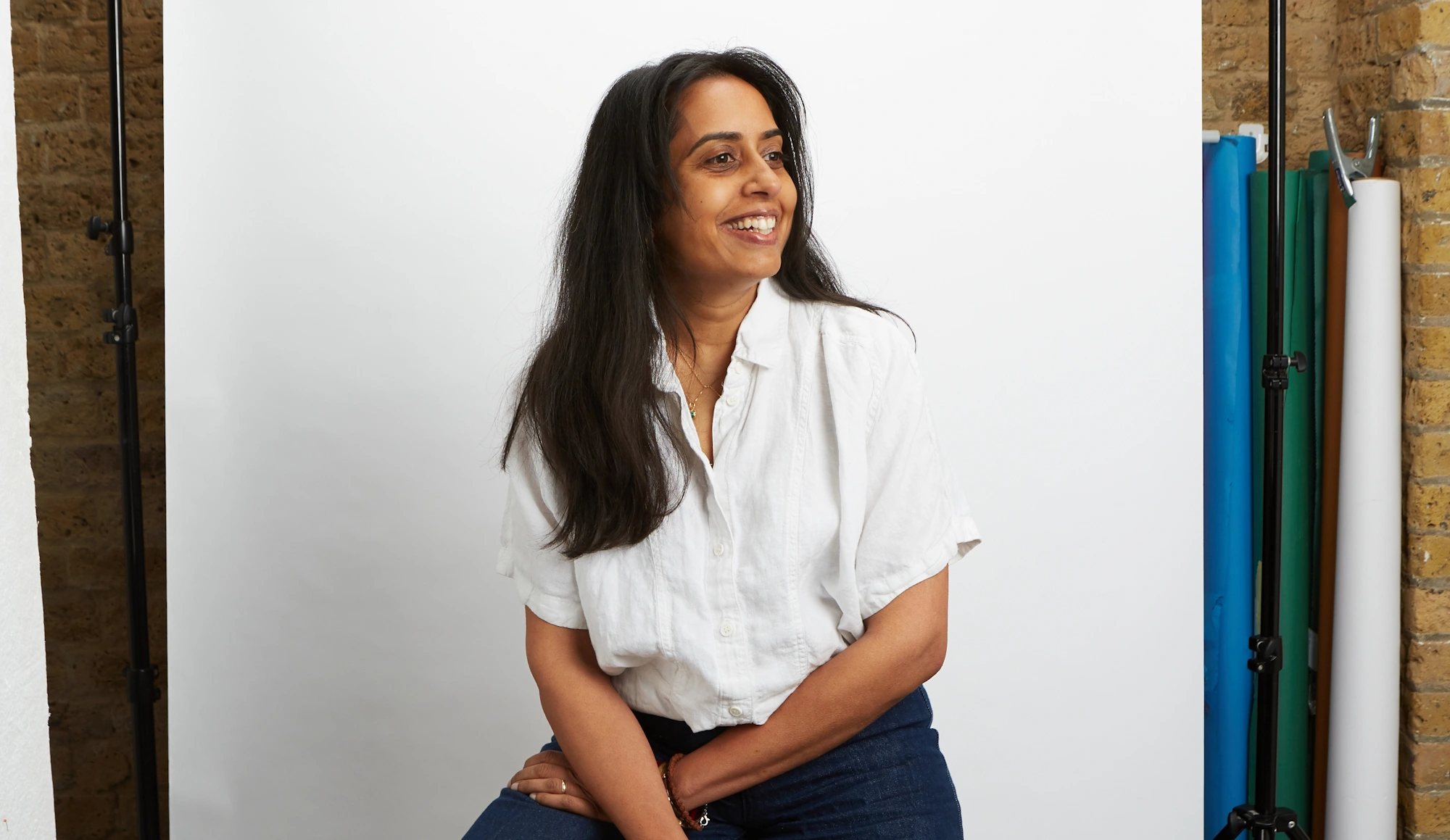
Minority women are increasingly visible in Europe’s image economy, but their authority to commission, own and profit from those images still lags far behind. The European’s Women, Work and Enterprise correspondent Elle Lorenzoni speaks to Blursday founder Sheena James to find out what closing the gap looks like
Are minority women overused as creative inspiration and underused as actual creators?
According to Sheena James, the London-based founder of multidisciplinary creative studio Blursday, the answer depends upon the sector in which they are operating.
“In fields like writing, acting and music, Black and Asian women are more visibly present as leading voices and authors of their own work,” she said.
“The gap becomes more visible when you look at authorship in the sense of who is directing, commissioning and owning the work. That’s where I still think there’s a noticeable imbalance.”
By this, James – whose creative content studio Blursday produces photography, video and CGI for brands and businesses – means that while writing, acting and music make authorship publicly legible, be that through a byline, a face or a voice, it is a different story within the visual creative industries.
In the commercial world of photography, production and commissioning – where images help create desire, trust and value – power hides behind the lens. The audience sees the campaign but rarely the brief, the budget, the producer or the relationship that decided who got hired.
James continued: “It’s most noticeable in leadership. There are many talented photographers and artists from diverse backgrounds, but that representation doesn’t seem to carry through at the same level into agency leadership or studio ownership.”
Put another way, according to James, minority women are routinely invited into the aesthetic life of the industry well before they are invited into its architecture: the budgets, boards and ownership structures where power actually gathers.
Pressed on whether the industry is more comfortable celebrating diverse subjects than empowering diverse creators, she did not hedge.
“It often feels more comfortable for the industry to showcase diversity as a subject matter rather than fully empower diverse creators in leadership, decision-making or ownership roles.”
What that looks like in practice rarely announces itself as prejudice. It survives because it sounds like taste, caution, fit and risk management, captured in tired yet common expressions such as ‘not quite right’, ‘maybe for another project’ or ‘we need someone proven’.
The rope is soft to the touch, yet it still functions as a rope. The same cultural fluency read as strategic intelligence in one founder gets read as risk in a founder who is a minority woman. What is viewed as confidence in another becomes attitude when displayed by a minority woman. Similarly, specificity becomes limitation and ambition becomes overreach.
James, who launched Blursday in 2021, knows the pattern from the inside. As a British Indian woman entering photography in the early 2000s, she was often the only South Asian person in a management or leadership role on set.
Reflecting on that period, she explained that her approach was simply to focus on the work. She rarely spoke about her identity or cultural background, instead seeing herself as British, like everyone else around her. She had attended art school (much to her mother’s dismay), worked her way up through the industry and, despite the challenges she faced, felt that because she spoke like her peers and fitted into the prevailing culture, she was ultimately accepted.
Even so, being the only one in the room leaves a mark.
“It inevitably shapes how you move through a space, how you see possibility, where you feel you belong and what you think is available to you,” she said.
That sense of absence narrowed what felt available to James long before the industry ever had to close an actual door, and she was careful not to overstate how much had changed since.
“Progress is happening, but it still feels uneven and not always reflected in who is actually leading or shaping the industry.”
Asked what was driving the imbalance, she did not isolate one culprit but instead traced the problem back earlier still.
“It’s a combination of systemic and structural barriers that sit on top of each other. Access, confidence, funding, networks, mentorship and gatekeeping all play a part, and they tend to compound over time rather than exist in isolation.”
According to James, much of it starts with the way Black and Asian families assess the risks attached to creative careers. Talent has little to do with it. Creative careers can appear unstable and hard to enter, with parental caution perhaps being filed under ‘cultural conservatism’ more often than it should. It is really a reading of risk.
Law, finance and education are difficult too, but their ladders are visible. The creative industries run on hidden ones: taste, proximity, unpaid proving grounds, inherited networks and the quiet transfer of trust. A child from a minority background is not, then, choosing between passion and practicality so much as between visible rules and invisible ones.
“You end up with a pipeline issue that starts early and continues through the system,” James said. “Fewer people entering, and even fewer reaching the top.”
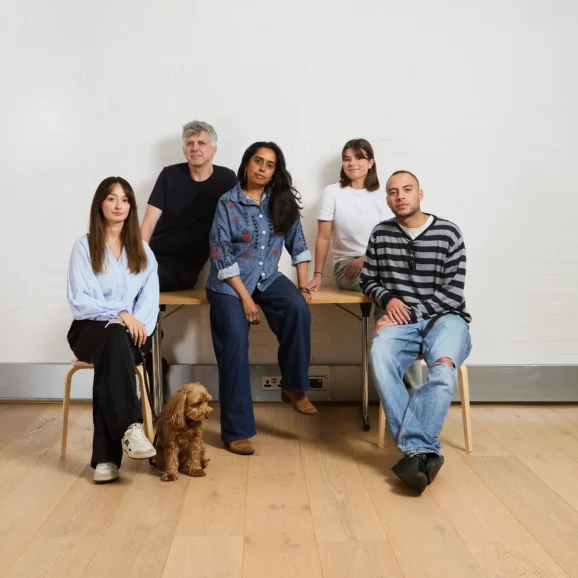
Her own company, Blursday, was born partly out of this recognition and partly out of the limitations of Covid. Founded during the 2021 lockdown following the closure of her previous employer, the studio began as a response to a stalled market in which jobs simply were not appearing. The alternative, she said, would have been waiting indefinitely for an industry that showed no sign of making room for her.
“No one was hiring – so I hired myself. Entrepreneurship stopped feeling like a choice I’d made and started feeling like a necessary step to build the kind of space I couldn’t find elsewhere.”
Necessity is the mother of invention, and what came out of James’s experience was the start of a playbook. She set out to build a studio that could handle commercial production without collapsing into a content machine, in a market flooded with high-volume ecommerce imagery: efficient, repetitive and largely stripped of craft.
Blursday, by contrast, sits somewhere between reliability and judgement, commerce and craft. The positioning is aesthetic, but it functions as an economic strategy too, since value in this industry flows to whoever owns the client relationship rather than whoever simply makes the image.
Staying close to the brief is its own form of power, James told me. That thinking has sharpened for her recently with the rise of AI and the speed at which the visual landscape is changing.
“There’s more saturation of imagery but, at the same time, a stronger desire for meaning and connection behind it.
“It’s pushed me to think of the studio less as an image producer and more as a creative ecosystem – somewhere that doesn’t just produce content but helps shape ideas, build collaboration and create work that actually feels considered and real.”
James was careful about the distinction between ‘participation’ and ‘ownership’. Participation, she believed, had genuinely improved. Ownership, though, had not kept pace. At industry events, she had met plenty of leaders in tech, strategy and fashion, but rarely women from ethnic minority backgrounds running creative studios of their own.
She added: “That might simply be down to the circles I’ve been in. I’d genuinely be interested to meet more women who are doing it.”
The data backs her up. Women make up 51 per cent of Europe’s population but account for only 34.4 per cent of the self-employed and 14.8 per cent of start-up founders, according to the European Institute of Innovation and Technology.
In the UK, Creative UK’s research finds that people from ethnic minority backgrounds make up 15.9 per cent of the workforce but just 9.8 per cent of managers and directors across the cultural sector. Most of what gets measured is who holds a title, not who owns the business, which is the narrower and harder question, and the one James is pointing at.
What James has shown through Blursday is that the fix is not another panel about visibility. Minority women do not need more applause for entering the building. Rather, they need routes to own parts of it: referral networks, shared resources, supplier directories and cooperatives with actual commercial teeth.
James herself located the industry fix even earlier in the system: “Students should be exposed to the idea that they can run studios, lead agencies and shape the industry, not just participate in it.”
Talked about openly and supported properly, those pathways would, she believed, draw far more minority women towards them.
None of that absolves the industry itself, of course. A small studio cannot commission itself onto a brand’s budget, and a founder cannot add herself to a closed supplier list. Brands and agencies have to stop treating diversity as something to display in the campaign while withholding it from the purchase order.
The real test of inclusion sits well beyond the image. It lies with who receives the brief, who owns the studio and who gets paid on time.
Sheena James – a minority woman who stopped waiting for permission – built one route on her own terms as an answer to that imbalance. But it is not the complete answer, and now the wider sector needs to do the rest.
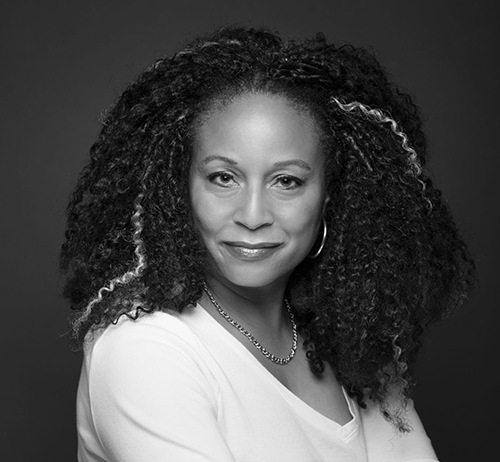
Elle Lorenzoni is an entrepreneur whose work spans media, law, and communications. She holds a BA in Rhetoric from the University of California, Berkeley, a Juris Doctor from Loyola University Chicago School of Law, and an LL.M. from the University of Fribourg in Switzerland. Her early career began at the William Morris Agency in Los Angeles, where she worked as a television literary assistant before going on to develop her own ventures, including Planning Pretty Picnics and The Spoken World. As Women, Work and Enterprise Correspondent for The European, she writes on female entrepreneurship, workplace culture, and leadership, with a focus on how power operates in professional environments and how it shapes women’s opportunities, decisions, and outcomes.
READ MORE: ‘Suits you, sir. If appearance still counts, why is credible workwear disappearing for women?‘. Finding affordable professional womenswear has become increasingly difficult, argues Elle Lorenzoni, who believes the decline of accessible career clothing is creating new obstacles for women seeking to advance in professional life.
Do you have news to share or expertise to contribute? The European welcomes insights from business leaders and sector specialists. Get in touch with our editorial team to find out more.
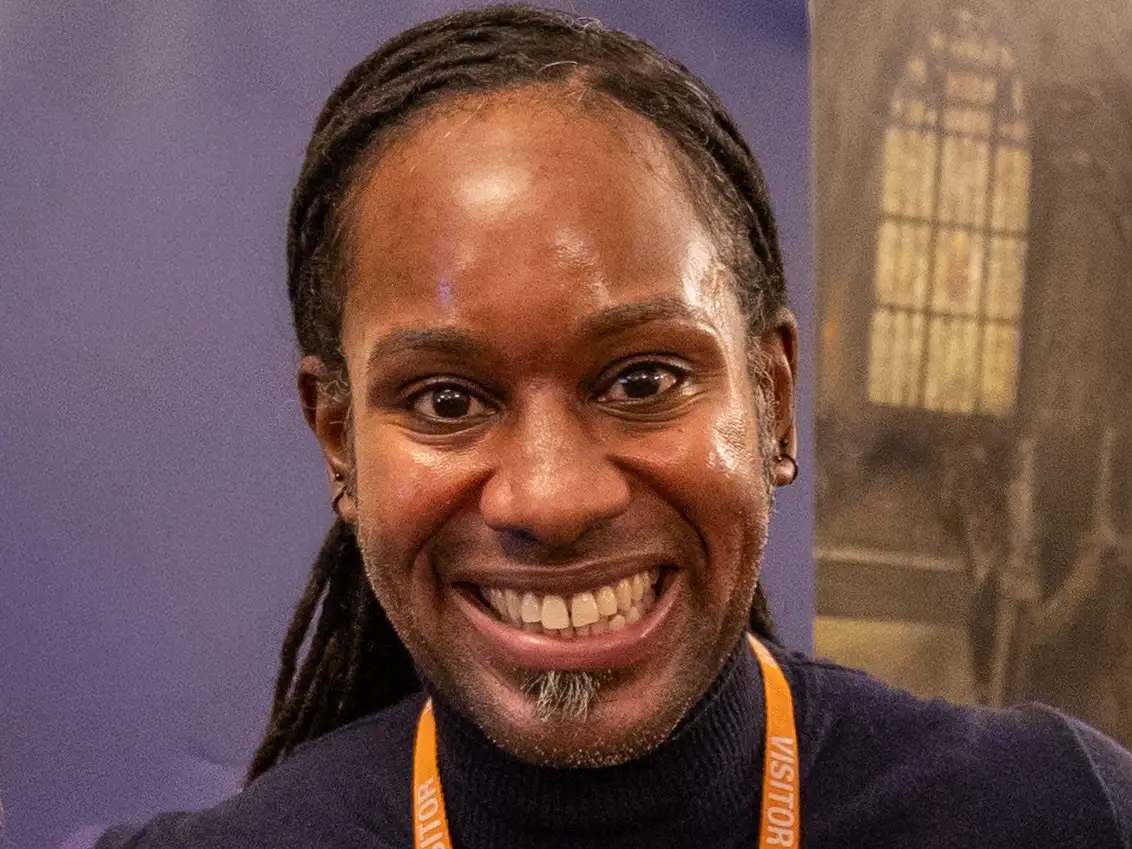
Main Image: Sheena James, founder of multidisciplinary creative studio Blursday. Credit: Supplied