As former Google executive Matt Brittin takes charge as BBC director-general, Pip Burley, the producer behind The Darling Buds of May and A Touch of Frost, argues that the corporation faces a defining choice about its future. With Netflix, Amazon, Disney and YouTube changing how audiences consume content, and with the licence fee under growing pressure, he tells The European how the BBC must rethink its priorities, reduce its dependence on news and recover the confidence to back popular drama and comedy drama that can bring viewers back
There was a time not so long ago in the grand sweep of broadcasting history when British television moved in something close to unison. A handful of channels, a shared cultural rhythm, and the rare alchemy of storytelling that could bring 20 million people together on a Sunday evening.
I had the privilege of working in that era, producing shows such as The Darling Buds of May and A Touch of Frost, programmes that attracted huge audiences and kept them coming back, week after week, in numbers that today seem almost mythical.
Those days are gone. The appetite for good storytelling remains strong, but the landscape in which that storytelling must now compete has changed beyond recognition.
Beyond the financial pressures on British broadcasting organisations lies a more intangible, but equally significant, issue: the working climate in which programmes are now developed. The term ‘woke’ is overused, sometimes carelessly, but there is no denying that commissioners today operate within a far narrower set of perceived boundaries than their predecessors. Risk, whether creative, tonal, or thematic, is approached with great caution.
Could The Darling Buds of May be made today? In the 90s it was the most popular series on television, a national treasure: a sun-drenched, unapologetically nostalgic portrait of rural England in the 1950s, full of warmth, charm, eccentricity and a certain disregard for modern sensibilities. It also launched the career of Catherine Zeta-Jones.
Some 30 years later, it was made again, although not by my company, I hasten to add. Renamed The Larkins, it was a miracle it got past the commissioning stage at all. Yes, H E Bates’ stories and characters were still there and as a vehicle for Bradley Walsh it worked well enough, but in the end it no longer ticked the “right” boxes. It was neither edgy enough, nor socially instructive. It was, I would say, too ‘English’.
If there is one genre under the cosh more than most, it is comedy drama. Once a staple of British TV, it now sits in a risky no-man’s-land between drama and situation comedy. Commissioners understandably seek clarity. A sitcom is expected to deliver laughs at a predictable rhythm, one every 30 seconds, if you like. A drama has to sustain tension and emotional engagement. Comedy drama, on the other hand, asks audiences to care about the characters while still finding humour in the everyday.
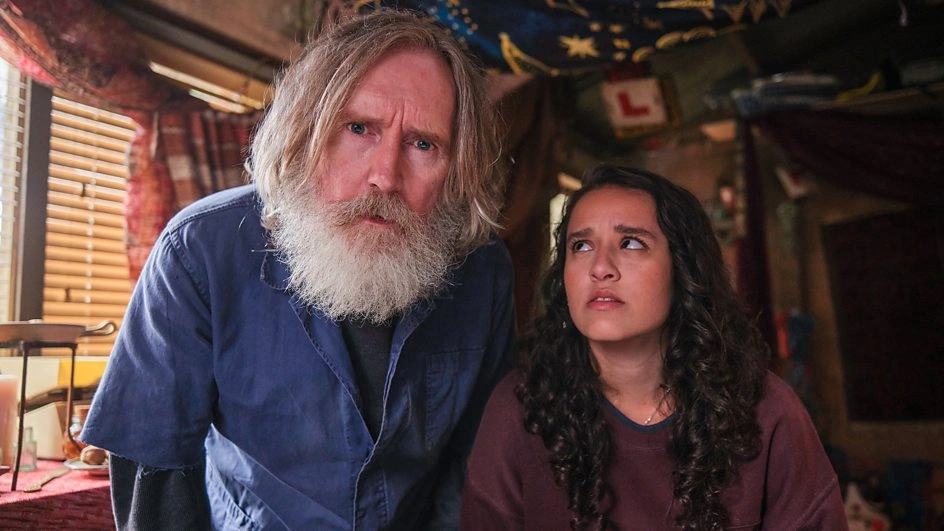
Recent examples show how powerful comedy drama can still be when it is done well. Mackenzie Crook’s Small Prophets and Detectorists are both beautifully judged pieces of television, rich in character, warmth and observation, and proof that audiences will still respond to stories that find humour in ordinary lives. Detectorists, in particular, has grown into one of the most admired British series of recent years, despite starting life on little-watched BBC Four in 2014 before finding wider recognition much later.
For all its praise of the genre, then, the BBC has hardly behaved like a broadcaster full of confidence in comedy drama.
Commissioning drama is, by its nature, a risk. And in an industry now driven largely by data and algorithms, risk must be minimised. The result is a narrowing of creative ambition, a preference for formats that can be easily defined, easily marketed, easily replicated and can be relied upon. On the other hand, like all art, television drama has never thrived on certainty. Its greatest successes, those rare moments when a programme captures the national imagination, have always involved a leap of faith.
At the centre of all this upheaval stands the BBC, an institution that remains one of the most admired broadcasters in the world yet finds itself under increasing pressure from all sides. Financial, political, cultural, and technological. It is, in many ways, the perfect storm.
The BBC’s new Director General, Matt Brittin, has a job on his hands, as he very well knows. The licence fee, once the bedrock of the BBC’s independence and creative ambition, is now under sustained scrutiny. It is not difficult to understand why.
Viewers are no longer limited to a handful of channels; they make their own choices in a vast, global marketplace of content. And, increasingly, they are voting with their wallets. Platforms like Netflix, Paramount, Amazon, and Disney offer drama of a scale and cinematic quality that would have been unimaginable on British television even a decade ago. Series such as Ozark or Landman, to take two recent examples, are not really ‘television’ at all but long-form films, lavishly produced and globally marketed.
While traditional terrestrial broadcasters wrestle with these challenges, external pressures continue to mount. Streaming has transformed the distribution of television and changed how audiences find, watch and engage with it. Binge-watching, for instance, has replaced appointment viewing. Gone are the days when families routinely gathered around the television at the same time each week to catch their favourite show. Global releases have also replaced regional scheduling. And production values have escalated to the point where television and cinema are virtually indistinguishable. This is both an opportunity and a threat. For British producers, the streamers offer unprecedented reach and resources. But they also bring a level of competition that is relentless and unforgiving.
And then there is YouTube, a platform that operates on an entirely different axis. Here, entertainment is immediate, fragmented, and mostly fleeting. A five-minute clip can attract millions of views, bypassing traditional gatekeepers entirely. For many younger audiences, YouTube has become the default place to watch, discover and share entertainment.
Against that backdrop, the familiar question arises: why should a modern audience pay a compulsory licence fee for content they may not even watch? This is by no means a trivial challenge. It strikes at the very foundation of what the BBC is and how it operates. And yet, the answer cannot simply be to mimic their competitors. The BBC’s strength has always lain in its distinctiveness – that is, its ability to inform, educate, and entertain with a uniquely British voice.
And therein lies the problem. In an increasingly diverse society, does that voice still exist? And if it does, how to find it? I recently asked Tim Davie, Mr Brittin’s predecessor, that question. His reply? “That’s a good question!”
I have also come to believe there is too much news. At the instigation of former director general John Birt in the early 90s, the BBC invested heavily to become the gold standard of global journalism. But no one has asked whether this emphasis has come at the expense of entertainment – not to mention the BBC’s reputation. Ironically, it’s their news department that has constantly got them into trouble – from Martin Bashir’s interview with Princess Diana in 1995 to the misleading editing of Donald Trump’s speech – and much else in between.
How much in-depth news does the average viewer really want? In an age where anything you need to know is available instantly and endlessly online, is there still the same appetite for extended, comprehensive coverage of selected events? Or, has the balance shifted too far?
It is a delicate question, and there is no quick answer. But if the BBC is to justify its unique funding model, it must give audiences something they cannot get elsewhere. Increasingly, that means compelling, high-quality entertainment. Drama has always led the schedule, so why not start there?
What worries me is not the competition from streaming platforms or the rise of new technologies. These are, in many ways, healthy forces. They push us to improve, to innovate, to think differently. What does concern me, though, is the potential loss of confidence within our own institutions. The sense that we are becoming more cautious, more constrained, less willing to have faith and take a chance.
Television, at its best, is a bold medium. It reflects society, yes, but it also shapes it. And that requires a degree of creative freedom that cannot be reduced to a checklist.
For the BBC, and indeed for the wider British television industry, the path forward will not be easy. It will require difficult decisions about funding, priorities, and identity. But one principle should remain at the heart of those decisions: the audience. Not the abstract notion of an audience, defined by demographics and data points, but those real people who sit down – whether in front of a television, a laptop, or a phone – and choose what to watch. Give them something worth watching, and they will find it.
As for me, I find myself returning to storytelling in a different form. Having spent those years helping to bring stories to the screen, I am now writing novels with a very specific purpose in mind: to create rich, layered narratives that can translate into long-form television.
My Harmony Legacy series – written under the name Philip G. Walsh – ‘Villa Harmony’, ‘Harmony’s Smile’, and the forthcoming ‘Go, Harmony!’ – follows the life of a girl called Harmony Nader, from childhood to early adulthood. It is a story designed not just as a single narrative, but as a world – one that could sustain three or four seasons of television.
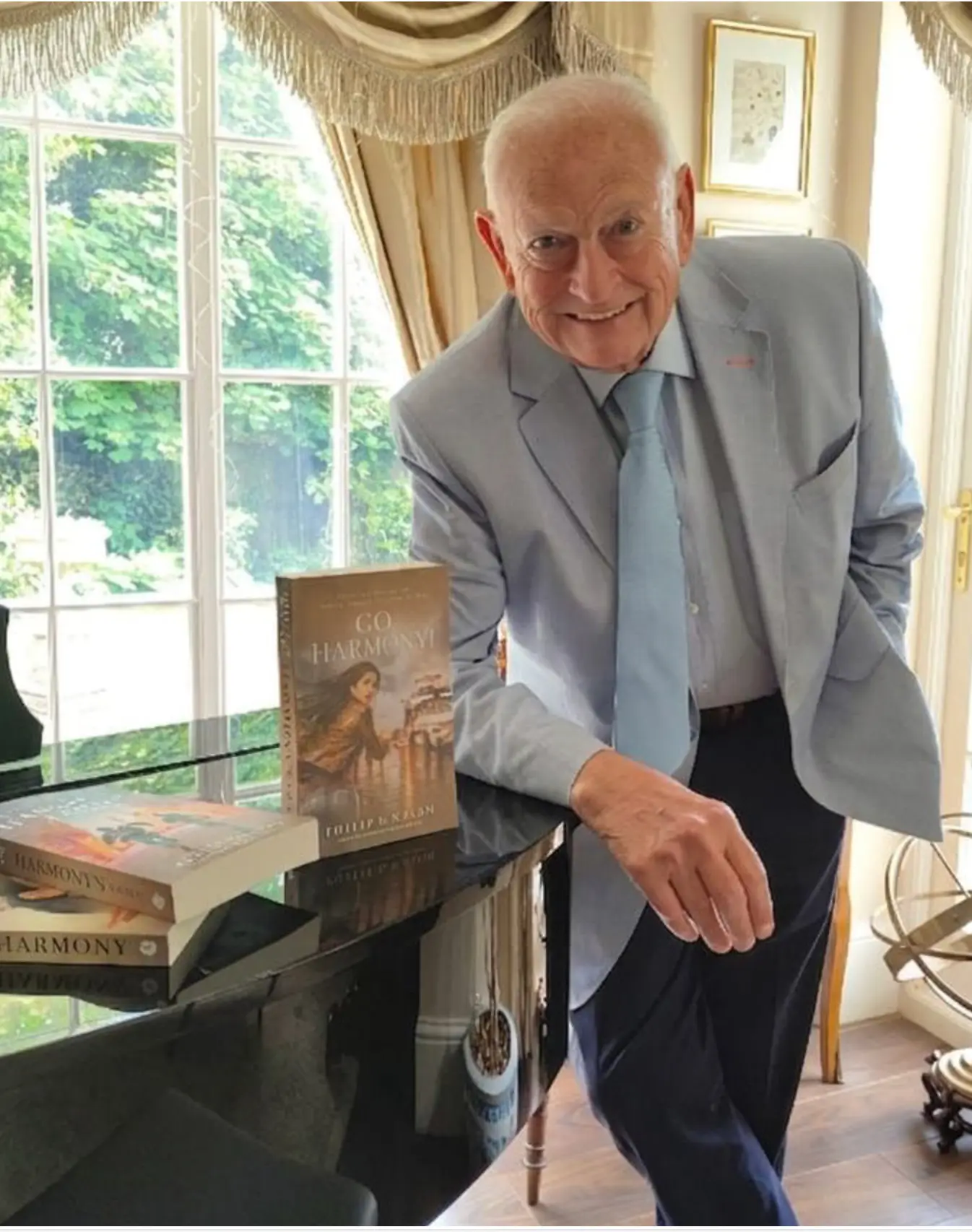
In many ways, it is a response to the very changes I have been describing. If the industry is moving towards long-form, appealing storytelling, then it makes sense for authors to create material that is suited to that model.
The platforms may have changed. The audience may be fragmented. But the fundamental need for compelling stories remains exactly the same. And perhaps that is the one constant we can rely on as we navigate this new and uncertain landscape.
Because in the end, whether it is broadcast on a traditional channel or streamed to a device halfway across the world, a good story beautifully enacted will always find its audience.
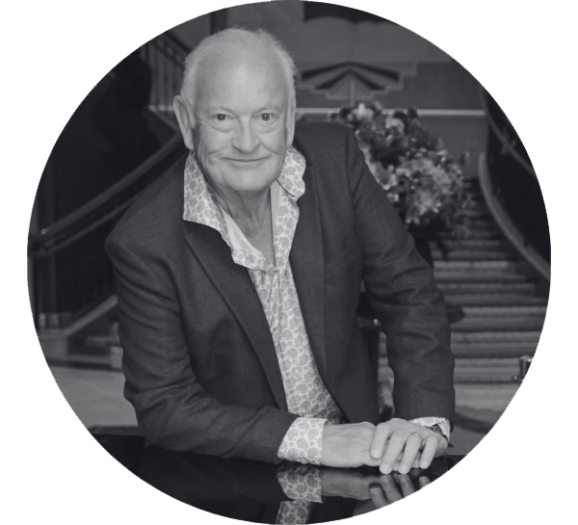
Pip Burley is a writer, producer, composer and broadcaster whose career spans television, theatre, music, advertising, marketing and publishing. He founded Excelsior, the production company behind The Darling Buds of May, A Touch of Frost and My Uncle Silas, starring Albert Finney. He also composed much of the music for The Darling Buds of May, including its Ivor Novello Award-winning theme tune. His theatre work includes serving as Artistic and Festival Director for the National Trust, producing work at the Edinburgh Festival, writing and directing four plays, and creating the internationally performed stage adaptation of The Slipper and the Rose. Burley has been involved with Variety, the Children’s Charity, since 1990, and received a Lifetime Achievement Award in 2025.
As an author, he has published Views from the Back of a Taxi and Briefest Encounters. Writing under the name Philip G Walsh, he is the author of the Harmony Legacy series, including Villa Harmony, Harmony’s Smile and the new third novel, Go, Harmony!
READ MORE: What kind of masochist would want to run the BBC? As the BBC appoints a new Director-General, The European’s Strategy & Creative Intelligence correspondent, Steve McCauley, examines the scale of the challenge facing Matt Brittin — and why the role has become one of the most precarious in British public life
Do you have news to share or expertise to contribute? The European welcomes insights from business leaders and sector specialists. Get in touch with our editorial team to find out more.
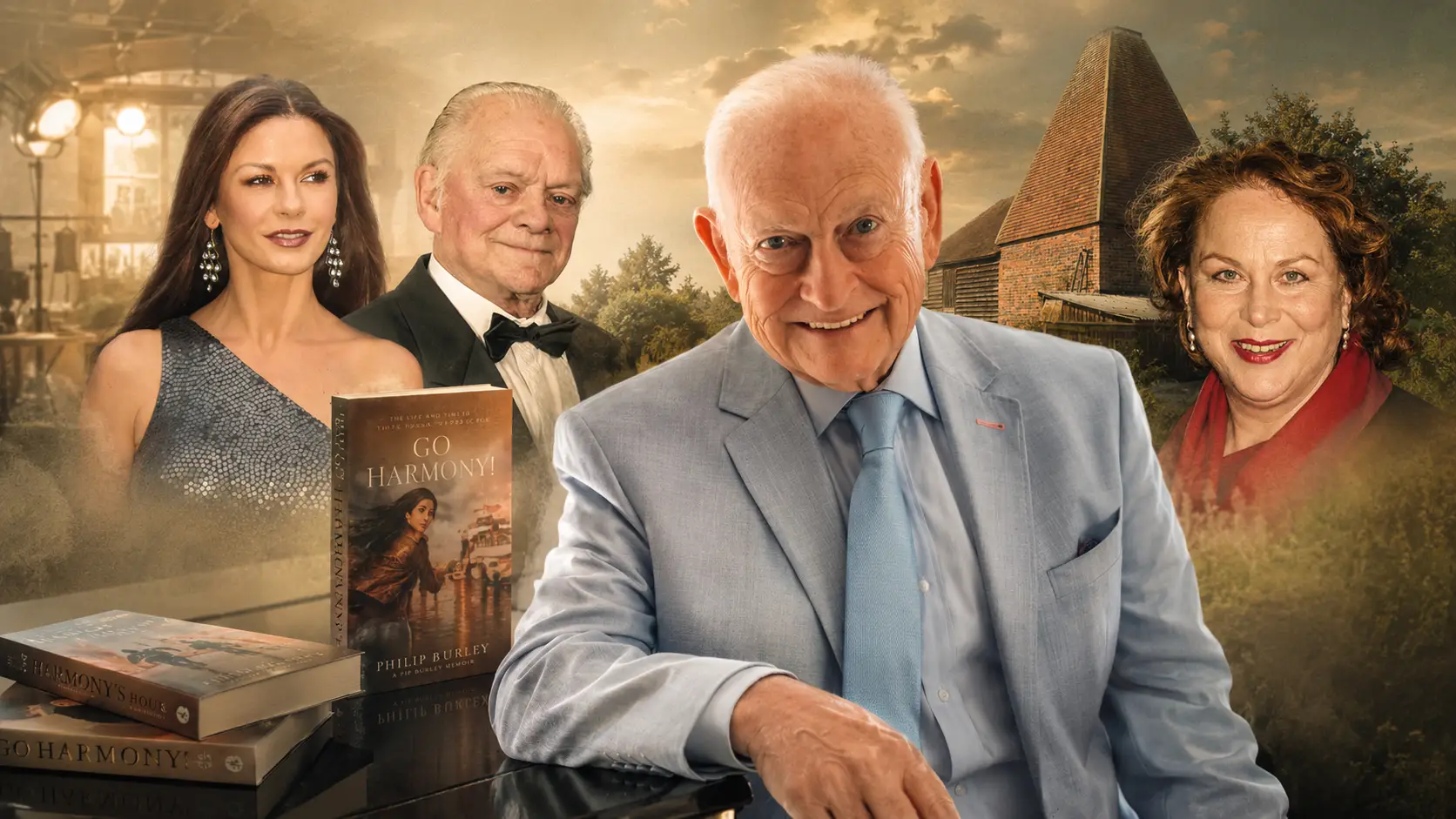
Main image: Pip Burley with Catherine Zeta-Jones, Sir David Jason and Pam Ferris, alongside the Kent oast house associated with The Darling Buds of May, in a photo illustration marking his career in British television and his return to long-form storytelling through the Harmony novels. Photo illustration: The European/Belters News. Source images: Pip Burley; Catherine Zeta-Jones and Michael Douglas, 2012, by Shankbone; Sir David Jason at the 2012 Sun Military Awards, Open Government Licence; Pam Ferris by Evangelinacp, CC BY-SA 2.0; Oast House at Buss Farm, Bethersden, Kent, Oast House Archive/geograph.org.uk