EU says ‘time for change’ on child social media safety after survey links platforms to youth distress

John E. Kaye
- Published
- News, Technology
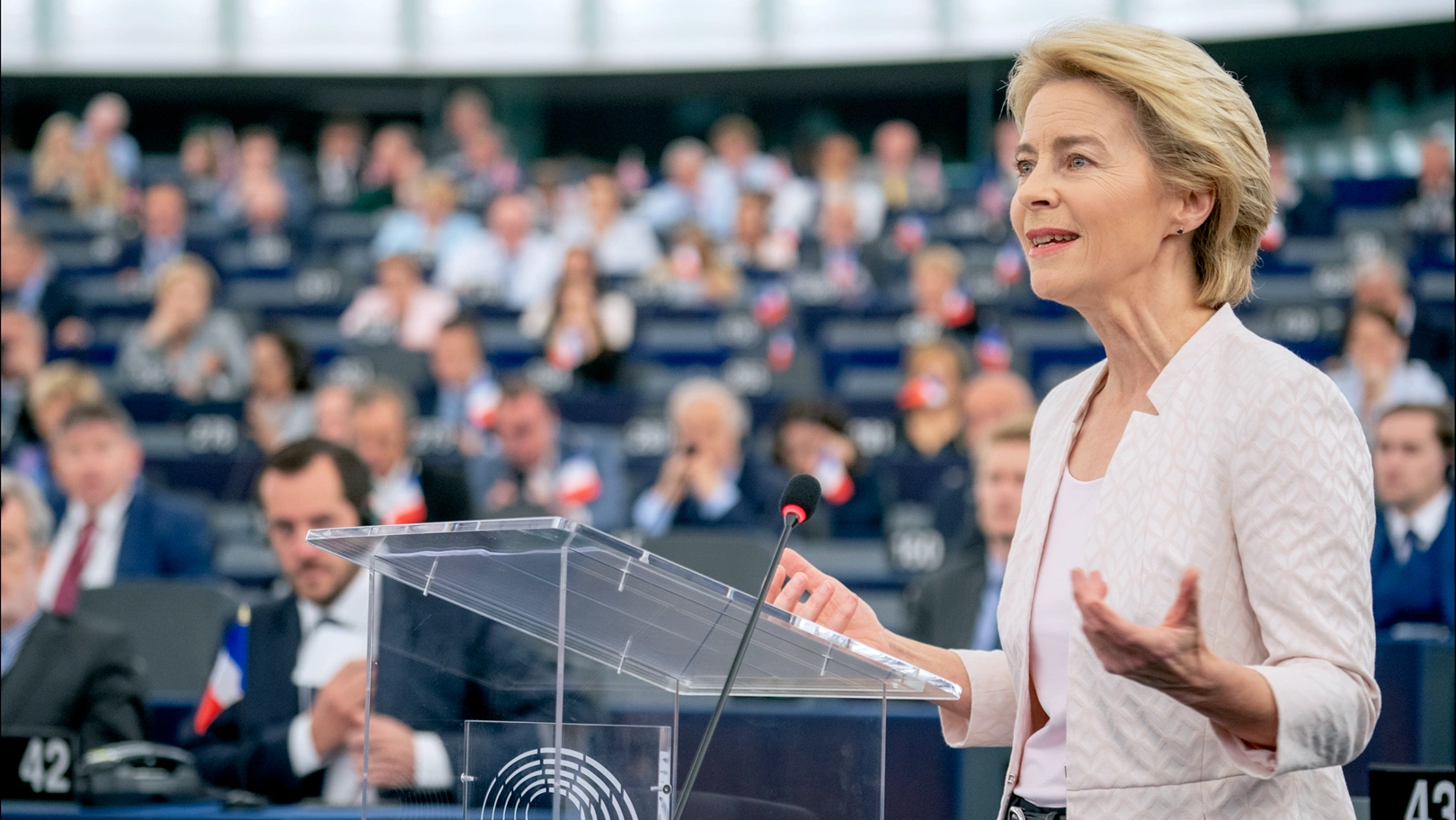
Brussels panel prepares recommendations on online child protection as Britain moves towards an under-16s social media ban and experts warn age blocks alone may not solve platform harms
European Commission president Ursula von der Leyen has said it is “time for change” on child online safety after a new survey found one-in-three adolescents feel stressed, sad or excluded because of social media.
Her warning came as the Commission’s Special Panel on child safety online met yesterday for the third and final time in Brussels, a day after Sir Keir Starmer set out plans for a UK ban on under-16s using major social media platforms.
The Commission said its latest Eurobarometer survey confirmed a significant link between excessive screen time, social media use and the mental and physical wellbeing of young people.
Young people across Europe spend an average of 4.5 hours online during a school day and 6.1 hours a day at weekends, the survey found.
Some 14 per cent of adolescents said they spent more than 10 hours a day on screens.
Von der Leyen said: “Social media can connect and inspire. But when one in three young people say it leaves them feeling stressed, sad or excluded, we cannot ignore the impact on their mental health and wellbeing.
“When a quarter of our young people are confronted with problematic content online – from hate speech, to body pressure, to unexpected violence – it is a clear signal that it is time for change.”
The Eurobarometer also found that 45 per cent of adolescents compare themselves with others when using social media, while around a quarter had encountered problematic content online. This was said to include speech, body pressure and unexpected violence.
Young people who started using social media before the age of 10 reported higher screen use than those who started later, the survey suggests.
Those who began before 10 reported 7.5 hours of daily screen time at weekends, compared with 5.7 hours among those who started after the age of 14.
A separate Eurobarometer on the Digital Decade, carried out between February and March 2026, found that 92 per cent of Europeans consider stronger online protection for children and young people to be a top policy priority.
Yesterday’s final meeting of the Special Panel brought together young representatives, educators, parents’ representatives, legal specialists, computer scientists, medical professionals and child-rights advocates. Discussions focused on lessons from the EU and partner countries, good practice and the role of parents and guardians in protecting children’s wellbeing online.
The panel’s co-chairs, Dr Maria Melchior and Prof Dr Jörg M. Fegert, will present recommendations to Von der Leyen on July 13 on how to strengthen the EU’s rules protecting minors online.
The final session followed two earlier meetings examining the risks and benefits of digital services for children and the EU regulatory framework for protecting minors online.
Henna Virkkunen, the Commission’s executive vice-president for tech sovereignty, security and democracy, said: “Teenage years should not be defined by addictive social media, excessive screen use and mental health concerns.
“In the EU, we’re tackling unsafe platform design with the Digital Services Act. We must and will do more. In the EU, teen years will be a time for learning and growth, safely, offline and online.”
Existing measures include the Digital Services Act and its guidelines on the protection of minors, the Audiovisual Media Services Directive, the Better Internet for Kids Strategy and the EU-funded network of Safer Internet Centres. The Commission is also developing the EU Age Verification App, described as a privacy-preserving way for users to prove their age online, and has already adopted an EU Action Plan against Cyberbullying to combat child sexual abuse online, including measures to protect minors from exploitation.
The EU findings come after Starmer said Britain would ban under-16s from major platforms expected to include Instagram, TikTok, Snapchat, YouTube, Facebook and X.
“This is a line in the sand,” the Prime Minister said on Monday. “Tech giants had their chance and failed, but we’re stepping in to protect children, back parents and set a new normal for future generations.”
But while ministers in Britain have presented age-based restrictions as a landmark move, scientists and child-health experts have warned that bans may give parents false comfort unless platform design, algorithms, age checks and hidden online spaces are also addressed.
Dr Rachael Kent, Senior Lecturer at King’s College London, said platforms were designed around sustained use through recommendation systems, infinite scroll, push notifications, behavioural profiling and algorithmic feeds.
“These features are not neutral,” she said. “They are designed to capture and retain attention.”
READ MORE: Juncker and Keller-Sutter to address Zurich finance summit as banks face AI and regulation shake-up. Former European Commission president Jean-Claude Juncker will speak on Europe’s crises and opportunities, while Swiss finance minister Karin Keller-Sutter will discuss regulation as a competitive advantage as the industry weighs digital change, competition and smarter rules.
Do you have news to share or expertise to contribute? The European welcomes insights from business leaders and sector specialists. Get in touch with our editorial team to find out more.
Main image: Ursula von der Leyen said it was “time for change” after an EU survey found one in three adolescents feel stressed, sad or excluded because of social media, as Brussels prepares new recommendations on child online safety. Credit: European Parliament / CC BY 2.0.
TOP STORIES
-
 France calls in army after riots sweep cities
 -
An Italian affair – Stanley Johnson takes London's society set on the Silk Road
-
Himalayan mountainside moved 40cm before avalanche killed 1,451 in Nepal, scientists reveal
-
Scientists and engineers quitting jobs as AI changes roles ‘beyond recognition’, study finds
-
UK profit warnings hit near two-year high as businesses struggle with rising costs
-
Microsoft pulls out of major UK AI data centre project amid power grid delays
-
Russia takes control of more European corporate assets amid Ukraine tensions
-
EU leaders resist calls to delay carbon rules as energy costs soar
-
‘A big step forward’ – PM Andy Burnham hails plans for Great British Railways HQ in Derby
-
UK economy grows just 0.1 per cent as construction falls and services stall
-
Germany risks losing €155bn a year under tighter AI data rules, new study warns
-
Pope Leo XIV diagnosed with lung cancer after surgery in Rome
-
France faces freezer meltdown as hackers strike supermarket chains
-
Bumble shares soar 50% amid $1bn takeover talks
-
China slump drives Volkswagen to sharpest quarterly fall in more than four years
-
Hollywood mega-powerhouse created as Paramount completes Warner Bros Discovery takeover
-
Gamers face gridlock as latest Grand Theft Auto download 'nears two days'
-
Samsung profits soar ninefold to record £61bn amid AI chip boom
-
New Springer books put the UN’s struggling sustainability goals to the real-world test
-
Europe’s solar boom set for two-year slowdown after record growth
-
Let it pea. Musicians turn vegetables into instruments at Beatles' Abbey Road studios
-
Golden naked Trump statue unveiled at European Parliament
-
Jaguar puts controversial rebrand on the road with £130K 1,030PS Type 01
-
Deepfakes and identity fraud drive new wave of post-hire background checks
-
Spain crowned Europe’s top retirement destination