As tensions between Washington and Beijing intensify, the greatest threat may not be China’s rise itself but America convincing itself that losing global supremacy is an existential catastrophe, writes Mike Bedenbaugh
For nearly 80 years, the United States has occupied a position unprecedented in modern history. Since the end of the Second World War, America has stood not merely as a great power but as the world’s dominant military, financial, and cultural force. Generations of Americans have grown up assuming that such supremacy was natural, permanent and inseparable from national identity itself.
But history offers a warning that few empires have ever been willing to hear: no hegemonic power remains supreme forever.
The danger for the U.S lies in convincing itself that losing unquestioned dominance would constitute an existential catastrophe requiring confrontation at all costs. That mindset, more than China’s rise itself, risks leading the world into disaster.
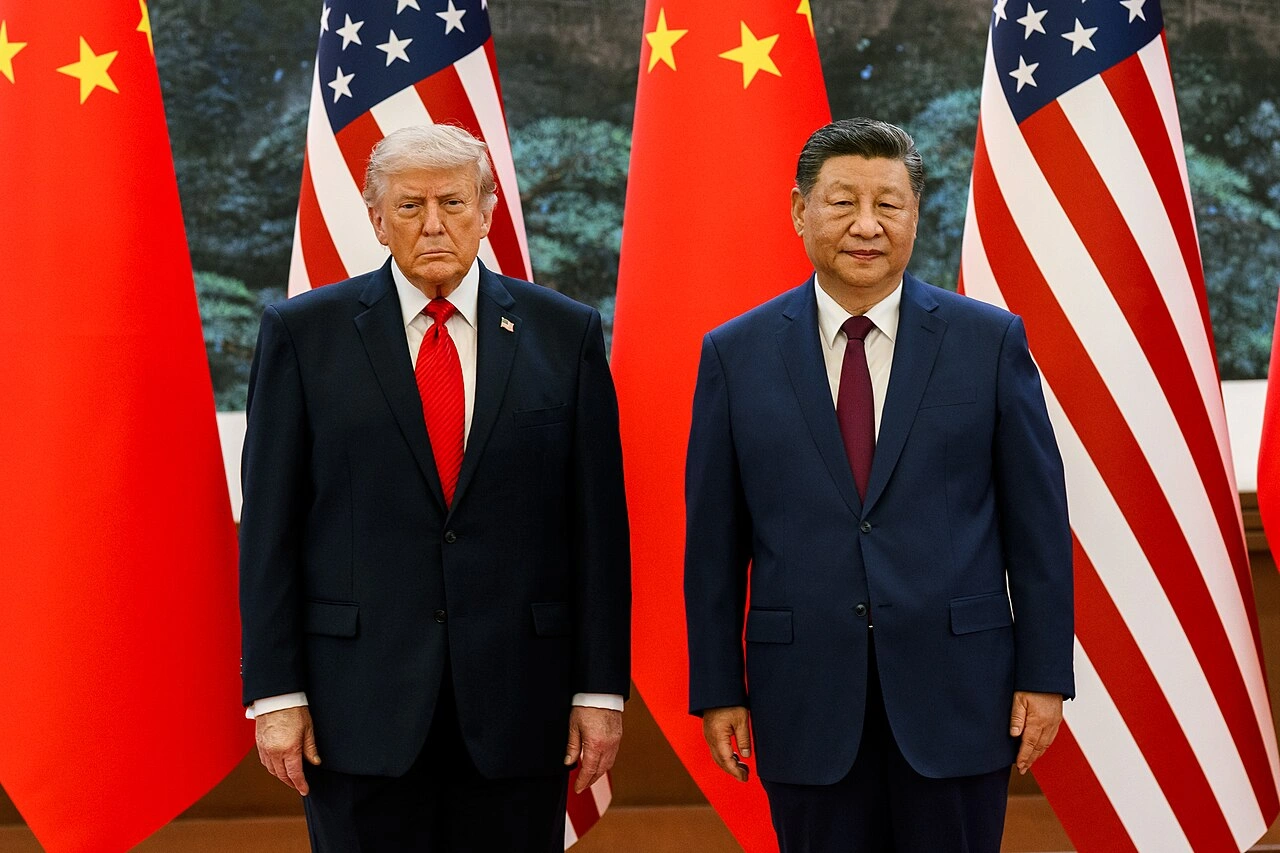
Chinese President Xi Jinping himself invoked this warning when he referenced the “Thucydides Trap” during recent discussions with President Donald Trump. The phrase derives from the ancient Greek historian Thucydides, who chronicled the Peloponnesian War between Athens and Sparta. His famous observation remains hauntingly relevant: “It was the rise of Athens and the fear that this caused in Sparta that made war inevitable.”
The theory has since become shorthand for the recurring historical pattern in which a rising power threatens an established hegemon, creating tensions that often spiral into conflict. Harvard political scientist Graham Allison, in his widely discussed study Destined for War, identified 16 major cases of such rivalries over the past five centuries. Twelve ended in war.
Perhaps the most important lesson is that fear itself becomes the accelerant.
Throughout history, dominant powers have often destroyed themselves not because rivals conquered them outright but because they lashed out in panic at the prospect of decline. Many of the empires toppled by history initiated catastrophic conflicts precisely because they could not psychologically accept a changing balance of power.
Within parts of the modern American political right — particularly among many adherents of the MAGA (“Make America Great Again”) movement — national greatness has become deeply intertwined with maintaining absolute supremacy. The belief persists that America must remain the unquestioned number one military and economic power on earth or risk collapse. Any suggestion of multipolarity is treated almost as civilisational surrender.
But such thinking confuses dominance with strength.
In reality, America’s greatest era of growth did not occur when it was the global hegemon. The United States spent much of its first 130 years as a relatively secondary power in the broader geopolitical struggles of Europe’s empires. During that time, however, America experienced explosive economic growth, industrial expansion, entrepreneurial innovation and the flowering of local self-government and constitutional liberty.
The young republic became prosperous not because it ruled the world but because it focused on building itself.
The United States grew while Britain controlled the seas. It industrialised while France, Russia, Austria and Prussia competed for dominance in Europe. America’s internal dynamism — its energy, ingenuity, commerce and civic institutions — mattered more than whether it sat atop a global hierarchy.
Today, however, many Americans appear unable to separate national success from global primacy.
A generation raised amid American unipolar dominance after 1945 often mistakes inherited power for permanent entitlement. Yet history shows that the generations who inherit hegemonic systems are rarely the same generations that built them. The discipline, sacrifice and industrial focus required to construct an empire are often replaced over time by complacency, debt, overextension and entitlement.
Imperial Spain exhausted itself defending global supremacy. Britain bled itself financially through two world wars to maintain balance-of-power dominance. Wilhelmine Germany launched catastrophic conflict out of fear that Russia’s growth would eventually eclipse it. Imperial Japan, believing American sanctions threatened its survival, lashed out at Pearl Harbor rather than accept strategic limitations.
The tragedy in many of these cases is that the established powers often destroyed the very systems that had made them successful.
America should recognise another historical parallel much closer to home: the American Civil War itself.
The Thucydidean dynamic can apply not only between nations but also within them. The Southern states of the old Confederacy, fearing the loss of political and economic influence within the Union, ultimately chose secession and war rather than adaptation within a changing national order. In attempting to preserve their position, they destroyed much of the civilisation they sought to defend.
That lesson should not be lost on modern America — particularly across parts of the old Confederacy, where some of the loudest calls for confrontation now emerge. Republican Senator Lindsey Graham, who has increasingly become an avatar for America’s reactionary war-hawk establishment, frequently frames geopolitical rivalry with China, Iran and other adversaries in near-existential terms. His rhetoric reflects a broader strain within American politics that equates restraint with weakness and assumes that any challenge to American supremacy must ultimately be met through overwhelming force.
History suggests this mindset is often the precursor to decline rather than its cure.
The greatest powers frequently become most dangerous not at the height of their confidence but at the onset of their insecurity. Fear of losing dominance has repeatedly driven nations into catastrophic overreach. The South in 1861 believed it was acting to preserve its way of life.
Similar dynamics emerged in Imperial Germany, Imperial Japan and elsewhere, where leaders embraced escalation in the name of preservation and instead accelerated the destruction they feared most.
That same psychology increasingly lurks beneath America’s growing panic over China.
For many Americans raised during the extraordinary but historically unusual period of post-1945 American hegemony, the idea of no longer being the single unquestioned superpower feels unimaginable. Confusing primacy with survival is precisely the kind of civilisational error that has trapped rising and ruling powers throughout history.
Especially because the United States itself helped create the modern China it now fears.
Following Nixon’s and Kissinger’s opening ties to China, and following Mao’s demise, American corporations eagerly pursued cheap labour and vast consumer markets. Western capital, technology, manufacturing expertise and trade policy fuelled China’s industrial ascent. Washington helped integrate Beijing into the World Trade Organization under the assumption that economic liberalisation would inevitably produce political convergence with the West.
Instead, America helped empower a civilisation-state with four thousand years of history, immense demographic scale, deep national cohesion and a strategic culture shaped by centuries of statecraft.
It should never have surprised anyone that China would eventually seek a larger role in world affairs.
Nor should it surprise anyone that China increasingly believes the Pacific cannot remain indefinitely dominated by a foreign naval power stationed thousands of miles from home.
This does not mean China’s ambitions are harmless. Beijing’s behaviour toward Taiwan, the South China Sea and regional influence raises legitimate concerns. But recognising those realities differs from treating any reduction in American dominance as intolerable.
The United States today faces a profound choice. It can attempt to preserve unipolar supremacy indefinitely through confrontation, economic decoupling, military escalation and ideological crusades. Alternatively, it can adapt to an emerging multipolar world while preserving what actually made America exceptional in the first place: constitutional liberty, economic creativity, local self-government, entrepreneurial dynamism and civic confidence.
Those qualities do not require global hegemony.
Indeed, America may ultimately rediscover itself more effectively by relinquishing the illusion that it must permanently dominate the globe.
The greatest danger lies in America becoming so psychologically dependent upon supremacy that it destroys itself trying to preserve a historical moment that was never destined to last forever.
The U.S escaped such a trap once before. When America surpassed Britain economically in the late 19th century, London ultimately chose accommodation over confrontation. Britain recognised that Germany’s militarised ambitions posed the more immediate threat, while a rising America, despite tensions and rivalry, shared deeper cultural and commercial ties with the British world.
Yet Britain’s fear of Germany still ultimately prevailed. British leaders increasingly came to believe that war on the continent might be necessary to prevent Berlin from dominating Europe and eclipsing British power. In the end, Britain defeated Germany militarily, but the cost of two world wars shattered the financial and imperial foundations of British global supremacy itself. London preserved the balance of power in Europe yet exhausted its own position as the world’s dominant empire in the process.
That is the deeper warning of the Thucydides dynamic: even when the ruling power ‘wins’, fear-driven conflict can still destroy the very supremacy it sought to preserve.
If America believes it can survive only as the world’s unquestioned hegemon, fear itself may drive the very conflict that destroys the republic it seeks to preserve.
But if America remembers that its greatness once emerged long before global supremacy — from liberty, commerce, innovation, local institutions and constitutional restraint — then perhaps it can avoid the fate that has consumed so many great powers before it.

American author, political thinker and U.S Navy veteran Michael Bedenbaugh is a respected voice in constitutional principles and American governance. Based in South Carolina, he contributes to national discussions on American politics, historic preservation and civic reform. He is the author of Reviving Our Republic: 95 Theses for the Future of America and host of the podcast Reviving Our Republic. He previously ran as an independent candidate for Congress.
READ MORE: ‘To fix a broken America, it must turn away from empire‘. In the final part of Is America Broken?, US political analyst Michael Bedenbaugh argues that America’s crisis can only be resolved by stepping back from decades of expansion and restoring the balance of power its founders intended.
Do you have news to share or expertise to contribute? The European welcomes insights from business leaders and sector specialists. Get in touch with our editorial team to find out more.
Main Image: Jaxon Matthew Willis/Pexels