As Brussels strips back EU sustainability reporting rules, companies risk discovering that corporate compliance built structures without creating commitment. The European’s new Business Strategy & Organisational Behaviour Correspondent, Marcus Iles, says leaders must now measure whether people actually believe in the strategies they are being asked to execute
On February 24, the Council of the European Union gave final approval to the Omnibus I simplification package, with the revised rules coming into force on March 18. The headline was straightforward deregulation: the Corporate Sustainability Reporting Directive now applies only to companies with more than 1,000 employees and more than €450 million in turnover, up from a framework in which 250 employees was one of the size thresholds used to define a large undertaking. This has meant an estimated 90 per cent of previously in-scope companies were released from the requirement altogether.
Almost every analysis of that decision has focused on regulation: whether Brussels blinked, whether competitiveness demanded it or whether the green agenda has stalled. But the change has also created something much more useful for leaders. By removing a legal requirement that had driven years of investment, the European Union has unintentionally created a large-scale test of what happens when the mandate behind a corporate strategy disappears.
For roughly three years, tens of thousands of European companies built real apparatus in response to that legal requirement. They appointed heads of sustainability, established board committees, bought data systems, trained finance teams and mapped supply chains. Then the requirement was withdrawn from most of them, effectively asking a question leaders rarely get answered so clearly: if the mandate evaporates, what is still standing?
The first set of results is encouraging. Research by the software provider osapiens, conducted with Andreas Rasche of Copenhagen Business School and surveying more than 400 executives across Europe and the UK, found that 90 per cent of companies removed from CSRD scope intend to maintain or expand their sustainability reporting, while 86 per cent say they can continue producing reports to CSRD-level standards. Some 90 per cent describe reporting as partially or fully integrated with financial reporting. Read on its own, that suggests regulation succeeded in embedding practices deeply enough for them to continue without the original requirement.
The second set of results complicates that picture. The Sustainability Transformation Monitor 2026, published by the Bertelsmann Stiftung with Stiftung Mercator, the University of Hamburg and the Peer School for Sustainable Development, surveyed 822 German organisations across the real economy and financial sector. Around 70 per cent have sustainability responsibility at board or executive level. Some 86 per cent record greenhouse gas emissions, at least in part, and 59 per cent have set climate targets.
Yet 59 per cent also say current political debate is causing sustainability to lose internal importance. Roughly 41 per cent are still ‘in planning’ when it comes to how they would actually meet the climate targets they have published. And 83 per cent have yet to see a viable business case for sustainability. The report’s own outlook makes the same point: the institutional foundations have been laid but the transformation is losing momentum.
The concern appears even in the more optimistic survey. Some 84 per cent of those executives expect reduced regulatory scrutiny eventually to result in fewer internal resources for the work they have just told researchers they intend to maintain or expand.

Taken together, the findings point to a striking conclusion: the apparatus survived while the conviction didn’t. Companies may keep the machinery because it has become integrated into financial reporting and would be costly to dismantle, while the belief that was supposed to sit beneath it never became equally secure.
That exposes the central distinction: the difference between a strategy that has been installed and one that people genuinely believe in. The evidence suggests that many organisations became good at building the structures required by the mandate without creating an equally strong internal understanding of why those structures were important.
It is worth being precise about where that gap sits. In the German data, 43 per cent of organisations do recognise financial added value in sustainability work but believe that value falls short of what the work costs them. Many have run the logic and found the gap, which is a considerably harder position to shift than indifference.
External pressure does not appear to be closing that gap either. Only 30 per cent of companies rate sustainability as important in their financing conversations, and even among banks the figure is 37 per cent. The market was supposed to supply the conviction the mandate couldn’t. These figures suggest it is not yet doing so consistently.
The same problem reaches well beyond sustainability. I would argue that it exposes the single biggest obstacle to strategy execution: organisations can create all the structures required to support a strategy without creating a shared belief in the strategy itself.
Coordinated action in an organisation depends on three things being genuinely shared. People have to be attending to the same priority. They have to interpret it in broadly the same way, with a common understanding of what the strategy means, why it matters and what it requires of them, their team and the wider business. And they have to share an expectation about the future, including a belief that the organisation will still care about the ambition in two years’ time when pursuing it becomes difficult or inconvenient.
Get all three and you have something that behaves like a shared mind: thousands of individual decisions, made without supervision, beginning to point in the same direction.
Mandates are extraordinarily effective at manufacturing the first condition: attention. A legal requirement appears on agendas, generates deadlines and consumes budget. By itself, however, it cannot create a shared interpretation of why the work matters. It can also undermine shared expectation because compliance creates its own assumption: that the organisation will continue for as long as the rule requires it to.
If the rule was the principal reason for acting, its repeal weakens the reason for continuing. The fact that 83 per cent of German organisations see no viable business case in sustainability shows how vulnerable a strategy can become when external obligation has done more work than internal conviction.
The same pattern runs through other areas of European corporate activity. Digital transformation programmes – AI, anyone? – can show impressive adoption figures while employees remain unable to explain why the new system is better. Safety cultures can be measured through completed training modules without revealing whether safer behaviour has actually become embedded. Inclusion strategies can have governance structures, targets and reporting lines while employees still experience them largely as administration.

In each case, the apparatus is easy to build, easy to count and comforting to report. Shared understanding is slower, harder and almost invisible. The danger is that organisations measure the apparatus and call it progress without asking whether people understand, believe in and expect the underlying strategy to last.
Three lessons follow for anyone responsible for a strategy that depends on people actually executing it. First, stop measuring installation and start measuring belief. Engagement scores are not enough. Leaders should ask whether people can explain the strategy in their own words, whether it moves them at all, whether they find its logic credible and whether they expect leadership to maintain it when doing so becomes inconvenient. Those questions tell you much more about whether a strategy has genuinely taken root than a completion rate alone.
Second, understand how belief works. Belief precedes the first behaviour. After that, the relationship begins to reverse: repeated behaviour can produce and deepen belief as people see what their actions actually achieve. The companies still reporting in 2030 will not necessarily be those with the most sophisticated systems but those in which enough people continued doing the work for long enough for it to acquire meaning.
That makes the first ask the hardest, and the currency available for it is borrowed belief. Before people have direct evidence that the strategy works, they may have to borrow that belief from a leader who can explain why the strategy is important in a way they find credible enough to act on.
Third, accept that an interpretation gets shared because somebody made it sharable. Interpretation travels in narrative, not in frameworks, because a story can be retold by somebody who did not write it. A strategy nobody can retell is not shared, however nicely designed the original PowerPoint deck may have been.
Brussels has unintentionally given European business a valuable demonstration of what happens when external pressure is removed from an established corporate priority. On this reading, deregulation exposed where belief had already died… or had never lived in the first place.
That leaves every board with a more uncomfortable question than which reporting standard to use now that the pressure has eased: which of our other strategies would still command attention, understanding and belief if the mandate to follow them disappeared?

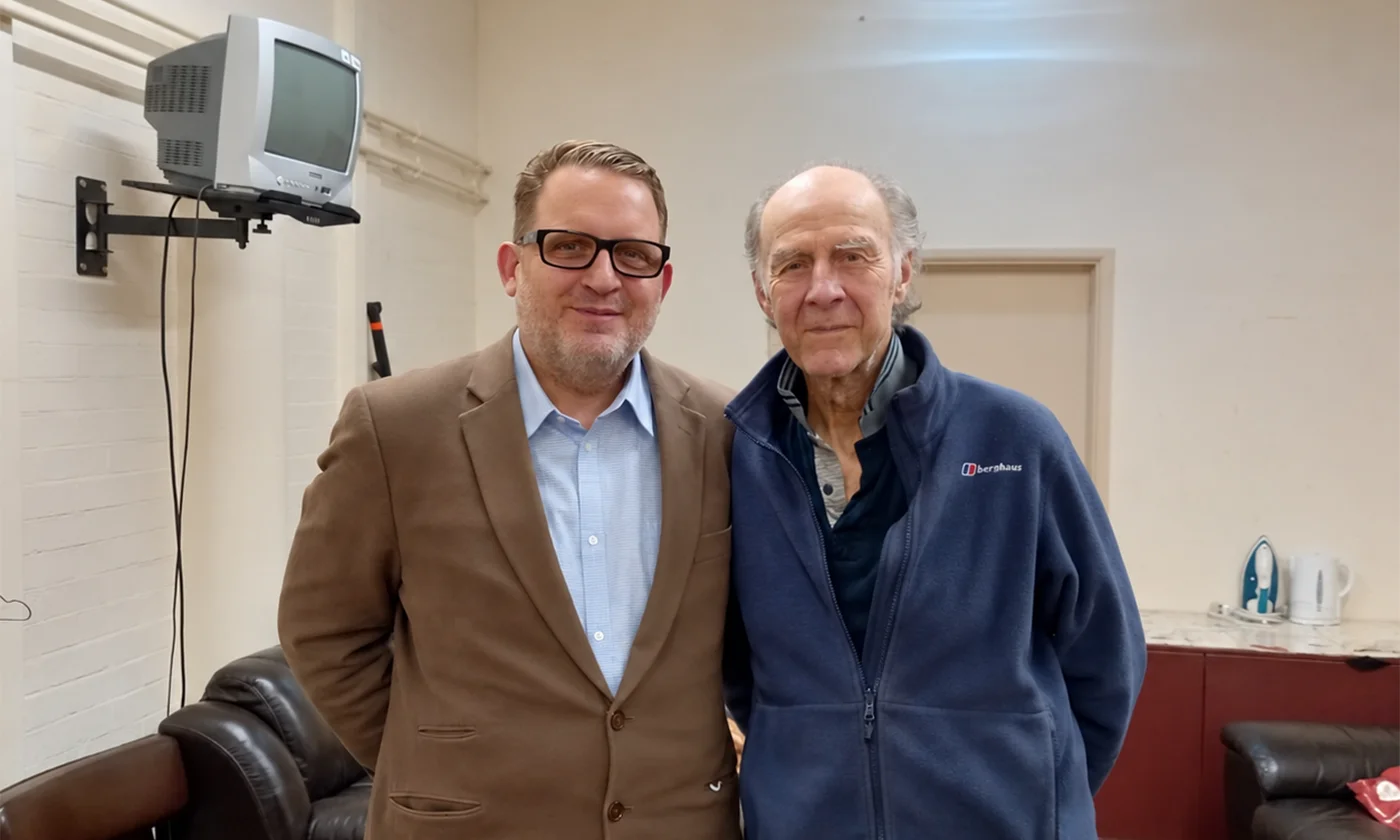
Marcus Iles is a business strategy and organisational behaviour expert specialising in strategy activation, leadership alignment, organisational storytelling and people engagement. With 25 years’ experience spanning advertising, creative strategy, organisational storytelling and consultancy, Marcus – a former Chief Storytelling Officer at The Storytellers and an award-winning advertising creative and strategist – examines why strategies that appear clear at leadership level can fragment when they are interpreted and acted upon across an organisation.
READ MORE: Menopause may make women leaders more empathetic – even as it leaves them drained. Severe symptoms can drain women leaders psychologically but the experience may also make them more empathetic towards employees, according to new research.
Do you have news to share or expertise to contribute? The European welcomes insights from business leaders and sector specialists. Get in touch with our editorial team to find out more.
Main Image: Atypeek Dgn / Pexels