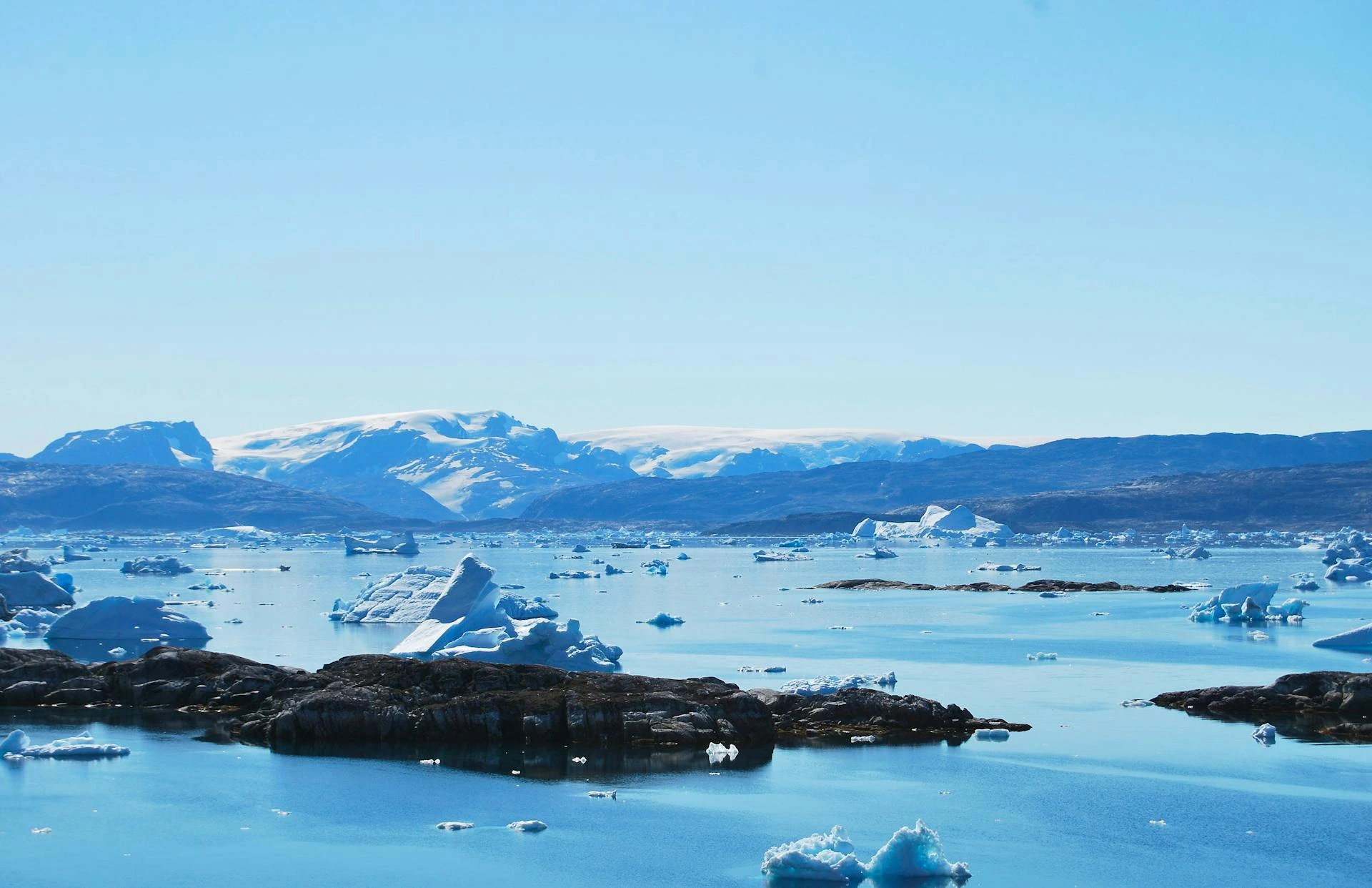
From Frobisher’s fool’s gold to Franklin’s fatal voyage, Britain’s history in the Arctic is as deep as it is dramatic. Dr Linda Parker traces four centuries of exploration, science and strategy to argue that this legacy gives the UK, and Europe by extension, both the expertise and the responsibility to help shape the region’s future
For much of modern history, the Arctic has been a stage on which European ambition, science and strategy have played out, and in the 21st century, melting ice and a changing climate have only intensified its importance, shifting it from the fringes of the map to the very centre of global politics.
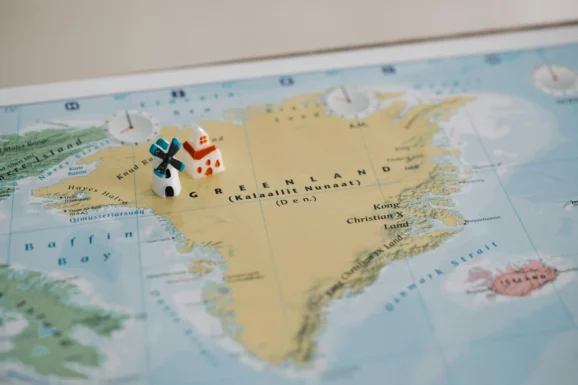
Sovereignty disputes, the race to exploit raw materials, and the strategic potential of new ice-free shipping routes continue to dominate the Arctic Council’s agenda and divide its members. Donald Trump’s attempt to buy Greenland, justified by its strategic position and rare earth minerals, was a reminder of just how high the stakes have become.
Today, the states bordering the Arctic Ocean lead the conversation yet for four centuries, Britain was one of the region’s principal actors, shaping its exploration, mapping, and even its mythology. That legacy matters now for the United Kingdom and, by extension, for Europe as a whole.
Britain’s Arctic story begins in the 16th century, when the lure of new lands, the Northwest Passage and the North Pole drew politicians, naval officers, traders and adventurers northwards. These expeditions mixed commercial ambition with patriotism and fired the public imagination. The voyages of Martin Frobisher in the 1580s promised gold – later exposed as iron pyrites – while those of John Davis in the 1590s expanded mapping and triggered a boom in the whaling trade. Whaling skill and experience would later prove essential to more ambitious ventures.
The discovery of Baffin Island pushed the search for the Northwest Passage forward, and over time British explorers mapped large swathes of the Northwest Arctic in their long pursuit of an eastward sea route through the ice.
In 1817, Admiralty Second Secretary John Barrow sounded a warning: Russian ships, he claimed, were seeking a northern route from the Pacific, threatening British security in North America and challenging naval prestige. The following year, the revised Longitude Act of 1818 offered new financial rewards, prompting four British explorers – John Ross, William Parry, John Richardson and John Franklin – to embark on their own Arctic expeditions. Their Admiralty orders emphasised scientific objectives such as charting coastlines, recording weather patterns, and mapping unvisited waters, but the strategic purpose was unmistakable: these voyages were also intended to counter Russia’s reported search for a northern sea route from the Pacific, to safeguard British security in North America, to reinforce national prestige in the age of imperial rivalry, and to assess routes that could one day serve as valuable trade or naval corridors.
The British public followed these expeditions avidly, devouring reports in popular journals. Artists like Edwin Landseer immortalised their struggles, most famously in Man Proposes, God Disposes. For Barrow, writing anonymously in the Quarterly Review in October 1817, Arctic exploration was “a peculiarly British object”. It was an expression of national character, science, seamanship and imperial pride.
Sir John Franklin became the Victorian era’s emblem of Arctic endeavour. Already known for his 1819 and 1825 Arctic Canada expeditions and nicknamed “the man who ate his boots”, Franklin set out on 19 May 1845, aged 59, to solve the Northwest Passage once and for all. Their ships Erebus and Terror, with experienced crews, reinforced hulls and provisions for years, sailed into what proved to be some of the worst ice years in the past millennium, confident of success. Last seen by two whaling ships in July 1845, they disappeared without trace.
The mystery ignited public fascination. Charles Dickens, in Household Words, kept the story alive, while in 1849 the Admiralty offered a £20,000 reward to any ship or crew, of any nationality, who could find Franklin. Between 1848 and 1859, forty rescue expeditions ventured into the Arctic. None succeeded in bringing the ships home, but their work was not in vain: they confirmed the existence of the Northwest Passage, identified possible alternative routes, and mapped thousands of miles of its main waterways. Franklin’s fate remains debated to this day.
By the early 20th century, Britain faced new competition from the United States and Scandinavian countries and turned its attention to the Antarctic. Arctic work resumed in the inter-war years, led by Oxford and Cambridge graduates with a different purpose: meteorological and geographical research to support the era’s new transatlantic flight ambitions. In 1931, Gino Watkins’s British Arctic Air Route Expedition examined Greenland for airfields that could carry airmail and passenger traffic across the Atlantic. Within a decade, these flight paths became vital to the Allies, moving men and aircraft and countering the U-boat threat. Allied air bases were often built close to the base camps chosen by the 1930s expeditions.
In 1936, Alexander “Sandy” Glen led an expedition to Svalbard to study how Arctic ice cap conditions influenced European weather patterns. The Second World War would prove how far-sighted his work was: the very knowledge he gathered on Arctic weather patterns became critical for wartime forecasting, naval planning, and Allied operations in the North Atlantic.
Svalbard’s strategic value became obvious: weather stations were essential for both Axis and Allied operations in the North Atlantic. In April 1942, Glen joined Operation Fritham to establish Allied stations and investigate suspected German-manned ones. When the mission’s two ships, Isbjørn and Selis, were sunk before landing, Glen’s Arctic expertise ensured the survival and eventual rescue of the survivors. The precision forecasting that helped make D-Day possible drew heavily on Britain’s high-Arctic experience from the inter-war years.
In the decades since, British names have continued to be associated with the Arctic. Sir Ranulph Fiennes and Pen Hadow have made it a proving ground for endurance, with challenges designed to be undertaken solo or without logistical support. Television documentaries – including one by the BBC Top Gear team which drove to the magnetic North Pole – have opened its history to a broad public, while the role of the Arctic’s Indigenous peoples, especially the Inuit, has begun to take its proper place in the narrative in both an historical context and in present-day management. These discussions have highlighted the long history of European and British involvement in the Arctic environment and its effects on Inuit communities.
From the early voyages to the present, Britain’s explorers, politicians, scientists and military commanders have recognised the Arctic’s influence. Victorian crowds flocked to panoramic exhibitions of the ice; today’s audiences watch high-definition footage on screen and follow Arctic politics on TikTok. The fascination endures because the stakes remain high.
The Arctic’s environmental, strategic and economic pressures are intensifying, and their effects are already shaping Europe’s weather patterns, trade routes and security decisions. These concerns demand coordinated action from those with the capacity and experience to respond. Britain’s centuries of exploration, scientific research and operational skill in the region provide exactly that, offering insights and capabilities no ‘newcomer’, Trump included, can easily match. When Arctic exploration was described as “a peculiarly British object” it reflected a national ambition; today it should be understood as a commitment to apply that legacy in concert with European partners to safeguard the region’s future.

Dr. Linda Parker is widely considered to be one of Britain’s leading polar and military historians. She is the author of six acclaimed books, an in-demand public speaker, the co-founder of the British Modern Military History Society, and the editor of Front Line Naval Chaplains’ magazine, Pennant, which examines naval chaplaincy’s historical and contemporary role.
Main photo: Jean-Christophe André/Pexels