Men are increasingly discussed as though ‘masculinity’ is a single condition with a single problem. But according to sociologist Dr Stephen Whitehead, there are five masculinities, reflecting men responding very differently to profound changes in work, relationships and ageing. And each masculinity, he says, demands a different type of response
Consider five men. The first is 24, posts about discipline and dominance, and can tell you what a woman owes a man. The second is 31, a full-time househusband whose wife earns for the family. The third is 38 and hasn’t left his flat except for deliveries since a job ended in 2022. The fourth is 51 and hasn’t told anyone how he feels since his father died. The fifth is 82, and understands what it means to be a man only now the scaffolding has gone.
One is a fundamentalist, one a progressive, one has collapsed, one is traditional and one has arrived at the last masculinity. Public conversation has a single word for all five: ‘masculinity’.
Let’s start with what most commentary gets wrong. Masculinity is not a quality a man has, in the way he has a blood type, but is something he does, repeatedly, in front of other people. And like any performance, it needs a stage, an audience and props.
For most of the last century those props were stable. Paid work, an income others depended on, a body that could lift or endure. Sport played rather than watched. Sex. Children. Other men in numbers, supplied by the shop floor, the terrace, the regiment, the bar.
None of that is biological. Testosterone doesn’t issue a mortgage or organise a five-a-side team. Average differences in size, strength and hormones are real and matter at the extremes, but they do not deliver the provider, the protector or the patriarch. Those are cultural arrangements, and if they were fixed in biology we wouldn’t be watching them dissolve in a single generation across every developed economy at once.
Which is why there is no such thing as masculinity, singular. There are masculinities: narratives available to men, each requiring particular conditions, each taken up because a man’s circumstances permit it.
Across 35 years of research I have identified five types, embodied in the five examples I gave above.
The first and oldest is traditional masculinity, and here the vocabulary has become genuinely confusing, because we have three words for it.
Hegemonic masculinity is sociologist R. W. Connell’s term, from Masculinities (1995), and it names the structure: the version of manhood sitting above all others and above all women, generating authority and status for men in general, including men with no personal power at all.
Traditional masculinity names the lived form: provider, protector, head of household, emotionally contained. Toxic masculinity, a term I helped develop and stand by, names the damage: entitlement, emotional suppression, the dominance that harms women and the men performing it.
Structure, form, damage: three angles on one formation. They are not three kinds of man, and treating them as though they were has made the public argument almost unusable. When a woman says ‘toxic masculinity’, she is describing behaviour she has experienced. When a man hears it, he thinks he is being told that being male is a disease.
I would keep the word. It describes something real, it was hard won, and softer alternatives have failed to name the harm. But its job is not to explain every man.

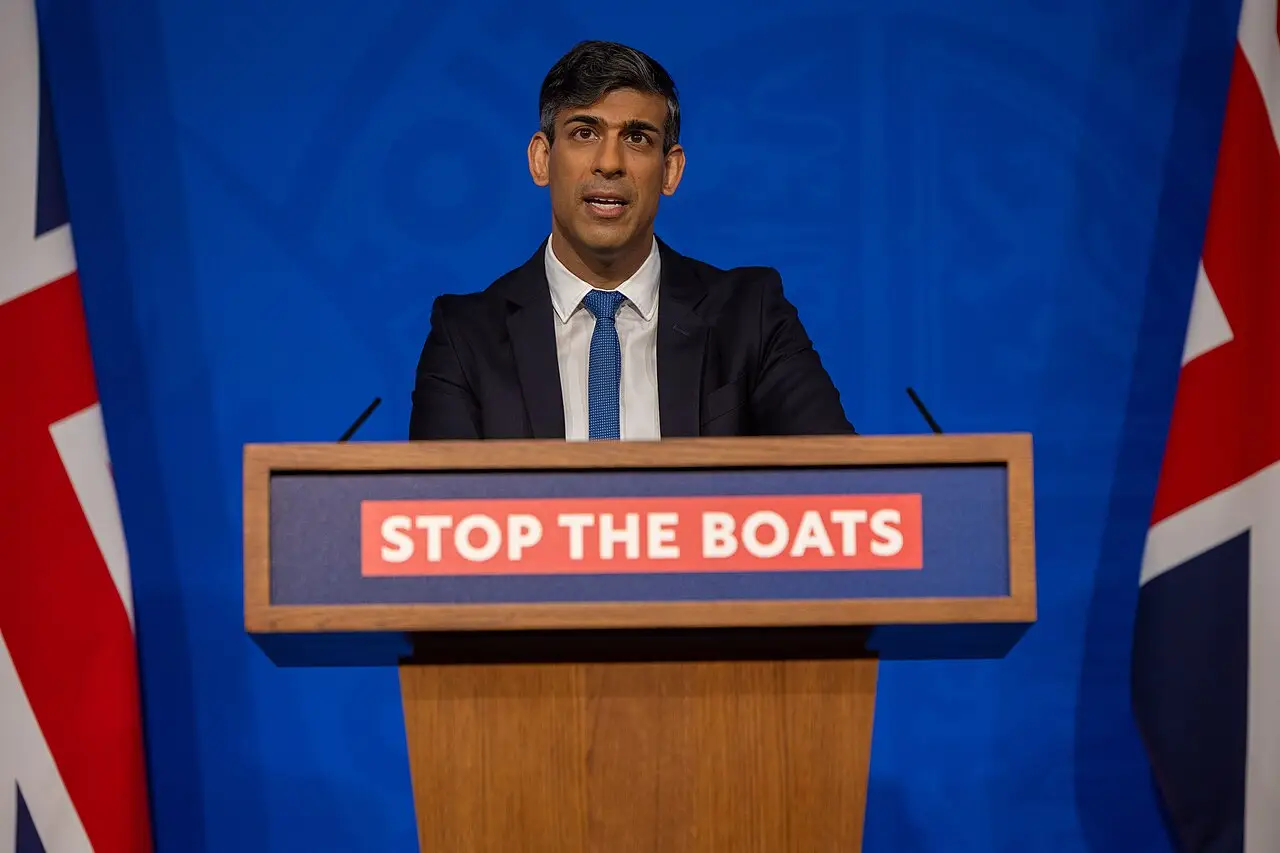
The second masculinity is male fundamentalism: what happens when traditional masculinity is codified into a creed and defended as a cause. Think of the Taliban or Vladimir Putin.
An ordinary traditional man does not have a theory. Rather, he has habits. He works, he provides, he doesn’t talk about his feelings, and he would be baffled to be told he holds a position. Fundamentalism is that position: the explicit, monetised claim that the old arrangement was correct and that women took it away.
That is what the manosphere is. Red pill, black pill, incel, MGTOW (Men Going Their Own Way): terms now familiar across the online manosphere. A HOPE not hate poll found that 79 per cent of British boys aged 16 and 17 had consumed Andrew Tate content, a higher share than had heard of the then prime minister. And an Ipsos survey of 23,000 people across 29 countries this year found that 31 per cent of Gen Z men agree a wife should always obey her husband, against 13 per cent of Baby Boomer men. On that question, the grandsons are twice as traditional as the grandfathers.
The manosphere is not the cause of that but the ideological expression of a masculinity whose material base has gone, and currently the only organisation on earth offering young men an identity, a hierarchy and an explanation. Grievance is a product, and it sells because nobody else has brought anything to market.
The third is progressive masculinity: men with a healthy self-love and the capacity to relate to women as equals. Their orientation is partnership rather than control, collaboration rather than competition. They reject male victimhood, not out of piety but because they have no grievance to nurse – women’s independence doesn’t threaten them. Inside actual partnerships, I have called this ‘collaborative masculinity’.
These are not exceptional men. One in our research, an ordinary 32-year-old in the north of England, objected to being written up as some kind of new man. He likes women, has always had close friends of both sexes, and finds it sad that anyone would go through life disliking half of humanity.
Across the same 29 countries included in the Ipsos study, only one in six people think women should take most of the responsibility for childcare, and 77 per cent want decisions at home shared equally. What is unusual is knowing it. 21 per cent personally agree that men should have the final word at home, while 31 per cent believe their countrymen do. Progressive masculinity is a majority position that men believe is a minority position.
The fourth type is collapsed masculinity, and it’s not another way of being a man but the absence of the means to be one. The Japanese call the most visible version hikikomori – men withdrawn to a bedroom for years – and they are in your neighbourhood too.
Take one prop away and a man improvises. Take two and he compensates. Take them all at once, which is what the past 40 years have done, and there is no performance left to give.

The numbers are not impressionistic. Weekly sex among American adults aged 18 to 64 has fallen from 55 per cent in 1990 to 37 per cent in 2024. Five times as many American men report having no close friend as in 1990, with the share holding six or more cut in half. Britain passed a million young people not in education, employment or training in early 2026, of whom 553,000 were young men. And withdrawal has stopped being Japanese: the largest meta-analysis to date, covering 58,229 participants, found a global prevalence of around 8 per cent, with no difference between East Asian and Western populations.
Researchers now distinguish between pathological and non-pathological hikikomori, recognising that some people who meet the physical withdrawal criteria report no significant distress or impairment. Collapsed masculinity is distinct from a broken version of traditional masculinity: it is what remains when the stage, the audience and the props have gone – and many of these men have made a reasonable calculation about what the outside now offers them.
The fifth type of masculinity is one I am researching now, in a study of 21 men in their 60s, 70s and 80s across four continents. I call it the ‘last masculinity’, and it arrives when time rather than economics removes a man’s props.
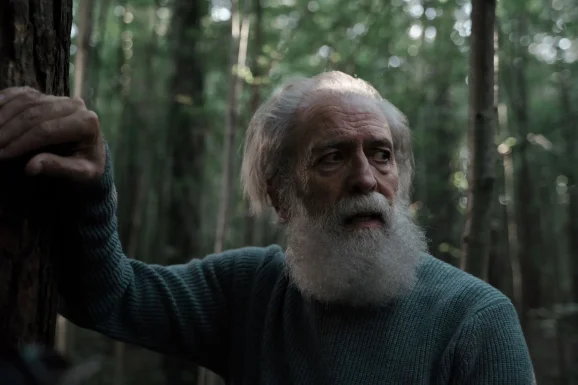
It has its own features. Blocked usefulness (the capacity to contribute survives the demand for it), premature obsolescence (a man is finished with by society long before he is finished), and what I call ‘unavoidable clarity’, which is the compensation. Strip away physical prowess, virility and occupational status and what is left is a man who can finally see himself, usually with some guilt attached, and more honestly than at any earlier point in his life.
The age question has to be handled carefully. The body is genuinely involved: these men describe biological change undermining an immortality they never knew they assumed. But the condition is not biological. A man is not made invisible by his arteries but by removal from the visibility of work, in a culture that grants standing for usefulness and withdraws it the moment usefulness ends.
One unexpected finding is worth recording. As the conditions harden around them, these men soften rather than harden. Bravado thins and selfishness recedes. Almost all of them had never discussed their fears, their health or their sexual lives with another man before the interview.
These five are not a hierarchy, a developmental ladder or five types of man. No, they are positions, and men move between them. A man can perform traditional masculinity at 30, lose its props at 45 and collapse, and arrive at 70 in the last masculinity, having spent his 40s on grievance forums and his 60s putting all of it down.
Which is why single-word explanations fail in practice rather than merely in theory. Each position requires a different response, and the responses are not interchangeable. Traditional masculinity responds to changed institutional incentives; research across four OECD countries found that fathers who took leave, particularly two weeks or more, were more likely to be involved in childcare. Fundamentalism is an ideological market, and it won’t be argued out of existence by people unwilling to compete on distribution – a point reflected in a 2025 survey in which 76 per cent of secondary-school teachers were extremely concerned about online misogyny in their schools. Collapse responds to neither: you can’t shame a man out of a position he reached by sound arithmetic. It responds only to presence – common ground, third places, people who notice. The last masculinity needs something we haven’t built at all – a role for men after usefulness.
Japan tried compulsion with its withdrawn men, placing fragile individuals into harsh part-time work where bullying drove them further in. Europe prefers moralising, which is cheaper and equally useless.
Men are not, however, a category with a defect. They are performing whichever narrative their conditions still permit, and when the conditions change, so do the men. That’s the whole argument, and the only good news in it. Nothing here is fixed in biology. Everything here was built, which means everything here can be built differently.

Dr Stephen Whitehead is a gender sociologist and author recognised for his work on gender, leadership and organisational culture. Formerly at Keele University, he has lived in Asia since 2009 and has written 20 books translated into 17 languages. He is based in Thailand, where he leads the Global AI Intimacy Study. His forthcoming book, co-authored with Constanza Fernández Arce, is Where Have All the Good Men Gone?
READ MORE: Who pays the price when men withdraw from society? In the second part of his examination of male social withdrawal, sociologist Dr Stephen Whitehead argues that while it may create little direct harm, in the long term it affects families, employers and the stability of wider society. If those consequences are to be managed, we must first determine the value of preserving male participation.
Do you have news to share or expertise to contribute? The European welcomes insights from business leaders and sector specialists. Get in touch with our editorial team to find out more.
Main Image: Ketut Subiyanto / Pexels