Wildlife campaigner calls on Andy Burnham to stop fast-growing chicken being served across the public sector, warning some birds are slaughtered at just 35 days old
Chris Packham has called on Prime Minister Andy Burnham to ban so-called “frankenchicken” from schools, hospitals, prisons and military bases.
The wildlife campaigner wants ministers to use the Government’s purchasing power to stop fast-growing breeds being bought for public-sector meals, arguing taxpayers should not be funding a farming system he says causes widespread suffering.
The birds have been selectively bred to grow far more quickly than chickens did decades ago, with some reaching slaughter weight at just 35 days.
Packham says the rapid growth can leave birds suffering from leg deformities, skin burns and heart problems, while consumers are often given little indication of the breed or age of the chicken they are eating.
Around 95 per cent of the one billion chickens raised in Britain each year are from fast-growing breeds.
In an open letter to Burnham, Packham wrote in The European: “There is a good chance that the chicken in the Caesar salad on your desk, the burger a child eats at lunchtime, the sandwich served in a police or military canteen or the soup carried into a Whitehall office today came from a bird slaughtered at just 35 days old.
“There is an equally good chance that nothing on the packaging or menu will reveal how young that animal was, or that it had been bred to grow 500 per cent faster than chickens did in the 1950s.”
Packham is now calling for government contracts to require slower-growing breeds under standards set out in the Better Chicken Commitment, which also covers stocking density and living conditions. The Government’s current animal welfare strategy says it will support voluntary efforts to move away from fast-growing meat chicken breeds, while existing policy also backs implementation of the Better Chicken Commitment.
But Packham wants ministers to go further by removing fast-growing breeds from public procurement altogether.
He wrote: “Responsibility for this lies in the corridors of power; it lies with you. I call on you to use the purchasing power of the state: ban fast-growing breeds from public procurement contracts.
“Ban them from the chicken bought for hospitals, prisons, the armed forces and government offices now.”
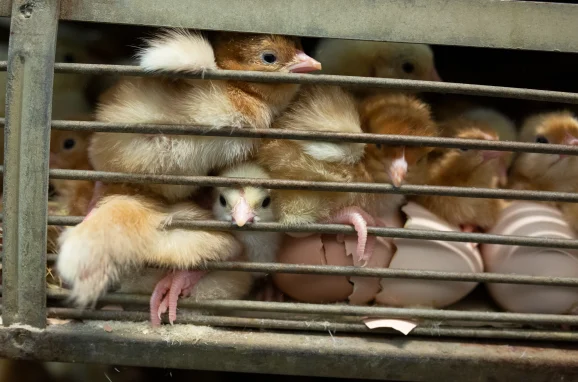
According to Packham, Britain risks falling behind other European countries. Fast-growing chickens have largely disappeared from Dutch supermarket shelves, while Norway is due to become the first country to phase them out entirely by the end of 2027 and major German retailers have committed to removing them by 2030.
He also pointed to Denmark, where politicians agreed in 2023 to begin removing fast-growing breeds from state procurement and dozens of municipalities have since introduced full or partial bans.
Packham has separately backed a campaign against Pret A Manger over its use of fast-growing chicken.
Pret originally committed in 2018 to meeting the Better Chicken Commitment by 2026 but has since set out a roadmap to move to 100 per cent slower-growing breeds by 2032. Campaign group Anima International says tens of thousands of people have pledged to boycott the chain over the delay.
Packham also highlighted Waitrose, which stopped selling fast-growing chicken in its own-brand fresh range, and M&S, which has moved away from the breeds in its fresh chicken.
He said public-sector action could create a dependable market for farmers prepared to change production methods while putting pressure on large food companies to follow suit.
Packham wrote: “Removing frankenchickens from our schools, hospitals, prisons, armed forces and government offices would improve the lives of millions of animals, create dependable demand for farmers and suppliers prepared to make the transition and challenge companies attempting to retreat from their responsibilities.”
Pret told The European that it remains signed up to the Better Chicken Commitment and already meets five of its six standards.
A spokesperson said: “We are disappointed that this campaign group has chosen to target one of the few businesses that remains signed up to the Better Chicken Commitment. It is unclear to us why activists are spending such significant funds targeting a business trying to do the right thing rather than focusing on those who have abandoned higher welfare reform entirely.
“While we respect the right to peaceful protest and the important issues this campaign seeks to raise, our priority is the wellbeing of our team members and customers. We have plans in place to support them and hope any demonstrations are conducted safely and with respect for the people who work in and visit our shops every day.”
READ MORE: Chris Packham launches campaign to rid Britain of ‘frankenchicken’. In an open letter to Andy Burnham, published exclusively here in full, the celebrated wildlife campaigner calls on the new Prime Minister to back his campaign to remove fast-growing chicken from schools, hospitals, prisons, military bases and government offices.
Do you have news to share or expertise to contribute? The European welcomes insights from business leaders and sector specialists. Get in touch with our editorial team to find out more.
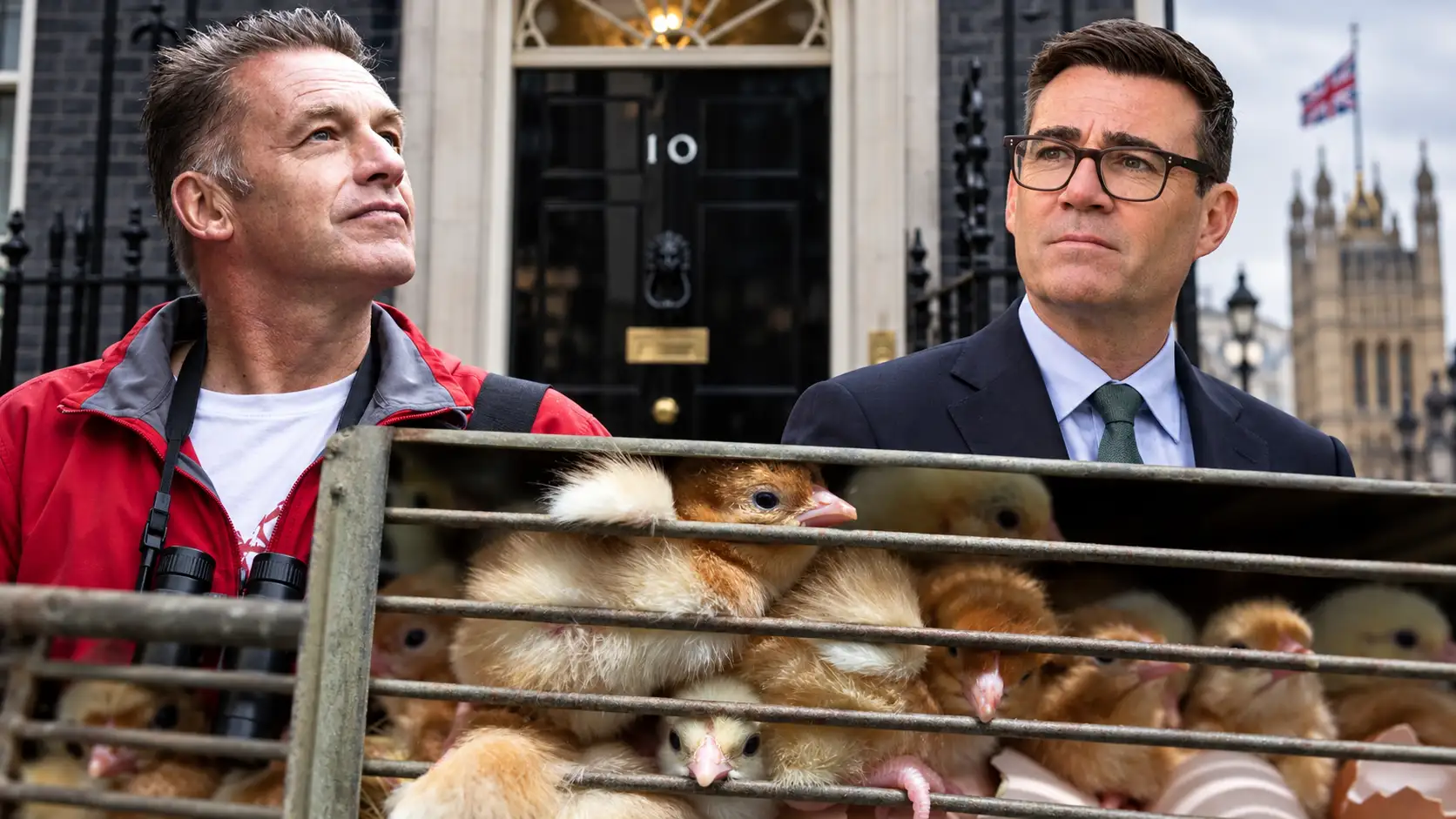
Main image: Chris Packham has urged Prime Minister Andy Burnham to ban fast-growing “frankenchickens” from schools, hospitals, prisons, military bases and government offices, arguing the state should use its purchasing power to improve chicken welfare. Image credits: Chris Packham: Garry Knight/CC BY 2.0. Andy Burnham: Alecsandra Dragoi/No 10 Downing Street/OGL v3.0. Chicks: Anima International.