China unveils giant crane capable of lifting 9,300 family cars

John E. Kaye
- Published
- News, Technology
Chinese machinery group says record-breaking lifting system will target nuclear, conventional power and offshore wind projects as developers build larger and more modular infrastructure
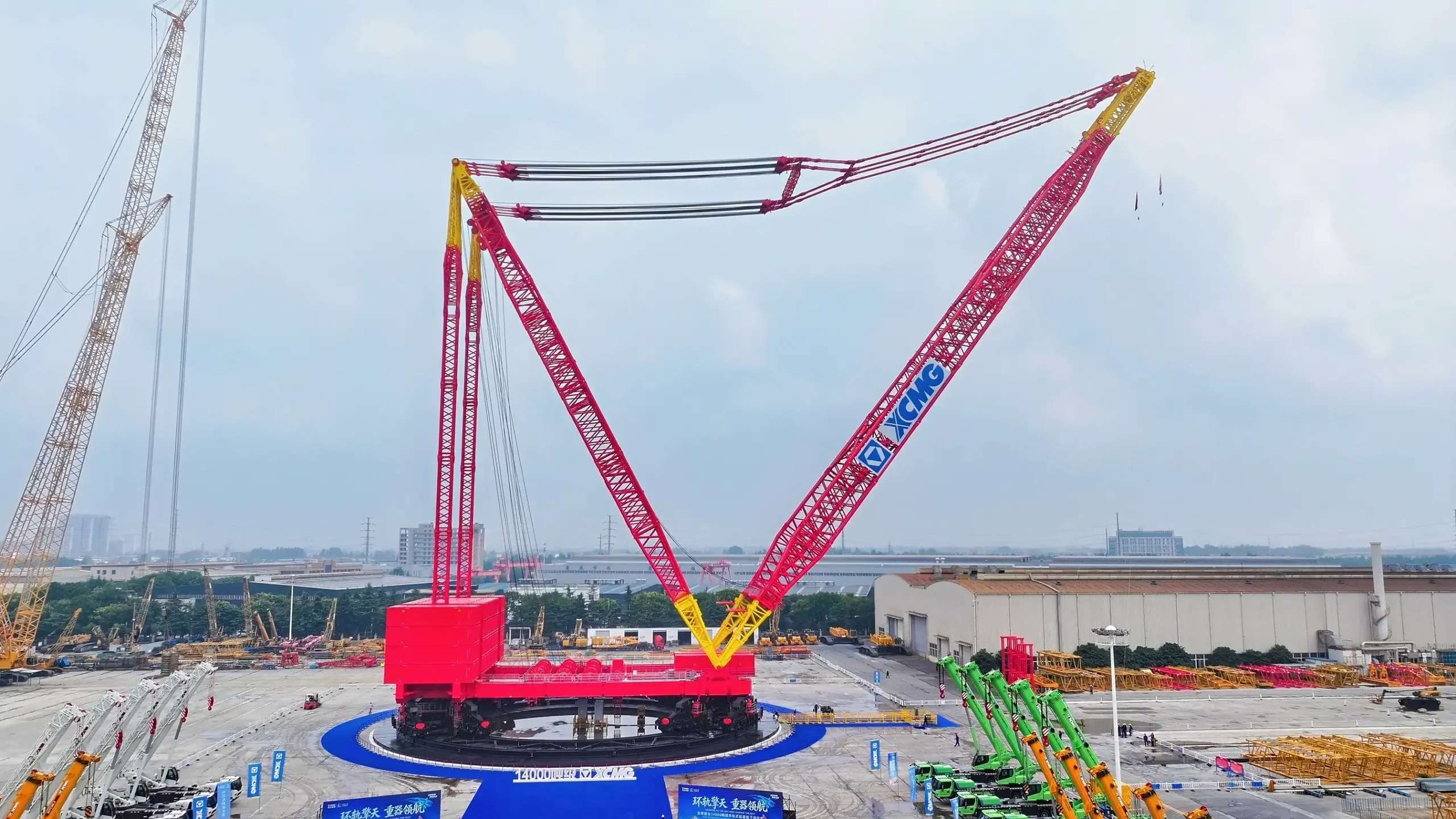
Chinese construction equipment giant XCMG has unveiled what it says is the world’s first 14,000-tonne ring crane, targeting growing demand from nuclear power, conventional energy and offshore wind projects.
The machine, developed with Sinopec Heavy Lifting & Transportation, has been designed for the increasingly large components being used in major energy developments.
XCMG said the crane will have a maximum lifting capacity of 14,000 tonnes – roughly the weight of 9,300 average family cars – and a maximum lifting moment of 700,000 tonne-metres once its two main units are completed and combined.
The first unit has already been assembled and can operate independently.
The company is pitching the machine at some of the biggest and most complex construction projects worldwide, particularly as nuclear power plants become larger and increasingly rely on prefabricated modules.
Yang Dongsheng, chairman of XCMG Group and XCMG Machinery, said: “This crane is more than an incremental improvement; it represents a transformative leap for the global heavy-duty lifting industry.
“Our partnership with Sinopec has created a new integrated model encompassing research and development, production, and application, setting an industry benchmark for independent innovation and engineering application of large-scale equipment.”
For nuclear projects, XCMG says the crane can handle plant modules and large equipment for two ‘nuclear islands’ from a single position and with one boom configuration.
It is also designed for conventional power projects, where large columns and vessels can be lifted as single units rather than in sections, potentially reducing assembly and installation work.
In offshore wind, the crane’s lifting capacity and height are intended to support the installation of larger turbines as the sector moves towards increasingly powerful machines.
XCMG said the crane uses a direct-drive electric system which converts electrical energy directly into motion.
This can reportedly cut energy consumption by more than 30 per cent, increase operating efficiency by 20 per cent and reduce both fuel costs and carbon emissions.
Yang added: “XCMG will continue to promote the independent development of ultra-large engineering equipment, offer proven and reliable solutions for a wider range of engineering applications, and provide customers worldwide with safer, more efficient, and more energy-saving construction solutions.”
READ MORE: EIB makes first small nuclear reactor investment with €40m backing for Finnish start-up. Steady Energy is developing a 50MW nuclear reactor designed to heat cities rather than generate electricity, with the EU bank financing research, testing and licensing ahead of its first commercial deployment.
Do you have news to share or expertise to contribute? The European welcomes insights from business leaders and sector specialists. Get in touch with our editorial team to find out more.
Main image: The first main unit of XCMG’s new 14,000-tonne ring crane, which the company says will be the most powerful of its kind once both units are completed and combined. Credit: XCMG
TOP STORIES
-
 China slump drives Volkswagen to sharpest quarterly fall in more than four years
 -
Hollywood mega-powerhouse created as Paramount completes Warner Bros Discovery takeover
-
Gamers face gridlock as latest Grand Theft Auto download 'nears two days'
-
Samsung profits soar ninefold to record £61bn amid AI chip boom
-
New Springer books put the UN’s struggling sustainability goals to the real-world test
-
Europe’s solar boom set for two-year slowdown after record growth
-
Let it pea. Musicians turn vegetables into instruments at Beatles' Abbey Road studios
-
Golden naked Trump statue unveiled at European Parliament
-
Jaguar puts controversial rebrand on the road with £130K 1,030PS Type 01
-
Deepfakes and identity fraud drive new wave of post-hire background checks
-
Spain crowned Europe’s top retirement destination
-
More than half of UK professionals report workplace burnout
-
More than 1.2m English drivers may have eyesight too poor for the road, study finds
-
David Reuben, Britain’s second richest person, leaves London for Monaco
-
UK prisoner release plan faces a major lag as tougher rules risk sending inmates back to jail
-
Brits trust AI with their health but not their money
-
Britain still hungry for Italian food as exports hit €4.56bn despite Brexit
-
Women who earn more than their partners still pay the price at work, landmark study finds
-
Vape expectations go up in smoke as new UK tax sparks fury
-
Robot sales rocket 24% as 250,000 machines snap up jobs in warehouses, hotels and hospitals
-
New-build homeowners should not be left with ‘mud and a fence’, campaigners warn
-
Bank of England governor warns AI poses growing ‘increasingly significant’ threat to financial stability
-
UK economy grows faster than first thought as household incomes bounce back
-
UK unveils ‘Great British Grid’ in bid to cut energy bills
-
British Chambers unite against 'Made in Europe' rules amid fears for UK industry