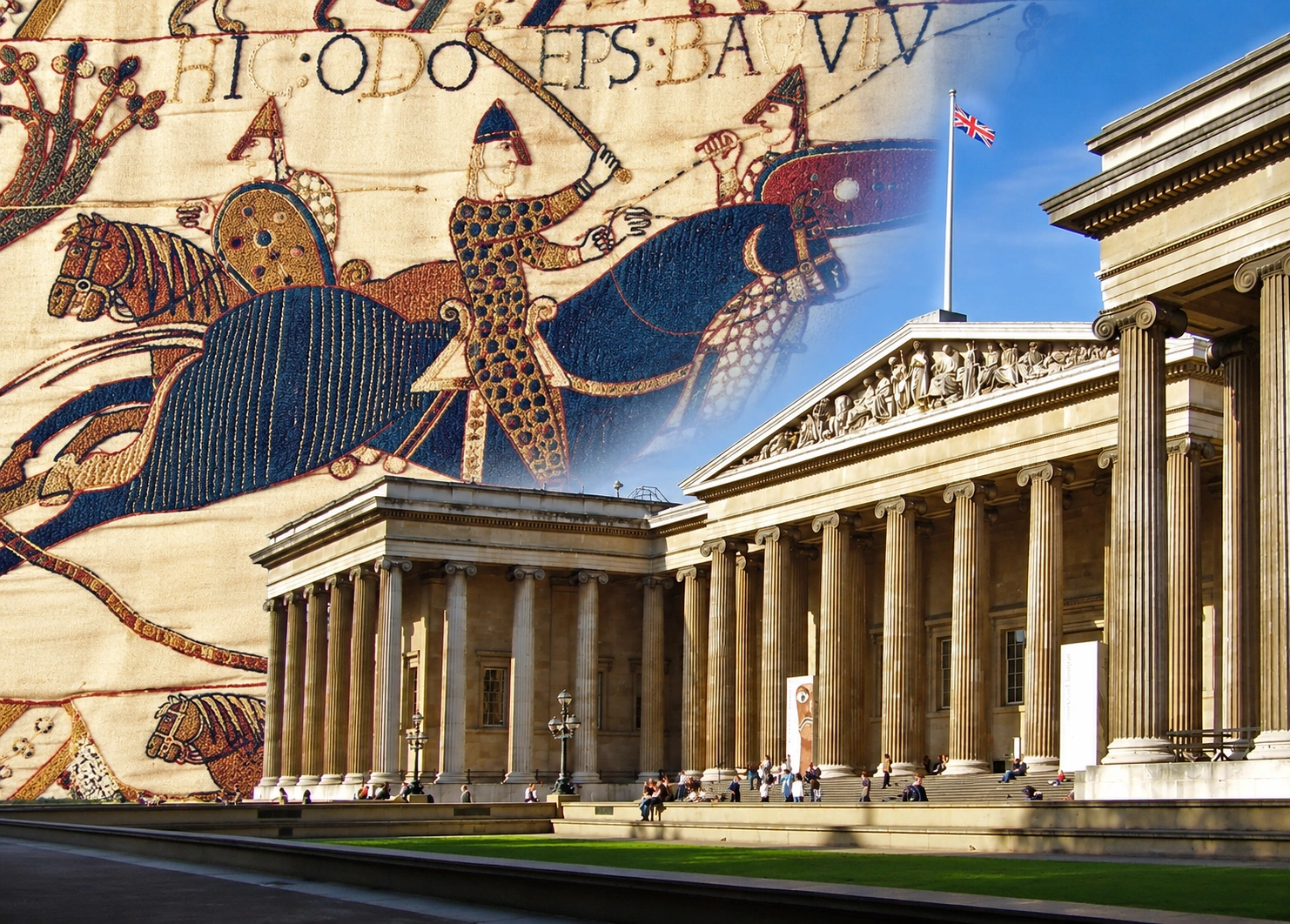
The British Museum has reportedly stopped visitors taking photographs of the Bayeux Tapestry after people pausing for pictures caused delays inside the sold-out exhibition
Visitors to the British Museum in London have reportedly been stopped from taking photographs of the Bayeux Tapestry after concerns that people were holding up queues to see it.
Photography was initially permitted inside the exhibition but museum officials later changed the rules after visitors stopping for pictures slowed the movement of people through the gallery.
The 11th-century embroidery, being shown in Britain for the first time, tells the story of the events surrounding the Norman conquest of England and the Battle of Hastings in 1066.
Demand to see it has been intense, with the exhibition currently sold out.
Visitors are admitted in groups at 40-minute intervals and are required to move in one direction alongside the 68m-long work.
But the BBC reported that people pausing to photograph sections of the embroidery were causing bottlenecks and leaving later ticket-holders waiting longer to enter.
A British Museum spokeswoman said: “There has been enormous interest in viewing the tapestry, and our priority is to ensure that all visitors have the best experience possible.
“In order to do this, we have made the decision to restrict photography while people are moving along the length of the tapestry.”
Despite its name, the Bayeux Tapestry is not technically a tapestry but an embroidered work believed to have been made in England during the 11th century.
It has been loaned to the British Museum from its permanent home in Normandy and is due to remain on display in London until July 2027.
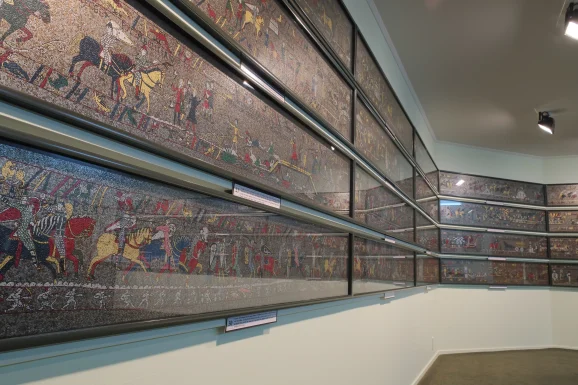
Museum bosses opted to show the entire work in a straight line, rather than using the horseshoe-shaped arrangement found at its museum in Bayeux.
Its loan to Britain was confirmed after a Franco-British summit in 2025, following years of discussions between the two countries.
The British Museum is meeting the cost of transporting and displaying the embroidery, while the UK Government is providing insurance under the agreement.
The historic artefact was transported to London inside a specially controlled crate and given a police escort during the 350-mile journey from Normandy.
Some prospective visitors have also criticised the cost of admission, with tickets reportedly priced at up to three times the amount charged to see the work in France.
The exhibition is sold out until December 31, although another batch of tickets is expected to be released in October.
Those unable to secure a ticket can see full-scale replicas of the Bayeux Tapestry for free at Tewkesbury Abbey in Gloucestershire from 22 October to 11 July next year.
READ MORE: Jewellery Museum explores silver’s cosmic origins in new exhibition. Pforzheim’s Jewellery Museum is staging Silver Lining, a programme spanning contemporary silversmithing, diamonds, ancient silver, global adornment and contemporary fashion.
Do you have news to share or expertise to contribute? The European welcomes insights from business leaders and sector specialists. Get in touch with our editorial team to find out more.
Main image: The Bayeux Tapestry, which is on display at the British Museum, where visitors have reportedly been banned from taking photographs after people stopping for pictures caused delays inside the sold-out exhibition. Credits: Public Domain/Wikimedia Commons/Ham/Wikimedia Commons/CC BY-SA 3.0