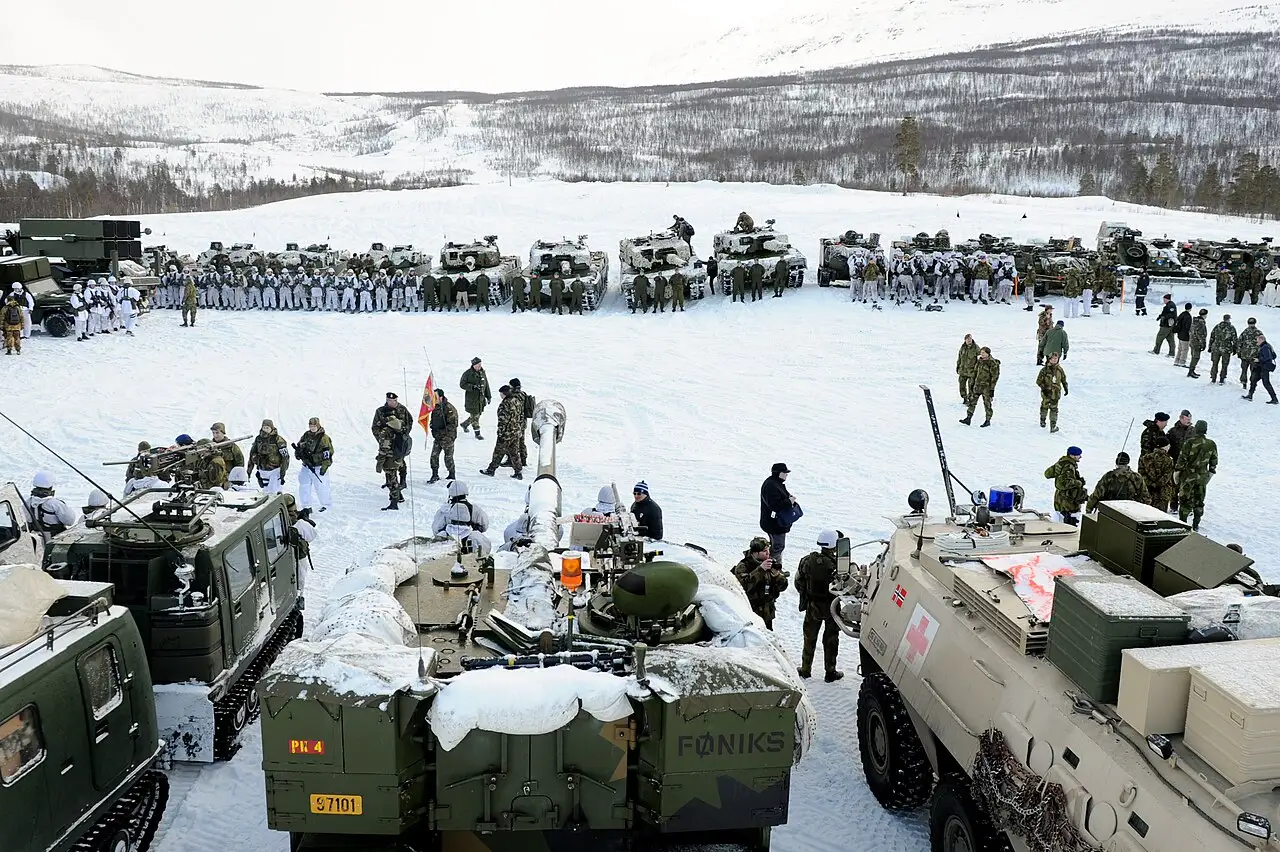
The Nordic countries are emerging as a more powerful force in Europe’s security architecture as they deepen military, economic and supply-chain cooperation. Could their growing influence reshape the balance of power across the continent, asks Ravi Balgobin Maharaj?
Europe has become accustomed to thinking about security in terms of institutions. There is NATO and the European Union, there is the transatlantic relationship with the United States, and there are the national governments that ultimately remain responsible for defending their own citizens. But something else is developing alongside these structures and the Nordic countries are becoming a strategic region in their own right.
The Joint Nordic Declaration on Security of Supply, signed on 2 September by Denmark, Finland, Iceland, Norway and Sweden, may appear at first to be a relatively technical agreement about preparedness. It is concerned with essential goods and services, stockpiles, critical raw materials, production, logistics and cooperation with business, while it does not create a new alliance and it sits explicitly within the wider European and NATO frameworks. Yet its significance lies precisely in what it says about where Europe is heading.
The Nordic countries are preparing for a world in which security can no longer be separated neatly into military and economic categories. In 2026, the war in Iran has shown how a crisis thousands of kilometres away can disrupt energy and food supplies and quickly affect households across Europe. As such, the Nordic countries are responding by making their own region more resilient, in a development that has been a long time coming.
The idea of Nordic cooperation predates the EU and NATO as we know them today. After the Second World War, Denmark, Norway and Sweden considered a Scandinavian defence union, but that proposal ultimately failed, partly because of different views about the relationship with the United States and NATO. Denmark, Iceland and Norway joined NATO in 1949, while Sweden remained militarily non-aligned and Finland pursued a particularly cautious foreign policy shaped by its relationship with the Soviet Union.
Yet the failure to create a common defence structure did not end Nordic cooperation. Instead, the region built something more subtle. The Nordic Council was established in 1952, followed by cooperation on labour mobility, passports, economic integration and political coordination. It was an approach based less on grand institutions than on practical interdependence, and that tradition is now finding a new purpose.
Finland joined NATO in 2023, while Sweden followed in 2024, and so for the first time since its creation, all five Nordic states belong to the same military alliance, and what was once a region divided by different approaches to European security has become one of NATO’s most strategically coherent northern spaces. And this change is especially important because of geography.
Norway looks towards the North Atlantic and the Arctic while Denmark sits astride the approaches to the Baltic. Sweden and Finland connect the Baltic region to the north, Iceland occupies a critical position between Europe and North America, and Greenland and the Faroe Islands add an Arctic and North Atlantic dimension that reaches well beyond the European mainland. Taken together, the Nordic region touches some of the most strategically important areas of the Euro-Atlantic system.
The countries have recognised this themselves, as NORDEFCO, the Nordic Defence Cooperation framework established in 2009, has been given a much more ambitious purpose. Its Vision 2030 is explicitly designed to strengthen Nordic deterrence and defence and contribute to the security of the wider Euro-Atlantic area, and the Nordic Defence Concept adopted in 2024 also reflects the new reality created by Finnish and Swedish NATO membership.
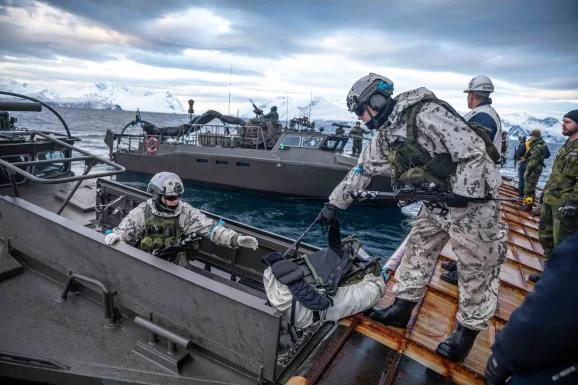
The declaration on security of supply is therefore not an isolated development but is the civilian and economic side of a much larger transformation. And it is Ukraine that has been the great accelerator.
The war has demonstrated that modern European security depends on industrial capacity as much as military doctrine, as governments need access to critical materials even when international markets are under pressure. Europe has spent years discovering how vulnerable some of these systems can be, and so the Nordic countries are now trying to ensure that they are better prepared before the next crisis rather than improvising once it arrives.
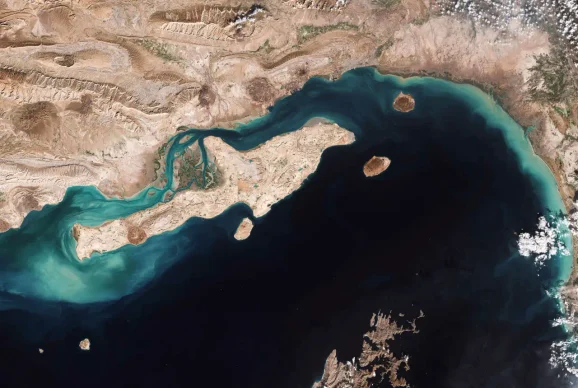
That lesson has acquired an even wider meaning because of the war involving Iran and the continuing crisis around the Strait of Hormuz. It might seem strange to connect events in the Gulf with a Nordic agreement signed in northern Europe, but in reality, they illustrate the same problem.
Before the current conflict, roughly one fifth of global oil shipments passed through the Strait of Hormuz. Shipping through the waterway has been dramatically disrupted during the conflict, with only a small number of commodity vessels transiting on some recent days, and the consequences have been felt through energy prices, shipping costs and wider concerns about global supply chains.
For Europe, the message is difficult to miss, as security is now global even when European forces are not directly involved.
Norway understands this particularly well because of its energy production and maritime economy. Denmark has major interests in shipping, while Sweden and Finland have highly integrated industrial economies, and Iceland occupies an important position in the North Atlantic. So while their economic interests may differ in detail, they are all exposed to the same disruptions in international trade and infrastructure.
There is often a tendency to describe European strategic autonomy as if it were necessarily a rejection of American leadership, but in this case the Nordic countries suggest a more practical interpretation.
They are not leaving NATO, nor are they attempting to replace the United States. But what they are doing is building greater capacity so that they can carry more responsibility within the alliance. And that is increasingly what Washington itself has asked of Europe.
The United States remains essential to NATO’s deterrence, particularly in areas such as intelligence, strategic lift, air power and the broader defence of the North Atlantic, but the political expectation that European allies should do more for their own defence has become considerably stronger.
For Britain in particular, this is an important development, because while the United Kingdom has left the EU, it has not left northern Europe. Britain’s geography, defence interests and maritime economy give it a natural connection to the Nordic region as all five Nordic countries are members of the Joint Expeditionary Force alongside Britain and the Baltic states. This means that some of the most important European security relationships increasingly operate across the boundary between the EU and the UK.
That is worth remembering in a British debate that can sometimes become excessively focused on the institutional question of Brexit. The future European security system will not be organised exclusively through Brussels, nor will it be organised exclusively through NATO headquarters, but it will be built through overlapping relationships between governments that share geography, infrastructure, military interests and economic dependencies.
The Nordic countries are particularly well positioned within this emerging system because they sit across so many of those relationships. Denmark, Finland and Sweden are EU members, while Norway and Iceland remain outside the EU but deeply connected to the European economic system. The Nordic region can therefore act as a bridge between different parts of Europe and that may become increasingly important as the EU itself develops its defence industrial capacity.
The immediate test of the new declaration will be whether it produces practical results as Nordic governments have committed themselves to further work on stockpiling, critical materials, industrial capacity and emergency preparedness. The declaration also envisages further agreements and closer cooperation with the private sector, and the long-term possibility is much more interesting.
The Nordic countries could become one of Europe’s principal centres of resilience and strategic production as their energy resources, industrial capacity, technology, maritime infrastructure and access to critical resources could give them influence well beyond their combined population.
That would not make them a new European bloc, nor should it. The strength of the Nordic model has always been its ability to operate through cooperation rather than political uniformity, and what is emerging now is a regional layer within the wider European security system.
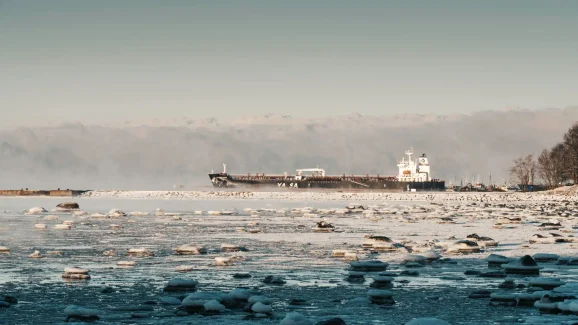
For the Baltic states, this will be especially significant as a stronger Nordic region means a stronger northern European defence space. For Britain, it creates another reason to maintain deep security relationships with European partners despite leaving the EU, and for Brussels, it provides a model of regional cooperation that can reinforce rather than compete with European institutions.
But for Washington, it demonstrates that European allies are capable of doing more themselves while remaining firmly anchored within the Atlantic alliance.
While the transformation has been accelerated by Russia’s war against Ukraine, it is not exclusively about Russia.
The crisis in the Middle East has demonstrated the vulnerability of global supply routes, as the disruption around Hormuz has shown that energy security remains inseparable from maritime security. And the changing American approach to European defence has encouraged governments to reconsider what they should be capable of providing themselves.
All of these developments are pushing the Nordic countries in the same direction and they are becoming more integrated because the world around them has become less predictable.
That is why I would not regard the new declaration as simply another Nordic initiative, but rather as a sign of where European security may be heading.
For much of the post-war period, Europe relied on a relatively simple division of responsibility, as NATO provided the military umbrella and the United States supplied much of the strategic weight, but that world no longer exists in quite the same form.
Europe now has to think about the resilience of its infrastructure, the security of its supply chains, the capacity of its industries and the ability of its societies to withstand disruption, and the Nordic countries have understood this early.
Their answer is not isolation, but cooperation, and that may ultimately be their greatest contribution to Europe’s future. The North is becoming not Europe’s periphery, but one of the places where the continent is learning how to become more capable, more resilient and more responsible for its own security.
And while the declaration signed this week is only one step, it may ultimately prove to be an important one.

Ravi Balgobin Maharaj is a geopolitical commentator and international affairs analyst with a focus on security strategy, alliance systems, and emerging global power structures. His work explores the intersection of military capability, political sentiment, and diplomatic alignment in an increasingly multipolar world. Drawing on a global perspective, he provides analysis on shifting coalition dynamics, regional security frameworks, and the evolving role of Western institutions in contemporary conflict.
READ MORE: The Arctic’s unfinished cold war. As Arctic militarisation gathers pace amid renewed geopolitical rivalry, the environmental scars of the Cold War remain embedded in ice, soil and seabed. Dr Linda Parker argues that without sustained cooperation and meaningful Indigenous consultation, the region risks compounding an already hazardous legacy.
Do you have news to share or expertise to contribute? The European welcomes insights from business leaders and sector specialists. Get in touch with our editorial team to find out more.
Main image: Troops and military vehicles during Exercise Cold Response in Norway in 2009. The Nordic countries have since deepened their defence cooperation, with all five now members of NATO. Credit: Soldatnytt/Wikimedia Commons, CC BY 2.0