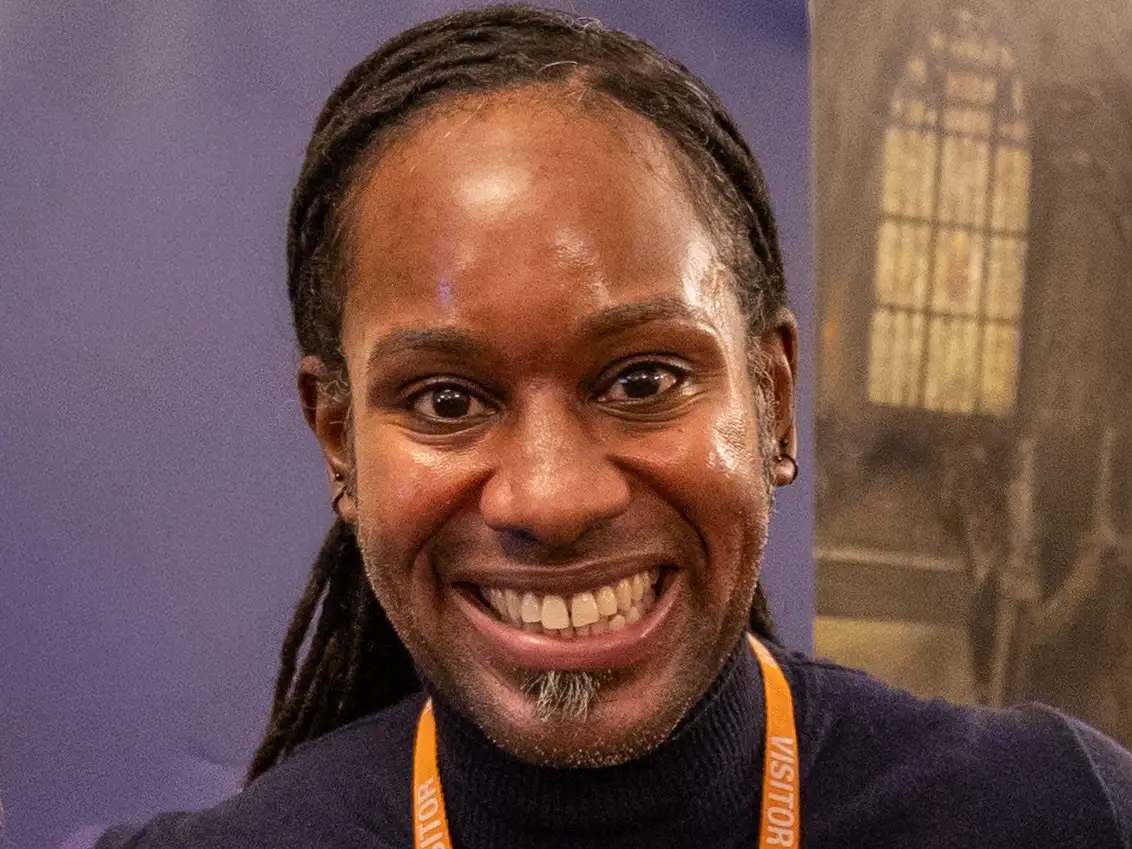
Celebrated as a symbol of Black achievement, Jason Arday later became the focus of intense scrutiny before his death at just 41. Dr Stephen Whitehead argues that, whatever the legitimate questions surrounding his scholarship, the public reckoning lost sight of the human being at its centre
In March 2023, Jason Arday became the youngest Black professor in the 800-year history of the University of Cambridge. On August 14, 2026, he was found dead in south London, aged 41, nine days after resigning his chair and his fellowship at Jesus College amid allegations of plagiarism and of embellishing his life story. Police described the death as unexpected but not suspicious. A file will be prepared for the coroner.
Between those dates there is a story about Jason Arday. There is also a story about us, and it is the second that ought to detain us.
Consider what made him irresistible in 2023. Ghanaian parents, Clapham, autistic, not speaking until 11, not reading or writing until 18, a PE lecturer who taught himself sociology in the evenings, then a Cambridge chair. A story of almost liturgical perfection, and it travelled the world because it was needed. Britain is enormously accomplished at celebrating the Black body – in sport, in music, in kingdoms that do not exist – and conspicuously less willing to celebrate Black intellect. Set against athletes, rappers and fictional monarchs, a young Black professor at Cambridge was in almost no supply and enormous demand.
The scarcity is not rhetorical. Around 250 of some 25,000 British professors are Black, roughly one in 100, and Arday had himself written about that scarcity. British cultural theorist Kobena Mercer called the consequence the “burden of representation”: where a group is barely present, each member is conscripted into standing for the whole, praised beyond their work and, should they fail, indicted beyond their offence. Arday did not merely become a professor but was enrolled, immediately, as evidence.
Which is why the question dominating the coverage – was his appointment driven by diversity policy? – is the least interesting available. It cannot be settled from outside an appointments committee, and it tells us little we did not know about the people asking it. The better question is what elevation of that intensity does to the person elevated. A colleague enjoys the protections of obscurity; a man installed as evidence has none. Former Home and Foreign Secretary James Cleverly’s remark that institutions were content to deploy Arday as a Black prodigy cuts across the usual alignment: celebration and destruction used the same equipment, and neither had much to do with him.
The scholarly questions were legitimate. Universities must investigate credible allegations of plagiarism, journalists may examine the claims of public figures and Black academics are not owed a lower standard than anyone else. Any argument that cannot say so plainly isn’t worth making. What follows is not a defence of Arday’s thesis but an account of the machinery around it.
The questions did not begin in July 2026. Academics raised concerns with Cambridge’s education faculty in May 2023 and were told the matter lay outside the university’s remit because the work predated his arrival. Two journal corrections followed. In September 2025, Times Higher Education had an investigation ready; after its reporter approached Arday for comment, a letter arrived from Carter-Ruck, one of Britain’s most formidable defamation firms, and the story was dropped. The reporter was then reported to police for harassment; the Met has since admitted that warning him off further contact was the wrong action.
The questions did not go away. They waited, and when they surfaced they did so on the Substack of a self-described ‘race realist’ rather than in a specialist education title, carrying three years of pressure and meeting no institutional process capable of absorbing them. One of the academics whose 2023 warning went nowhere made the point exactly: because Cambridge would not deal with it, the only people left to take it up were the radical right. Suppression should not be thought of as the opposite of a pile-on. It is, in fact, frequently its precondition.
What followed is best understood through Jamaican-British cultural theorist Stuart Hall. Racialised regimes of representation, Hall argued, work by reduction and fixing: a person is compressed into a few essential traits, those traits are naturalised and the figure is split – an idealised half and a debased half, held rigidly apart, nothing permitted between them. The prodigy and the fraud were never two stories about Jason Arday but halves of one apparatus, and the machinery that produced the first was always capable of producing the second. Fixing of that kind also explains why the examination could not stay within its subject. Once doubt attaches to the person rather than the paper, nothing is irrelevant: the coverage travelled from a 2015 thesis to the marathons, the charity money, the age at which he first spoke and whether he could truly not read. An institutional inquiry ends yet this had no terminus.
In Policing the Crisis, Hall and his colleagues showed how a panic escalates through a ‘signification spiral’: an offence is linked to ever-wider anxieties until it stands for a general condition, and race becomes the lens through which a crisis of authority is fought out. Their model had ‘primary definers’ – police, courts, officials – setting the terms, and a press that amplified. This summer the structure was inverted: the primary definer was an independent blogger, the national press his amplifier, and the anxiety contested through one man’s thesis was Britain’s unfinished argument about empire, entitlement and who belongs at the top of its institutions. British sociologist Paul Gilroy named that condition ‘postcolonial melancholia’ – a country unable to mourn what it lost and so unable to be calm about whom it now includes. A spiral of that kind needs no author. Almost every participant made a defensible contribution: a fair question, a legitimate report, a forwarded link. Everyone can say they were only doing their job, which is why that defence is worth so little.
One dimension belongs to my own field. For most men, occupational standing is not an ornament attached to identity but the load-bearing wall. Remove a man’s work, his title and his public account of himself and you have not damaged his reputation – you have removed the structure holding him up. Men in that condition withdraw rather than ask for help. Those closest to him seem to have registered his collapse only at the end. Crossbench peer and Cambridge principal Simon Woolley, who saw him days before he died, described a man at half his weight.
So where does public-interest scrutiny end? Three tests, offered as craft rather than absolution. Is the examination bounded by the original claim – does a thesis inquiry stay within the thesis? Is there a stated point at which the account is settled? And what is the audience getting from it? Accountability is grim, procedural work. Spectacle is enjoyable. Enjoyment is the tell.
Which brings us to the third act, under construction as I write: a petition with more than 98,000 signatures demanding a public inquiry, a vigil in Trafalgar Square, a family fund exceeding £185,000 and a growing insistence that racism lay at the heart of the affair. Some of that may be right, but notice the shape. Hall’s splitting is running in reverse, and Arday is being fixed for the third time in three years: first as proof of what inclusion achieves, then of what it conceals, now of what the press does to Black men. Each version reduces him. His fiercest critics, meanwhile, have not softened – one broadcaster spent the weekend insisting responsibility rests with Arday alone.
The honest position holds two things at once. His death resolves nothing about his scholarship and the questions about his scholarship excuse nothing about his treatment. A culture that can process a man only as prodigy, fraud or martyr leaves no room for the ordinary possibility: someone who did real work, embroidered parts of his own story, was raised far above the height at which anyone survives a fall and did not deserve what was done to him.
The psychiatrist and anti-colonial thinker Frantz Fanon wrote of being sealed into an object by the gaze of others, fixed before he could speak. That is the condition we imposed on Jason Arday – twice before he died and once since. We have learned to celebrate Black bodies and to argue over Black symbols. We have not learned to let a Black intellectual simply be a person.
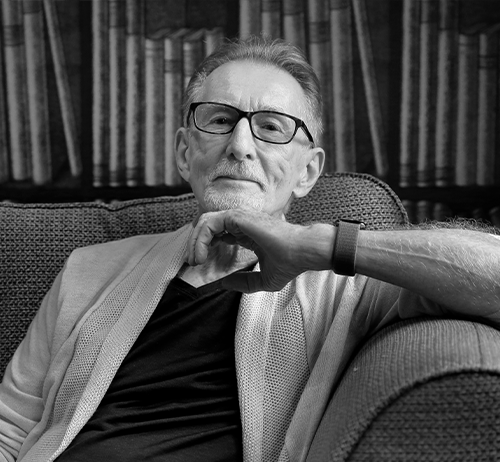
Dr Stephen Whitehead is a gender sociologist and author recognised for his work on gender, leadership and organisational culture. Formerly at Keele University, he has lived in Asia since 2009 and has written 20 books translated into 17 languages. He is based in Thailand and is co-founder of Cerafyna Technologies. His forthcoming book, co-authored with Constanza Fernández Arce, is Where Have All the Good Men Gone?
READ MORE: ‘Toxic masculinity, like climate change, can only be denied until the flames burn down your house‘. A 14-year-old boy’s killing of eight people in Thailand is the latest in a series of attacks in the country that, according to Dr Stephen Whitehead, exposes a wider pattern of male violence linked to toxic masculinity. But like climate change, society repeatedly acknowledges each case while refusing to confront the underlying pattern, he argues.
Do you have news to share or expertise to contribute? The European welcomes insights from business leaders and sector specialists. Get in touch with our editorial team to find out more.
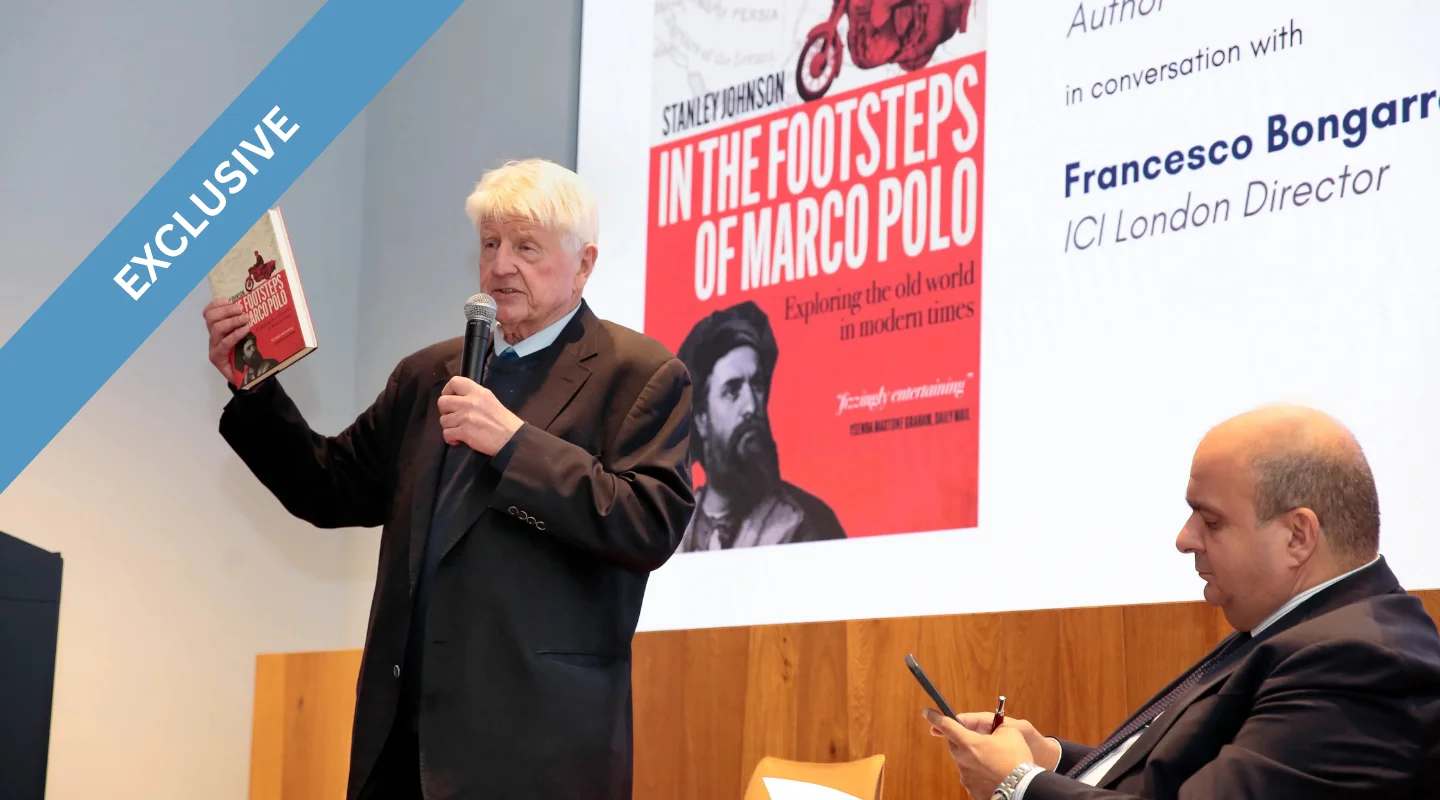
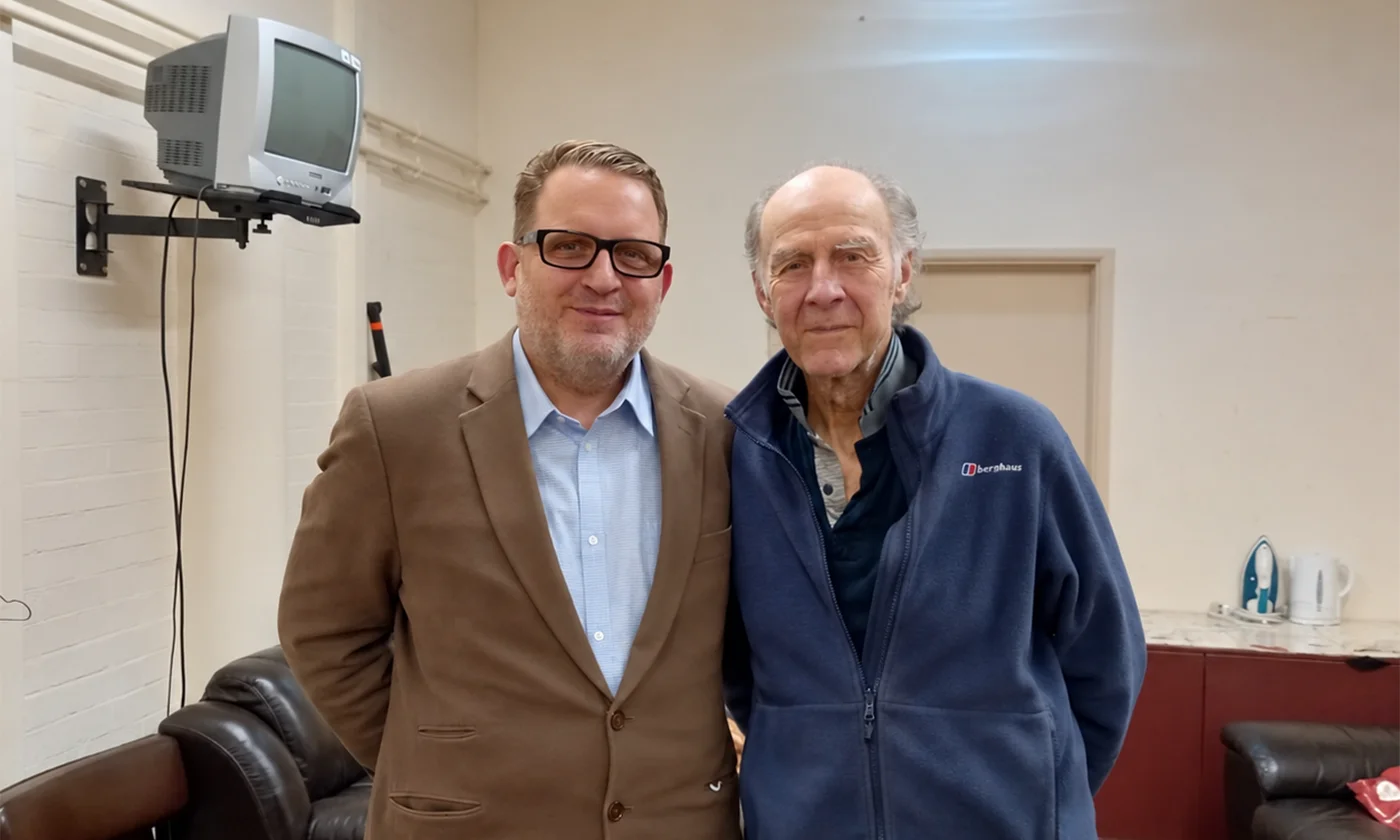
Main Image: Professor Jason Arday was celebrated as a symbol of Black academic achievement before becoming the focus of intense scrutiny that, Dr Whitehead argues, was inseparable from Britain’s wider anxieties about race, status and belonging. Credit: Wikimedia Commons