Greenland became a strategic prize during the Second World War, when the United States occupied the island to block Nazi advances, shield Atlantic convoys and gather the meteorological intelligence that helped time D-Day. It later formed the backbone of NATO’s Arctic early-warning system during the Cold War. Trump’s latest claim that America “has to have” Greenland has revived that history, alarmed Denmark and unsettled the alliance. Yet Greenland’s future remains a matter for Greenlanders, not Washington, writes historian Dr Linda Parker
Donald Trump’s continued insistence that the United States “needs Greenland” and that it “must have it” has caused growing concern in Greenland and Denmark that his sabre-rattling is serious. This week he refused to rule out the use of military force to achieve his aims. The appointment of Jeff Landry as a “special envoy” responsible for pursuing Greenland’s incorporation has heightened concerns about Greenlandic sovereignty.
If Trump did decide to seek control of Greenland — a prospect that no longer seems far-fetched after the events in Venezuela — the implications for NATO would be severe, because one alliance member would be attacking another. The Danish prime minister, Mette Frederiksen, stated that if the United States attacked Greenland then “everything stops, including NATO”. Other NATO nations have expressed concern and support for Greenland, although none has predicted NATO’s collapse.
Although Trump’s claims on Greenland lack legal justification, Greenland holds significant strategic importance for the United States, Canada and NATO, particularly as commercial competition and military rivalry intensify in the Arctic. Both the United States and the United Kingdom have a long history of involvement in Greenland’s exploration and development.
As Trump discusses the importance of Greenland to U.S. and northern hemisphere security, he might reflect on its importance during the Second World War. When Denmark fell to Nazi Germany in 1940, Greenland became a colony of an occupied state, and its strategic position and mineral resources made its defence a priority for the Allies.
Britain, at a low point in its fortunes, asked Canada to occupy and defend the island against German invasion or interference. Canada, dependent on Greenland’s cryolite and determined to keep the Atlantic convoy route open alongside Britain, agreed. The U.S. government objected to this arrangement, and in the summer of 1940 the U.S. Coast Guard moved to occupy Greenland, which became a de facto American protectorate in April 1941 under the U.S.–Danish Kaufman Agreement. These actions took place while the United States remained officially neutral.
A major Allied concern throughout the war was the control of meteorological information. Greenland is the origin point of many weather systems affecting western Europe and accurate meteorological reporting was essential for planning operations, including D-Day. Germany also needed this information, and before the war had relied on reports from Allied countries. Preventing German weather stations from being established on Greenland, and locating and eliminating those that were, became a priority. The United States set up a surveillance station on Jan Mayen Island named “Atlantic City” to help locate German stations across the region.
During 1941 and 1942 the United States established a series of bases on Greenland’s east and west coasts known as “Bluies”. These bases became vital refuelling and servicing points on the North Atlantic ferry route, enabling the transport of aircraft to Britain. Short-range aircraft could fly in stages from New England through Newfoundland, Labrador, Greenland and Iceland to Britain. The United States also supplied weather stations, radio beacons and LORAN navigation systems.
The U.S. Coast Guard expanded its role in protecting Atlantic convoys against U-boats and in ensuring supplies reached Greenland. The extended air range provided by the U.S. bases enabled Allied aircraft to push further into the Atlantic. Weather information from the bases and stations informed convoy timing and routing.
The United States took the initiative in building bases and facilities and provided most of the manpower. Cooperation with Britain and Canada existed, but U.S. action proved decisive in the role Greenland played in the Second World War. The “Bluie” bases later formed the nucleus of Cold War Arctic defence and early-warning systems. Greenland again played a crucial role in NATO’s strategic planning, and evidence of the scale of U.S. involvement was revealed in early 2025 when Camp Century, an abandoned U.S. Cold War nuclear base, was discovered buried beneath the ice sheet.
Trump now claims that he “has to have” Greenland to ensure U.S. security, although the United States already enjoys extensive rights to operate in Greenland under the 1951 U.S.–Denmark agreement, supplemented by the 2004 protocol. This agreement authorises the United States to station forces, build and use facilities and cooperate on Arctic defence as part of NATO responsibilities. Other motivations are possible, including access to Greenland’s rare minerals or a more traditional form of territorial ambition.
What is clear is that Trump is serious about his ambition to control Greenland and has stated that he will achieve this “one way or another”. European leaders have been united in opposing him and in affirming that the future of Greenland will be determined by Greenlanders. The benefits of U.S. involvement in Greenland are evident from the Second World War, although these benefits should not threaten NATO’s future or Greenland’s independence.
An agreement in which the United States uses its military capability to promote Arctic environmental and security cooperation alongside its NATO partners would serve the interests of the region without jeopardising the alliance or Greenland’s sovereignty.

Dr. Linda Parker is widely considered to be one of Britain’s leading polar and military historians. She is the author of six acclaimed books, an in-demand public speaker, the co-founder of the British Modern Military History Society, and the editor of Front Line Naval Chaplains’ magazine, Pennant, which examines naval chaplaincy’s historical and contemporary role.
READ MORE: ‘Without Britain, Europe risks losing its grip on the Arctic’. From Frobisher’s fool’s gold to Franklin’s fatal voyage, Britain’s history in the Arctic is as deep as it is dramatic. Dr Linda Parker traces four centuries of exploration, science and strategy to argue that this legacy gives the UK, and Europe by extension, both the expertise and the responsibility to help shape the region’s future.
Do you have news to share or expertise to contribute? The European welcomes insights from business leaders and sector specialists. Get in touch with our editorial team to find out more.
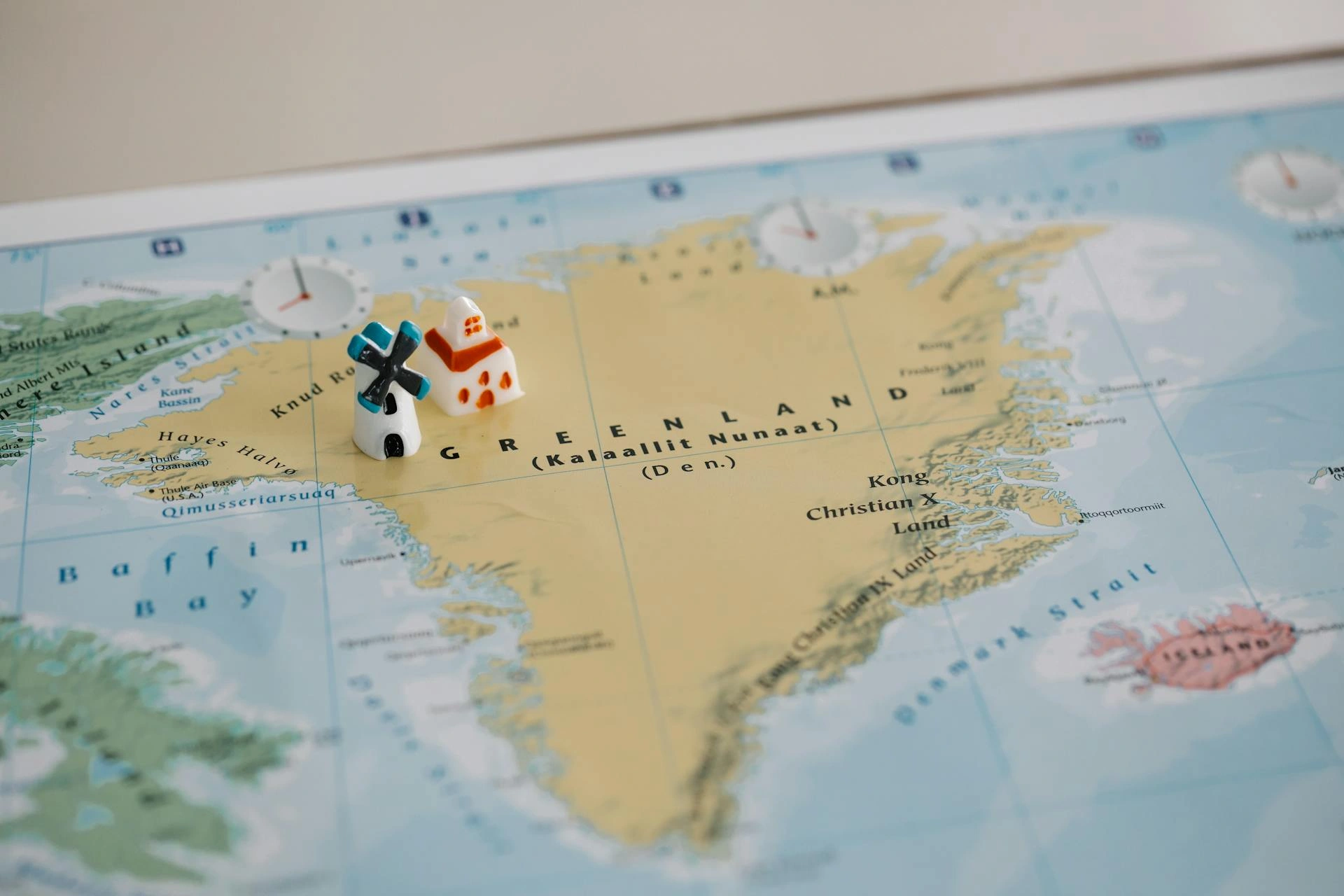
Main image: Lara Jameson/Pexels