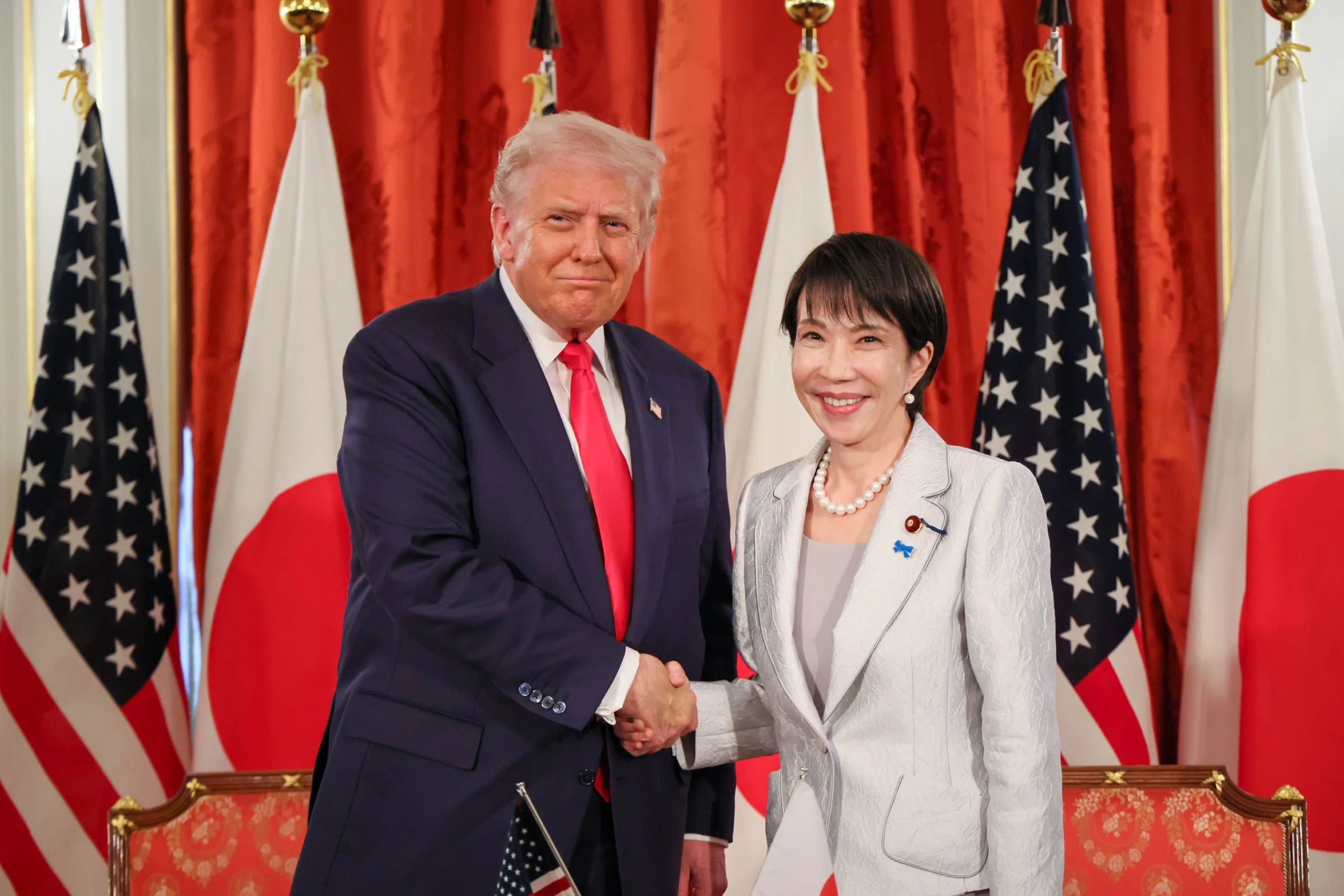
Sanae Takaichi’s love of fast motorbikes, heavy metal and hard politics unsettles every neat category used to judge women in public life. Her ascent to Japan’s top office reveals how identity works in all its complexity — and why women leaders cannot be understood through gender alone, writes Dr Stephen Whitehead
LISTEN: Dr Stephen Whitehead argues that Sanae Takaichi’s ascent shows how Japan’s heavy-metal-loving Prime Minister defies every reductive stereotype applied to women in power.
The Prime Minister of Japan, Sanae Takaichi, is a petrolhead with a love of fast motorbikes and performance cars. She is also an avid fan of heavy metal. Picture that for a moment: the leader of the world’s third-largest economy speeding down the highway in black leather listening to Paranoid by Black Sabbath. It tells you far more about the limits of our stereotypes than it does about her. Women in power never fit the neat boxes we create for them, yet public debate insists on judging them as if they should.
The barriers to women’s advancement are well known, but one is rarely examined: identity itself. What makes someone a “woman”, and how do the different elements of that identity clash, reinforce or propel her on her career path? The answers vary from person to person, yet the starting point is intersectionality. As I have written elsewhere:
“Intersectionality recognises that each individual identity exists at the intersections of many aspects of self…including for example, race, sex, sexuality, ability, ethnicity, age, culture and class, to ‘produce’ the individual.”
This lens helps explain not only how women see themselves but also how society projects expectations onto them. It leads to awkward questions, too. Take Margaret Thatcher. Was the so-called Iron Lady a positive role model for women or a negative one? Judged on her Conservative politics, many argue the latter; judged on her gender alone, her symbolic impact is undeniable. For decades she stood as one of the most visible demonstrations of female authority in public life.
Even before Takaichi’s election in October, commentators cast her in Thatcherite terms — “Japan’s Iron Lady”, a nationalist, a “far-right” or “hardline conservative”. On that reading, she is neither feminist nor progressive, regardless of the significance of her ascent to power.
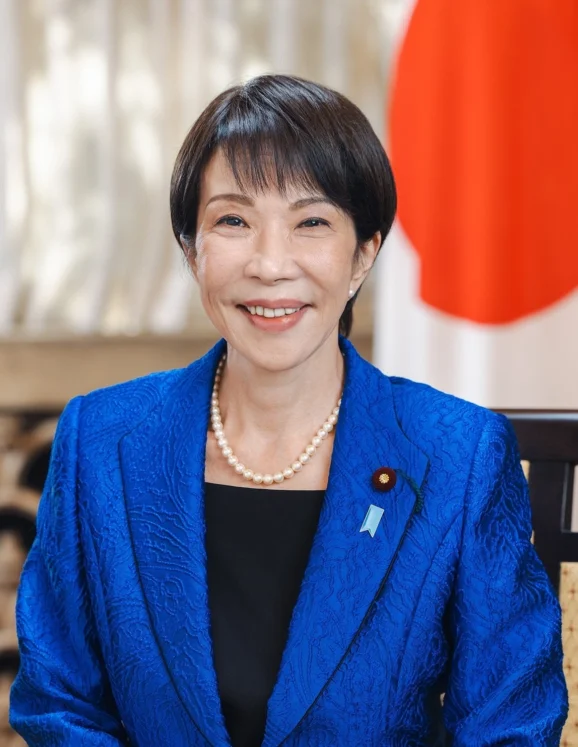
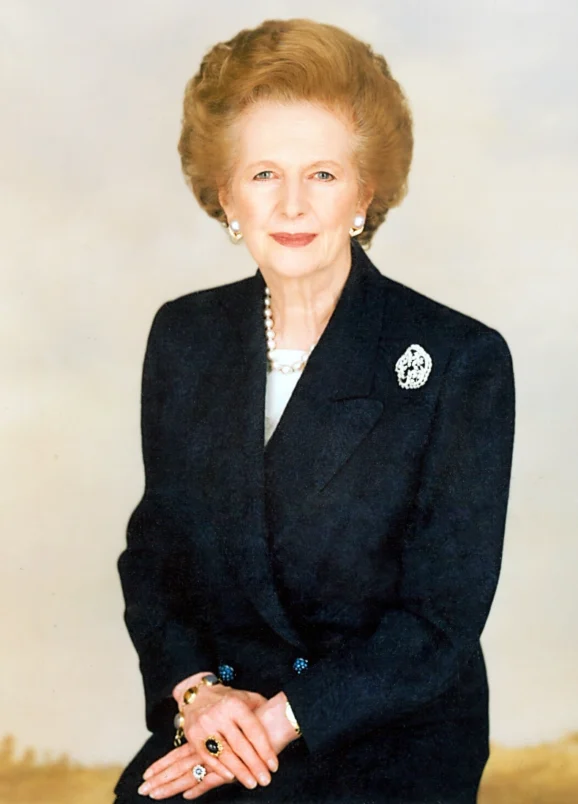
Yet while denying the feminist label, both Thatcher and Takaichi achieved what any feminist seeks to achieve, which is to shatter the glass ceiling.
Shattering glass ceilings is feminism in action and every successful woman, whether they seek to or not, inevitably inspires many thousands more women to emulate them. In other words, women leaders don’t need to declare themselves feminists in order to have a feminist impact on society. They don’t even need to behave as feminists in order to inspire other women. It is enough that they are women, not men. At the same time, being a woman is no predictor of how an individual will behave once in power. This adds a whole new layer of complexity to our desire to slot women leaders into a simplistic gender binary.
Intersectionality cautions against judging anyone by a single aspect of identity, and this matters especially when looking at women in power. Focusing on only one dimension obscures the fuller, more intricate picture. Takaichi, like Thatcher and every other woman, is more than her gender. She has a nationality, a sexuality, a class background, a religion and a culture; she is 64, shaped by age, health and education, and by life events such as abandoning hopes of having children after surgery for gynaecological disease. Her politics have ranged across Independent, Liberal and Liberal Democratic affiliations. She is also a wife, daughter and sister, a martial arts enthusiast, a scuba diver and the previous owner of a Kawasaki Z400 and a Toyota Supra A70 2.5GT Twin-Turbo. Oh, and for much of her life the 64-year-old has loved heavy metal. Since drumming in a college band, she has “remained a fan of groups like Black Sabbath and Iron Maiden”, reports CNN. She used to play so hard that she carried “four pairs of sticks as back-up in case they snapped”, it said.
Some of these aspects of self which intersect to constitute Takaichi as the Prime Minister of Japan, will be in conflict. Some will be harmonious. Some will impair her career while other aspects will motivate her to achieve.
Just as it is with all women, Takaichi is more than a woman, and certainly more than an Iron Lady. She is a kaleidoscope of intersecting elements conspiring to create the Japanese Prime Minister you see in the photos and hear on the news.
When you watch recent videos of her confronting Chinese President Xi Jinping, and warning him to lay off Taiwan, what you are witnessing is a female politician striding confidently into the world of powerful men and acting way beyond gender stereotypes of pliant, passive, Japanese femininity.
We are still not fully accustomed to seeing women in top leadership roles. When a woman steps into a space long dominated by men — as Thatcher did in 1980s Britain and as Takaichi has now in Japan — the instinct is to judge her first by her sex and gender, rather than by the wider mix of qualities and experiences she brings.
This is highly reductionistic and, as Xi Jinping no doubt discovered, quite risky also.
Just as with any determined woman who takes on a leadership position, Takaichi can be sure of questions being raised about her femininity. How can this particular Iron Lady also be a loving and intimate wife, a dutiful and caring mother, and someone who likes to rock it to Black Sabbath while powering along the highway, clad in black leather and astride her Kawasaki? Takaichi holds all of these identities and more, and even she cannot know which one will come to the fore at any given moment.
This is why trying to predict how any woman leader will act based only on her sex or gender is a fool’s errand.
What we can predict is that she will inspire other women. And in the final analysis, that is enough.
Just how far can such inspiration go?
Today we look at a politician like Takaichi and see a woman leader, albeit surrounded by hundreds of powerful men. The feminist era will truly have arrived when we see a male political leader surrounded by hundreds of powerful women.

Dr Stephen Whitehead is a sociologist, author and consultant internationally recognised for his work on gender, leadership and organisational culture. His most recent book is The End of Sex: The Gender Revolution and Its Consequences (Acorn, 2025).
READ MORE: ‘The Britain I returned to was unrecognisable — and better for it‘. After a decade living in Southeast Asia, sociologist Dr Stephen Whitehead expected a divided, declining Britain. What he found instead was a confident, multicultural nation transformed by immigration — a country richer, fairer and far more interesting than the one he left behind.
Do you have news to share or expertise to contribute? The European welcomes insights from business leaders and sector specialists. Get in touch with our editorial team to find out more.
Main image: © Prime Minister’s Office of Japan / CC BY 4.0