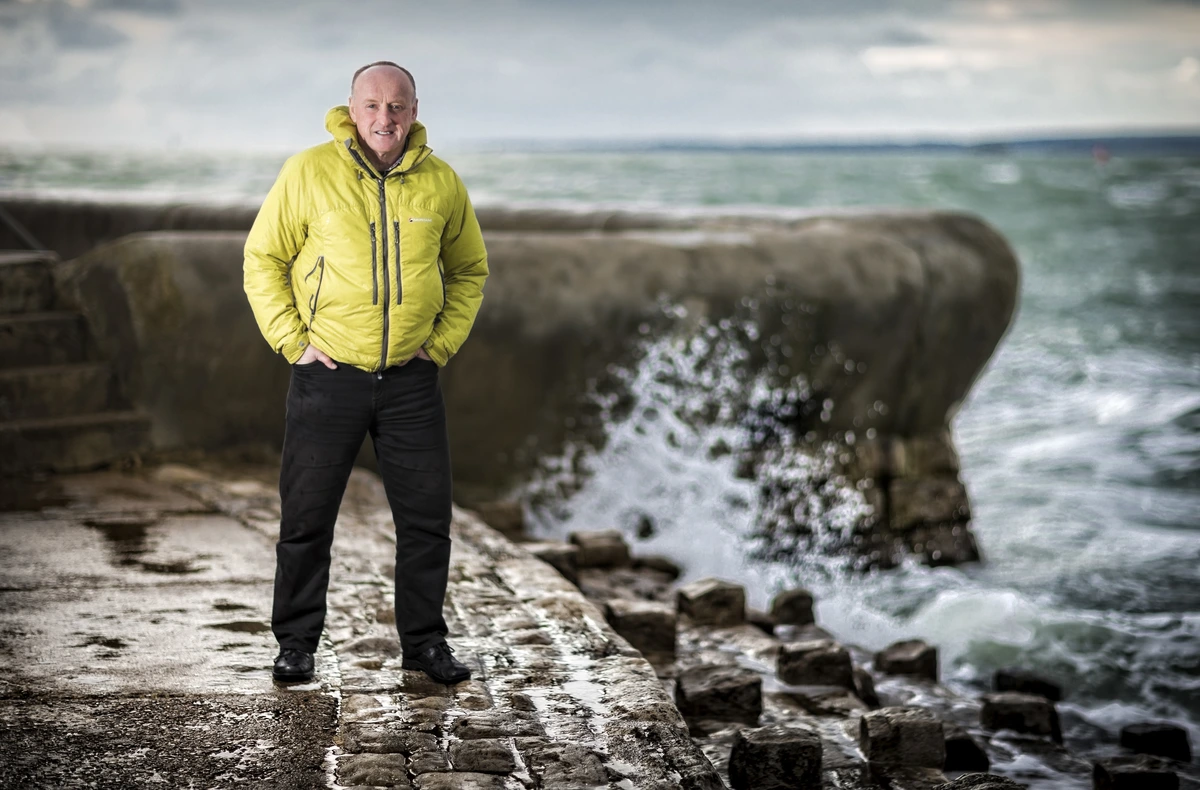
With interest in wild swimming at an all-time high, the risks of cold-water immersion are being dangerously overlooked. Ben Hooper speaks to Professor Mike Tipton, Britain’s leading authority on environmental physiology, about what really happens to the human body in cold water — and why experience, fitness, and enthusiasm offer little protection against the laws of thermodynamics
In November 2023, Joel Ineson, a 55-year-old swimmer, suffered a fatal cardiac episode while taking part in a swim in Sunderland Lake. According to the Coroner, no safety briefing had been given. No one was counting people in or out of the water. No medical cover was present. He was an experienced swimmer — but experience, as Professor Mike Tipton will tell you, does not offer immunity from cold.
As Professor of Human and Applied Physiology at the University of Portsmouth, Mike Tipton is one of the UK’s foremost experts in extreme environments, particularly cold water. His work has shaped international policy on drowning prevention; informed lifesaving techniques used by the RNLI and HM Coastguard and redefined our understanding of how the body responds to cold water immersion.
In 2015, I trained with Professor Tipton at Portsmouth’s Extreme Environments Laboratory while preparing for my own attempt to swim the Atlantic. That experience was transformative. His insights into thermoregulation, heat and cold-shock responses were not just useful — they were the foundation for surviving what lay ahead.
“It is the cold shock response which probably accounts for the majority of near-drowning incidents and drowning deaths, following accidental immersion, in open waters below 15°C,” he says.
“And it is still possible to suffer a degree of cold shock in water temperatures up to 25°C.”
Wild swimming in Britain is now more popular than ever with over eight million swimmers annually, taking to the rivers, lakes and seas of Britain. Once a fringe pursuit, it has become a national pastime. Advocates cite physical invigoration, mental clarity, and natural connection. Health claims abound. But the physiological reality, Tipton argues, is that even in water that doesn’t feel ‘cold’, the human body is under immediate stress.
That stress begins at temperatures well above freezing. While definitions vary, many experts agree that anything under 15°C can present a risk to unacclimatised swimmers. Some, including Tipton and others in the field, go further.
“The sudden lowering of skin temperature upon immersion in cold water produces a number of significant physiological responses,” Tipton explains. “The responses, which commence almost immediately upon immersion, peak during the first 30 seconds and last for around two-minutes.
“Each of these can have a detrimental effect on the body and adversely affect survival chances.
“They include gasping and hyperventilation, which can lead to inability to breath hold and panic and therefore be a precursor to drowning.”
Those first minutes are critical. Cold receptors in the skin trigger the cold shock response: sharp inhalation (‘gasp’), rapid breathing, rising blood pressure and workload on the heart. Aerobic fitness offers limited protection against cold shock, but fit individuals still experience it. The hyperventilation of cold shock makes it very difficult to co-ordinate swimming stroke with breathing. The best thing to do at this stage is fight your instinct to swim and thrash about, and “float to live”.
Soon after cold shock, cooling of superficial nerves and muscle, particularly in the limbs, begin to impair swimming ability. In controlled studies carried out by Tipton and his team, even strong swimmers were overwhelmed.
“Swimming efficiency is reduced as muscles and nerves cool; strokes shorten, angle steepens, oxygen use increases,” he says. This can happen in as little as 10-20 minutes in very cold water. The swim failures occurred before any of the swimmers reached hypothermic thresholds.
“That deterioration arrives well before clinical hypothermia (deep body temperature of 35°C).”
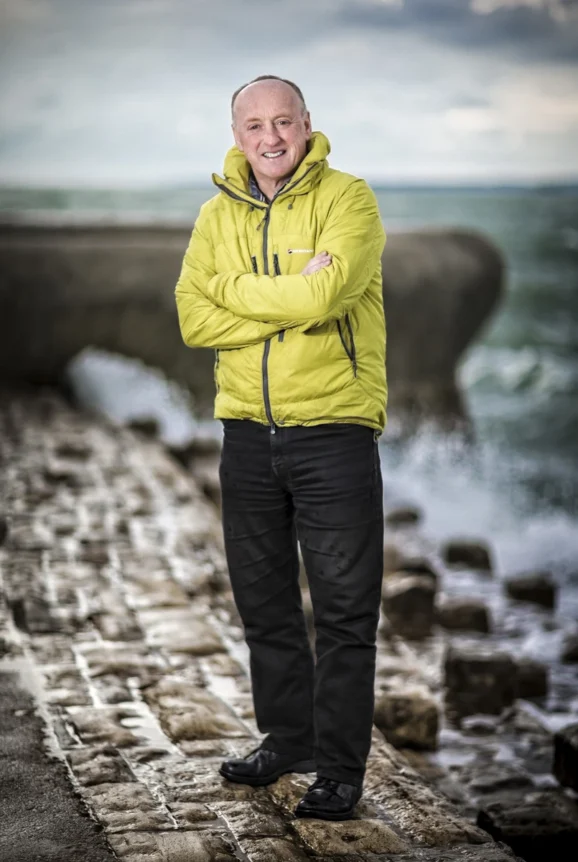
Professor Mike Tipton MBE, FRSM, FTPS is Professor of Human & Applied Physiology at the Extreme Environments Laboratory, University of Portsmouth. More of his research can be found here or here.. Mike is also Co-founder of the International Drowning Researchers’ Alliance (IDRA) and Chair of the National Water Safety Forum, and sits on the RNLI Council and is a trustee of The Physiological Society.
With repeated cold water immersions humans habituate to cold water: their cold shock reduces, and they begin to feel more comfortable in cold water, but they continue to cool at the same or even a faster rate (hypothermic adaptation). Therefore, it is important that people do not judge their time in cold water by ‘how cold they feel’.”
This disconnect — between perception and physiological reality — is one of the major concerns for experts. Another is the assumption that ‘healthy’ individuals are automatically low risk. There are many individuals with undiagnosed conditions that can be aggravated by cold water immersion; people should always get a health check before embarking on cold water swimming. After all, 43 percent of drownings are associated with pre-existing health conditions, from asthma and diabetes to cardiac arrhythmias and long-QT medications. Sudden immersion can tip these conditions into crisis in seconds.
However, the sharp rise in interest and participation in wild swimming — often encouraged through social media — has not been matched by improved safety measures. Although local initiatives exist, there is no national requirement for briefings, signage, or qualified support at informal swimming events. This, Tipton argues, must change. Sadly, the coroner of Joel Ineson’s tragic case, concurs.
In the meantime, Tipton recommends a clear protocol for any swimmer entering cold water: get a health check, walk in slowly, allow time for the cold-shock response to stabilise before beginning to swim.
“You should always get a health check before embarking on cold and wild swimming,” he advises.
“Always walk in slowly — never jump or dive. Allow yourself 30 to 60 seconds to feel the water about your waist before you begin to swim. Avoid face immersion with prolonged breath holding; this is a very good way of producing cardiac arrythmias.
“Start with a wetsuit and reduce coverage gradually, in line with exposure.
“Swim with a buddy or where there’s a lifeguard on shore, wear a bright swim hat, and use a tow-float. It’s not just about survival. It’s about being seen.
“Five, two-minute dips, spread over days, can halve the cold-shock response.”
Professor Joyce Harper of University College London also believes cold-water swimming needs a reappraisal. Her recent research has explored its potential to ease menopausal symptoms and improve mental health — but she is clear that enthusiasm must be balanced by proper safeguards.
“Many papers say it is an ice swim if 5°C or under, and cold water if 15°C or under, but we want to change this to 18°C or under,” she says.
“It is a dangerous sport and people die, so everyone also needs to be aware of the risks.”

Professor Joyce Harper is Head of the Reproductive Science and Society Group, UCL Institute for Women’s Health. Click here for more information.
It is this tension — between the benefits many swimmers experience and the biological risks they may not fully understand — which lies at the heart of this debate. A debate which should grow louder and bring open-water national guidelines and legislation, for the ever-growing tsunami of cold-water swimmers in Britain, to save lives. After all, as Professor Tipton states, survival begins not in the water, but in what we know before we get in.
When I set out to swim the Atlantic, the scale of the physical challenge was clear. But what I had underestimated — until I met Professor Tipton — was how fine the margin for survival really is. Portuguese Man O’War stings, a mid-ocean restart, a damaged support vessel: all were part of the expedition. But none were more perilous than the cold itself. In that, I was fortunate to have the science on my side.
How to Swim Smarter: Professor Tipton’s Guide to Staying Safe
As the weather warms and wild swimmers return to the water in their droves, it’s easy to forget that cold water doesn’t stop being cold just because the sun’s out. In fact, spring and early summer are some of the riskiest times to swim, with inland waters often lagging far behind the air temperature.
For those keen to embrace the chill without becoming a statistic, Professor Mike Tipton offers a set of straightforward, science-backed precautions. Here are his top tips:
1. Get a health check
Before you begin any regular cold-water swimming, consult your GP. Pre-existing conditions such as heart rhythm disorders, diabetes, asthma or those affecting blood pressure can all increase your vulnerability in cold water. Many medications — including those affecting the heart’s electrical activity — can also elevate risk. A basic screening could save your life.
2. Enter the water slowly
Never jump or dive into cold water. Sudden immersion causes the cold-shock response —with uncontrollable gasping and hyperventilation. Instead, walk in gradually and pause at waist depth to allow your body to begin adjusting. Give yourself at least 30–60 seconds before immersing your chest. Avoid face immersion with breath holding.
3. Let the shock settle before swimming
The most dangerous window is the first 90 seconds. Stay upright and resist the urge to strike out until your breathing is under control. The initial stress on your cardiovascular and respiratory systems are highest at this stage.
4. Build up gradually over time and use a wetsuit — at least to begin with
A wetsuit not only helps conserve body heat but also slows the rate of change of skin temperature — the stimulus for the cold shock response. A wet suit also slows the rate of nerve and muscle cooling. This can improve your ability to swim efficiently and reduce risk of cold incapacitation. As you build experience and exposure tolerance, you can gradually reduce coverage — but this should be done progressively and never suddenly. Acclimatisation works best through short, repeated exposures. “Five, two-minute dips, spread over days, can halve the cold-shock response,” says Tipton. But remember, although you may feel more comfortable with repeated immersions, you are still cooling. Limit your swim duration by time (10 minutes max.) not by how you feel.
5. Never swim alone
Even experienced swimmers should avoid solo cold-water swims. Always go with a buddy or choose a location with a lifeguard or trained spotter on shore. Sudden loss of mobility or consciousness can occur with little warning, and assistance must be immediate.
6. Make yourself visible
Wear a brightly coloured swim cap and use a tow-float. These are not only useful for buoyancy and rest but also make it far easier for others — including lifeguards and boaters — to see you in the water.
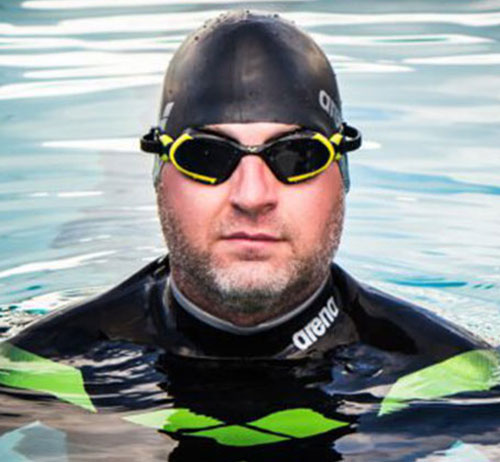
Ben Hooper hit the international headlines after revealing what has been described as one of the world’s most ambitious expeditions: to swim “every single mile” of the Atlantic Ocean – according to Sir Ranulph Fiennes OBE, the last great bastion to be conquered. Ben’s intended journey, across two-thousand miles of open ocean between Senegal and Brazil, would take up to 4-months, and would enter the record books. The expedition, called ‘Swim the Big Blue’, following Ben’s death from swimming into thousands of left-over Portuguese Man O’War tentacles and his incredible restart, mid-Atlantic, was eventually thwarted by adverse weather conditions damaging his support vessel. It was a devastating blow following years of painstaking dedication and training. Today, Ben holds the only WOWSA verified attempt to swim the full extent of The Atlantic Ocean.
Main image: Courtesy, Professor Mike Tipton
Additional image: Courtesy, Professor Joyce Harper