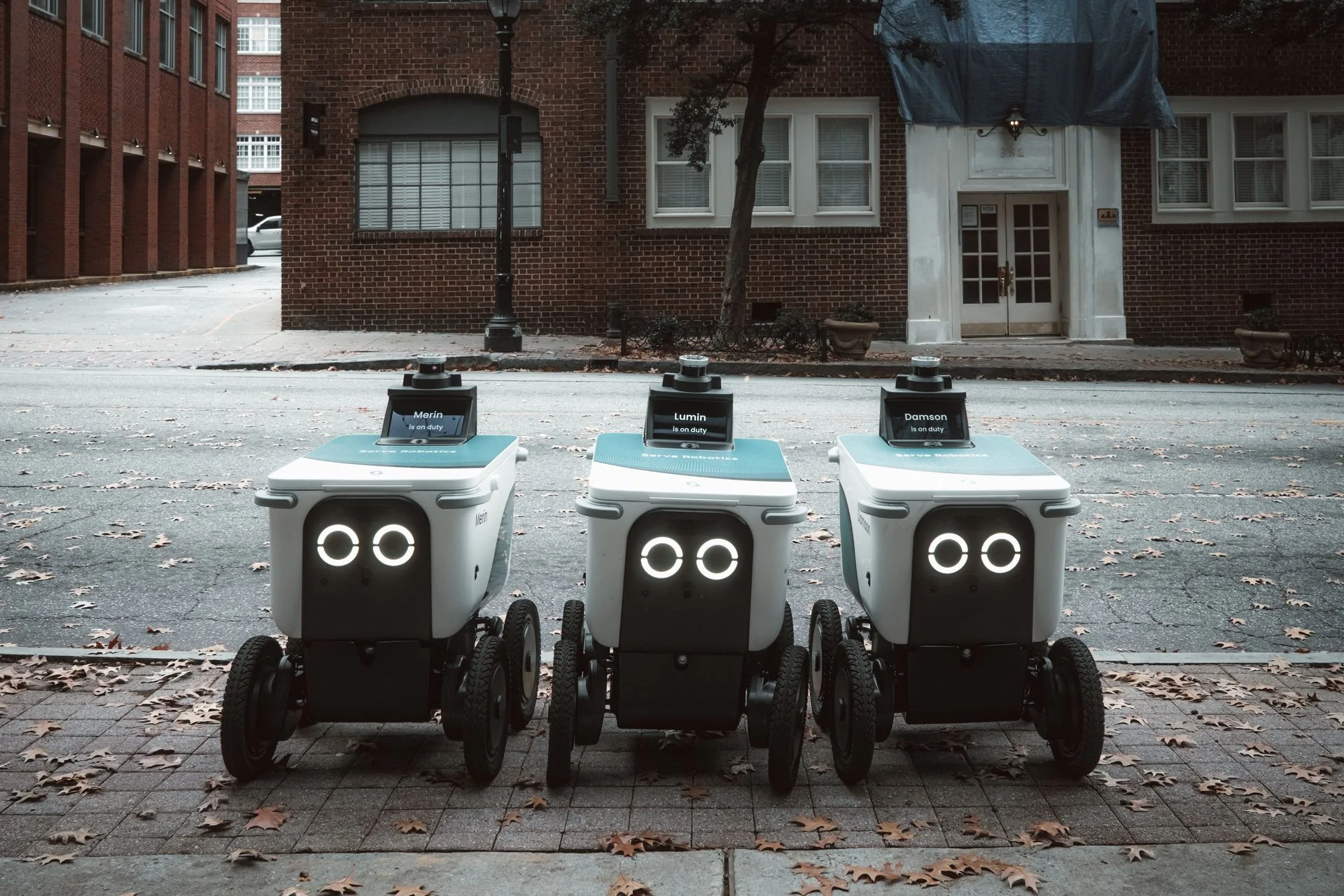
Artificial intelligence promises extraordinary productivity and wealth creation, but concentrating that wealth in the hands of the few while millions lose their jobs could ultimately undermine the very marketplace on which that prosperity depends, writes Harry Margulies
Every major technological advance has revived fears that machines will displace workers and leave large parts of the population without jobs. Since the Industrial Revolution, those fears have often proved overstated in the long run. Technology has disrupted labour markets, but it has also created new industries, raised productivity and, over time, improved living standards.
For much of the past two centuries, a rough economic pattern held. Capital investment increased labour productivity; higher productivity supported rising wages; and rising wages sustained demand. That demand, in turn, drove further growth.
In recent decades, however, that relationship has shown clear signs of strain across advanced economies. The labour share of national income in OECD countries has declined since the 1980s, while median wages have, in many places, decoupled from productivity growth even as output per worker continued to rise.
Artificial intelligence may test that relationship more fundamentally.
The concern is that AI will reduce the need for human labour across a wide range of both manual and cognitive tasks. Previous waves of innovation primarily replaced specific tasks. Generative AI, by contrast, has the potential to reshape entire categories of work.
This is already beginning to happen in real time. The UAE, for example, plans to shift roughly half of government services to AI within two years — a move intended to increase efficiency, while also illustrating how quickly administrative labour itself may come under pressure.
Estimates suggest that tasks equivalent to hundreds of millions of jobs globally could be exposed to automation, particularly in administrative, legal, customer-service and knowledge-work roles.
If labour ceases to be the primary way most people earn income, a basic question emerges: Who provides the demand that sustains the market?
Henry Ford understood that mass production required mass consumption. By paying his workers enough to buy the cars they produced, he helped create the market his company depended on.
AI-driven firms may not face the same constraint. They can scale output dramatically with relatively few employees.
As wage income becomes less central to the distribution of purchasing power, the question of demand becomes unavoidable.
One answer is that wealth does not remain concentrated indefinitely. History shows that fortunes rise and fall, shaped by competition, innovation, policy and, at times, instability. In theory, capital compounds without limit. A simple illustration makes the point: US$1 invested two millennia ago at five per cent annually would exceed the value of all assets in existence today.
In practice, though, it rarely does. Wars, technological disruption, taxation and creative destruction interrupt the process.
The wealthiest man of Roman antiquity, Marcus Licinius Crassus, has no descendants who control the modern world. The House of Medici disappeared centuries ago. The Rothschild family, once a banking empire of immense global influence, now operates on a far smaller scale through separate institutions.
The difficulty is timing. Wealth may dissipate over generations, but economic dislocation can emerge far more quickly. If AI reshapes labour markets faster than new sources of income develop, political and social pressures will not wait for long-run adjustments.
Democracies tend to respond to such pressures, and not always smoothly. Protectionism, heavy redistribution or restrictions on innovation could all emerge from prolonged economic disruption.
There is also a more optimistic possibility. AI could expand demand for work in areas where human interaction, empathy, creativity and judgement remain central: care, education, personalised services and leisure. It could assist rather than wholly replace workers, supporting diagnostics in healthcare while freeing professionals for direct patient care or enabling teachers to spend more time on mentorship.
AI may support shorter working lives, greater leisure and a gradual shift away from employment as the sole source of identity and income. Such outcomes would be consistent with previous technological transitions, though they are far from guaranteed.
Some countries may attempt to slow AI adoption but others will continue advancing rapidly. The question is whether societies shape the process as it unfolds or simply react to the consequences afterwards.
A market economy depends on broad purchasing power. If income becomes increasingly concentrated while wage income declines, the system risks undermining its own foundations. Production without sufficient demand is not a stable equilibrium.
Large rewards for innovation are entirely justified. Incentives matter, and breakthroughs that improve human welfare should be generously rewarded. But a system generating substantial wealth must also sustain a functioning marketplace, and that requires broad participation in consumption.
If labour no longer functions as the primary mechanism through which people earn income, alternative systems will be needed. These may include broader ownership of capital, sovereign wealth funds, citizen dividends tied to AI productivity, targeted or universal income supports, wage subsidies, lifelong learning systems or shorter working weeks. The precise mix will vary between societies; the underlying requirement for broad-based demand will not.
Societies can endure severe imbalance for long periods before any correction arrives, but they cannot remain stable indefinitely. An economy in which a narrow group controls most of the wealth and largely transacts among itself gradually ceases to function as a broad-based market economy. It becomes increasingly detached from the wider society around it.
We have seen versions of this before. Ancient Rome sustained social order through distributions and spectacle, though under very different expectations about agency and participation. Modern democratic societies are unlikely to accept prolonged economic exclusion so passively.
And if the super-wealthy ‘overlords’ of AI end up trading mostly within their own circle, they may eventually discover they’re simply passing around Monopoly money.

Harry Margulies is a journalist, author, commentator, and public intellectual whose work interrogates religion, politics, and morality with sharp wit and fearless clarity. A second-generation Holocaust survivor, he was born in Austria and spent time in an Austrian refugee camp before moving to Sweden. Educated by Orthodox rabbis throughout his childhood, he ultimately abandoned faith in his teens—a journey that has shaped his lifelong commitment to secularism, critical thinking, and freedom of expression. His latest book, Is God Real? Hell Knows, has been described by ABBA’s Björn Ulvaeus as “funny, sharp, and unafraid.”
READ MORE: ‘The dollar isn’t collapsing — but it is starting to matter less‘. The U.S dollar has long dominated the global financial system, but its position is no longer as secure as it once was. In a new era of currency fragmentation, policymakers, businesses and investors can no longer afford to bet their bottom dollar on its continued supremacy, writes Business & Regulation Correspondent Harry Margulies.
Do you have news to share or expertise to contribute? The European welcomes insights from business leaders and sector specialists. Get in touch with our editorial team to find out more.
Main Image: Andrew Patrick Photo/Pexels