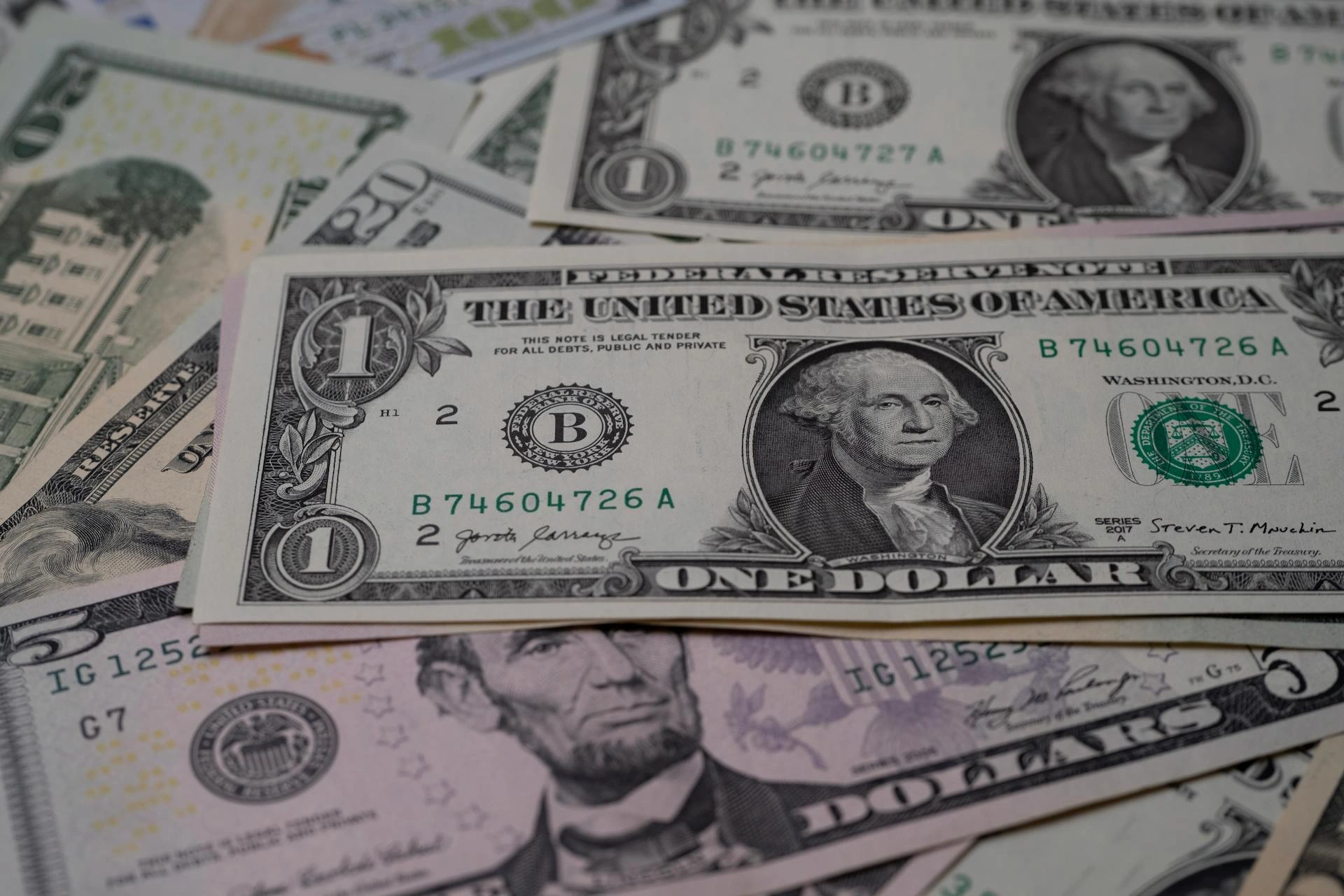
The U.S dollar has long dominated the global financial system, but its position is no longer as secure as it once was. In a new era of currency fragmentation, policymakers, businesses and investors can no longer afford to bet their bottom dollar on its continued supremacy, writes Business & Regulation Correspondent Harry Margulies
For decades, the U.S dollar has been the central pillar of the global financial system. It remains the world’s dominant reserve currency and continues to underpin international trade, investment and finance.
The scale of that dominance is striking. The dollar features in around 89 per cent of global foreign exchange transactions, and its deep integration into global markets makes it the default currency for everything from commodity pricing to sovereign debt issuance.
This position did not emerge by accident. It reflects a system that confers significant advantages on the United States. By issuing the world’s primary reserve currency, the U.S can finance persistent trade deficits by effectively exporting its own currency — paper in exchange for real goods, services and assets. It eliminates foreign exchange risk on its debt and extends geopolitical influence through the dollar-based financial system.
That influence reaches far beyond U.S borders. Even transactions between banks outside the United States remain exposed because access to dollar clearing, correspondent banking and systems such as SWIFT is indispensable. Few institutions are willing to risk being cut off. The system is reinforced by powerful network effects: trade is invoiced in dollars, commodities are priced in dollars and global finance — from debt issuance to derivatives — remains overwhelmingly dollar-based.
At the same time, the dollar’s dominance rests on the unmatched scale, liquidity and perceived safety of U.S financial assets, particularly Treasuries. Investors and central banks require not just a currency, but a place to deploy large sums with confidence. For now, only the United States provides that at scale.
Yet this position is no longer as unchallenged as it once was.
The dollar’s share of global reserves has declined from over 70 per cent in the early 2000s to just under 57 per cent as of Q4 2025. While much of this reflects exchange-rate valuation effects rather than active selling by central banks, the broader trend towards diversification is clear. A softer dollar against the euro, rising gold prices and shifts in reserve composition all point to a reassessment of its role at the centre of the system.
Some of the pressures are structural. To supply the world with safe dollar assets, the United States must run persistent deficits — what economists describe as the Triffin dilemma. A dominant reserve currency also tends to be stronger than domestic fundamentals alone would justify, eroding export competitiveness over time. What is often described as an “exorbitant privilege” is therefore also a constraint.
Other pressures are political and strategic. Persistent fiscal deficits, rising debt levels — now exceeding $39 trillion — and repeated brinkmanship around the U.S debt ceiling risk eroding confidence over time. The increasing use of financial sanctions, while effective in the short term, has also encouraged countries to explore alternative systems that reduce exposure to the dollar.
More broadly, intent is beginning to shift. A growing number of countries are seeking to diversify their reserves and reduce reliance on the dollar, even if inertia remains strong. At the same time, alternative payment systems, bilateral settlement mechanisms and the development of central bank digital currencies are gradually lowering the barriers to operating outside the dollar system.
Despite this, no single challenger is yet ready to take the dollar’s place.
The euro remains the most significant alternative but rests on a monetary union without full fiscal integration. It lacks a unified fiscal backbone and a single safe asset comparable to U.S Treasuries. China’s currency reflects growing economic weight, but reserve status ultimately depends on trust — in institutions, transparency and capital mobility — areas where confidence remains incomplete. Special Drawing Rights lack both scale and practical usability.
Gold is re-emerging as a hedge against uncertainty, with central banks purchasing 863 tonnes in 2025 and forecasts near 850 tonnes for 2026. Its appeal reflects concerns about inflation, debt and systemic risk. However, it generates no yield, lacks flexibility and cannot support the scale of modern financial markets. Cryptocurrencies face even greater hurdles, lacking institutional backing, stability and a lender of last resort.
Taken together, these alternatives point not to the dethroning of the dollar but to a future in which the dollar remains dominant but less central.
Trade is likely to be settled in a wider range of currencies, with more bilateral arrangements and a gradual emergence of regional financial blocs. Change, if it comes, is likely to begin at the margins before becoming visible at the centre.
Such a shift will carry important implications. A more fragmented system means greater currency volatility, more complex financial arrangements and a reduced ability for any single country to shape global outcomes through its currency alone. It also introduces new strategic risks for governments, institutions and investors accustomed to operating within a dollar-centric system.
In the near term, the dollar’s position remains secure, supported by deep financial markets and entrenched global usage, with a significant share of global trade, including energy markets, still conducted in dollars.
Over the medium term, though, incremental shifts are likely. No reserve currency exists in isolation, and the dollar is no exception. Over the longer term, the outcome is less certain.
History, however, offers a reassuring precedent in the transition from the British pound to the U.S dollar. That shift was gradual, and the global system adapted.
The key point for policymakers, businesses and investors is that the dollar’s lasting supremacy can no longer be taken for granted. It is not about to be replaced, but as the global financial system moves towards fragmentation, it is starting to matter less. Continued reliance on a single dominant currency therefore carries growing risks that must not be ignored.

Harry Margulies is a journalist, author, commentator, and public intellectual whose work interrogates religion, politics, and morality with sharp wit and fearless clarity. A second-generation Holocaust survivor, he was born in Austria and spent time in an Austrian refugee camp before moving to Sweden. Educated by Orthodox rabbis throughout his childhood, he ultimately abandoned faith in his teens—a journey that has shaped his lifelong commitment to secularism, critical thinking, and freedom of expression. His latest book, Is God Real? Hell Knows, has been described by ABBA’s Björn Ulvaeus as “funny, sharp, and unafraid.”
READ MORE: ‘Iran, nuclear proliferation and the hard choices facing democracies‘. Should the West risk confrontation with Iran, or accept the possibility of a nuclear-armed regime exerting leverage over one of the world’s most important oil routes? The question goes to the heart of today’s debate over Iran and the risks facing global trade, writes Business & Regulation Correspondent Harry Margulies.
Do you have news to share or expertise to contribute? The European welcomes insights from business leaders and sector specialists. Get in touch with our editorial team to find out more.
Main Image: Саша Алалыкин/Pexels