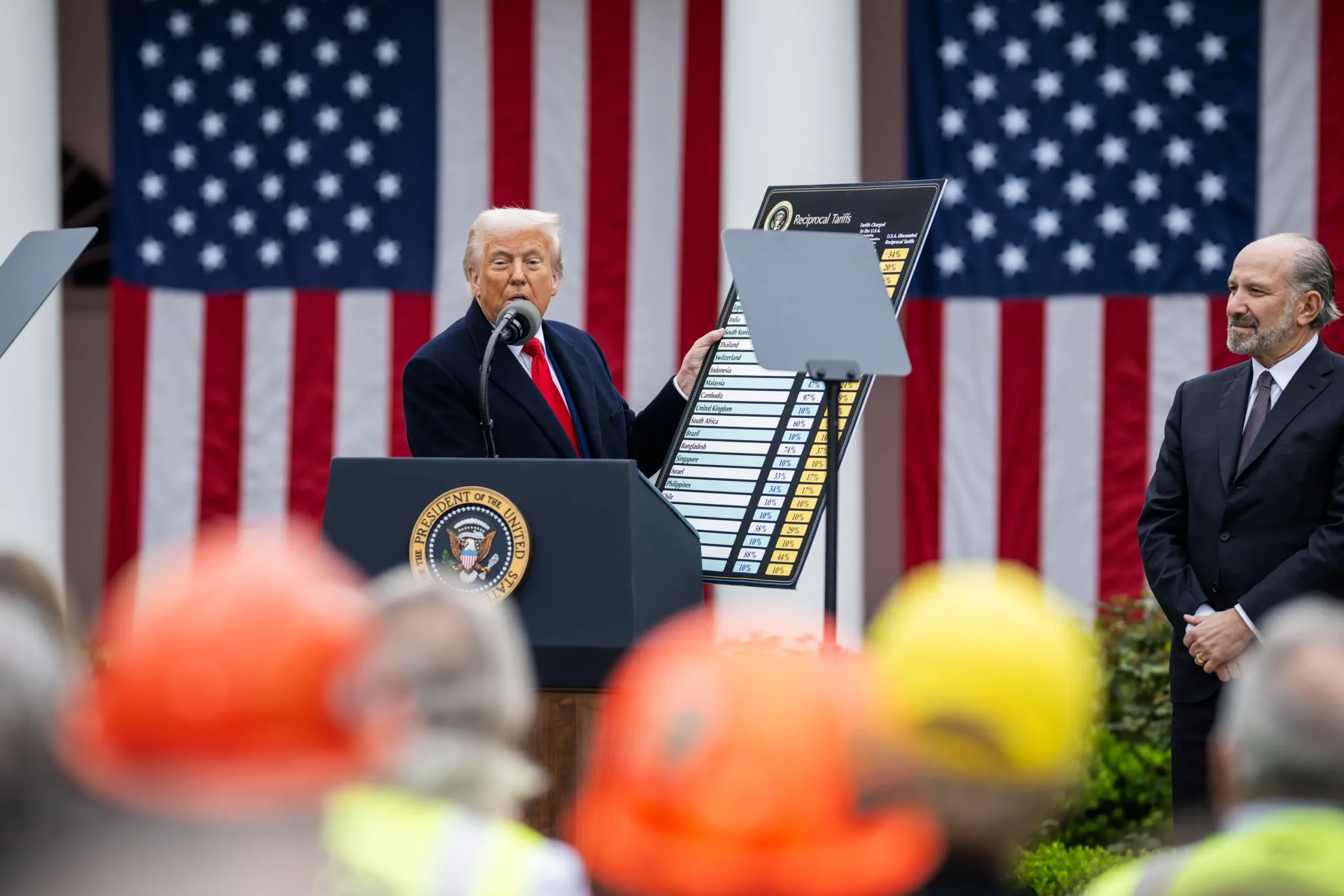

For many people in Europe, Donald Trump represents a shocking break from the political norms the United States once claimed to champion. But in the first of a three-part series asking the question Is America Broken?, political analyst Mike Bedenbaugh says American history suggests something more complicated: the tensions revealed by Trump’s presidency have long been embedded in the American system itself
Across the world, people are increasingly asking a question that would have seemed almost unthinkable a generation ago: What has happened to America?
For decades, the United States has presented itself as the central pillar of the post-war international order — a nation committed to defending democratic institutions, maintaining global stability and upholding what came to be called the “rules-based system”.
To many observers, Trump appears to represent a dramatic break with the democratic norms the United States once claimed to champion. Both inside and outside the nation, many have struggled to reconcile the confident rhetoric of a “shining city on a hill” with the volatility of modern American politics.
Television commentators in the United States often repeat a familiar phrase when discussing corruption scandals, executive overreach or controversial wars: This is not who we are.
The line is meant to reassure audiences that the country has somehow strayed from its true values.
Yet the phrase reveals something deeper. It suggests how little many Americans — and many Europeans — truly understand about the longer history of the United States.
The reality is that much of what the world is witnessing today has appeared before in different forms. The gap between American ideals and American behaviour has, in fact, existed from the very beginning rather than suddenly emerging with Donald Trump.
His presidency has simply forced many of those tensions into the open.
Thomas Jefferson, the author of the Declaration of Independence and America’s third president, wrote the famous words “All men are created equal”. Yet he also enslaved hundreds of people during his lifetime.
Jefferson’s life captured a contradiction that has echoed throughout the American experiment: a nation built on ambitious moral claims that repeatedly struggles to meet them.
The tension surfaced again in the next generation. In the 1830s, President Andrew Jackson forced Native American nations from their lands in the southeastern United States despite a Supreme Court ruling recognising their legal rights.
Jackson ignored the Court and carried out the policy that became known as the Trail of Tears — one of the most tragic episodes in early American history. The incident showed how fragile constitutional restraints could become when they collided with presidential power.
The Mexican-American War of 1846 was presented as a defensive response to Mexican aggression, yet President James K Polk had positioned American troops in disputed territory along the Rio Grande in a way that made conflict likely. The war allowed the United States to seize vast territory across what is now the American Southwest.
A young congressman named Abraham Lincoln later challenged Polk to identify the precise “spot” where American blood had supposedly been shed on American soil. The president never provided a clear answer.
Half a century later, the Spanish-American War followed a similar pattern. Sensationalist newspapers blamed Spain for the explosion of the USS Maine in Havana Harbor and the slogan “Remember the Maine!” spread rapidly across the country. Historians later concluded the explosion was most likely accidental, but by then the war had already begun and the United States soon found itself controlling territories thousands of miles from its shores.
In the Philippines, local revolutionaries who had helped American forces defeat Spain expected independence. Instead, they encountered a new imperial authority. The United States suppressed the Filipino independence movement in a conflict that cost hundreds of thousands of lives.
The pattern continued into the twentieth century. Woodrow Wilson ran for re-election in 1916 under the slogan “He kept us out of war.” Only months later the United States entered the First World War promising to make the world safe for democracy.
For readers in Britain or France, American intervention may still appear as the decisive factor that helped end a brutal war. Readers in Germany, however, may see the story differently.
By entering the conflict with more than two million fresh troops and overwhelming industrial power, the United States tipped the balance of a war that had already settled into stalemate among Europe’s great powers. The war ended quickly after American entry, but the punitive settlement that followed — the Treaty of Versailles — destabilised Europe and helped create the conditions that allowed the rise of Adolf Hitler.
After the Second World War, the United States emerged as the dominant global power and helped design the modern international economic system through the institutions created at Bretton Woods. For the first time in its history, America was not simply influencing world affairs but actively shaping the rules that governed them.
Power on that scale carries consequences.
“When a country with global reach acts inconsistently with its own ideals, the effects extend far beyond its borders.”
Jackson ignored the Court and carried out the policy that became known as the Trail of Tears — one of the most tragic episodes in early American history. The incident showed how fragile constitutional restraints could become when they collided with presidential power.
During the Cold War, the United States repeatedly intervened in the domestic politics of other nations. American foreign policy was strongly influenced by figures such as John Foster Dulles and his brother Allen Dulles, who helped organise covert operations that reshaped governments in countries including Iran and Guatemala.
Fear often played a central role in these decisions. During the Cold War, the word ‘communism’ carried enormous political force, mobilising public anxiety and justifying sweeping foreign policy choices.
Vietnam became the most tragic example.
In 1964 the Johnson administration announced that American ships had been attacked by North Vietnamese forces in the Gulf of Tonkin. Congress responded with a resolution granting the president broad authority to wage war.
Years later it emerged that the second reported attack almost certainly never occurred, but by then more than fifty-eight thousand Americans — and millions of Vietnamese — had died.
The Cold War eventually ended, but the political power of fear remained. The language changed. ‘Communism’ was replaced by another word capable of mobilising public anxiety and legitimising military action: terrorism.
Following the attacks of September 11, 2001, the United States launched wars in Afghanistan and Iraq aimed at defeating terrorist networks and stabilising the Middle East. Those conflicts reshaped entire regions and produced consequences that are still unfolding today.
Seen within this longer history, the presidency of Donald Trump suddenly appears less surprising.
Some of these pressures arise from the structure of the American system itself.
The founders deliberately designed a government that would move slowly. They feared concentrated authority more than inefficiency and divided power across institutions and levels of government in order to prevent centralised control.
In 1787, that arrangement governed a small republic of roughly three million people spread across thirteen states. Its strength lay in restraint rather than speed. The goal was to limit authority and protect individual liberty.
That framework still shapes American government today. The difficulty is that the United States now operates on a vastly different scale.
A constitutional system built to manage a modest republic now sits at the centre of a global power. As American influence has expanded, presidents have gradually accumulated vast instruments of power — military, intelligence, economic and administrative.
Trump has inherited those tools rather than creating them.
What distinguished his approach, however, is his willingness to use them with little regard for diplomatic convention.
Proposals to purchase Greenland from Denmark, disputes over long-standing security commitments, confrontations with Iran and pressure on governments such as Venezuela have startled many European observers.
Yet these actions reflect long-standing habits of American power that Trump has been willing to express more bluntly than previous presidents.
The tension is also made clearer because he operates in a political environment transformed by technology. Social media has allowed him to communicate directly with tens of millions of supporters, bypassing traditional institutions and reshaping the national political conversation.
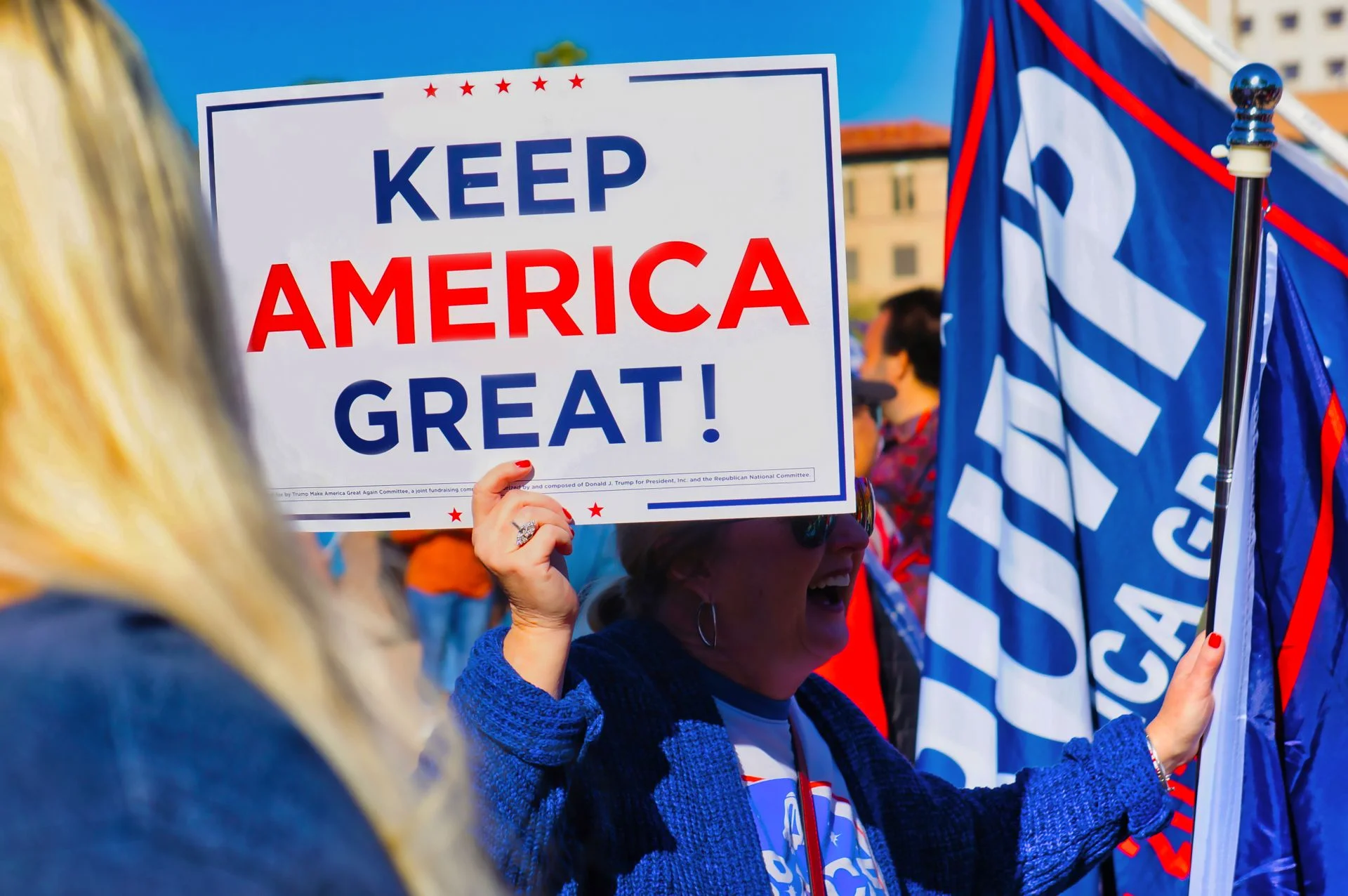
The portrait of Andrew Jackson that Trump displayed prominently in the Oval Office offers a revealing symbol. Jackson represented a tradition of American leadership that favoured decisive executive action and popular authority over institutional caution.
Trump has clearly seen in Jackson a precedent worth following.
In Part II of Is America Broken?, I will examine how these structural pressures developed — and what they may mean for the future of the American republic.

Author and political thinker Michael Bedenbaugh is a respected voice in constitutional principles and American governance. Based in South Carolina, he is deeply involved in his home state’s development while contributing to national discussions on governance and civic engagement, most recently as standing as an independent candidate for Congress. He is the author of Reviving Our Republic: 95 Theses for the Future of America and the host of YouTube channel Reviving Our Republic with Mike Bedenbaugh.
READ MORE: ‘What the Monroe Doctrine actually said — and why Trump is invoking it now‘. When President Donald Trump justified action in Venezuela by invoking a new “Donroe Doctrine”, he attached a modern intervention to the name of a little-understood 1823 American policy that originally promised the opposite: that Europe would stay out of the Americas and America would stay out of Europe. Political analyst Mike Bedenbaugh explains how that promise changed over two centuries into something very different, and why hearing it revived now tells Europeans far more about today’s United States than about its founders.
Do you have news to share or expertise to contribute? The European welcomes insights from business leaders and sector specialists. Get in touch with our editorial team to find out more.
Main image rauschenberger/Pexels