Have we become a nation of bad sports? From the playing field to the ballot box, Pip Burley asks whether Britain has forgotten how to lose gracefully – and what our increasingly bitter political rivalries mean for democracy
Sport is supposed to teach us how to lose.
We may complain about the referee, blame the conditions or spend the journey home explaining how different everything would have been if only that shot had gone in, but when the final whistle blows, the result stands. We shake hands, congratulate the winner and prepare for the next contest.
At least, that’s the theory.
When Spain defeated Argentina 1-0 after extra time in the World Cup final back in July, the final whistle was followed by pushing, shoving and an unseemly confrontation involving players and coaching staff. One Argentinian assistant subsequently apologised, while FIFA began disciplinary proceedings. Argentina’s inability to accept defeat threatened to overshadow Spain’s achievement.
A few days before that, tennis player Novak Djokovic responded very differently after being beaten by Jannik Sinner in the Wimbledon semi-final. Djokovic was disappointed, naturally, but acknowledged that what he had produced had been good – just not good enough.
There, in miniature, are two ways of losing. One is to accept that we entered a competition governed by agreed rules and didn’t win. The other is to behave as though the result itself must somehow be an injustice.
Nor are we in Britain immune. When England lost the 2019 Rugby World Cup final to South Africa, several players attracted criticism for removing their runners-up medals almost as soon as they received them. More recently, after boxer Tyson Fury lost his 2024 rematch with Oleksandr Usyk by unanimous decision, he insisted he’d won and accused the judges of giving his opponent a “Christmas gift”.
Sport is one thing, but could it be that the second type of response – the same difficulty in accepting defeat – is spreading far beyond the playing fields of England?
I’m in my eighties. I’ve been married for more than half a century, have founded companies in several different fields and have experienced both the risks and rewards of business and investment. None of that makes my political opinions more correct than anyone else’s – age doesn’t confer wisdom automatically. It does, however, provide a certain wider perspective.
In marriage, family life, business and creative work, one learns a fairly unglamorous truth: nobody gets his own way all the time. No lasting relationship, company or collaborative endeavour can survive if every disagreement must produce an outright winner and a humiliated loser.
Democracy depends upon much the same understanding. We hear a great deal about the right to vote and rather less about the responsibility that comes with it.
The most important democratic responsibility may be the willingness to lose. Political scientists call this ‘loser’s consent’. It doesn’t mean that the losing side must agree with the winner, abandon its principles or remain silent. Rather, it means accepting that the contest was legitimate and that the winner has the right to govern within the established rules.
A democracy is a bargain. It can’t survive if only the winners recognise its authority. Increasingly, however, when an election or referendum produces a result that people dislike, the first reaction is not to consider why they lost but to question whether the result should be allowed to stand at all. We hear the same forms of complaint: ‘The electorate was misled’, ‘The voting system was unfair’, ‘The newspapers were biased’, ‘social media interfered’, ‘The public didn’t understand the question’,
Some objections may indeed contain truth. No election is perfect, no campaign is entirely honest and no voting system satisfies everyone. Evidence of fraud, unlawful interference or serious misconduct must always be investigated.
But there’s a difference between challenging a broken rule and rejecting a legitimate result simply because we don’t like it. The roots of democracy lie not merely in casting a ballot, but in accepting that the other side may win.
The Brexit referendum is perhaps the clearest recent British example. More than 33 million people voted. Leave received 17,410,742 votes and Remain 16,141,241 – a result of 51.9 per cent to 48.1 per cent. It was close, certainly, but close contests are still contests.
Many who voted Remain found the result almost impossible to accept. There were calls for a second referendum, attempts to delay or prevent Britain’s departure and repeated suggestions that Leave voters hadn’t understood what they were doing.
Some concerns were perfectly reasonable. The referendum didn’t determine every detail of Britain’s departure, and Parliament had a proper role in deciding how it should be accomplished. Nevertheless, there was also a widespread feeling that the public had produced the wrong answer and ought to be given another opportunity to produce the right one.
Brexit supporters were guilty of a different failure. Some treated a narrow victory as permission to ignore the 48 per cent who had voted the other way. Any compromise was denounced as betrayal. Any attempt to examine the practical consequences was portrayed as an effort to overturn democracy.
That’s the conduct of a bad winner – and bad winners can be every bit as damaging as bad losers.
Democratic consent requires the losers to accept the result but it also requires the winners to exercise power with restraint. Victory is not permission to humiliate opponents or pretend that their interests no longer matter.
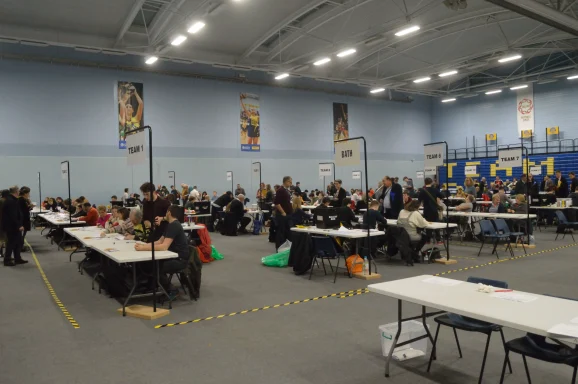
Our electoral system regularly produces results that leave large numbers of voters dissatisfied. A party can win a commanding majority in the House of Commons without receiving anything close to a majority of the national vote.
These are reasonable grounds for debating electoral reform. But the rules must be questioned consistently – not merely when they disadvantage our own side. Change them openly and prospectively for the next contest, not retrospectively because we dislike the score.
An election settles who governs for a period. It leaves plenty still to argue about and doesn’t prove that the winners are always right or require the opposition to disappear. During that period, the opposition’s job is to scrutinise, challenge and prepare an alternative.
The deeper problem begins when political disagreement is no longer presented simply as disagreement about policy but as a test of morality. We’re increasingly dividing ourselves into hostile groups: young against old, region against region, nationalist against globalist, environmentalist against motorist, and one cultural or religious identity against another.
When I believe that my position is not merely preferable but morally righteous, anyone who defeats me can’t simply be mistaken. He must be ignorant, selfish, corrupt or wicked. And why should a morally righteous person accept defeat by the wicked?
Once politics reaches that point, compromise becomes cowardice, restraint becomes betrayal and an election result is accepted only when it advances the correct cause. That’s how ‘loser’s consent’ begins to disappear.
Generational disputes are a perfect example. They’re too often framed as contests between selfish pensioners and resentful young people. Another example is environmental arguments, which become battles between those who believe they are saving the planet and those who fear that their freedom and livelihoods are being sacrificed by an unaccountable elite.
In these, and countless other examples, each group comes to believe that the stakes are too high to permit defeat. Perhaps we’ve forgotten democracy’s purpose: to manage disagreement without violence.
Democracy delivers occasional, if not frequent, disappointment and that means all of us will, sometimes, be disappointed. We’ll be governed by people we didn’t support. Taxes we oppose will be imposed, policies we consider foolish will be enacted and causes we believe are just will be rejected.
Without an acceptance of those outcomes, politics becomes a permanent struggle in which no result is final because every losing side refuses to recognise the winner. Britain’s political stability has never depended solely upon Parliament, the courts, the police or the monarchy. It has also relied upon how we behave. Winners don’t take everything and losers don’t seek to overturn the table. Governments remember that their power is temporary and opponents accept that they’ll have another opportunity. Everyone understands that today’s minority may become tomorrow’s majority. These conventions are rarely written down, but they are among democracy’s deepest foundations.
There is already official concern about diminishing trust and engagement in Britain’s electoral system. A parliamentary inquiry launched in March 2026 is examining the health of electoral democracy in the light of falling turnout and weakening public trust in democratic institutions.
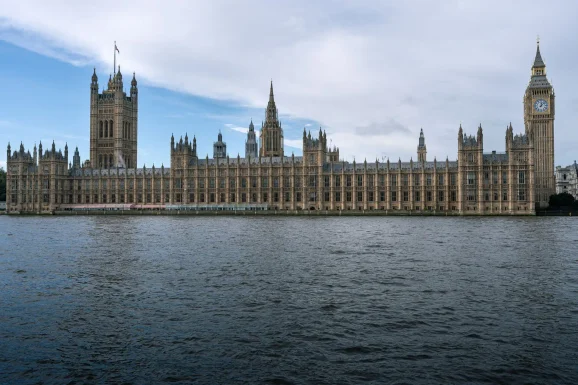
No reform of registration, voting procedures or political finance can restore that trust on its own. It also depends upon people believing that political contests are conducted under common rules – and that the result will be respected.
Being a good loser still allows us to challenge dishonesty, corruption or genuinely unlawful conduct. Results may sometimes need to be challenged, just as a decision in sport may be appealed when the rules have been broken.
But such a challenge must be based upon evidence – not simply upon our conviction that our side deserved to win.
Accepting defeat also means returning to the argument, persuading more people and trying again at the next election. That’s democracy’s equivalent of going back into training.
So, are we becoming a nation of bad losers? Perhaps not quite yet. Most defeated candidates still concede. Most governments still leave office peacefully. Most voters grumble, complain and then get on with their lives.
But the habit of acceptance is definitely weakening. Too many people now regard a democratic result as valid only when it confirms what they already believe. Too many winners mistake victory for absolute authority. Too many people see opponents not as fellow citizens to be persuaded but as obstacles to be defeated, denounced or silenced.
Sport offers us a simple lesson: we play hard, we argue our case and we use every opportunity permitted within the rules. But when the contest is over, we look at the scoreboard and then we shake hands.

Pip Burley is a veteran television producer, author, novelist, composer and creative industries expert whose career has spanned more than six decades across television, music, theatre, advertising, publishing, business and writing. He founded television production company Excelsior and produced some of Britain’s best-known dramas, including The Darling Buds of May, A Touch of Frost and My Uncle Silas. He also composed the theme music for The Darling Buds of May, receiving an Ivor Novello Award in 1992. As novelist Philip G. Walsh, he is the author of the Harmony Legacy series of thriller. As Television Production & Generational Affairs Correspondent for The European, he writes on broadcasting, creativity, leadership, ageism, intergenerational affairs and the role older and more experienced people can continue to play in public life.
READ MORE: Why some TV roles become iconic. Some TV performances become so definitive that they live on decades after the cameras stop shooting. The European’s Television Production & Generational Affairs Correspondent, veteran TV producer Pip Burley, explains why the greatest roles are built not on star power alone but on creative collaboration.
Do you have news to share or expertise to contribute? The European welcomes insights from business leaders and sector specialists. Get in touch with our editorial team to find out more.
Main Image: cottonbro studio / Pexels