Workplace microaggressions can force Black women to weigh the professional cost of speaking up or staying silent, giving employers practical as well as moral reason to address them, argues Dawn-Maria France
A colleague touches a Black woman’s hair without permission. Someone expresses surprise that a Black colleague is articulate. Another Black professional speaks firmly in a meeting and is assumed to be angry or intimidating, or finds herself treated as the diversity representative whenever race enters the conversation.
Individually, these incidents may be defended as harmless. Collectively, however, they can become exhausting, because the woman on the receiving end has another decision to make. Does she challenge the comment, ignore it, explain why it is offensive or protect the feelings of the person who made it?
An old BBC Ideas film, How I deal with microaggressions at work, produced by Team Sass Productions, is currently circulating on social media and helping spark fresh conversations about microaggressions – experiences which are still far too commonplace, and which are still frequently dismissed as ‘small things’, misunderstandings or oversensitivity.
Before anything else, we need to understand what a ‘microaggression’ is. It is often an apparently casual comment, question or behaviour that conveys a negative assumption about someone’s race, identity or belonging. What may appear minor to one person can have a profound emotional effect on another, particularly when it happens repeatedly.
For Black women at work, the calculation that they must make each time they encounter a microaggression can be particularly stressful. Speaking up may risk being labelled difficult, aggressive or lacking a sense of humour. Staying silent, meanwhile, can create resentment and the painful feeling that dignity is being traded for professional acceptance.
That professional double bind is one of the most damaging and largely invisible aspects of workplace microaggressions against Black women, and its consequences can extend beyond the individual experiencing them. Instead of being able to focus exclusively on work, they must spend time and emotional energy interpreting what has happened, deciding whether to respond and preparing for the possibility of it happening again.
And these experiences can be especially isolating when a Black woman is the only person of colour in a group. She may be expected to explain racism to everyone else while receiving little support herself. She may hear a racial comment followed by, “You know I don’t mean you,” as though personal familiarity cancels out the wider harm. She may feel pressured to laugh along so others are not made uncomfortable. The absence of others who share her experience can make it harder to challenge what happened and easier for others to dismiss it.
While the organisational cost of these experiences is difficult to quantify precisely, employers should still recognise that experiences which look minor from the outside can carry a heavy cost.
A study involving 345 Black employees found that workplace microaggressions were associated with greater emotional and cognitive effort, including discussing and processing experiences with colleagues and remaining vigilant for future racism. Employees reporting more microaggressions also experienced higher burnout and lower job satisfaction.
A 2025 systematic review of 48 peer-reviewed studies into racial microaggressions at work similarly found evidence linking them with poorer workplace outcomes, including lower job satisfaction and organisational commitment, and increased intentions to leave.
American research published earlier this year, meanwhile, examining the attrition of Black women from workplaces, identifies persistent microaggressions among the experiences relevant to understanding why Black women leave organisations, alongside other forms of workplace bias and inequity.
Employers invest considerable time and money recruiting talented people and trying to retain them. It makes little sense to do so while allowing a workplace culture in which employees must repeatedly calculate whether speaking honestly about their treatment will damage how colleagues perceive them.
Free speech remains an important part of British culture and people should be free to express an opinion, make a joke or ask a question. But equally, they must recognise that others are equally free to criticise or challenge what they say. While a speaker’s intent is important when considering how to respond to an awkward remark, so is the impact of what they’ve said. A lack of malicious intent doesn’t mean there’s no responsibility to listen, reflect and change.
A respectful workplace can protect open discussion while encouraging people to consider how their words affect others. If someone says that a comment was hurtful, listen rather than immediately defending the speaker’s intention. Do not touch a colleague’s hair or body without consent. Avoid treating Black colleagues as representatives for an entire community. And when commenting on someone’s race, appearance, name, accent or background, ask whether the remark relies upon a stereotype and whether you would say it to someone else.
The BBC and Team Sass have done something valuable by bringing these experiences back into the public sphere. Black women are colleagues, friends and citizens entitled to the same complexity, respect and freedom to express themselves as anyone else. When stereotypes are repeatedly forced upon a Black female colleague, it becomes difficult for her to be recognised as a complete individual.
And when Black women feel forced to choose between challenging bias and risking a damaging stereotype, or staying silent to protect their professional position, employers have reason to pay attention.
If organisations want their employees to contribute fully, remain engaged and build careers with them, they have a practical as well as moral reason to ensure that professional acceptance does not depend upon silence.
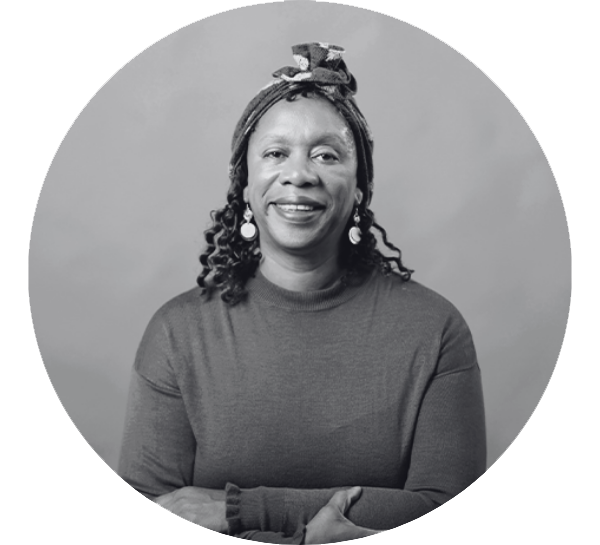
Dawn-Maria France is an award-winning journalist and broadcaster with experience across BBC News, Sky News, TalkTV and ITV News, alongside bylines in national and international publications. Her work focuses on mental health, social affairs, carers’ rights and wellbeing, informed by a background in community care, youth work and psychology.
READ MORE: ‘Memorial quilts honouring lives lost to suicide tour the UK‘. A touring exhibition created by people bereaved by suicide is bringing memorial quilts to communities across the UK this summer, preserving individual lives through fabric, photographs and personal mementoes.
Do you have news to share or expertise to contribute? The European welcomes insights from business leaders and sector specialists. Get in touch with our editorial team to find out more.
Main Image: Mikhail Nilov / Pexels