As Britain accelerates solar and AI infrastructure, Raj Joshi argues that the nation’s planning system is failing to protect farmland, water resources and local communities
If you want to understand how Britain is losing control of its land, its water and its democratic planning system, start in Lincolnshire.
Sutton Saint James is a quintessential English village of around 2,000 people. It is a quiet, agricultural and retirement-friendly place where everyone wishes you a “good morning”. It’s also the location for the Fendyke Farm case – an unassuming 44-hectare solar farm approved on the edge of Sutton St James. This contested solar development provides the perfect microcosm of a system that no longer protects the public.
Across the country, solar megaprojects and hyperscale AI server campuses are being fast-tracked under national policy frameworks that treat farmland, water resources and community rights as expendable. Prime Minister Andy Burnham’s administration speaks the language of net-zero urgency, technological sovereignty and future-facing industry. He has warned that failing to deliver climate commitments risks making the environmental transition “the next Brexit”, promised that fast-tracking green technology will “create thousands of good jobs” and pledged to “fight green belt development”.
Yet the land being sacrificed is not green belt but something more important: the agricultural heart of England.
At Fendyke Farm, the Planning Inspectorate approved a solar farm that removes 27.6 hectares of Best and Most Versatile Agricultural Land (BMVAL) from food production for 40 years. The site also lies beneath National Grid’s preferred corridor for a 140-kilometre NSIP overhead line. The decision raises serious questions about the treatment of BMVAL, the proposed grid corridor, the evidence for a viable grid connection, the consideration of alternatives and the statutory heritage duty under s.66(1) of the Planning (Listed Buildings and Conservation Areas) Act 1990. The Planning Inspector approved the scheme anyway.
There are also serious questions of law. The Inspector described the loss of BMVAL as “relatively insignificant”. That sits uneasily with the Supreme Court’s judgment in Samuel Smith Old Brewery v North Yorkshire CC [2020] UKSC 3, which held that policy terms must be applied according to their ordinary meaning. BMVAL is defined in national policy as land of national importance.
His treatment of the Grade II listed medieval cross raises questions about whether Barnwell Manor Wind Energy Ltd v East Northamptonshire DC [2014] EWCA Civ 137, which requires heritage protection to carry “considerable importance and weight”, was properly applied.
And the dismissal of the National Grid conflict, because plans were “not finalised”, raises a similar question under R (Kides) v South Cambridgeshire DC [2002] EWCA Civ 1370, which requires decision-makers to take relevant future proposals into account.
Questions also arise over the adequacy of the Inspector’s reasoning. In my view, he did not adequately explain how he had resolved the principal objections before him, including the loss of BMVAL and the conflict with National Grid’s proposed corridor. In South Bucks DC v Porter (No.2) [2004] UKHL 33, the House of Lords held that planning reasons must be “intelligible” and “adequate”, enabling the reader to understand why the decision was reached and how the principal controversial issues were resolved.
Taken together, these points expose a structural weakness in the planning system rather than a series of minor technical disagreements.
The council’s role is even more revealing. South Holland District Council’s officers did not appeal the Inspector’s decision. Residents say they learned that the council would take no further action only after specifically asking for its position – by which time the six-week period for bringing a statutory challenge had almost expired. Residents were told they could appeal, but by the time they learned the council would not, there was very little time left to prepare a High Court challenge. The public is given theoretical rights then denied the practical ability to exercise them.
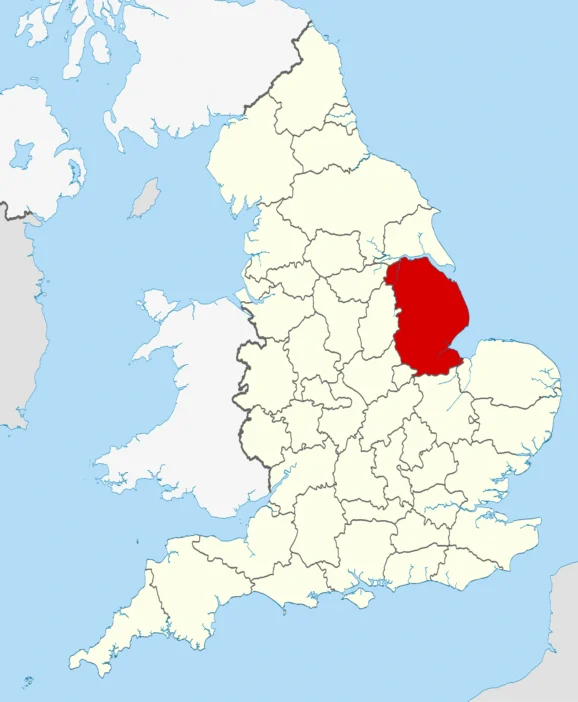
Lincolnshire has become the central government’s chosen landscape for the UK’s largest solar NSIPs. Springwell Solar Farm spans 1,280 hectares. Tillbridge covers another 1,200. One Earth Solar Farm will power half the homes in Lincolnshire. Mallard Pass, Gate Burton, Cottam and West Burton collectively consume thousands more hectares. The region is being carved up at industrial scale.
At the same time, the UK’s AI land rush is accelerating. The country already hosts 555 data centres, mostly in urban clusters. But the AI boom has triggered a new phase: hyperscale server campuses claiming greenfield sites at unprecedented scale. Elsham Tech Park, a 176-hectare data centre campus approved on the former RAF Elsham Wolds airfield in North Lincolnshire, could attract up to £10 billion in private investment and forms part of the proposed Northern Lincolnshire AI Growth Zone. The Conesby Campus in Scunthorpe combines a data centre with a 60MW dedicated solar farm to bypass grid constraints.
And in London, Burnham’s administration has already overridden municipal rejections – most notably the Brick Lane data centre redevelopment, approved despite local council opposition and drought-related water concerns. National tech ambitions trump local democratic control.
East Anglia, one of the driest regions in the UK, faces a wave of data centre applications requiring millions of litres of water daily for cooling. Anglian Water has issued formal objections. Developers are negotiating to use treated sewage effluent to avoid draining aquifers. The result is environmental triage.
Utility-scale solar farms and battery compounds carry long-term contamination risks that are almost never acknowledged in planning decisions. Damaged lithium-ion batteries and cadmium-telluride solar panels can release or leach contaminants into soil and water. Hyperscale AI server farms can require millions of litres of cooling water every day, adding pressure to rivers, aquifers and other water sources already under drought pressure. Together, these developments create a new form of environmental stress: land that can no longer grow food, water systems under greater strain and habitats degraded by industrial infrastructure marketed as ‘green’.
The public is told that judicial review is the safeguard yet the barriers can make that safeguard largely theoretical.
Firstly, judicial review is prohibitively expensive. Even with Aarhus cost caps – special limits designed to prevent environmental claimants from facing ruinous legal bills – ordinary people cannot realistically afford to bring a claim. The caps typically limit a claimant’s adverse costs liability to £5,000, or £10,000 for organisations, and the defendant’s liability to £35,000. But they do not remove a claimant’s own legal costs, which can still be substantial. The protection depends on the claim being treated as an Aarhus Convention claim, and the court can vary the limits in defined circumstances.
Secondly, judicial review is narrow. Courts do not reconsider the merits but, rather, purely examine legality. Even when a decision is environmentally catastrophic, judicial review cannot challenge the outcome unless the legal reasoning is defective, and courts defer heavily to Inspectors even then. National Policy Statements (EN1, EN3, EN5) carry overwhelming weight. Local harm is treated as collateral.
Thirdly, judicial review is also time-critical. In the case of an Inspector’s appeal decision, the statutory High Court challenge must normally be brought within six weeks. As the Fendyke case illustrates, much of that period can already have elapsed before residents know whether a council intends to take further action.
Finally, judicial review also places the burden entirely on the public. Councils are under no duty to challenge an Inspector’s decision, while developers have deep pockets and residents rarely do. The result is a system where the right to challenge exists on paper but not in reality.
The National Policy Statements (NPS) govern how Inspectors must assess energy infrastructure. EN1, EN3 and EN5 were revised in 2025 and came into force on January 6, 2026. Yet they remain dangerously inadequate.
NPS EN1 overweights national need. It requires decision-makers to approve energy infrastructure unless adverse impacts “outweigh the benefits”, creating a presumption in favour of approval even when environmental harm is severe. NPS EN3 fails to protect agricultural land. It requires developers to avoid BMVAL “where possible” but does not define ‘possible’, allowing Inspectors to treat BMVAL loss as trivial even when cumulative loss threatens national food security. NPS EN5 prioritises grid infrastructure above all else. It states that electricity network infrastructure should be given “the highest priority” yet Fendyke shows how a conflict with proposed grid infrastructure can still be discounted.

The 2025 revisions still do not adequately reflect the environmental realities described here or protect water resources and food security, require cumulative impact analysis or give communities meaningful leverage.
Britain cannot deliver net zero by destroying food security, depleting water resources and eroding democratic participation. The law must change in three fundamental ways.
First, the UK must introduce a third-party right of appeal. Residents must be able to appeal planning permissions that harm their environment, water supply or agricultural land. The current system, which allows developers to appeal refusals but denies residents any equivalent right, is indefensible.
Second, environmental safeguards must be strengthened. Solar farms and server hubs should be subject to mandatory water impact assessments, cumulative agricultural land-loss analysis, strict BMVAL protection, enforceable biodiversity and soil safeguards and binding requirements for alternatives assessments. Infrastructure should not be permitted to drain aquifers, pollute watercourses or industrialise prime farmland without rigorous scrutiny.
Third, the National Policy Statements must be updated. EN1, EN3 and EN5 should be rewritten to prioritise food security, protect water resources, require genuine alternatives assessments, prevent industrialisation of prime farmland and ensure that cumulative impacts are assessed and mitigated. The NPS should reflect the realities of drought, water scarcity and the unprecedented scale of AI server infrastructure.
Andy Burnham’s government speaks the language of urgency, sovereignty and future-facing industry. Much of that language is sincere, but sincerity does not excuse the erosion of democratic planning, the sacrifice of prime farmland or the depletion of water resources in drought-stricken regions.
Fendyke Farm is a national story because, in my view, it shows how planning policy and statutory duties can be given inadequate weight when major infrastructure is approved, how residents can be left with little practical opportunity to challenge a decision and how court proceedings remain inaccessible to many ordinary people. It also shows how inadequate National Policy Statements are enabling the industrialisation of England’s most productive farmland and the depletion of water resources in drought-stricken regions.
Europe should take note. The energy transition must be delivered, but not at the cost of the environment, the water that sustains us or the democratic principles that legitimise us.

Dr Raj Joshi is a senior barrister and prominent civil rights advocate whose career spans frontline legal practice, regulatory reform, and international justice. Twice named among the ‘Top 10 Asian Lawyers in the UK’ and listed in the ‘100 Most Influential Asians in the UK’, he has appeared before major inquiries, including giving evidence in the Stephen Lawrence case, and served as Chair of the Society of Black Lawyers. A former Adjudicator to the Solicitors Regulation Authority, Dr Joshi has advised ministers, helped shape legal protocols, and represented the UK in international legal forums.
READ MORE: ‘The dangerous precedent behind the Shabir Ahmed deportation row ‘. Calls to deport Rochdale grooming gang ringleader Shabir Ahmed may be politically understandable, but rewriting Section 7 of the Immigration Act to achieve that outcome could permanently weaken long-standing legal protections for Commonwealth citizens, warns Dr Raj Joshi.
Do you have news to share or expertise to contribute? The European welcomes insights from business leaders and sector specialists. Get in touch with our editorial team to find out more.
Main Image: Rafael Carneiro/Pexels