AI firms are recruiting philosophers to shape the values and behaviour of their systems but, according to Dr Stephen Whitehead, they are overlooking sociologists, the experts best placed to identify the assumptions that can leave technology biased, exclusionary and unsafe
In October 1946, at a meeting of the Cambridge Moral Science Club, three of the 20th century’s most influential philosophers – Bertrand Russell, Karl Popper and Ludwig Wittgenstein – became embroiled in a furious argument over whether philosophy dealt in genuine problems or merely puzzles of language.
Wittgenstein, chairing, is said to have seized a fire poker and brandished it while demanding that Popper name a single moral rule. Popper famously replied, “not to threaten visiting lecturers with pokers”, before Wittgenstein stormed out. Accounts still differ more than 75 years later, even among those in the room. If three of the sharpest minds of their generation could not agree on whether philosophy deals in real problems at all, it should give pause to anyone assuming philosophy alone can now supply a stable foundation for how a machine ought to behave.
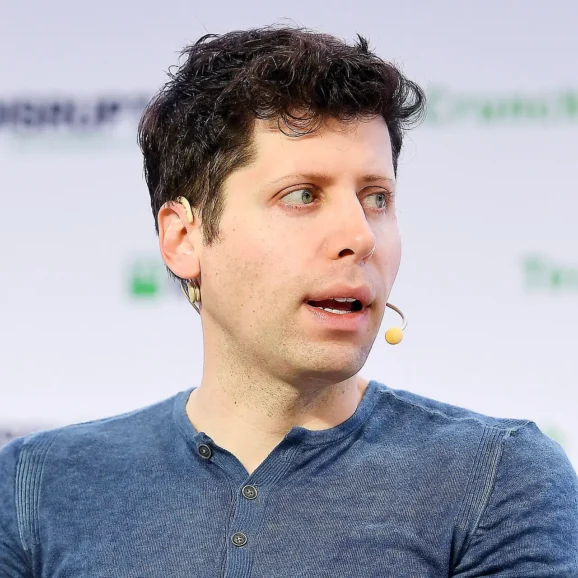
Philosophy is nevertheless exactly what the AI industry has been buying, at speed and at scale. Iason Gabriel, formerly of Oxford, joined Google DeepMind as a philosopher in 2017, while Anthropic brought in Amanda Askell in 2021. She now leads the team responsible for Claude’s character and is the principal author of its published constitution. In May, DeepMind gave Henry Shevlin, previously at Cambridge, its first official title of “Philosopher”, with a remit covering machine consciousness, human-AI relationships and AGI readiness. Sam Altman, CEO of OpenAI, has separately claimed that OpenAI consulted hundreds of moral philosophers while shaping ChatGPT’s guardrails.
The scale of this shift is now visible in the labour market itself. A Federal Reserve Bank of New York report this February found that philosophy graduates have a lower unemployment rate than computer science graduates – a reversal that would have seemed absurd a decade ago, and one Caixin Global has tied directly to AI labs’ appetite for philosophical talent as technical skills become increasingly commoditised.
Another discipline is designed specifically to answer these questions and has been sitting largely unused a floor below the philosophy department: sociology. More particularly, there is the framework I call ‘Total Inclusivity’, based on the principle that no institution, product or platform is neutral and that genuine inclusivity is a structural design decision rather than a sentiment. Philosophy asks what the good is in the abstract. Total Inclusivity asks a narrower, checkable question: whose experience was treated as typical when this was built, and whose was quietly left out? The answer lies in the data, the team and the design record, whether or not anyone has bothered to look for it.
Consider what happens when nobody does. An AI healthcare assistant trained predominantly on male clinical data can under-recognise heart attack symptoms in women, who present far more often with nausea, fatigue and jaw pain than the crushing chest pain the training data treats as the default. An AI relationship companion built almost entirely within one cultural register can misread reticence as disinterest, mistaking a culture’s more indirect expression of intimacy for a lack of feeling, or hearing warmth where a Western template expects bluntness. These are failures of standpoint: the predictable result of a system built around one population’s default being asked to serve everyone else, with nobody in the room whose job was to notice before it shipped.
Some AI labs have not even reached for the philosopher’s version of this problem, let alone the sociologist’s. Elon Musk’s xAI has recruited specialist contractors by the hundred to train Grok – accountants, bankers, comedians and published novelists – but no philosopher or ethicist in a comparable role has been reported, and xAI paused a chunk of that hiring in June. The absence appears in the product. Grok has twice been made to push a fringe conspiracy theory and, separately, to praise Hitler, with each incident blamed by the company on a “rogue employee”. It is hard to imagine either surviving contact with the kind of constitution Askell has built at Anthropic, let alone a standpoint audit of the kind Total Inclusivity would demand. The trend is far from universal, and the gap between the labs that have some version of it and the lab most associated with failures of exactly this kind is unlikely to be coincidence.
Why hire philosophers at all, then, if sociology asks the sharper question? Used well, the role still earns its place. Philosophers give companies a consistent basis for explaining why a model refuses one request and allows another. They identify exceptions before regulators do and provide a language for defending difficult decisions. Some of the work runs deeper still: Shevlin’s brief at DeepMind, and parallel model-welfare research at Anthropic and Meta, asks whether AI systems might possess anything resembling experience. The role can also signal seriousness to the public and investors without changing a single decision, which is why the criticism of “ethics-washing” deserves attention.
What these companies are actually searching for is a way to ensure that everyone can use an AI system safely and trust the platform to maintain that safety, regardless of who they are, where they come from or how they differ from whoever happened to build it. That is Total Inclusivity in action, whether or not the company uses the phrase, and it is the standpoint worth adopting for any organisation with a customer, user or citizen on the other end of what it builds.
The birth of social-media platforms offer a warning, Between Facebook, TikTok and their peers, these platforms have reordered how billions of people form relationships, construct identity and understand what is normal. For most of their existence, there was no one employed to ask systematically what this was doing to the people using them. Facebook’s founding team were disproportionately young men, engineering-trained and based in Northern California, operating within a worldview that treated engagement and virality as self-evidently good. TikTok is instructive precisely because it did not emerge from Silicon Valley at all. Its parent, ByteDance, is headquartered in Beijing and carries an entirely different national and corporate standpoint. While one geography is no more inherently suspect than another, no platform escapes having a standpoint. Facebook’s growth-hacking culture, TikTok’s engagement algorithm and the “like” button itself were all built on particular, unexamined ideas of what a person wants and is. The result has been platforms on which content that provokes can be amplified over content that informs, where moderation is applied inconsistently across cultures and genders, and which are designed for addictive engagement with little concern for what that does to a person’s sense of self.
Applied to technology, a resident sociologist reframes the whole question. Statistical impartiality alone is insufficient. The important questions are whose experience was treated as typical when a system was conceived, whose needs shaped the defaults and whose difference was patched in later, if at all. A platform designed almost entirely by one demographic, in one corner of the world, was never going to build a universal experience by accident, however talented its engineers. Inclusivity has to be designed into the architecture from the outset: who is in the room when the guidelines are written, whose data trains the model and whose case is treated as central rather than exceptional.
That has direct implications for the role itself. A resident sociologist would review datasets before training begins, sit inside product design rather than be consulted afterwards, audit the assumptions built into user personas and default settings, and sign off – or refuse to sign off – on whether a genuinely diverse range of standpoints is represented before anything reaches the public. The work would also demand different registers of engagement rather than one supposedly universal voice, and an understanding that caring for users does not mean agreeing with them endlessly. A diversity statement is no substitute for a diverse architecture, because the latter requires changing who defines the rules.
This is not an argument against employing philosophers. Rigorous reasoning is a welcome, overdue addition to an industry that has mostly done without it, and the questions now being asked about machine consciousness and AI welfare are genuinely serious.
Philosophy alone, however, imports its own unresolved disagreements into the machine and risks repeating the error that produced the harms of the social media era: a narrow set of minds, however clever, deciding on behalf of everyone else what counts as safe, true and normal.
Twenty years from now, companies will wonder how they ever believed products could be designed without someone whose professional task was understanding society itself. The resident sociologist will become as commonplace as today’s Chief Technology Officer. Every organisation will be expected to answer, in public and before it ships anything, the question Total Inclusivity already asks: if this platform is not totally inclusive, what is it? Who, precisely, is it deliberately leaving out, and why?
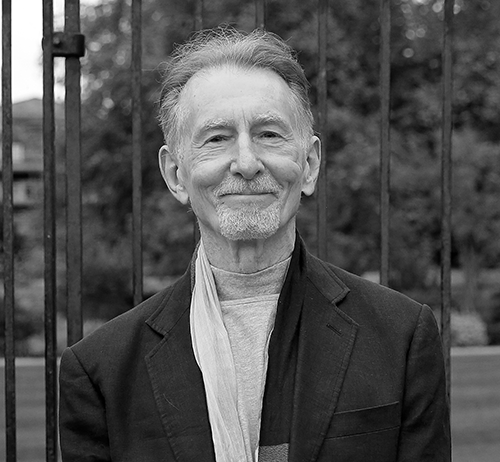
Dr Stephen Whitehead is a gender sociologist and author recognised for his work on gender, leadership and organisational culture. Formerly at Keele University, he has lived in Asia since 2009 and has written 20 books translated into 17 languages. He is based in Thailand and is co-founder of Cerafyna Technologies. His forthcoming book, co-authored with Constanza Fernández Arce, is Where Have All the Good Men Gone?
READ MORE: ‘AI’s unequal future can be found on the streets of Hanoi‘. Artificial intelligence has transformed the way millions of professionals work, with many now relying on free AI tools every day. But the age of free AI services is unlikely to last, and the streets of Hanoi, Vietnam, offer a glimpse of the unequal future that could lie ahead, writes Dr Stephen Whitehead.
Do you have news to share or expertise to contribute? The European welcomes insights from business leaders and sector specialists. Get in touch with our editorial team to find out more.
Main Image: Ann H/Pexels