Pop star Sting has suggested that the decline of manual labour may be fuelling toxic masculinity in the UK. But, according to gender sociologist Dr Stephen Whitehead, the problem runs far deeper, rooted not in deindustrialisation but in centuries-old cultural ideas about what it means to be a man
Sting is a brilliant musician. He is also, on the question of toxic masculinity, mistaken.
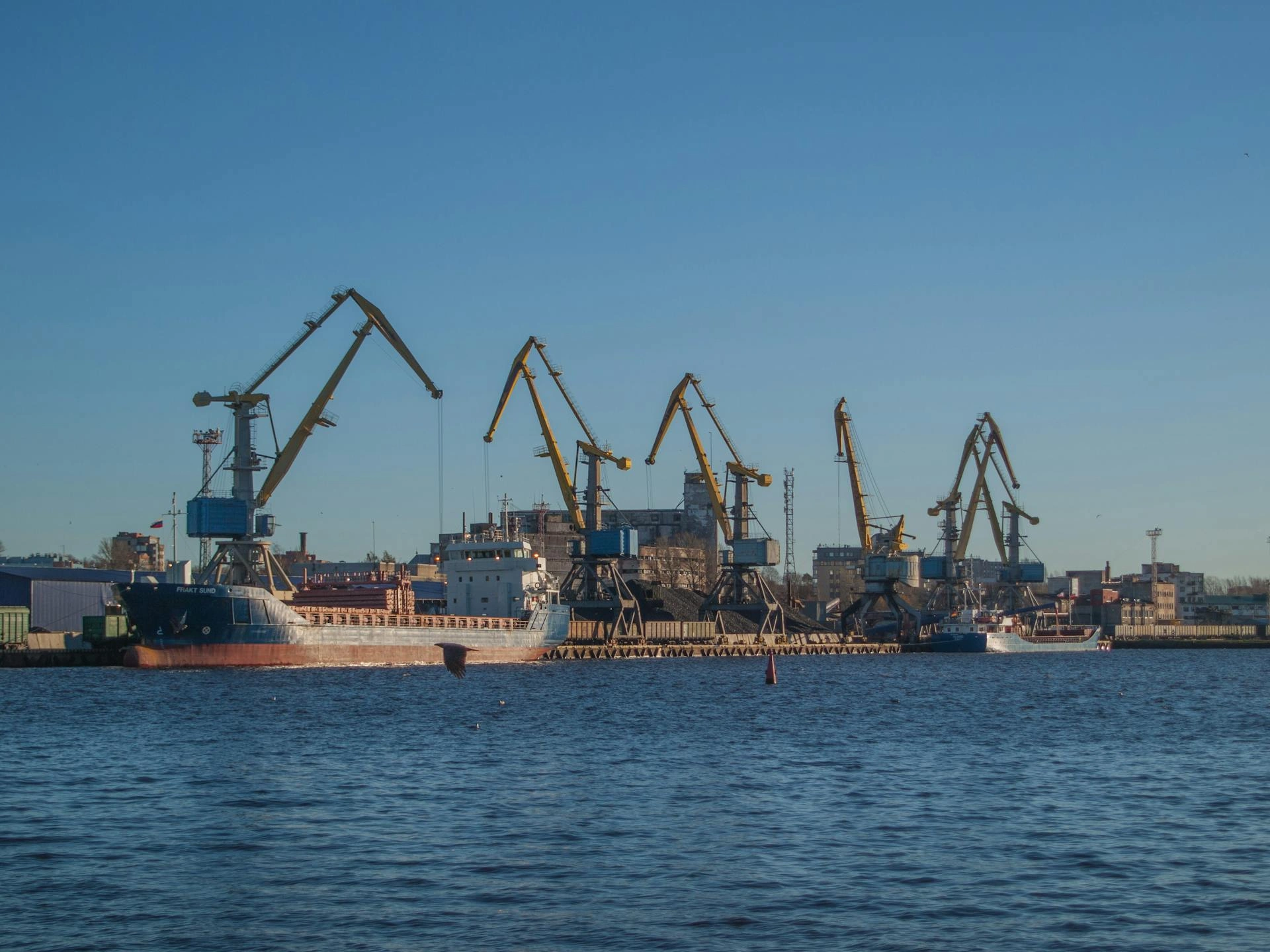
Speaking last month to promote his West End musical The Last Ship — a nostalgic elegy to the shipyards of his native Wallsend — he suggested that the loss of manual labour may be driving the toxic traits we see in contemporary masculinity.
Men, he argued, have lost the productive outlet for their physical strength. The implication is clear: give men back their hammers, and the toxicity recedes.
It is a seductive idea, but sociologically, it’s nonsense.
Toxic masculinity — defined broadly as the cluster of behaviours including aggression, dominance-seeking, emotional suppression, misogyny and the will to dominate others — is not a product of post-industrial dislocation. Rather, it is as old as patriarchy itself. What is new is not the phenomenon but our willingness to name it, study it and refuse to excuse it.
Consider the historical record. The warrior codes of ancient Greece and Rome, the honour cultures of feudal Europe, the brutal disciplinary systems of Victorian Britain’s public schools — all of them institutionalised precisely the behaviours we now label toxic. Men were trained to suppress emotion, assert dominance and treat vulnerability as shameful long before Margaret Thatcher closed a single colliery. The shipyards that Sting romanticises were themselves environments that enforced a rigid, often brutal masculine code — one that was frequently turned against women at home and against any man perceived as insufficiently hard.
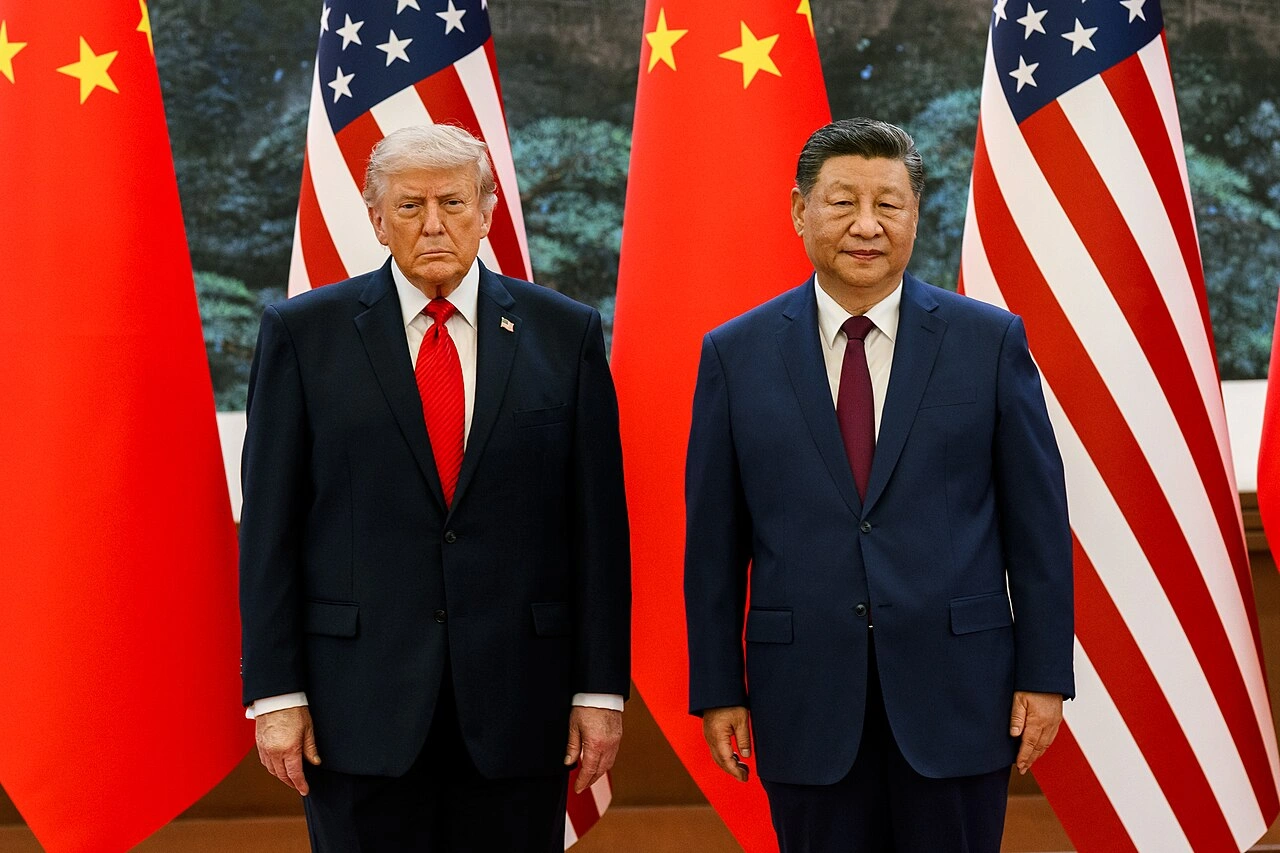
The argument that deindustrialisation produced toxic masculinity also collapses the moment you look at where that toxicity actually flourishes today. Vladimir Putin was not made redundant when the Sunderland car plants closed. Donald Trump has never worked with his hands in his life. Benjamin Netanyahu commands one of the most technologically sophisticated military forces on earth. They are men of extraordinary power, wealth and influence, and they exhibit, in their aggression, their contempt for others, their refusal of accountability and their glorification of dominance, precisely the characteristics that define toxic masculinity in its most consequential form.
The corner office, it turns out, is as reliable a breeding ground for toxic masculinity as the factory floor ever was. Boardrooms, parliament buildings, law firms and university senior management teams are populated by men whose behaviour — the bullying, the sexual harassment, the performative toughness, the punishment of those who challenge them — fits the clinical and sociological profile perfectly. These are not men who have lost purpose but who have found it, and weaponised it.
And lest anyone imagine this is a pathology of the powerful alone, look equally to the favelas of São Paulo, the inner-city estates of Birmingham and Baltimore, the gang hierarchies of Manila or Marseille. There, too, toxic masculinity flourishes because the same ancient script has been handed down to them as well: be hard, dominate, never show weakness, never ask for help. The script does not discriminate by postcode or net worth. It crosses every boundary of class, culture and geography with remarkable ease. You will find it in the corridors of Buckingham Palace and in the stairwells of tower blocks; in the billionaire’s penthouse and the single-room tenancy; in the boardroom and on the street corner. It is, in the truest sense of the word, ubiquitous, and that ubiquity is precisely what makes it so stubbornly resistant to any explanation rooted in economics alone.
Why is it so pervasive? Because it is not a behaviour that has to be individually invented or consciously chosen. It is transmitted. Boys absorb it before they can articulate it. It arrives in the jokes their fathers tell, in the films that reward the strong and punish the gentle, in the school playgrounds where sensitivity is a liability and aggression earns respect. It is reinforced by institutions, ratified by culture, and too often excused as nature. Across radically different material circumstances — from the titled aristocrat to the man with nothing — the underlying formation is the same: a set of inherited gender rules that equate manhood with dominance, and treat empathy as a threat to it.

My own analysis, drawn from over three decades of research and detailed in my book The End of Sex: The Gender Revolution and Its Consequences, points to a far more complex and historically embedded picture.
Gender divergence — the widening gap between how men and women relate to identity, intimacy, and selfhood — is not an artefact of post-industrial job loss. In reality, it is rooted in the slow, uneven and still incomplete dismantling of patriarchal structures that have governed human society for millennia. Women, through what I call ‘independent femininity’, have transformed themselves over the past half-century. Many men have not kept pace, and that failure has nothing to do with whether they once built ships.
To be fair to Sting, he acknowledged he had no answers, and there is genuine pathos in the story he tells — of communities hollowed out, of men whose identities were bound to a craft that vanished. The social costs of deindustrialisation are real and deserve serious political attention.
But conflating economic marginalisation with the roots of toxic masculinity is analytically lazy and practically dangerous, because it invites a false remedy: restore the manual jobs and the problem solves itself.
Toxic masculinity is a psychological and cultural formation shaped far more by culture and socialisation than by economics. It is reproduced in families, in schools, in media and in the silent curriculum that tells boys from birth what a ‘real man’ looks like and what he must never become. It persists in men who have everything and in men who have nothing, in the powerful and the powerless alike, because it is transmitted not through employment status but through the deep structures of gender socialisation.
What would actually help is honest engagement with masculinity as a social construction, one that has served some men extraordinarily well and cost others — and virtually all women — an enormous price. That is a harder conversation than nostalgia for the shipyards. It requires men of influence — musicians, politicians, business leaders — to look not at what the economy has done to men but at what men, across the centuries and across the class spectrum, have done with the power they were given.
It is time — long past time, in fact — that we called this out. Not as a polite academic exercise, but clearly, consistently and without apology. We should name toxic masculinity wherever it appears: in the palace and in the tenement, in the C-suite and in the street gang, in the ageing rock star’s romanticised past and in the digital spaces where young men are currently being groomed into misogyny. The fact that it is everywhere is an argument for urgency, not resignation.
And here is what the conversation too often misses: naming and confronting toxic masculinity is, in a very real sense, an act of care for men. The same culture that teaches boys to dominate also teaches them to suffer in silence. It produces men who cannot ask for help, who cannot grieve, who cannot sustain intimacy, who die younger than they should and far lonelier than they deserve. The suicide statistics alone — men accounting for the vast majority of deaths by suicide across every class and country where this data is collected — should be enough to settle the question of whether toxic masculinity hurts men as well as women. It does. Profoundly. The cage that patriarchy built for women was always also a cage for men — smaller, better upholstered, more flattering to its occupant, but a cage nonetheless.
Calling out toxic masculinity is therefore about liberating men, alongside women, from a set of inherited imperatives that have outlived whatever social utility they once possessed. We are not, after all, still building ships by hand, or defending hill forts, or proving our worth by the weight we can carry. We have the capacity, if we choose it, to construct a different kind of manhood entirely. But we will not get there by excusing the old one.
Sting’s musical asks: ‘For what are we men without a ship to complete?’ It is a good question. But the better one is this: What kind of men do we choose to be when no one is forcing us to be anything at all?

Dr Stephen Whitehead is a gender sociologist and author recognised for his work on gender, leadership and organisational culture. Formerly at Keele University, he has lived in Asia since 2009 and has written 20 books translated into 17 languages. He is based in Thailand and is co-founder of Cerafyna Technologies.
READ MORE: ‘The Singha scandal and the end of untouchable family power‘. Following allegations that have shaken Thailand’s Singha beer dynasty, Dr Stephen Whitehead explores what the controversy reveals about governance, accountability and the growing power of social media to challenge traditional corporate hierarchies.
Do you have news to share or expertise to contribute? The European welcomes insights from business leaders and sector specialists. Get in touch with our editorial team to find out more.
Main Image: paul/Pexels