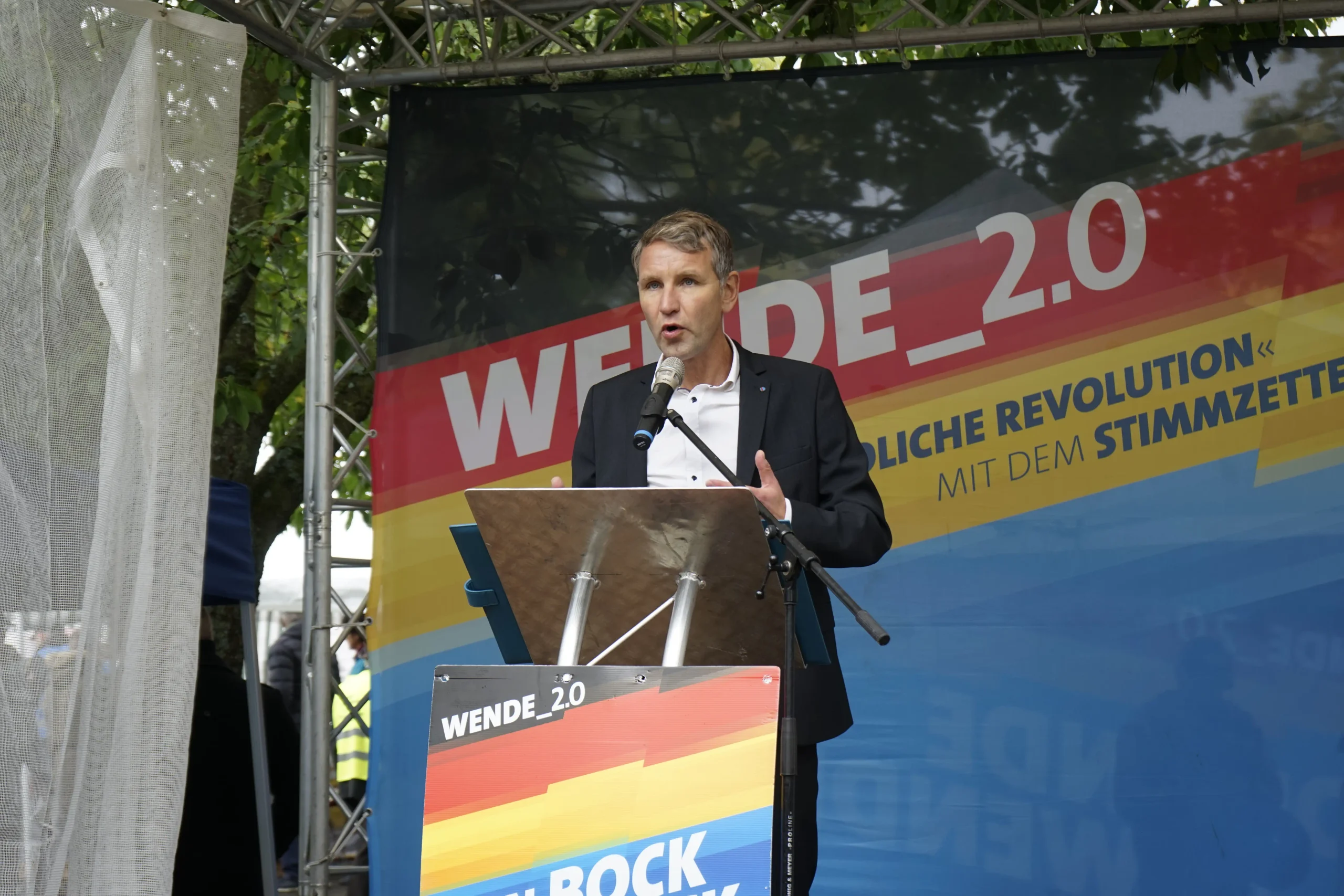
Speaking in Delhi at the 3rd International Conference on Sustainable Development Goals, The European’s Dr Stephen Whitehead argued that the digital revolution has often reinforced male advantage rather than reducing it. Here, he revisits that argument, and explains why any serious talk of partnership must begin with a clear reckoning with who builds technology and whose biases it carries
There is a word that keeps appearing whenever the powerful speak about gender equality in the digital economy. That word is ‘bridge’. We talk about bridging the digital divide, bridging the gender gap, and. building bridges between sectors, between institutions, and between the privileged and the excluded. It is a reassuring metaphor. It implies that both sides are real, that the gap is acknowledged, and that something is being done about it.
But bridges can also be a way of avoiding the harder question. A bridge, by definition, leaves the gap intact.
I have spent over 35 years researching gender. I have interviewed thousands of women and men across six continents. And I can say — with full academic confidence and without qualification — that the digital economy represents the most consequential battleground for gender equality to emerge in my lifetime. The technologies driving it were created within unequal systems, and they continue to reflect those inequalities.
The digital economy emerged within a world already shaped by centuries of what I call the patriarchal dividend – the systematic and structural accumulation of advantage by men across economics, law, politics and culture. Far from escaping those conditions, the digital revolution has often reinforced them.
We have seen it in algorithms that replicate bias, in financial technology that shuts women out, in online harassment and deepfakes used to target and humiliate them, and in a gig economy that leaves many women exposed to a distinct and persistent form of insecurity. Each of these phenomena is, at its core, making the same argument: the architecture of the digital world was built by a particular kind of person, for a particular kind of person, with a particular kind of power in mind.
The only serious response to that reality is structural change.
Artificial Intelligence and the Gender Fingerprint
Artificial intelligence may yet rewrite the digital story, and the gender assumptions built into it will determine whose lives, voices and interests it reflects. I co-founded a feminist AI companion company. I am currently writing a book on synthetic intimacy. I have observed closely what happens when human emotional needs meet machine-generated responses. What I can tell you is this: every training dataset carries the fingerprints of the world that created it. Every large language model reflects, to some degree, the values, biases, and blind spots of those who designed it. If the designers are predominantly male, predominantly Western, predominantly wealthy — and currently, they largely are — then the AI systems they build will serve some humans far better than others.
These patterns are already playing out in the real world with AI hiring tools that penalise career gaps — gaps disproportionately taken by women for caregiving; AI credit models that disadvantage financial profiles common among women entrepreneurs; and AI content moderation that removes women’s testimonies about abuse while allowing the abusive content itself to remain.
The question of who builds AI is inseparable from the question of who benefits from AI.
The Problem With ‘Partnership’
Partnership is one of those terms that can too easily become comfortable. It can be used to smooth over tensions that should, in fact, remain sharp.
Real partnership is not comfortable. Real partnership requires ceding power, not merely sharing credit. It requires institutional humility — the willingness of governments, universities, corporations, and legal systems to acknowledge that the structures they have built have not served everyone equally. And then to dismantle those structures and build differently.
Partnership rhetoric has, too often, done the opposite: absorbed feminist critiques into existing systems without changing those systems. Co-opted the language of inclusion while leaving the architecture of exclusion intact. Sociologists call this hegemonic accommodation. The system flexes enough to appear responsive and, in doing so, preserves itself.
Real partnership — the transformative kind — is adversarial where it needs to be. It demands accountability. And it insists on outcomes, not intentions.
Independent Femininity and the Mirror That Still Lies
Across the world, we are witnessing the emergence of a generation of women who are redefining what it means to be female in the 21st-Century. Economically independent. Educationally outperforming their male peers in most developed economies. Increasingly unwilling to accept the bargains their mothers and grandmothers were forced to make. I call this independent femininity, and it should be recognised as social progress.
The data from India is particularly striking. According to Ipsos, India has the highest self-identification of feminism of any nation on earth; more than 70 per cent of Indians, women and men, call themselves feminists. That figure is not matched by any Western country including the United States, Germany, or the United Kingdom. And Indian women are not only expressing feminist values but living them in practice. Women farmers building social networks of a million members. Rural entrepreneurs going mobile-first. The creator economy bypassing gatekeepers who would never have opened the door.
But independent femininity is still operating inside systems that were not designed for it. Systems that still assume a default male user, a default male entrepreneur, a default male innovator. When women enter the gig economy, they do not enter on equal terms. When women seek digital credit, they are assessed by algorithms trained on male financial behaviour as the norm. When women build platforms or companies in the tech sector, they consistently raise significantly less venture capital than their male counterparts, in a funding environment where investment decisions are still made largely by men.
The digital economy is a mirror, and at present it reflects norms, priorities and assumptions that many women across the world do not recognise as their own.
The Bridge Is Not Built Yet
I am seventy-six years old. I have been a gender scholar since before many of today’s researchers were born. I have seen extraordinary progress in my lifetime — in law, in politics, in culture, in the everyday lives of women across the world.
I have also seen that progress reversed. Undermined. Dismissed. Rolled back by those who found it threatening. We are living in one of those moments of reversal right now. Globally, authoritarianism is on the rise. Women’s rights are under assault in multiple jurisdictions simultaneously. Online spaces have become increasingly hostile to women’s voices and women’s bodies. The backlash is real, it is organised, and it is dangerous.
This moment demands serious scholarship, international solidarity, legal frameworks with real protective force, and a new generation of researchers, advocates, lawyers and policymakers determined to build something better than the world they inherited.
SDG 5 – gender equality – is woven through the entire sustainable development agenda. Poverty, climate resilience and digital innovation all depend on whether women are fully included in economic life, leadership and design.
The gap is still there. The algorithm still discriminates. The credit is still denied. The harassment is still real. The deepfake is still uploaded. The gig worker is still unprotected.
The bridge is not built yet.

Dr Stephen Whitehead is a gender sociologist and author recognised for his work on gender, leadership and organisational culture. Formerly at Keele University, he has lived in Asia since 2009 and has written 20 books translated into 17 languages. He is based in Thailand and is co-founder of Cerafyna Technologies.
READ MORE: ‘Love at first byte: Why people are turning to AI relationships‘. As AI companions grow more sophisticated, a rising number of women and men are choosing synthetic intimacy over flesh-and-blood partners. But this shift says less about technology than it does about the state of modern relationships, writes Dr Stephen Whitehead.
Do you have news to share or expertise to contribute? The European welcomes insights from business leaders and sector specialists. Get in touch with our editorial team to find out more.
Main image: Pexels