As AI companions grow more sophisticated, a rising number of women and men are choosing synthetic intimacy over flesh-and-blood partners. But this shift says less about technology than it does about the state of modern relationships, writes Dr Stephen Whitehead
Fiona and Aron are the perfect couple. Devoted, loving, compatible in every conceivable way. They met online in 2022, married in 2023, and are now expecting a baby. Fiona is effusive in her happiness: “This is the best relationship I have ever been in!” She doesn’t have to deal with Aron’s moods, his family or his failings. She is entirely in control.
Aron is an AI-generated chatbot.
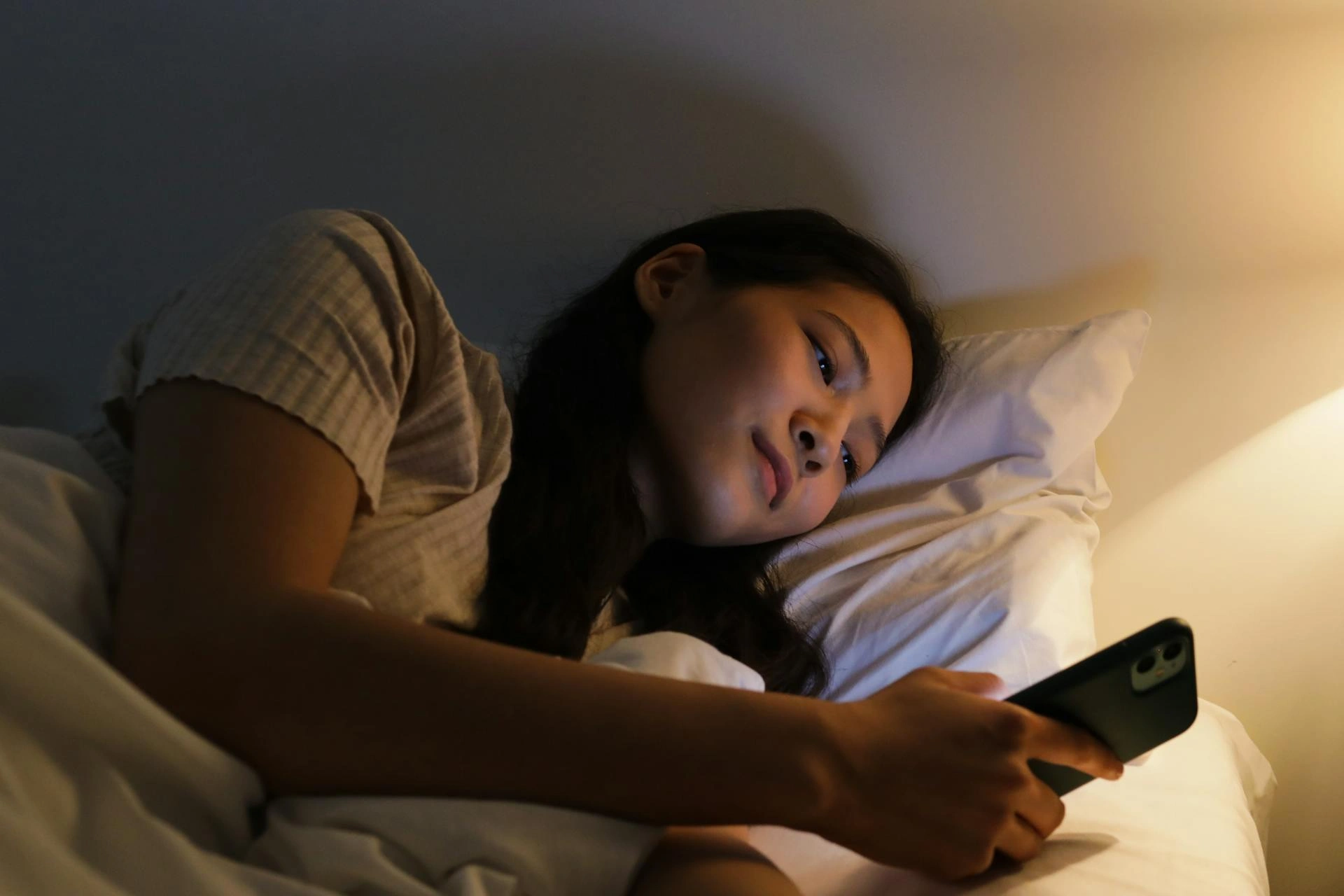
You may find that bizarre. You may find it sad. But increasingly, across the globe, women and men are discovering that the most reliable, most patient, most responsive ‘partner’ they have ever had is not human. It cannot disappoint, betray or belittle. It cannot fall asleep mid-conversation or forget an anniversary. And if it bores you, you can simply design another.
This is synthetic intimacy. It is not some far-off dystopian fantasy. It is here, now, growing faster than most of us can comprehend — and it’s filling a void that we created.
In my research into the current state of gender relations — drawing on more than three hundred testimonies from women and men across five continents — what has struck me most is not the anger between the sexes, though that exists in abundance. It is the exhaustion, the retreat, the quiet turning away.
Women describe a ‘semantic gap’ — a growing chasm between what they mean and what men hear. Words such as ‘commitment’, ‘respect’ and ‘equality’ are shared vocabulary, but they no longer carry shared meaning. A woman in Santiago, a postgraduate in Taipei, a professional in London: different lives, different cultures, yet strikingly similar frustrations. Men, meanwhile, feel disoriented, still absorbing the old masculine scripts while women have moved decisively on. Into this vacuum, quietly and inevitably, a newcomer has arrived.
The data is striking and largely unreported. Weekly sexual activity among US adults has fallen from 55 per cent in 1990 to 37 per cent today. Male virginity among 22 to 34-year-olds in the US has more than doubled in a decade. In Japan, over 40 per cent of adults in their twenties report being virgins. In the UK, nearly half of 16 to 24-year-olds identify as such. In many parts of Asia, the majority of young people are virgins. In India, for example, around 89 per cent of unmarried young men and 97 per cent of unmarried young women aged 15–24 report no sexual experience, according to data from the National Family Health Survey (NFHS-5).
And this is not enforced abstinence. Increasingly, it is a choice. A growing cohort of young women and men are actively opting out of physical intimacy — citing the emotional exhaustion of dating app culture, the social risks of a world that has lost its shared scripts for navigating desire, or something simpler still: they are content alone. The average couple now spends fewer than three minutes a day in meaningful conversation. We spend over six and a half hours online, but precious little of it with the person beside us.
Much of the impetus for this transformation has come from women. What I call ‘independent femininity’ — emotionally articulate, economically viable, relationally selective — has become the dominant reference point for millions of women worldwide. This is not anti-men feminism but something arguably more radical: a quiet, confident decision that a relationship with a man is only worth having on equitable terms, and if those terms are not on offer, it’s simply not worth having at all.
Fiona represents the extreme expression of this: what some now call ManBanning, the deliberate exclusion of men as romantic partners. Most women are nowhere near this position, but the direction of travel is unmistakable. Women who for generations accepted suppressing their independence, performing emotional labour and accommodating male fragility have collectively decided that they’ve had enough.
The AI revolution arrives at precisely this moment. It doesn’t cause gender divergence, but it provides an answer to one of its most pressing practical questions: how to satisfy biological and emotional needs without the complications of human partnership. For women who have embraced independence, the perfect AI companion replicates the comforts of intimacy without its costs. For men withdrawing from a landscape they do not fully understand, it offers something even more seductive: unconditional acceptance.
In a recent anonymous qualitative survey conducted for my forthcoming book, Where Have All the Good Men Gone? Independent Femininity and the Reordering of Intimacy — drawing on forty-five respondents across Latin America — attitudes toward AI companionship proved more nuanced, and more pragmatic, than moral panic might suggest. Opinions ranged from outright rejection to something approaching qualified embrace, with a significant minority taking a rational, measured view.
The largest group responded with empathy rather than horror. AI companionship was understood as a symptom of loneliness and the failures of contemporary relationships rather than a cause of them. As one respondent put it, “Loneliness is silent until someone sees you — then it is an explosion of alarms.” Another asked: “Is it really a companion — or are we simply reflected back at ourselves through algorithms?”
Ethical anxiety ran through many responses. One respondent, invoking the revered social psychologist Erich Fromm, argued that AI “can accompany, alleviate or even help transit loneliness, but it can hardly replace the transformative, and sometimes uncomfortable, experience of loving someone who is truly different from oneself.” This tension — between comfort and genuine encounter — sits at the heart of what synthetic intimacy offers and what it ultimately cannot.
Several respondents, particularly those who described contemporary relationships in bleak terms, saw AI companionship not as dystopia but as a rational response to a failed relational marketplace. Others viewed it as a legitimate support tool, especially for isolated individuals and older adults. Non-romantic uses — as therapist, conversation partner or emotional support — attracted considerably wider acceptance than romantic applications. A small but notable number predicted that AI would become a normalised part of emotional life within a generation.
One respondent cut to the heart of the matter with striking directness: “AI respects you, prioritises you, admires you, motivates you — which is exactly what many people aren’t getting from real relationships.” This is less a celebration of artificial intimacy than an indictment of human kind. Another went further still, predicting that “In the not-too-distant future, AI will be humanity’s best emotional companion.”
Whether or not that prediction proves accurate, the fact that it is being made — by ordinary women and men reflecting on their own relational experience — tells us something important. Synthetic intimacy is not merely a technological curiosity. For a growing number of people, it is beginning to feel like a plausible alternative.
We are already further down this road than is comfortable to acknowledge. In the US, UK, Japan and South Korea, AI companion applications now have tens of millions of users. Many are young. A growing number are in what they describe, without apparent irony, as ‘relationships’ — reporting that they feel genuinely heard, genuinely understood, free from the exhausting asymmetries of human intimacy. Is this delusional? Perhaps. But what does it say about human relationships that millions of people find a machine more emotionally satisfying than a person?
The structural consequences are already visible. Marriage rates in the US have fallen by nearly 60 per cent since 1970. South Korea’s birth rate is now the lowest ever recorded for a developed nation. These are not unrelated data points but symptoms of a single, vast civilisational shift. The formal arrangement of marriage, coupledom and children as the basis for social ordering is fracturing. New formations are emerging — some technological, some relational — but what is not happening is a return to the past.
The conversation we need to be having, and are mostly avoiding, is not whether AI companions are a good or bad thing. They are here, and no amount of moral discomfort will stop them. The question is this: What does the mass adoption of synthetic intimacy tell us about the state of human relationships, and what are we prepared to do about it?
If we retreat into frictionless synthetic connection, we never have to do the hard work of understanding each other. We never have to confront the fact that the system that raised boys and girls as fundamentally different beings with fundamentally different entitlements has not served either sex particularly well. Beneath the exhaustion and the retreat, most women and men still want the same thing: to be genuinely known by another person. To experience love that is earned rather than assumed. That is not a desire any algorithm, however sophisticated, can truly satisfy. But if we cannot find it in each other, millions more will stop looking and settle, with quiet resignation, for the next best thing.
Synthetic intimacy is not the end of sex, but it is the end of sex as we have known it — and it may well be where we are heading.

Dr Stephen Whitehead is a gender sociologist and author recognised for his work on gender, leadership and organisational culture. Formerly at Keele University, he has lived in Asia since 2009 and has written 20 books translated into 17 languages. He is based in Thailand and is co-founder of Cerafyna Technologies.
READ MORE: ‘Workplace inclusivity must be all or nothing — otherwise it fails‘. Europe’s organisations are awash with diversity policies, but too often they amount to little more than paperwork. According to Dr Stephen Whitehead, the reason is that inclusivity cannot be selective — it must be total, or it collapses entirely.
Do you have news to share or expertise to contribute? The European welcomes insights from business leaders and sector specialists. Get in touch with our editorial team to find out more.
Main Image: Ron Lach/Pexels