Poland is pressing ahead with nuclear power, growing its tech sector and bringing skilled workers back home. Zion Lights explains why its progress offers a useful guide for how European countries can secure reliable energy and support long-term economic growth
There is currently a fashionable pessimism about Europe’s future, especially on social media. We are told that the continent is divided, indecisive, and allergic to ambition. But this narrative depends on selective blindness, as Europe is not uniformly failing at the energy transition, and some countries have proven, scalable plans in motion. While commentators recycle the same stories about stalled projects and public opposition, they ignore a significant case study: Poland.
I find it strange how rarely Poland enters the conversation. For years, the country was written off as irredeemably coal-dependent, politically allergic to climate policy, and structurally incapable of large-scale energy reform. Yet today, Poland has done something many Western countries have struggled to do by committing clearly, publicly, and strategically to an ambitious civil nuclear program.
Not long ago, Poland was defined by the scale of its emigration, with millions leaving for jobs in the UK and the U.S. Now, while Britain grapples with labour shortages across multiple sectors – shortages that have been exacerbated by Brexit – Poland has positioned itself as a destination rather than a departure point. In the years following the referendum, an estimated 200,000 Polish nationals left the UK to return home, and the state has strategically and actively welcomed its citizens back with incentives. Returning citizens, for instance, can be exempted from income tax for up to four years after resettlement.
This shift has helped to drive sustained economic growth, as Poles who once left in search of opportunity have been returning to take advantage of conditions that did not previously exist at home. Thanks to this reversal, which is often described as “reverse brain drain”, the returning diaspora is feeding directly into high-growth sectors, particularly technology. Poland has long produced exceptional IT talent, but what is new is the scale at which that talent can now be absorbed domestically.
Europe needs what nuclear offers: stability in an unstable geopolitical moment, decarbonisation without deindustrialisation, and energy sovereignty in a world where dependence is increasingly weaponised. Wind and solar are complimentary, but they cannot shoulder this burden alone.
In fact, Poland’s tech sector is among the fastest growing in Europe. Many major tech companies have bases there, and while Amazon has long highlighted the productivity and returns of its investments in Poland, in 2020 Microsoft committed US$1 billion to a national digital transformation strategy aimed at accelerating innovation in what is now often referred to as the “Polish Digital Valley.” The seven-year programme includes the development of a new Microsoft data-centre region and a large-scale skills initiative designed to train around 150,000 people in areas such as cloud computing and artificial intelligence. In 2023, Microsoft confirmed the launch of its first Polish data-centre region, with a particular emphasis on digital security.
Against this backdrop, it is unsurprising that Poland is beginning to outperform peer economies such as China, India, and Brazil across a range of growth indicators, including online services. Research further underlines this trajectory, ranking Polish developers as the third strongest globally, behind only China and Russia.
Poland’s trajectory has also been shaped by its place within the European project. The country has received substantial EU support in the form of post-Covid recovery grants and loans, alongside the structural advantages of membership in the customs union and single market. In 2024, EU funding accounted for nearly 3% of Poland’s GDP, and Poland’s Minister for Funds and Regional Policy has explicitly linked this support to the country’s recent economic acceleration, including a six-fold rise in exports. Poland’s success, then, cannot be understood in isolation: it is, in a meaningful sense, a European success as well.
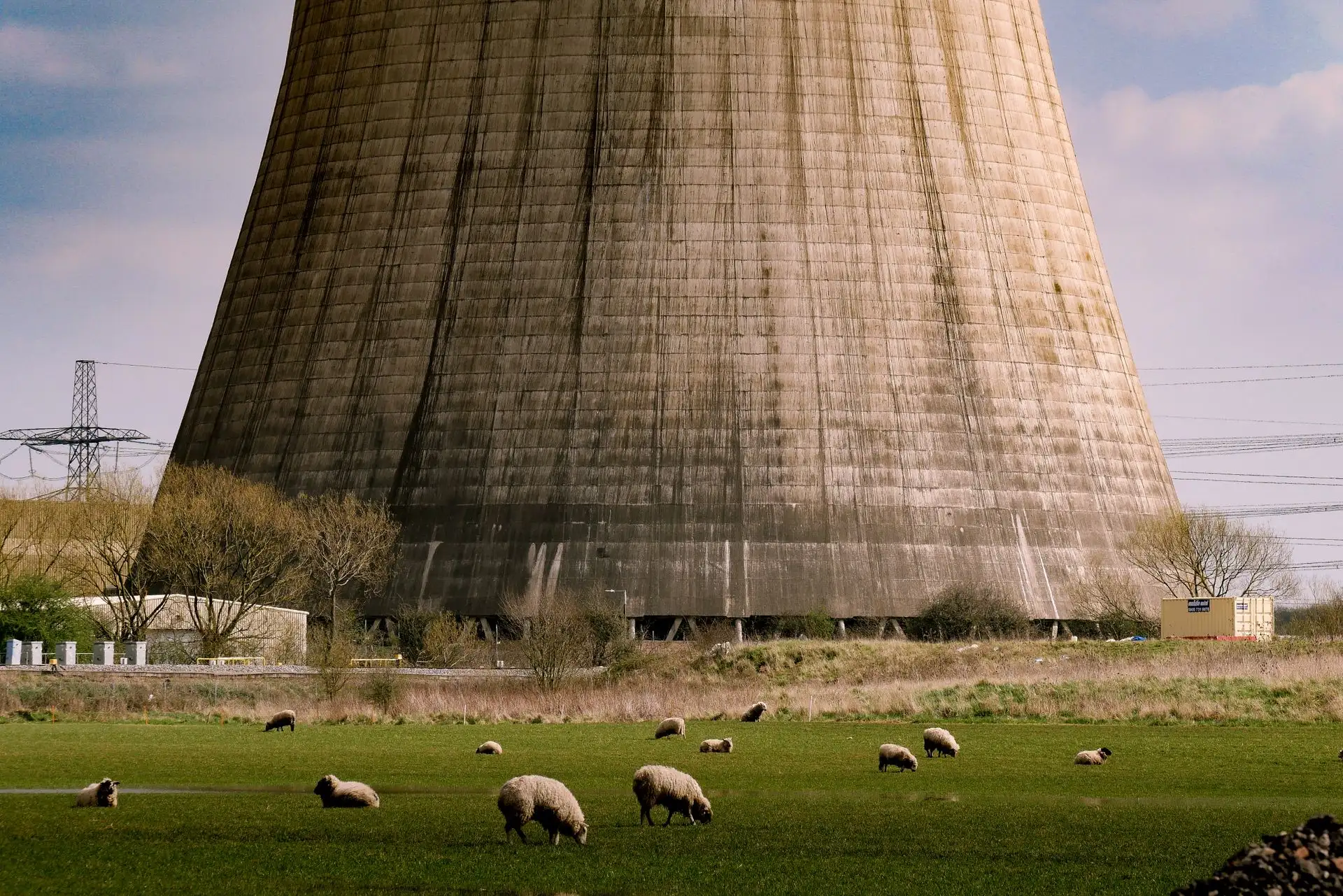
However, the growth of The Digital Valley raises a pressing question: how will Poland power an economy growing at this pace, while also trying to phase out coal? At present, more than 70% of the country’s energy consumption is derived from fossil fuels. So, in 2021, the Polish government set out a long-term nuclear strategy, committing to the construction of six large reactors by 2040, with additional units planned at intervals of two to three years thereafter.
This will be no small feat, but it is a decision that recognises that Europe needs what nuclear offers: stability in an unstable geopolitical moment, decarbonisation without deindustrialisation, and energy sovereignty in a world where dependence is increasingly weaponised. Wind and solar are complimentary, but they cannot shoulder this burden alone.
Of course, this doesn’t mean Poland’s path will be smooth. Nuclear projects are complex, and they often face public opposition and hit regulatory barriers. But complexity is not the same as impossibility. Europe once built nuclear fleets at speed and scale, with France building over 50 reactors in around 15 years in the 1970s and 80s. In Poland, public support for nuclear energy is among the highest in the world, with polls showing over 92% of the population in favour of building nuclear power plants. This is important because it shows how ready Poland is to achieve its goal, as well as an understanding and acceptance of the need for clean, cheap and reliable energy.
Poland’s energy strategy is a useful case study in what can happen when a country decides that energy policy is too important to outsource or fear. While SMR companies in the U.S struggle to site reactors due to local protests, some European countries are bucking the trend and eager to build. For those who are pushing back against the anti-European narrative – I have seen calls for a “European Federation” among them – Poland is likely to lead the charge. Europe can still achieve big things. All we need now is for other countries to learn from the places that are leading the way.

Zion Lights is an award-winning science communicator and environmental advocate known for championing a high-energy, low-carbon future. A former Extinction Rebellion spokesperson and founding editor of The Hourglass newspaper, she is the author of The Ultimate Guide to Green Parenting and Only a Moment, with a new book due in 2026. A TED speaker and recipient of the Holyoake Lecture Medal, she has written widely for UK and international publications and played a leading role in reshaping global attitudes towards nuclear energy.
READ MORE: ‘Britain is finally having its nuclear moment – and it’s about time’. After years of stalled projects and political hesitation, a rare alignment of policy, investment and public opinion suggests the UK may at last be ready to build the nuclear fleet it has talked about for generations.
Do you have news to share or expertise to contribute? The European welcomes insights from business leaders and sector specialists. Get in touch with our editorial team to find out more.
Main image: Pok Rie/Pexels