After years of stalled projects and political hesitation, a rare alignment of policy, investment and public opinion suggests the UK may at last be ready to build the nuclear fleet it has talked about for generations, writes Zion Lights
For decades, Britain has lingered on the brink of an energy-abundant future that has remained tantalisingly out of reach. Projects have stalled, costs have escalated, and political momentum and commitment have faltered. I have spent years working to challenge it all: publishing the first pro-nuclear pieces in mainstream press, urging politicians to voice public support for the technology, imploring the industry to communicate more effectively, and leveraging my own public engagement expertise to shift opinion away from myth and toward sensible discussion of nuclear energy.
The journey has not been easy, and back in 2020, few days passed without people criticising and dismissing my work (I was considered an ‘industry shill’ despite having no connection to the industry), but at last I can say with some confidence that my efforts were not entirely futile. Because this year, a rare convergence of policy and public opinion suggests that Britain may finally be on the cusp of a nuclear revival, and it could not have come too soon.
The UK’s energy landscape has changed dramatically in the past few years. Rising gas prices, instability in European energy markets, and the urgent imperative of decarbonisation have forced policymakers to confront a simple truth: intermittent renewables alone cannot provide reliable, affordable electricity at the scale required. Nuclear energy, long relegated to contentious debate, is now recognised for what it has always promised – a dependable, low-carbon backbone capable of keeping the lights on regardless of weather or geopolitics, and crucial for replacing fossil fuels.
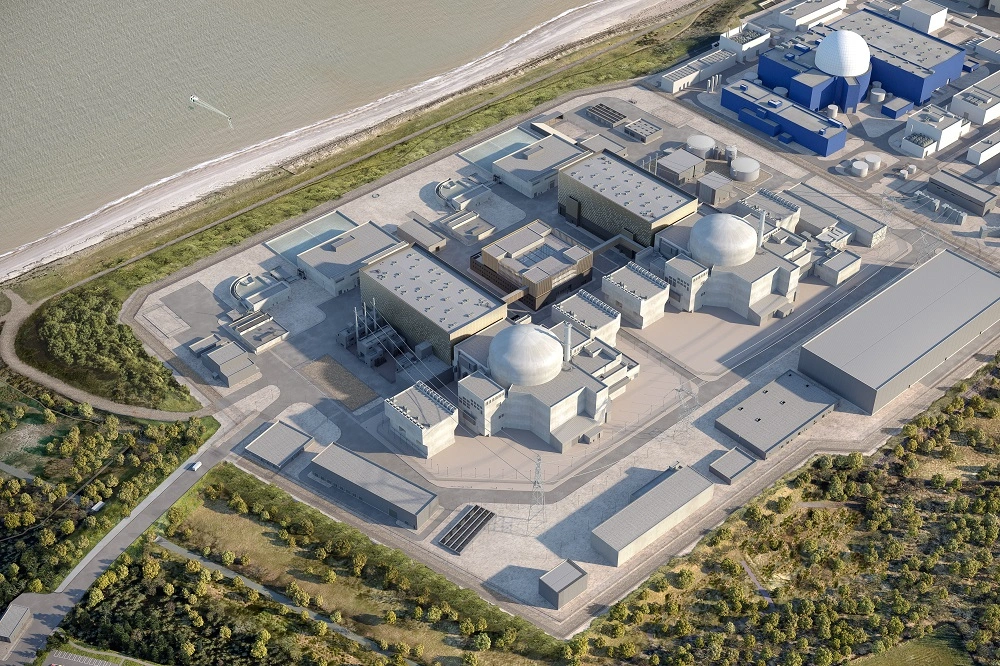
Take Sizewell C as an example – a nuclear power station under construction in Suffolk. Its main function is to generate low-carbon electricity at large scale – about 3.2 gigawatts, enough to power roughly six million homes. Beyond electricity generation, it also stabilises the national grid by providing consistent “baseload” power, and contributes to the economy by creating thousands of jobs, supporting apprenticeships, and engaging UK supply chains. But for years Sizewell has been the subject of much debate: should it be built or not? At one point I managed to secure confirmation for Sizewell from an advisor to Boris Johnson back when he was prime minister, only to see the project lose momentum under his successor, Liz Truss, whose commitment seemed less certain.
Although large projects like Sizewell C do require high upfront costs, nuclear power plants have long been misrepresented as “too expensive”. In reality, they repay themselves many times over, lasting for decades – as much as 60 to 80 years – without requiring fossil fuel generation to back them up (as is the case with wind and solar power). The challenge to building Sizewell C has largely been short-term thinking in government, since it requires long-term funding and follow through. So here’s the good news – now, a new model has been introduced to resolve this dilemma and make sustained investment for new power plants feasible.
The government is finally moving forward with secured financing and an innovative Regulated Asset Base (RAB) model, which reduces investor risk and signals a long-term commitment. What this means is that nuclear projects like Sizewell C can attract investment more reliably, costs can be spread over time, and the country can finally plan for energy infrastructure on a decades-long horizon. It is music to my ears, and cannot be understated as an achievement.
Of course, the future of nuclear energy in the UK is no longer just about large-scale plants. Small Modular Reactors (SMRs) are emerging as a part of the strategy, and Britain is moving decisively in this area as well. The SMR programme, which has now been officially approved at Wylfa on Anglesey, is creating opportunities for flexible, scalable deployments in locations and grids where traditional gigawatt-scale plants would be impractical.
Wylfa’s approval marks a long-awaited milestone for Anglesey, promising both reliable energy and economic renewal for a community that has waited decades for certainty. When I visited the community a few years ago, the story I heard everywhere was the same: fears of a declining local economy, the loss of jobs, and young people leaving Wales in search of work. I vividly recall an interview with a young woman who had chosen to pursue a PhD in nuclear science in North Wales, encouraged by assurances from the Conservative government at the time that Wylfa would receive a new nuclear reactor. When the deal fell through and the reactor never materialised, Megan had no choice but to move to London to put her expertise to use. A sad loss for Wales, and for her family who had hoped to see her contribute to nuclear development at home.
Yet, as I have long argued, nuclear technology itself has never been the real issue. Large or small, nuclear reactors in Britain have long faced the burden of over-regulation – a somewhat controversial statement that has traditionally been avoided by politicians. But now, success: the government acknowledged that the UK’s historic regulatory complexity has been a major barrier, and the appointment of the Nuclear Regulatory Taskforce (NRT) was a decisive step taken to identify bottlenecks to building new nuclear.
The NRT’s new report exposes the UK’s regulatory problems with unflinching clarity, describing a system that is over-complex, inefficient, and costly. Its recommendations, including a centralised decision-making body, streamlined planning approvals, and risk-proportionate regulation, are designed to cut years from the approval process without compromising safety. Taken together, these reforms could reduce costs by billions and establish a template for agile nuclear deployment that few other nations have achieved. I write this with palpable relief.
Public sentiment has also shifted, quietly but decisively. Once a polarised topic, nuclear energy is increasingly recognised in Britain as a practical, low-carbon solution, with more in favour of it than against. This evolving consensus allows policymakers to act without fear of political backlash, which is a prerequisite for any sustained nuclear programme. By combining public buy-in with clear regulatory reform and proven technology, the UK may finally have the conditions to move beyond stalled promises and toward concrete delivery.
What makes this moment historic is not simply the scale of planned construction, but the convergence of multiple levers: political resolve, regulatory reform, and public acceptance. Too often in the past, nuclear projects failed because these factors were out of sync. Today, they are aligned, creating a rare opportunity to redefine the nation’s energy infrastructure for decades to come.
Of course, challenges remain. Regulatory reforms will need to be implemented faithfully, supply chains nurtured, and workforce skills developed. SMRs, while promising, are still new, and large reactors like Sizewell C remain complex undertakings. But the underlying conditions for success are now in place in a way they never have been before. It is with this in mind that I can finally say the UK finally possesses both the ingredients and the recipe for a true golden age of nuclear. After years of false starts and delays, these recent achievements suggest that Britain may at last be ready to power a future defined by resilience and ambition, potentially setting a global example for how a country can achieve net zero goals, prioritise long-term energy security, and bring down electricity prices without costing the planet or our pockets.
As someone who has been in the trenches of nuclear advocacy for some time now, I say with enthusiasm that it is immensely satisfying to witness steps toward decisive progress at last. Let’s hope it continues.

Zion Lights is an award-winning science communicator and environmental advocate known for championing a high-energy, low-carbon future. A former Extinction Rebellion spokesperson and founding editor of The Hourglass newspaper, she is the author of The Ultimate Guide to Green Parenting and Only a Moment, with a new book due in 2026. A TED speaker and recipient of the Holyoake Lecture Medal, she has written widely for UK and international publications and played a leading role in reshaping global attitudes towards nuclear energy.
READ MORE: ‘Italy’s nuclear return marks a victory for reason over fear‘. Nearly forty years after Chernobyl ended its nuclear ambitions, Italy is rethinking the energy source it once rejected. Pressed by climate goals and rising demand, the nation is reopening a debate long silenced — and, as Zion Lights argues, rediscovering both its confidence and its scientific heritage.
Do you have news to share or expertise to contribute? The European welcomes insights from business leaders and sector specialists. Get in touch with our editorial team to find out more.
Main image: UK Government / OGL 3.0