Stability, predictability and trusted institutions are once again moving to the front of Europe’s economic debate. Here, Simon Tribelhorn of Liechtenstein Finance explains why the principality’s position between the European and Swiss markets gives it a particular advantage in a period of political and financial uncertainty
Europe is living through a period of profound transformation. Geopolitical tensions have returned to the continent, global supply chains are being reshaped, and political fragmentation is increasingly visible across institutions and societies. From energy security and technological competition to shifting alliances and economic volatility, uncertainty has become a defining feature of the international landscape.
In such an environment, stability can no longer be taken for granted. It has become one of the most valuable assets a country, financial centre or organisation can offer. For investors, businesses, and policymakers alike, predictable frameworks, trusted institutions, and long-term continuity have become essential anchors in this increasingly divided world.
Against this backdrop, Liechtenstein stands out as a remarkable example of stability and strategic positioning. Small in size but globally connected, the principality offers a model of how resilience, openness, and long-term thinking can create opportunity even in uncertain times.
A test of Europe’s resilience
Europe today is characterised by both integration and fragmentation. While economic cooperation and regulatory alignment remain central pillars of the European project, political divisions and shifting national priorities have become more pronounced.
Recent years have brought a series of shocks that have reshaped the geopolitical landscape. Conflict has transformed Europe’s security architecture and energy markets. Global economic competition has intensified, particularly in technology and industrial policy. At the same time, internal political dynamics within many European countries have become more polarised.
These developments are influencing how businesses and investors assess risk and opportunity. Regulatory complexity, political volatility, and economic uncertainty can create hesitation when it comes to long-term investment decisions. In such an environment, jurisdictions that offer continuity and reliability become increasingly attractive as stability is a clear competitive advantage.

The value of predictability
For financial markets and international business, predictability is a cornerstone of confidence and essential for planning certainty. Investors need assurance that legal frameworks will remain reliable, that regulatory systems will be transparent, and that institutions will function consistently over time.
Liechtenstein’s political and economic model provides precisely this type of environment. The country combines a long tradition of constitutional stability with a pragmatic approach to governance and economic openness. Its institutions are known for continuity, transparency, and a strong commitment to the rule of law.
Equally important is the principality’s economic resilience. Despite its small size, Liechtenstein has developed a highly diversified and globally oriented economy. Advanced manufacturing, innovative technology companies, and a sophisticated financial sector coexist within a stable macroeconomic framework. This diversity provides a strong foundation for long-term prosperity and adaptability.
A bridge between markets
One of Liechtenstein’s most distinctive advantages lies in its unique geopolitical and economic positioning. As a member of the European Economic Area (EEA), the country participates fully in the European single market while maintaining close economic integration with Switzerland through its customs and monetary union.
This dual alignment creates a rare combination of market access and flexibility. Companies and financial institutions operating from Liechtenstein can engage seamlessly with the European market while benefiting from strong connections to the Swiss economic ecosystem.
In a Europe where regulatory frameworks and economic priorities are increasingly complex, this bridging role becomes particularly valuable. Liechtenstein offers a platform that connects markets, facilitates cross-border cooperation, and provides a stable base for international operations.
A culture of long-term thinking
Beyond institutional arrangements and economic structures, Liechtenstein’s strength also lies in its culture of long-term thinking. The country’s governance philosophy emphasises sustainability, responsibility, and continuity across generations.
This perspective shapes both public policy and the private sector. Many businesses and financial institutions in Liechtenstein operate with a generational outlook, prioritising durable value creation rather than short-term gains. Such an approach fosters trust and reliability – qualities that are especially important in times of global uncertainty.
In an increasingly fast-paced and divided world, the ability to maintain a steady course can be a powerful differentiator.
Stability as a strategic asset
As Europe navigates a complex and evolving geopolitical landscape, stability is emerging as one of the continent’s most valuable resources. Countries and institutions that can offer reliability, openness, and long-term vision will play a crucial role in shaping the region’s future.
Liechtenstein exemplifies how stability can become a strategic asset. Through strong institutions, economic openness, and a unique position between major markets, the principality provides a reliable partner in an increasingly uncertain environment.
In a fragmented Europe, the importance of such anchors cannot be overstated. Liechtenstein’s track record demonstrates that even the smallest countries can offer powerful lessons: that stability fosters trust, trust enables cooperation, and cooperation ultimately drives sustainable prosperity.
Further Information
Produced with support from Liechtenstein Finance. To find out more about Liechtenstein’s role as a stable, internationally connected financial centre, and Liechtenstein Finance’s work promoting the principality’s long-term strengths in financial services, visit www.finance.li/
READ MORE: Why Liechtenstein is the launchpad for blended finance. With geopolitical instability reshaping global priorities, Simon Tribelhorn of Liechtenstein Finance and the Liechtenstein Bankers Association argues that blended finance offers a practical route to sustainable investment – and that Liechtenstein has the financial infrastructure, agility and international reach to become a leading base for it.
Do you have news to share or expertise to contribute? The European welcomes insights from business leaders and sector specialists. Get in touch with our editorial team to find out more.
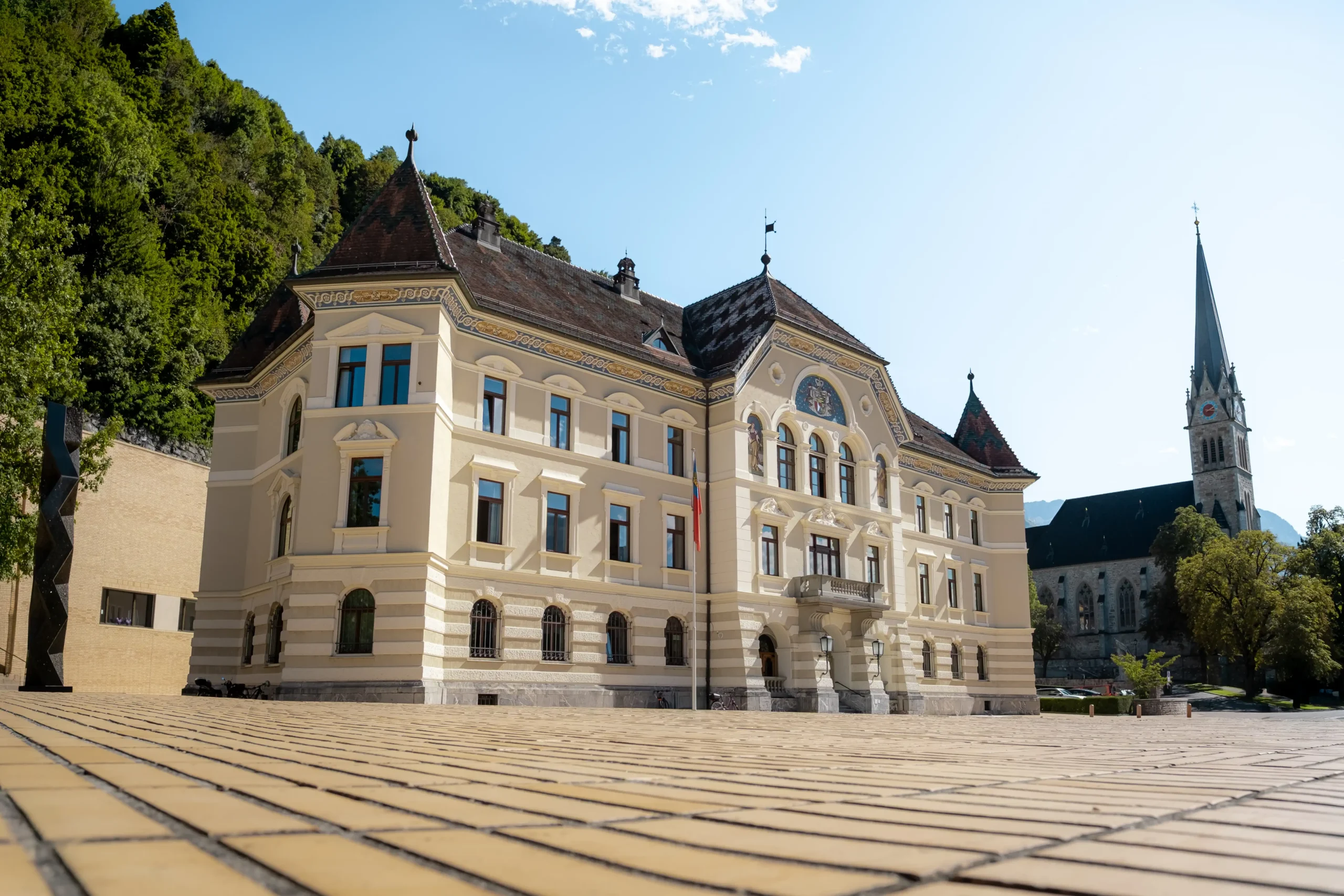
Main image: Liechtenstein’s government district in Vaduz. The principality’s political stability and close links to both the European and Swiss markets are central to its appeal as a financial centre. Credit: Liechtenstein Finance