Rwanda’s high-profile European football sponsorships are about far more than sport, forming part of a deliberate strategy to reshape global perception and signal a nation healed and transformed three decades after civil war, writes Steve McCauley
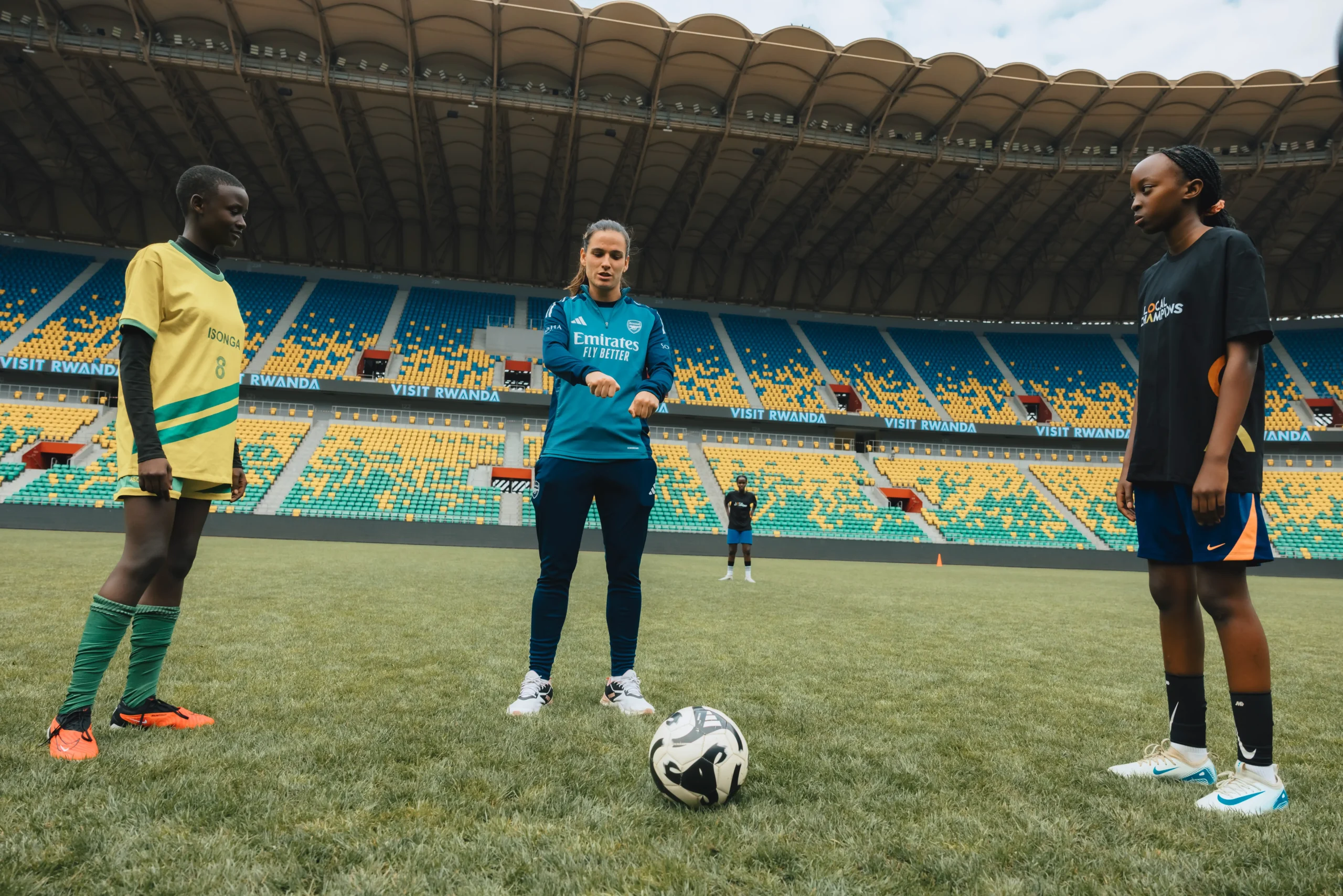
Sharp-eyed fans of Champions League football might have noticed a strange coincidence during this season’s semi-finals, which featured Paris Saint-Germain v Bayern Munich and Atlético Madrid v Arsenal.
All four clubs have sponsorship deals with “VISIT RWANDA”.
It is a strategic campaign run by the Rwanda Development Board to promote tourism in the formerly war-torn East African country. More generally, the campaign aims to build Rwanda’s international profile and change perceptions about the country.
To many people who don’t know the country, the reaction might have been, “Wait, you can actually visit Rwanda? Is that a safe thing to do?”
Well, yes, you can visit Rwanda safely: it was ranked as the safest country in Africa in 2024 and 2025, and one of the top 25 safest countries in global rankings.
Rwanda, which is about the size of Wales, is also remarkably beautiful and is known as the Land of a Thousand Hills. Located in East Africa, just below the Equator in the Great Rift Valley, this land-locked country’s high altitude moderates daytime temperatures.
Kigali, the capital city with a population of around two million, sits at 1,567 metres (5,141 feet) above sea level. Locally, people describe the climate as perpetual spring. It is usually never warmer than 28 degrees Celsius during the day nor cooler than 16 degrees at night. Heating isn’t needed.
The mountains of the Volcanoes National Park in the north-west of Rwanda rise to as high as 4,507 metres (14,787 feet). This is where the famous mountain gorillas live, and you can visit them with a trekking guide. Permits cost around US$1,500 per day. The climate, soil and altitude are perfect for growing some of the best coffee and tea you can buy.
The journey from a dark history towards a bright future
The Genocide against the Tutsi started on 7th April 1994, although its roots go back decades earlier. Shamefully, the international community failed to intervene to bring the violence to an end. The conflict lasted until 7th July that year, when the rebel army of the Rwandan Patriotic Front (RPF), mostly Tutsis, defeated the national army, the remnants of which fled to Zaire, now the Democratic Republic of Congo (DRC).
According to the Government of Rwanda, a million people were killed in systematic, racially motivated violence. The victims were mostly from the minority Tutsi tribe, murdered by their Hutu neighbours, a youth militia called the Interahamwe, and the armed forces of the authoritarian Hutu government. Researchers suggest that hundreds of thousands of Tutsi women were raped.
The victorious RPF army was left to run a broken nation where even the seals of government had been looted. As a political party, the RPF set about rebuilding the country, which most observers regarded as the definition of a failed state.
Post-1994, large amounts of emergency and development aid were provided to Rwanda to help with its development. Various agencies of the United Nations were involved, as well as numerous international NGOs. There was a significant U.S presence. The British government alone committed over £1billion in development assistance to Rwanda from 1998 to 2025.
Indeed, Rwanda’s diplomatic relationship with the UK led to the wheeze hatched by the Prime Minister, Boris Johnson, in 2022 to have claims of asylum seekers who arrived in the UK in small boats processed by Rwanda: the UK and Rwanda Migration and Economic Development Partnership. The UK Supreme Court knocked it on the head in November 2023, and the scheme was eventually dropped when Labour won the General Election in July 2024. It cost the UK at least £290 million. Four asylum seekers volunteered to go to Rwanda as part of the scheme: £72,500,000 for each one.
At the centre of the story of Rwanda’s rebirth is President Paul Kagame. He was second in command when the RPF began the Rwandan Civil War in 1990, to fight for the right of return of the Tutsi to Rwanda, who had been exiled, mainly in Uganda, since the early 1960s. The leader of the RPF, Major General Fred Rwigyema, was killed on the second day of battle, and General Kagame assumed command.
President Kagame is an intensely thoughtful, serious, visionary and quietly spoken man. He is not without his critics, who accuse him of running an authoritarian government with a questionable human rights record. Rwanda bridles at and refutes such criticism.
Rwanda has been accused over the years for material involvement in eastern DRC in support of a Congolese Tutsi armed group called M23, which Rwanda denies. M23 remains under UN and U.S sanctions for alleged human rights violations.
Senior political and security figures in Kigali would tell you that Rwanda has made the politics of race illegal. The drive since 1994 has been away from sectarianism and towards the notion of national identity above tribe or clan. They would say that to include politicians whose ideology is based on racial hatred would be like Germany allowing Nazis to sit in the Bundestag.
Other observers say that to understand Rwanda is to realise that it runs more along the lines of Singapore than a European-style democracy.
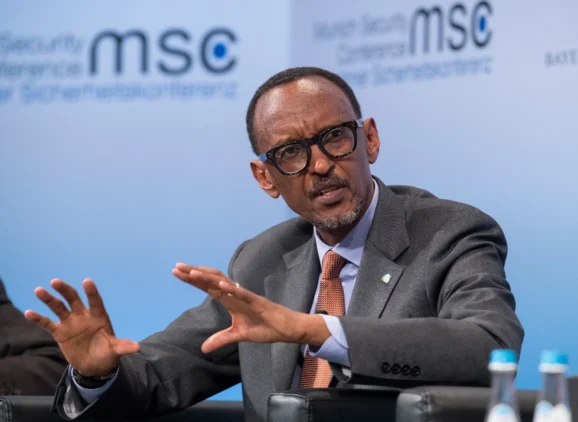
Few doubt that President Kagame wants to create a stable and prosperous future for his country from the ashes of 1994. His frequent public message to the young people of Rwanda is this: “Think big, aim high and stick together.” He tells them to take responsibility and to work hard. It is a message that British and European leaders might do well to adopt, if only they would find the courage to say it to coddled generations.
Paul Kagame is a demanding and ambitious leader who expects results from his ministers and officials. He has driven a culture of accountability, of fighting corruption, and of the importance of due process and the rule of law. He sees these factors, combined with the country being a safe place to visit and in which to live, with good physical and digital infrastructure, as well as having a well-educated population, as essential in attracting inward investment and the development of a high-value services economy.
The President’s philosophy is to promote gender equality and to harness all the talents in Rwanda. Its parliament has a majority of female lawmakers. Paul Kagame has championed the cultivation of a knowledge-based economy in a country where 58 per cent of the population of 14 million is under the age of 25.
The University of Rwanda has over 33,000 students in seven colleges. There are 10,000 students enrolled at the University of Kigali. Carnegie Mellon University Africa is based in Kigali, a joint venture between Carnegie Mellon University of the US and the Government of Rwanda, founded in 2011.
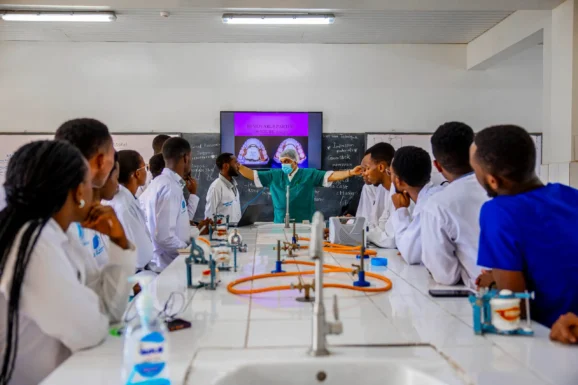
The President has made a number of bold moves. Rwanda abolished the death penalty in 2007. Traditionally a francophone country (it was a Belgian colony), Rwanda adopted English as a primary language in school and in government in 2008. Rwanda joined the Commonwealth in 2009, only the second country to join with no colonial tie to the UK. The country completed work on its fibre optic network backbone in 2011. In 2018, Rwanda decriminalised defamation, a significant change to help protect journalists from malicious prosecution, which built upon earlier media reforms.
The Kigali Convention Centre opened in 2013 at a cost of US$300 million and has helped propel Kigali’s global reputation as a destination of choice for important meetings. It hosted the Commonwealth Heads of Government Meeting 2022.
One of Rwanda’s greatest achievements post-1994 has been in peace and reconciliation. The RPF realised that it would have been impossible to prosecute cases against all the perpetrators of the genocide in mainstream criminal courts. Instead, a system of traditional justice was set up, the Gacaca courts, to allow criminals to admit their crimes and to be sentenced. Around 500,000 cases were heard between 2002 and 2012.
While Rwanda remains a developing country, its growth has been impressive. Its GDP grew from US$753 in 1994 to around US$16 billion in 2025. Today, 85.5 per cent of the population has access to electricity while urban coverage of water supply stands at 97 per cent, while rural areas stand at 87 per cent. According to the World Bank, the country is on course to be an upper middle income nation by 2035 and a high income country by 2050.
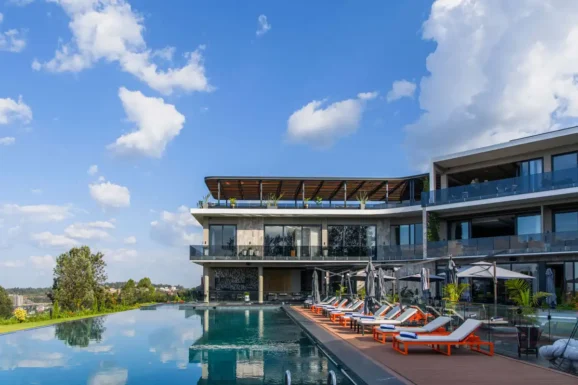
The Visit Rwanda campaign is a strategic part of the country’s development story and its move up-market. A room at the luxury boutique Pinnacle Hotel in Kigali, which opened in January, is yours for just US$3,500 per night in June.
Nearly 1.5 million visitors travelled to Rwanda in 2025, a nine per cent increase on 2024. Tourist revenues were US$685million, according to the New Times, the English-language newspaper published in Kigali.
Football is the great common denominator
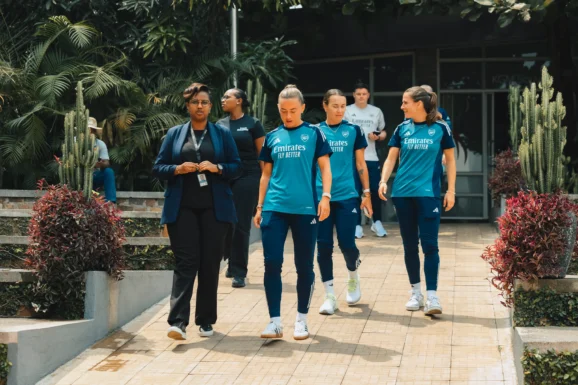
President Paul Kagame is a passionate Gooner, an Arsenal fan. He leads a country that, like the rest of Africa, is mad about football. The Visit Rwanda deal with Arsenal, which finishes at the end of this season, was an inspired initial vehicle. You won’t find Rwanda sponsoring Tottenham Hotspur any time soon.
The English Premier League is huge in Rwanda, and games are shown live wherever there is a bar. Arsenal, Manchester United, Liverpool and Chelsea, in particular, are heavily supported.
In 2012, President Kagame called for Arsenal’s manager, Arsène Wenger, to quit after a string of poor results for the Gunners. Wenger diplomatically avoided the temptation to call for the President of Rwanda to quit in return and stayed on until 2018. President Kagame is expected to remain in post until 2034.
So, should you visit Rwanda? Yes, even if you’re a Spurs fan. It is a fascinating, fabulous country, the beating heart of Africa’s future.
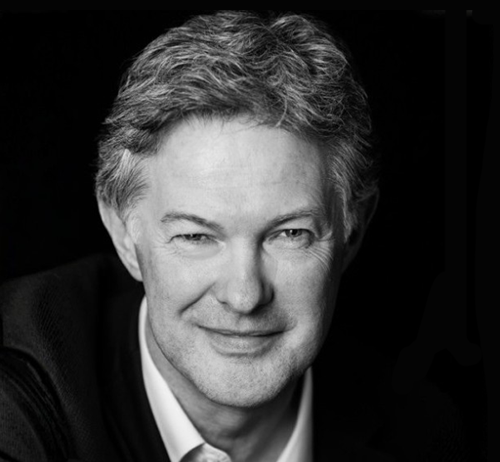
Steve McCauley is a leadership coach, strategic advisor and journalist whose career spans media, government, digital technology and international development. A Senior Fellow at the University of Cambridge and certified executive coach, he has advised presidents, ministers, CEOs and global organisations on strategy, governance and creative thinking in complex environments. As Strategy & Creative Intelligence Correspondent for The European, he writes on leadership, governance, talent, innovation and the forces shaping European growth.
READ MORE: ‘What kind of masochist would want to run the BBC?‘. As the BBC appoints a new Director-General, The European’s Strategy & Creative Intelligence correspondent, Steve McCauley, examines the scale of the challenge facing Matt Brittin — and why the role has become one of the most precarious in British public life.
Do you have news to share or expertise to contribute? The European welcomes insights from business leaders and sector specialists. Get in touch with our editorial team to find out more.
Main Image: Rwanda High Commission