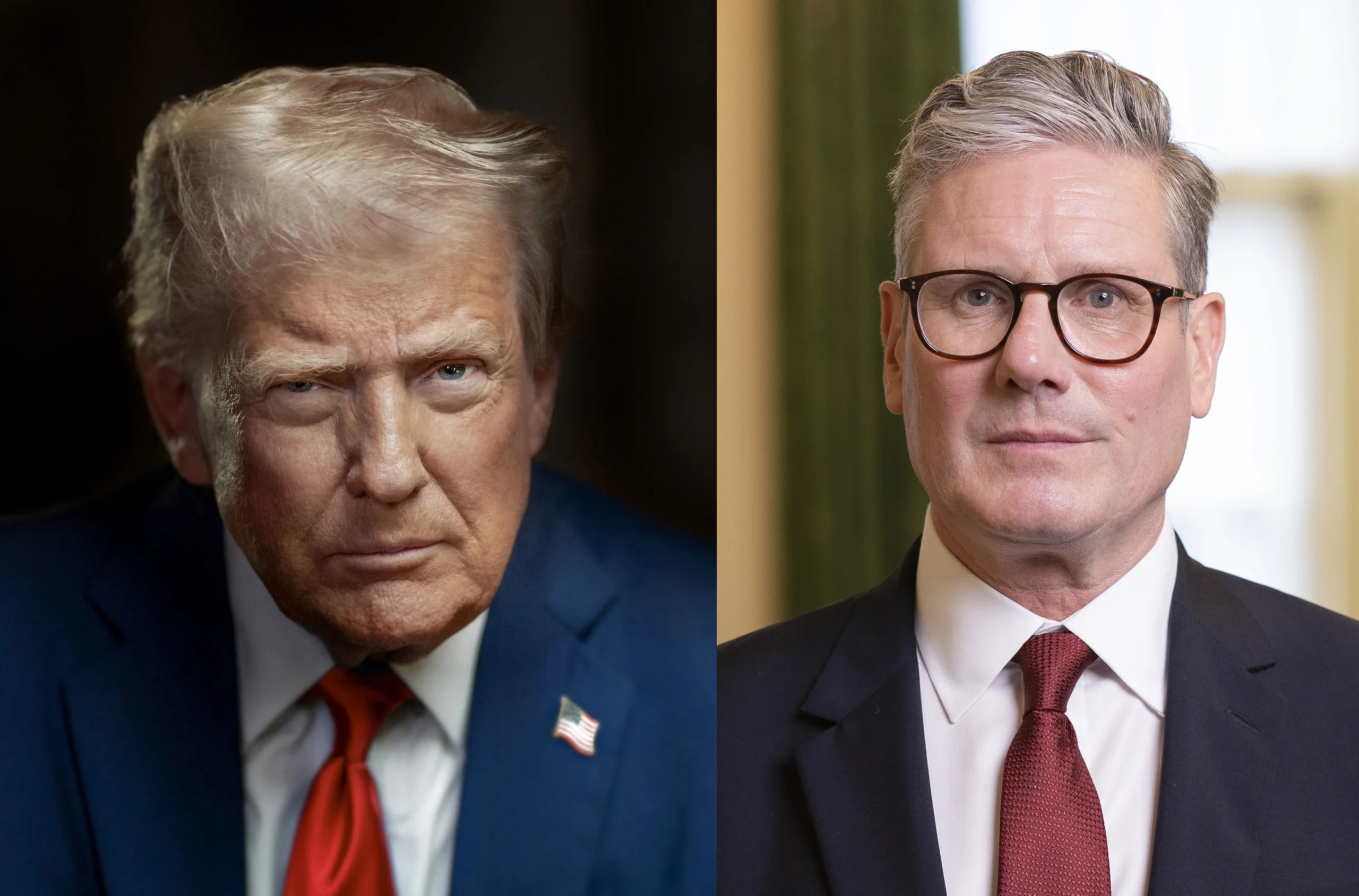
Trump wants Britain to toughen its stance, deepen its role and bow to U.S pressure over Iran. Barrister Raj Joshi examines international law – and why Starmer is right not to be bullied
Donald Trump has spent weeks attacking Sir Keir Starmer over Britain’s refusal to go further in the Iran war, mocking the Prime Minister in public, questioning Britain’s worth as an ally and pressing for a more aggressive response. Starmer, for his part, has been equally clear: Britain will not be “dragged into the war” and he will not “buckle under pressure”.
He is right, and his position is justified in law as well as politics.
The reason lies in the nature of the rules that govern the use of force between states. International law does not treat war as an elastic instrument to be reshaped by the mood of the moment or the demands of an ally. Regardless of Trump’s “noise”, as Starmer puts it, the law imposes exacting conditions on when force may be used, on the grounds by which it may be justified and on the evidence required to sustain it. Governments often speak as though these rules become pliable in moments of crisis. The law itself is considerably less accommodating. The framework is settled across the UN Charter, the jurisprudence of the International Court of Justice, customary international law and the relevant Security Council resolutions.
Downing Street rests its case on Article 51 of the UN Charter, which preserves the right of self-defence, including collective self-defence where an ally comes under armed attack, requires states acting under it to report the measures they have taken to the Security Council, and leaves the wider authority to act with the Security Council itself. Article 51 does not create a general right to use force to deter, punish or pre-empt hypothetical threats. On that footing, ministers have sought to confine Britain’s role to defensive action: intercepting drones and missiles, supporting limited steps to prevent further attacks, and stopping short of entry into the wider war. That boundary marks the legal dividing line between a defined act of defence and deeper participation in a regional conflict, and the UK has said it will make the required notification.
This is the framework within which Britain’s present position must be judged, and any pushy U.S President would do well to remember it. Nevertheless, Whitehall’s own legal footing is less secure than its public confidence implies. Starmer is right not to be hustled into a wider war, but the government’s invocation of Article 51 is hardly beyond dispute, either.
According to the International Court of Justice, Article 51 is engaged only where there has been an armed attack in the legal sense. The leading modern authority remains the Nicaragua case (Military and Paramilitary Activities in and against Nicaragua [Nicaragua v. United States of America], 1986) in which the International Court of Justice drew a clear distinction between the gravest forms of force, capable of amounting to an armed attack, and other unlawful conduct which still falls short of that threshold. It held that assistance to rebels in the form of weapons, logistical support or other aid does not by itself constitute an armed attack. That remains a central point, because it means the right of self-defence cannot be invoked simply by pointing in general terms to instability, proxy activity or regional violence. The Court’s reasoning was all the more striking because it came after detailed findings of American training, arming, financing and operational coordination of the Contras, yet still treated that conduct as falling short of an armed attack in the legal sense. The distinction between unlawful intervention and armed attack remains central to any serious legal assessment of proxy conflict. Proxy conflict, without more, does not by itself trigger Article 51.
The same judgment also reaffirmed that any exercise of self-defence is limited by necessity and proportionality. Both requirements sit at the heart of the legal test. Force must therefore be genuinely necessary to meet the attack in question, and it must remain proportionate to that end. Those limits apply regardless of the scale of the threat or the identity of the state invoking them. A government does not acquire a wider discretion merely by describing its actions as defensive, still less by describing them as limited. The legal test remains the same regardless of how cautiously or carefully ministers choose to describe their actions.
Whitehall’s position becomes harder to defend if it relies not only on past attacks, but on the need to avert future ones. In those circumstances the governing standard remains the so-called Caroline test, named after the 1837 Caroline incident, when British forces entered U.S territory and destroyed an American steamboat they accused of supplying rebels in Canada. The legal formula itself was later set out in diplomatic correspondence between Daniel Webster, the U.S Secretary of State, and Lord Ashburton, the British envoy sent to resolve the dispute. Webster’s formulation has since become the classic statement of anticipatory self-defence. It held that the necessity of self-defence must be “instant, overwhelming, leaving no choice of means, and no moment for deliberation”, while the response must do nothing “unreasonable or excessive”.
Reaffirmed at Nuremberg in the post-war legal treatment of self-defence and aggressive war, the Caroline affair remains the classic statement of anticipatory self-defence. The requirement is one of real, evidenced imminence. Force used against a non-imminent future threat does not meet it.
Modern conflict, of course, rarely presents itself in neat state-against-state terms. Proxies, militias and aligned armed groups complicate the picture, which is why the law of attribution matters so much. Here again the International Court of Justice has adopted a demanding standard. A state is responsible for the conduct of a non-state armed group only where it exercises “effective control” over the specific operations in question. General sympathy, strategic alignment, funding or training do not by themselves satisfy that test. The category is narrower than ministers often prefer and more exacting than political argument usually acknowledges.
The Bosnian Genocide case (Application of the Convention on the Prevention and Punishment of the Crime of Genocide [Bosnia and Herzegovina v. Serbia and Montenegro], 2007) also drew a careful distinction between direct responsibility, complicity and the separate duty to prevent, holding that Serbia was not directly responsible for genocide at Srebrenica and was not complicit in it, while finding that it had failed in its duty to prevent genocide.
Nor did the law suddenly expand after the 11 September 2001 terror attacks. Security Council Resolutions 1368 and 1373, adopted in the immediate aftermath of 9/11, reaffirmed the inherent right of self-defence recognised by Article 51. They did not rewrite the Charter or create a broader licence to use force. The threshold for armed attack remained high, the requirement of imminence remained strict, and the need for evidence where responsibility is attributed to a state remained in place.
With all this mind, the UK government is entitled to say that Britain should not be drawn further into the conflict, and Starmer is plainly right to resist Trump’s bluster on that score.
In legal terms, however, Whitehall stands on firmer ground in arguing for restraint than in presenting Article 51 as a clear and untroubled basis for the action already taken. By invoking Article 51, Downing Street assumes the burden of showing which armed attack is said to have triggered the right of self-defence, which state or states were the victims of it, what specific evidence supports that case, and on what basis Britain was entitled to act in collective defence. It is far from obvious that those propositions would withstand serious scrutiny. Without a direct armed attack giving rise to self-defence, or Security Council authorisation, the UK simply has no general licence to join a wider war.
Britain should not be pushed into a wider war by bluster from Washington. On that point, at least, Starmer is right.

Dr Raj Joshi is a senior barrister and prominent civil rights advocate whose career spans frontline legal practice, regulatory reform, and international justice. Twice named among the ‘Top 10 Asian Lawyers in the UK’ and listed in the ‘100 Most Influential Asians in the UK’, he has appeared before major inquiries, including giving evidence in the Stephen Lawrence case, and served as Chair of the Society of Black Lawyers. A former Adjudicator to the Solicitors Regulation Authority, Dr Joshi has advised ministers, helped shape legal protocols, and represented the UK in international legal forums.
READ MORE: ‘Britannia no longer rules the waves‘. With questions mounting over whether Britain is prepared to support the U.S in the Gulf and defend its own regional interests, Dr Linda Parker argues that the delay in sending HMS Dragon to Cyprus has revealed how far the Royal Navy has drifted from its long tradition of rapid global response.
Do you have news to share or expertise to contribute? The European welcomes insights from business leaders and sector specialists. Get in touch with our editorial team to find out more.
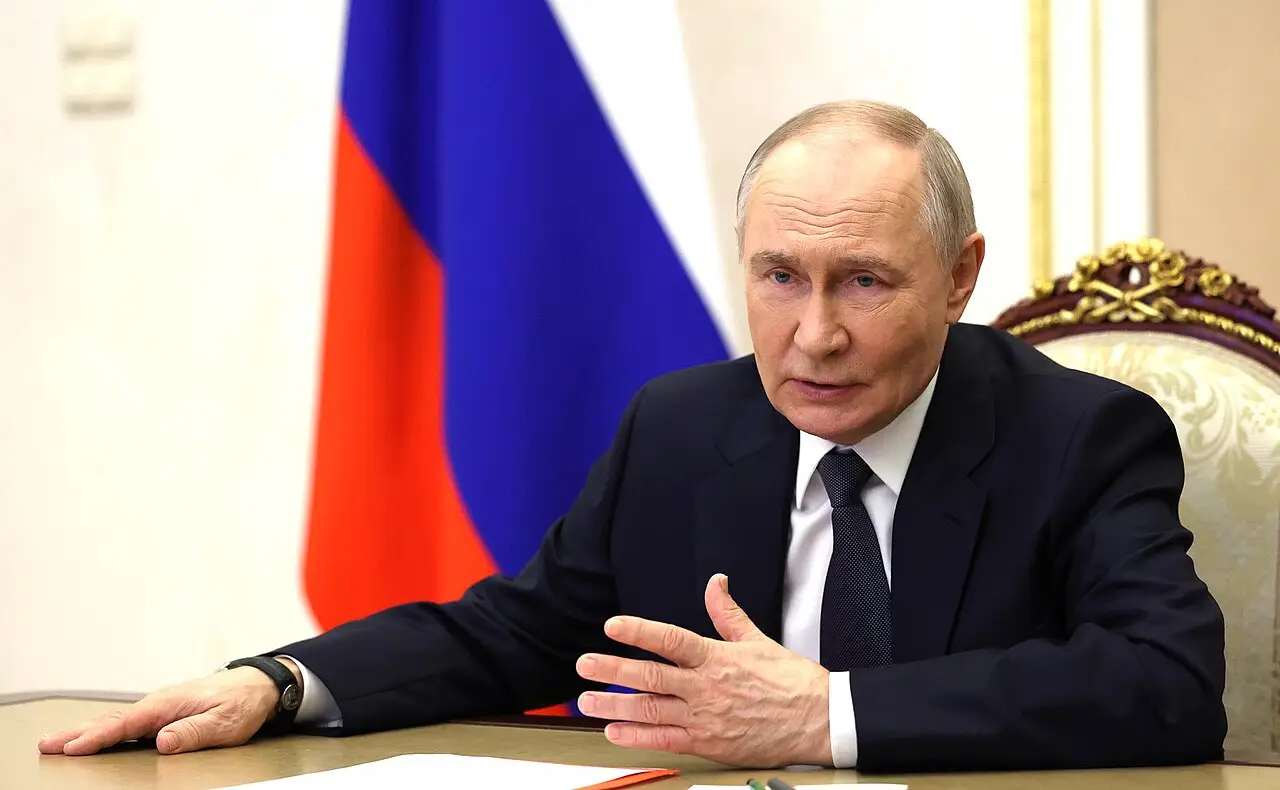
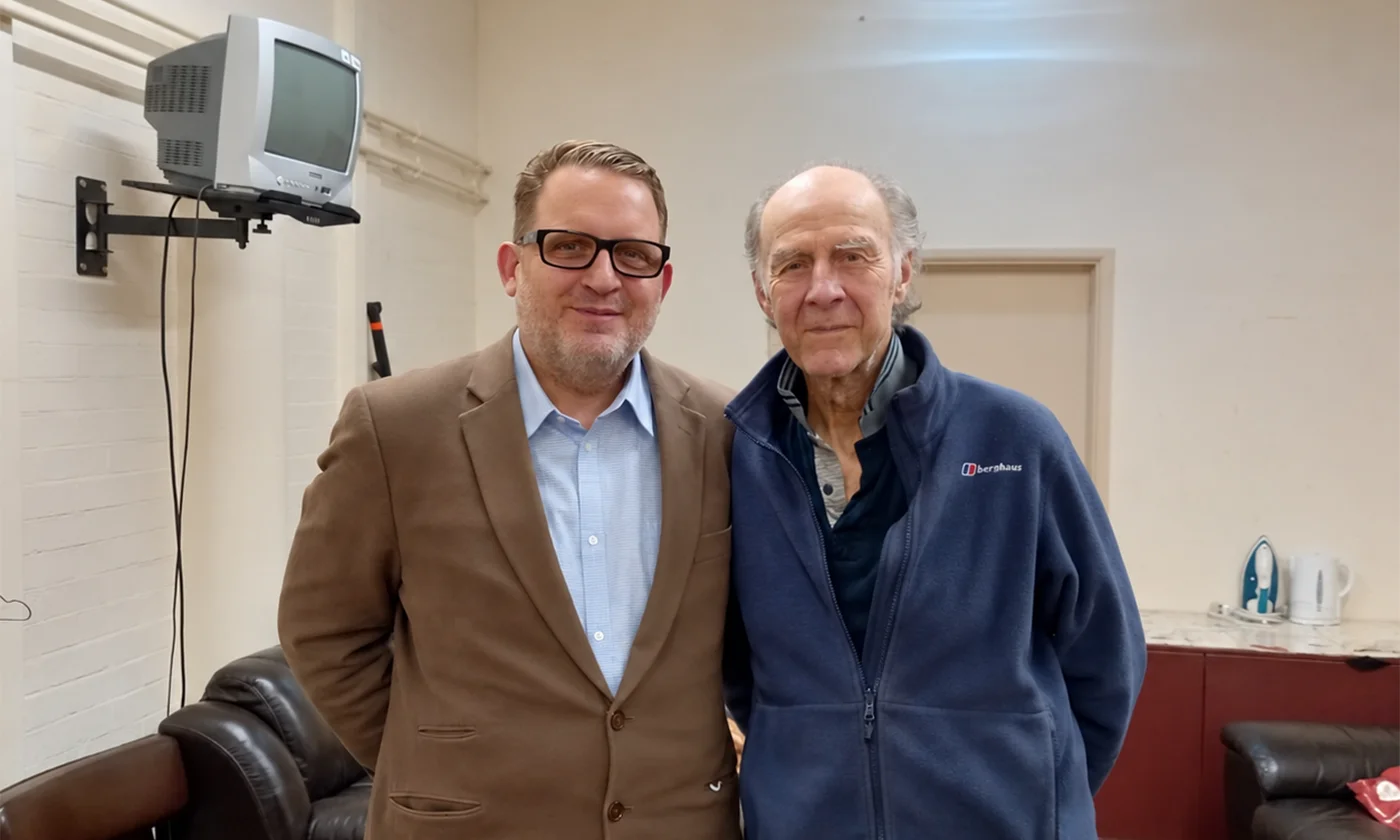
Main image: Official portraits of Sir Keir Starmer following his appointment as Prime Minister, London, 5 July 2024, and Donald Trump in his official presidential portrait for his second term. By Simon Dawson / No. 10 Downing Street – OGL v3.0 / Wikimedia Commons; and by Daniel Torok / The White House – public domain / Wikimedia Commons.