The 2026 summit opened with President Trump’s freewheeling performance and a room full of uneasy allies. Andrew Horn argues that the Forum’s new “Spirit of Dialogue” theme is an operating system global markets must follow
Davos has always mixed diplomacy with commerce, yet the 2026 meeting opened with a reminder that geopolitical stability can hinge on highly personal performances. Donald Trump’s press-room session on the opening afternoon zigzagged through anecdotes, boasts and grievances. NATO’s cohesion, Greenland’s status and the credibility of U.S alliances all drifted in and out of view. Delegations that had come to discuss regulation and capital flows began to ask a different question: how do global systems function when the world’s superpower communicates through improvisation and spectacle?
The World Economic Forum’s decision to frame this year’s meeting around “A Spirit of Dialogue” now reads less as a slogan and more as an operating requirement for people everywhere. Deals at Davos already depend on structured conversation. CEOs, sovereign wealth funds, regulators and heads of state meet in private rooms where positions are tested and language is refined. The past year has raised the stakes of those conversations. Energy security, supply-chain reconfiguration and AI safety need coordination across actors who do not share the same domestic politics or strategic horizons. The United States, Europe, India, China and the Gulf each carry different expectations and risk tolerances. Dialogue gives the system a mechanism for managing those differences without escalation.
The logic is not new. The Rig Veda, one of the oldest surviving texts in the world, written in ancient India around 1900 BCE, records dialogues in which people argue through difficult moral questions rather than being handed answers by an authority. One of these exchanges, between the twins Yama and Yami, explores the foundations of human conduct. No ruler intervenes. Judgement emerges from the exchange itself. Religious practice later developed techniques on the same principle. Kirtan, a devotional form of call-and-response chanting, creates alignment through rhythm and repetition, allowing a group to move from individuality to synchronisation without instruction.
Business governance relies on an equivalent method. Boards and investors use facilitated dialogue to handle succession, activist pressure and strategic pivots. Regulators convene cross-industry discussions to shape rules for emissions, data and product safety.
Theological language has a term for the impulse that frustrates cooperation: ishvara bhava — the disposition to dominate. Markets have their equivalents. Sovereign funds use balance sheets. Supermajors use offtake and infrastructure. Governments use export controls, industrial policy and sanctions. Without a shared reference point, meetings collapse into power contests. Even trivial settings illustrate the point. A Sunday lunch in Hertfordshire featured a pub garden with a pond occupied by three ducks. Two of them spent the meal attempting to drown the third in a territorial dispute over weeds. Stakes were low, yet the assertion of dominance was absolute.
The Rig Veda treats individuality as a fundamental property of the world, traced to Brahman, the source of personality. The text refers to the same origin as Bhagavan — the Supreme Person. For Davos, the relevance lies in the recognition that difference is structural. Attempts to suppress it through force or authority generate resistance. Dialogue accepts difference as a condition to manage rather than a problem to erase.
Trump’s performance accelerated that lesson. The spectacle of a single leader shaping alliance politics through improvisation concentrated the minds of Europe’s security establishment. Nordic delegations recalled Greenland’s newly reopened status in presidential rhetoric. NATO members weighed the credibility of commitments. Investors asked how capital pricing adapts when defence policy, energy markets and sanctions are keyed to one person’s mood music. Dialogue became a hedge against volatility.
If Davos succeeds in turning dialogue from ceremonial theatre into a method for system-wide coordination, its relevance increases. The global economy already uses conversation as infrastructure: stewardship frameworks in capital markets, multistakeholder rulemaking in technology, and supervisory colleges in finance. Trump did not invent that structure, but he exposed the cost of its absence. In that sense, the Davos Everyman Theatre has begun its next act, three thousand years after Yama and Yami.

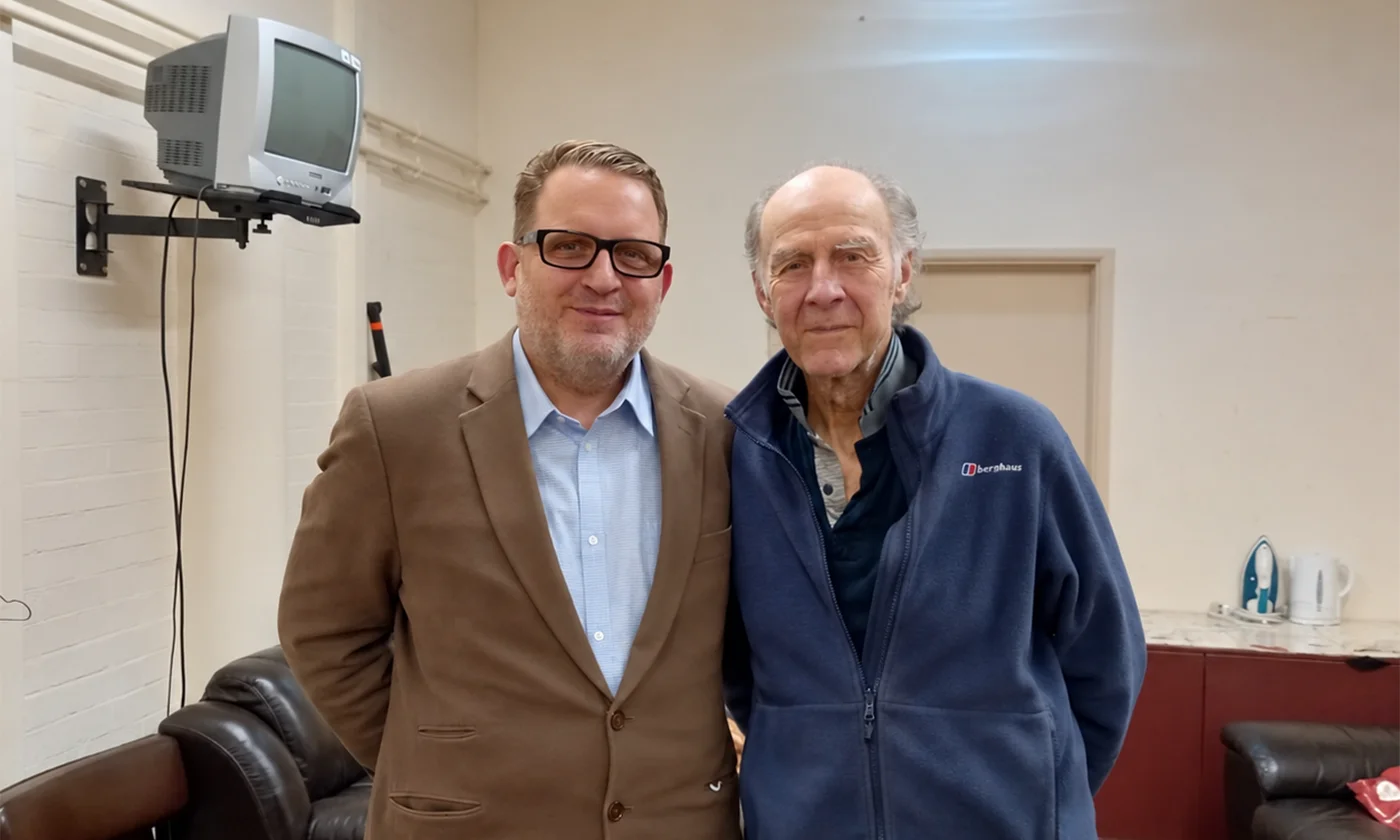
Author Andrew Horn, the son of the great neuroscientist Sir Gabriel Horn and grandson of the socialist peer Baron Soper, is widely regarded as one of the world’s leading experts on traditional Indian and Sanskrit drama whose English translation of the epic 16th-Century Vidagdha Madhava by Rupa Goswami is considered the most accurate ever published. Despite his notable lineage, Andrew chose a different path, becoming a Hare Krishna monk for 20 years. During this time, he was given the name ‘Arjundas Adhikari’, signifying devotion to the hero Arjuna from the Mahabharata. He also appeared on Top of the Pops with Boy George for the singer’s 1991 hit, Bow Down Mister.
READ MORE: ‘Will Trump’s Davos speech still destroy NATO?‘ Trump rowed back on force in Davos, but not on pressure, leaving NATO to confront a stark question: what happens when an ally treats another’s territory as negotiable?Do you have news to share or expertise to contribute? The European welcomes insights from business leaders and sector specialists. Get in touch with our editorial team to find out more.
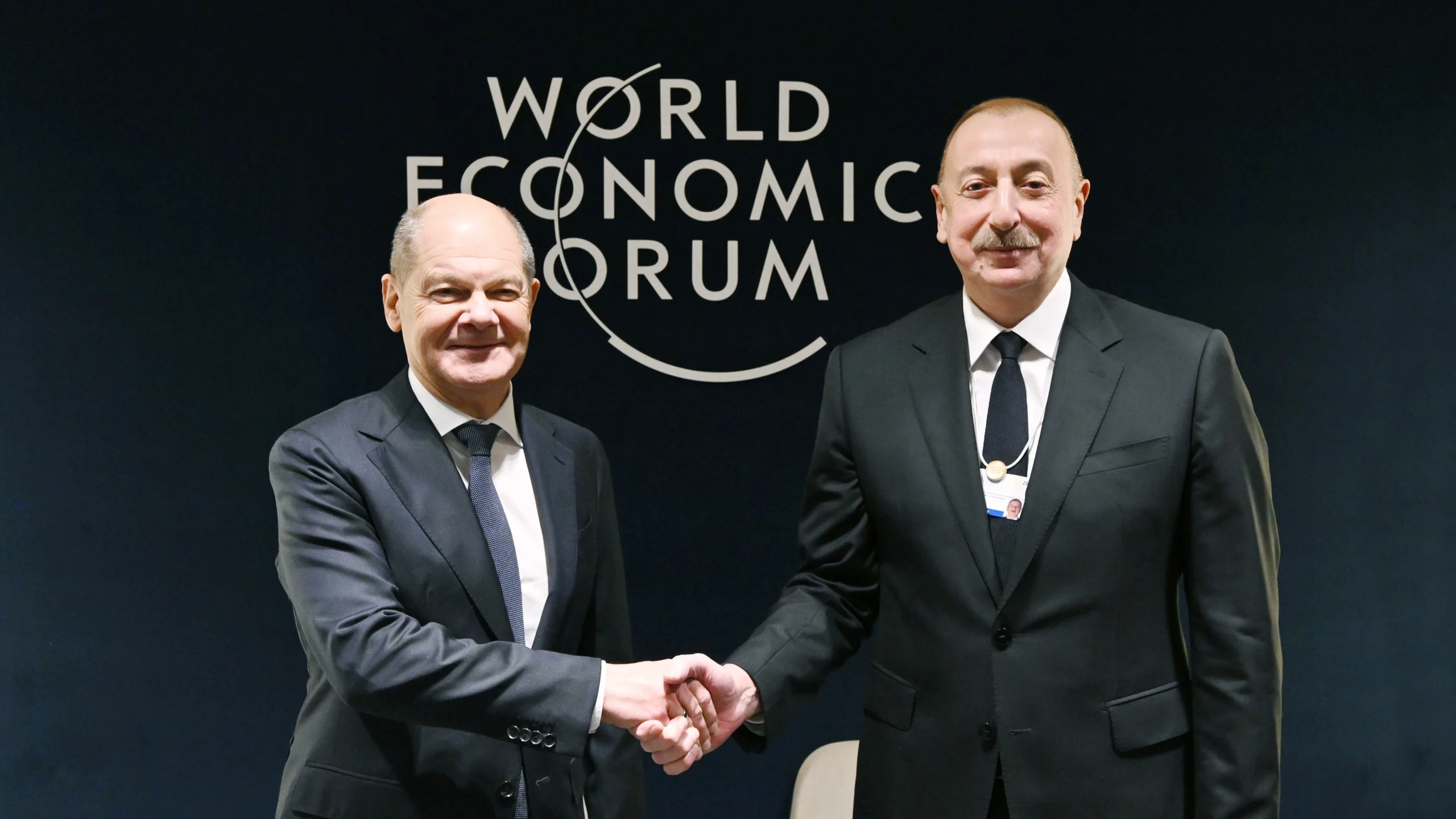
Main image: German Chancellor Olaf Scholz and Azerbaijani President Ilham Aliyev in January 2025. Credit: President.az, CC BY 4.0, via Wikimedia Commons (curid:158597600)