A single Instagram pick from a celebrity like Reese Witherspoon can turn an unknown novel into a global bestseller overnight. Here, Milosh Zezelj, our European Books & Culture Correspondent, unpacks how celebrity book clubs have become one of publishing’s most potent sales machines
‘Celebrity Book Clubs Are Actually Selling Books’ reads the catchy title of a BuzzFeed News article published back in 2019. The piece observes that the heavy hitters, known by just one name to club participants – Reese, Jenna, Oprah – are also driving sales for publishers, giving authors the gift of instant success in a subjective industry. What was once treated as an industry curiosity has since evolved into a fundamental force within publishing, proving how effectively celebrity book influencers disrupt the traditional publishing ecosystem.
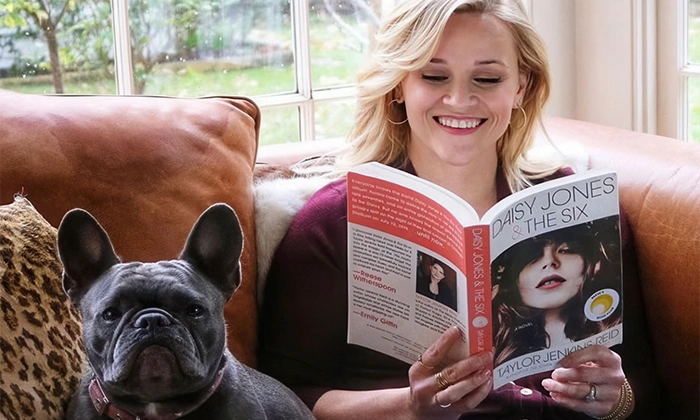
At the centre of this transformation stands Reese Witherspoon. She has become a household name not just in Hollywood, but most recently whenever and wherever book sales are being discussed. Her book club, Reese’s Book Club (@reesesbookclub on Instagram), displays a loyal following of nearly three million readers and exerts influence that rivals, and in some cases surpasses, traditional publisher marketing.
Being a twice-published author myself, I have always been interested in how book sales work, what influences them and how someone like Witherspoon can impact the entire publishing industry by simply picking and posting about books on Instagram. When a single individual can disrupt long-established publishing and advertising structures through social media alone, the phenomenon deserves closer scrutiny.
I am mesmerised by the fact that one single pick from Witherspoon means that the book in question will reportedly overperform by 700 per cent compared to the rest of the fiction market. This figure illustrates what industry insiders now routinely call the “Reese Witherspoon effect”. It does not simply boost individual titles but reshapes risk calculations for publishing, purchase strategies, and even genre prioritisation. Authors selected by Witherspoon might enjoy instant visibility, worldwide readership, movie deals, and long-term career momentum. Comparingly, such a level of success once depended on years of institutional support. Vox once labelled Witherspoon the ‘New High Priestess of Book Clubs‘ describing her platform as ‘publishing’s secret weapon.’ If a book performs strongly after her endorsement – which it certainly almost does – the industry now openly refers to this as the Reese Witherspoon effect. Here, immediacy and emotional resonance distinguish this model from traditional publishing influence. Additionally, readers are not responding to advertisements or reviews, but to a trusted cultural intermediary who frames books as mutual experiences.
To anyone in the publishing industry, such phenomena are highly interesting, for they clearly demonstrate the sheer power of celebrity endorsement and its specific effects on the literary market, as well as the role of social media in shaping cultural products. These two forces intersect and become visible on platforms like Instagram, which have become a playground for influencers offering endless opportunities to shape tastes and consumer behaviour.
Research already suggests that literary influencers are playing an increasingly important role in publishing and leading change in this field. Understanding how these endorsements work allows publishers, booksellers, and marketers to rethink discovery, marketing strategy, and audience engagement. If we narrow the lens even further, insights into cultural trends and shifts in reader preferences (including upcoming ones) could be gained simply by analysing which books are selected, how they are framed, and how audiences are invited to respond.
Three patterns that drive the Reese Witherspoon effect
As a ‘mega’ or ‘celebrity influencer’, Reese is regarded as an authentic and truthful source. Instagram is perceived as very visual, polished, and in many instances, glamorous, making it notably suited to lifestyle-driven cultural endorsement. Analysing Witherspoon’s Instagram activity using a structured content-analysis approach, three recurring endorsement mechanisms emerge:
1. Presence and nature of book mentions. This variable indicates whether a text post (tagline) mentions a book, either directly or indirectly. Such mentions can include the full book title, shortened versions thereof, or even nickname variations, and may not exclude author names, series references, or indirect references to books, such as through thematic elements within the author’s world-building.
2. Endorsement signifiers. This variable identifies linguistic signals that indicate Reese Witherspoon’s endorsement of a book. Specifically, hashtags such as #ReesesBookClub or #ReadWithReese, references to monthly picks, or expressions such as ‘our June pick’ operate as textual seals and approval. These distinguish casual mentions from formal recommendations and therefore signal cultural importance to followers.
3. Calls to action and engagement prompts. This variable defines any content within the post text created to encourage viewer action or engagement. Here, questions like ‘Have you read…?’, ‘Tell us in the comments…’, or prompts to participate in giveaways transform readers into an active community rather than a passive audience.
As a set, these variables systematically address the central theme of this article: the dynamics of celebrity endorsement via social media and its impact on book-related consumer behaviour.
The goal is not to criticise celebrity involvement in publishing at all, but simply to understand its mechanics. Celebrity book clubs are no longer peripheral marketing tools but central actors – key factors – in shaping what is read nowadays, what succeeds, and what stories ultimately enter the cultural mainstream. And in doing so, the traditional publishing ecosystem is being fundamentally renegotiated. And increasingly, the gatekeepers of literary success are not only publishers and bestseller lists, but celebrities with carefully crafted Instagram captions and millions of engaged readers.

Milosh Zezelj is a Swiss author with international publication experience and exposure to the European book fair circuit. He works in communications and branding, speaks multiple languages and operates across several European markets. As European Books & Culture Correspondent for The European, he contributes editorial on books, publishing and cultural trends across the continent, including new titles, cross-border literary movements and developments shaping Europe’s contemporary cultural landscape.
READ MORE: ‘What bestseller lists really tell us — and why they shouldn’t be the only measure of a book’s worth‘. Bestseller lists are often treated as objective measures of a book’s success, yet their rankings reflect editorial judgement, marketing dynamics, and cultural visibility as much as raw sales. European Books & Culture Correspondent Milosh Zezelj examines what lists such as The New York Times Bestseller List really measure, and why readers should never judge a book entirely by its cover.
Do you have news to share or expertise to contribute? The European welcomes insights from business leaders and sector specialists. Get in touch with our editorial team to find out more.
Main image: Reese Witherspoon on the Reese’s Book Club website, where her monthly selections and focus on women’s stories have built a global community of readers around shared discovery and discussion (Reese Witherspoon Book Club)