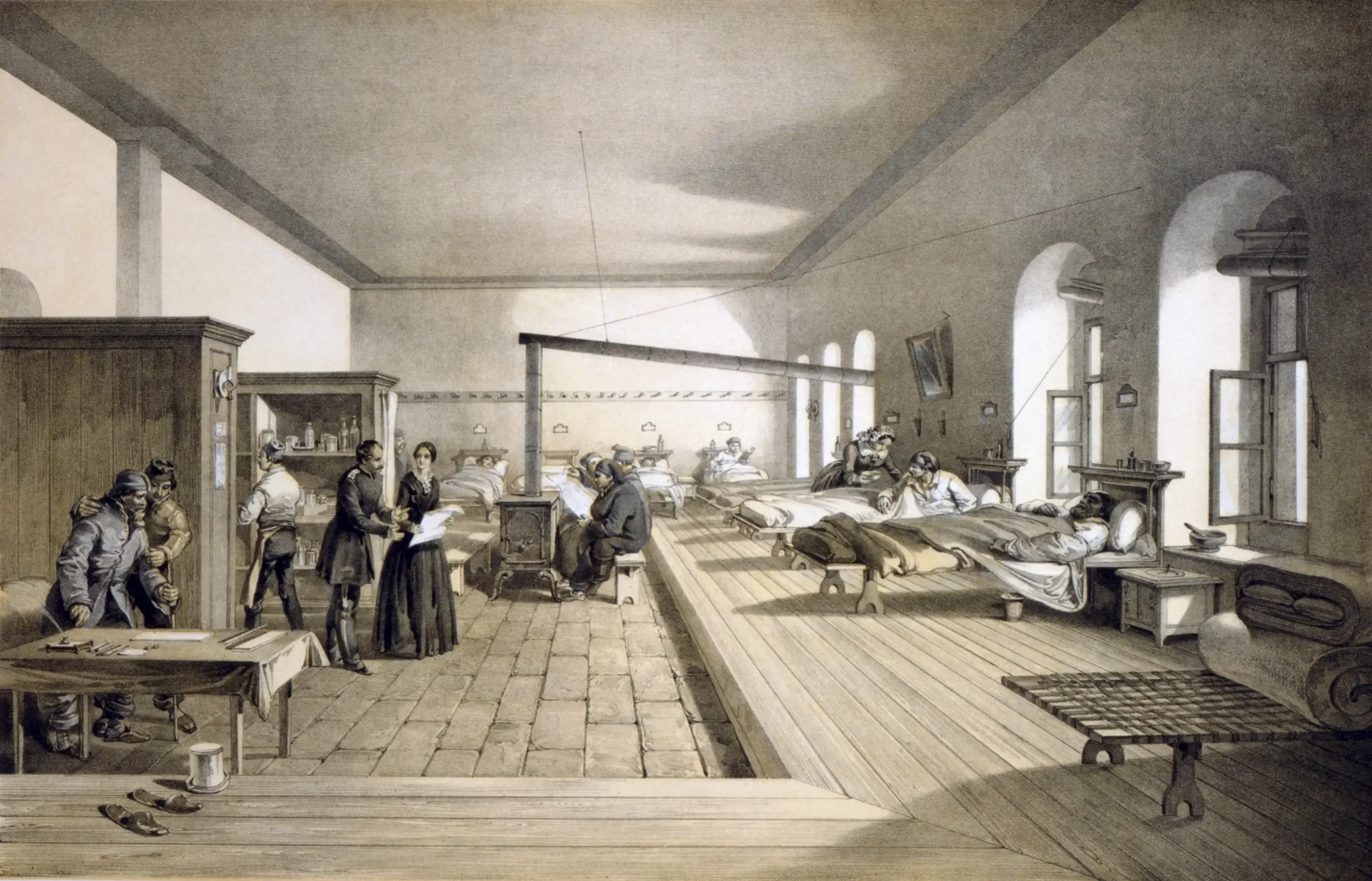
With hospitals spending millions on ventilation and cooling systems, George F Winter wonders whether modern healthcare has overlooked some remarkably simple lessons from the past
In September 2026, the Royal College of Nursing (RCN) published a report based on a survey of 2,471 nursing staff in England and Wales, revealing the extent to which the summer’s extreme heat had affected hospitals, healthcare workers and patients.
Respondents described dangerously hot working conditions, inadequate ventilation, staff falling ill, disrupted treatment and patients suffering in overheated wards. One registered nurse in north-west England reported that the underfloor heating in their office was permanently switched on, with windows that opened no more than 10cm, leaving the room resembling a greenhouse.
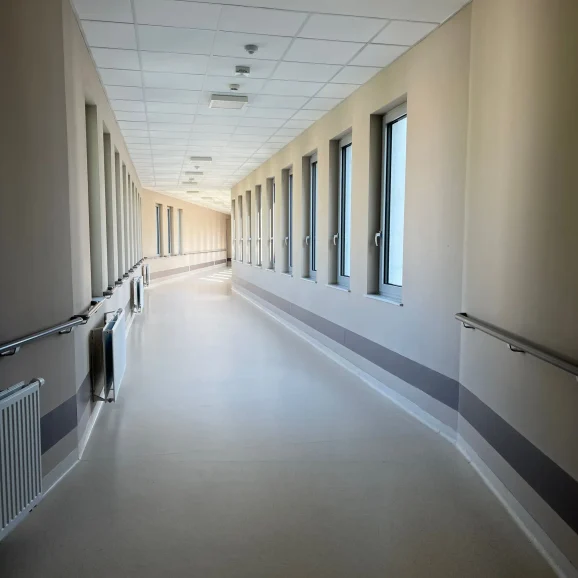
Hospitals have spent decades attempting to tackle these problems through increasingly sophisticated heating, ventilation and air-conditioning systems, building insulation and mechanical cooling. And yet the £32 million allocated to NHS hospital cooling and ventilation between 2026 and 2030 falls well short of what is needed, the RCN notes.
Amid all this investment in technology, there is a remarkably simple solution that appears to have fallen out of favour: opening a window.
Have architects and hospital planners really become so preoccupied with complex design requirements that they have overlooked something so basic?
There are, of course, sound reasons why certain hospital windows cannot be opened. Patient safety, infection control and the requirements of specialist clinical environments all demand consideration. Nor will opening a window necessarily cool a building during a heatwave, particularly when the air outside is hotter than the air inside.
Nevertheless, I suspect that our enthusiasm for technological solutions has encouraged us to neglect some of the simpler ways in which hospitals might provide healthier and more comfortable environments.
A particularly intriguing example appeared in Laboratory News on 22 February 2008. In an article entitled Breath of fresh air for superbug treatment, the magazine reported that the UK company Mid-States had developed a device capable of generating hydroxyl radicals in enclosed spaces. These highly reactive molecules occur naturally in outdoor air and were being investigated for their potential to destroy airborne microorganisms.
Mike Heath, then managing director of Mid-States, was quoted as saying: “We know that superbugs can’t survive in fresh-air [sic], but clearly it isn’t practical to have the windows open all the time!”
It is possible that the misplaced hyphen in “fresh-air” had been blown off course by a gust of hydroxyl radicals, but it was Mike’s exclamation mark that intrigued me. Did he find the idea of opening hospital windows laughable, or was he expressing disapproval at the very thought?
Either way, his throwaway observation about the impracticality of open windows seems emblematic of a peculiarly 21st-century enthusiasm for technological complexity. We have become so accomplished at devising machines to improve the air that we risk overlooking the relatively unsophisticated machinery already fitted to our buildings.
The scientific proposition behind the hydroxyl-radical device was more complicated than simply reproducing fresh air, and its reported development should not be mistaken for evidence of clinical effectiveness. Equally, ordinary outdoor air cannot be guaranteed to destroy hospital pathogens. Nevertheless, the underlying question remains: why should the straightforward provision of fresh air so readily be considered impractical?
The philosopher SuddhaSatwa GuhaRoy offers an interesting perspective in his 2024 essay, In Defence of (Over)Thinking, in which he explores how asking the wrong questions can lead to excessive and unproductive analysis. Hospital architecture might be a case in point. How much time, money and ingenuity have gone into developing sophisticated ventilation systems when architects could also have been asking a much simpler question: why not throw open a window?
There are at least two reasons for taking this proposition seriously.
First, the Covid-19 pandemic reminded us that airborne infection can be encouraged by inadequate ventilation. In their 2021 BMJ article, Covid-19 has redefined airborne transmission, Julian Tang and colleagues argued for greater emphasis on ventilation and air quality, highlighting the increased infection risks associated with poorly ventilated indoor environments.
Their recommendations included opening windows and improving mechanical ventilation systems. Both approaches can help replace contaminated indoor air and reduce exposure to airborne infectious particles.
Second, perhaps some of the havoc wrought by the pandemic might have been mitigated had we paid greater attention to lessons from the past, particularly those concerning hospital architecture and natural ventilation.
I had the good fortune to work for many years at Edinburgh City Hospital, which opened in 1903. Set in extensive grounds, its handsome series of red sandstone Nightingale pavilions boasted sunrooms and airy balconies. It was a hospital designed at a time when sunlight and fresh air were regarded as important considerations in the treatment of infectious diseases.
In his book The Edinburgh City Hospital (1999), Dr JA Gray recounts how the hospital’s architect, Robert Morham (1839–1912), toured European fever hospitals in search of architectural inspiration. During a visit to Berlin, he met the pioneering bacteriologist Dr Robert Koch, whose observations about sunlight influenced Morham’s approach to hospital design.

Koch’s work had established the bactericidal properties of sunlight under experimental conditions. Dr RA Hobday, writing in Medical History in 1997, records that in 1890, eight years after discovering the tubercle bacillus, Koch demonstrated the lethal effect of sunlight on the organism.
Subsequent research into the infectious nature of dried tuberculous sputum and contaminated dust helped influence the design of sanatoria intended to maximise exposure to sunlight and fresh air.
Of course, the germicidal properties of direct sunlight cannot simply be equated with the benefits of daylight entering a modern building through ordinary glazing. Nevertheless, the historical emphasis on light and ventilation reflected an understanding of the relationship between architecture, environmental conditions and health.
The architect Charles-Édouard Jeanneret-Gris (1887–1965), better known as Le Corbusier, was another advocate of the importance of sunlight in architecture.
On the evidence of hospitals such as the New Royal Infirmary of Edinburgh, in whose fluorescent light-flooded, largely windowless pathology laboratories I worked following the closure of Edinburgh City Hospital in 2002, I harbour the suspicion that contemporary architects occasionally confuse Le Corbusier with something to which one might add a little lemonade.
The consequences of our enthusiasm for sealed buildings deserve closer examination. In 2013, Hobday and Professor Stephanie Dancer revisited the historical evidence in their paper, Roles of sunlight and natural ventilation for controlling infection: historical and current perspectives, published in the Journal of Hospital Infection.
They examined how modern building practices, particularly the emphasis on insulation and energy efficiency, had affected the availability of natural ventilation and sunlight. They also drew attention to the potential for overheating and poor indoor air quality in tightly sealed buildings.
Their review considered the differences between modern warm-air heating systems and the radiant heating traditionally found in older buildings. Radiant heating warms surfaces rather than relying principally on heating the surrounding air, allowing comfortable conditions to be maintained at lower air temperatures.
The implications extend beyond infection control. Hospitals must maintain appropriate temperatures for patients and staff, often in buildings occupied around the clock and containing substantial amounts of heat-generating equipment. There are obvious advantages to sophisticated environmental control systems, particularly in operating theatres, isolation facilities and other specialist areas. However, one might reasonably question whether every hospital corridor, office and general ward needs to be designed on the same principles.
There is also the question of sunlight, a subject on which medical opinion has not always enjoyed universal agreement.
In 2004, Dr Michael Holick, an endocrinologist at Boston University School of Medicine, found himself at the centre of a controversy following the publication of his book, The UV Advantage.
Holick advocated limited exposure to sunlight as a means of supporting vitamin D production. His recommendations brought him into conflict with colleagues concerned about the established risks of ultraviolet radiation, including skin cancer.
He was subsequently asked to resign from his position in Boston University’s dermatology department, although he retained his other academic appointments. Contemporary reporting also identified concerns about his research funding from the tanning industry, which Holick maintained had not compromised his independence.

The controversy illustrates the difficulties involved in reconciling the potential health benefits of sunlight with the dangers of excessive exposure. There are good reasons for both medical caution and architectural consideration, although providing patients with daylight is an entirely different proposition from prescribing unprotected exposure to ultraviolet radiation.
Long before such arguments occupied modern medical departments, however, physicians were making practical use of sunlight and fresh air in the treatment of tuberculosis.
Hobday’s 1997 historical study records the work of Dr Henry Gauvain, who was appointed medical officer at the Lord Mayor Treloar Hospital for Crippled Children in Alton, Hampshire, in 1908.
Many of his patients were children suffering from tuberculosis, and their treatment included carefully supervised exposure to sunlight and fresh air, alongside other measures such as sea bathing.
Gauvain’s enthusiasm for the benefits of the outdoors extended to hospital architecture. When a new hospital was completed in 1933, it incorporated five balcony ward units, each accommodating 60 beds. The wards had high ceilings and were designed to encourage cross-ventilation, allowing air to circulate gently through the building.
Writing in 1938, Gauvain argued that modern hospitals had neglected the provision of properly planned and protected balcony accommodation. It was a criticism directed at a generation of hospital designers who, in his view, had failed to appreciate the therapeutic possibilities of the outdoor environment.
Nevertheless, Gauvain was no reckless evangelist for fresh air. He acknowledged that open-air treatment was unsuitable for certain patients, particularly those who were seriously ill or whose condition was deteriorating rapidly.
His approach recognised that hospital architecture should accommodate different clinical requirements, providing access to natural ventilation and sunlight wherever appropriate.
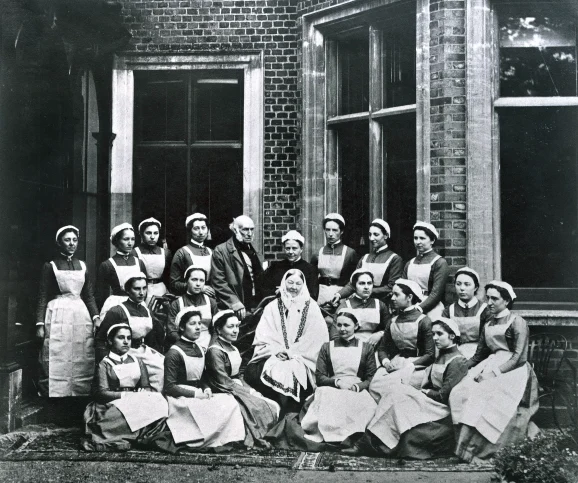
Another celebrated advocate of fresh air was Florence Nightingale, although her reasoning was not entirely consistent with our modern understanding of infectious disease.
As Lytton Strachey observed in his Eminent Victorians, Nightingale’s convictions were shaped principally by her own observations. She had witnessed the beneficial effects of fresh air and light during her work at Scutari and was determined to apply those lessons to hospital design.
Her understanding of the causes of infection was imperfect, and her resistance to certain emerging ideas about infectious disease reflected the limitations of contemporary medical knowledge. Nevertheless, she recognised the importance of adequate ventilation, appropriate heating, cleanliness and the physical environment in which patients were treated.
Hobday and Dancer’s 2013 review revisits Nightingale’s views on hospital heating and ventilation, including her criticism of keeping patients confined in artificially heated environments. She believed that poorly designed heating and mechanical ventilation could interfere with recovery, and argued for buildings that provided fresh air without unnecessarily exposing patients to cold.
More than a century later, we find ourselves investing considerable sums in preventing modern hospital buildings from becoming intolerably hot, frequently using increasingly elaborate systems to overcome problems arising from their design.
None of this suggests that we should abandon mechanical ventilation, disregard infection-control requirements or return wholesale to Victorian hospital architecture. Nor would opening windows solve every problem associated with extreme heat. During periods of particularly hot weather, natural ventilation must be managed carefully, and some clinical environments require precisely controlled airflow.
Nevertheless, there is surely room for hospital buildings that combine modern medical requirements with some of the architectural principles understood by their predecessors.
The outrageous idea of having windows that one can actually open – except on aeroplanes, of course – must surely be set to return.
And who knows? The next Henry Gauvain or Florence Nightingale might be just around the corner. We might even spot them through an open window.

George F Winter is a Belfast-born, Scottish Borders-based freelance journalist, a Fellow of the Institute of Biomedical Science and a former biomedical scientist. He is the author of Clinical Virology: A Guide for Practitioners (1999) and won the Opinion category at the Irish Medical Media Awards in 2007.
READ MORE: Europe risks losing its cleantech stars to the US. Europe produces more than a fifth of the world’s clean and sustainable technologies, yet many of the companies behind them must look overseas when they need serious growth capital. Could Europe end up inventing the technologies of the clean-energy transition only to see the companies, jobs and economic rewards migrate across the Atlantic? Uche Nneoma investigates.
Do you have news to share or expertise to contribute? The European welcomes insights from business leaders and sector specialists. Get in touch with our editorial team to find out more.
Main image: A military hospital ward at Scutari in 1856, where Florence Nightingale championed fresh air, sunlight and improved hygiene – principles that modern hospital architects may have good reason to revisit. Credit: William Simpson (illustrator), E. Walker (lithographer) / Day & Son / Library of Congress / Wikimedia Commons, Public Domain.