Since the release of The Da Vinci Code in 2003, Leonardo The Last Supper has been obsessively re-examined for hidden messages. But while Dan Brown claimed the painting revealed a secret marriage between Jesus and Mary Magdalene, Monty Python filmmaker and biblical historian Julian Doyle argues that the Renaissance master was pointing—literally and figuratively—to something even more radical: a suppressed tradition that placed John the Baptist, not Jesus, at the centre of the true Christian story
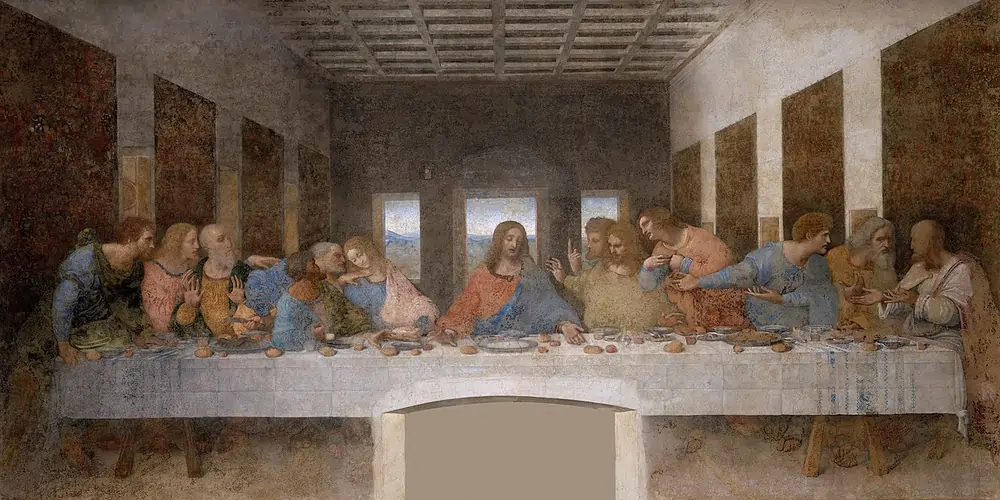
Dan Brown’s The Da Vinci Code caused a global stir with its claim that Leonardo da Vinci hid a secret in The Last Supper: the controversial idea that Jesus was married to Mary Magdalene.
The 2003 bestseller proposed that the figure seated to Jesus’ right wasn’t the disciple John at all, but Mary herself—cast as his wife, and the true “Holy Grail.” The theory was widely dismissed by scholars, but it sparked a lasting fascination with the idea that Leonardo might have embedded hidden messages in his work.
Brown’s version may not stand up to scrutiny, but it helped popularise a bigger, more intriguing question: was Leonardo trying to tell us something?
Because here’s the strange part. The Last Supper, and other Christian-themed paintings by Leonardo, really do contain cryptic details. Just not the ones Brown imagined.
Take The Last Supper. Look closely, and you’ll notice a single, raised finger – one of the disciples, seated just to Jesus’s left, is pointing straight up. It’s not subtle. His hand is stark against a dark background, clearly meant to catch the eye. But the gesture doesn’t fit the biblical moment Leonardo is depicting, where Jesus says, “One of you will betray me.” So what’s it doing there?
Now look at Leonardo’s John the Baptist. If the title didn’t tell you, you’d be hard-pressed to identify the figure: a smirking, androgynous youth pointing skyward with one hand. The official explanation is that the raised finger symbolises Christ’s destiny. But look at his other hand – it’s pointing at himself. The expression on his face says it all: “I am number one.”
Then there’s The Burlington House Cartoon, also known as The Virgin and Child with Saint Anne and the Infant Saint John the Baptist. It’s a serene scene – until you spot young John ‘giving the finger’ again. A holy gesture, perhaps, but striking nonetheless. It’s rarely mentioned in gallery notes, but once you see it, you can’t unsee it.
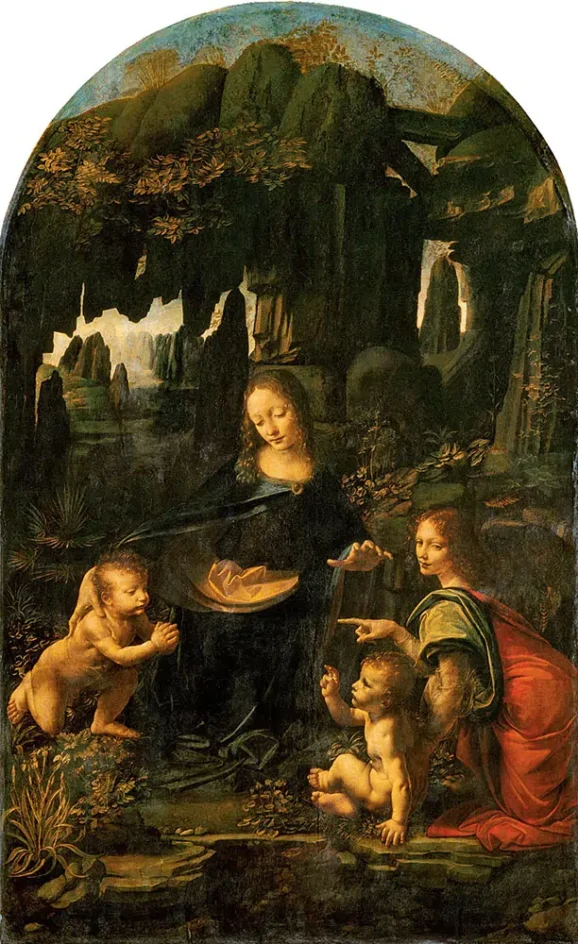
And in The Virgin of the Rocks, which exists in two versions – one in the Louvre and one in the National Gallery – the angel isn’t pointing at Jesus, as tradition would suggest, but at the infant John.
So what’s going on?
This same motif appears outside Leonardo’s work too. In the Church of St Sulpice in Paris—famous for its cryptic architecture and mysterious “Rose Line”—a statue of John the Baptist stands with his finger raised skyward, echoing Leonardo’s pose. Coincidence?
Further south, in Rennes-le-Château—the village at the heart of countless conspiracy theories—a statue inside the Church of Mary Magdalene shows Jesus being baptised by John. But here, Jesus is the humble one, eyes downcast, while John looks regal. Authoritative. Dominant.
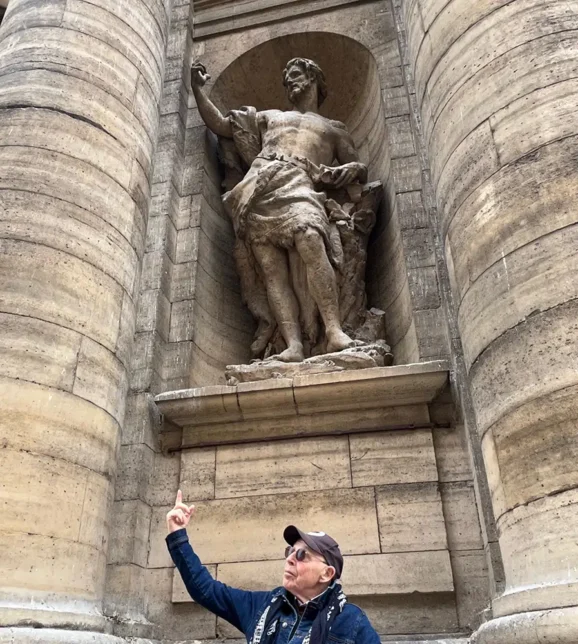
Everywhere we turn, John is given the upper hand. Literally and symbolically.
Which leads to a provocative question: was Leonardo part of a tradition – or even a secretive group – that venerated John the Baptist over Jesus?
In the 1960s, a strange set of documents surfaced in the Bibliothèque Nationale in Paris. They claimed to be the secret archives of an ancient society: the Priory of Sion. Most researchers now agree the Priory was a modern hoax. But some of the details in the documents were so obscure—and so historically accurate—that it’s hard to believe they were simply made up.
Among the claims was a list of “Nautonniers”- Grand Masters of the order. Leonardo da Vinci appears as leader from 1510 to 1519. Others include Nicolas Flamel, Isaac Newton, Victor Hugo, and Jean Cocteau. All of them, supposedly, adopted the title “John”- in sequence. Leonardo was listed as John XIII. The original? John the Baptist.
Go back to Leonardo’s painting of the Baptist with this in mind. One finger points up. The other, to himself. “I am number one.”

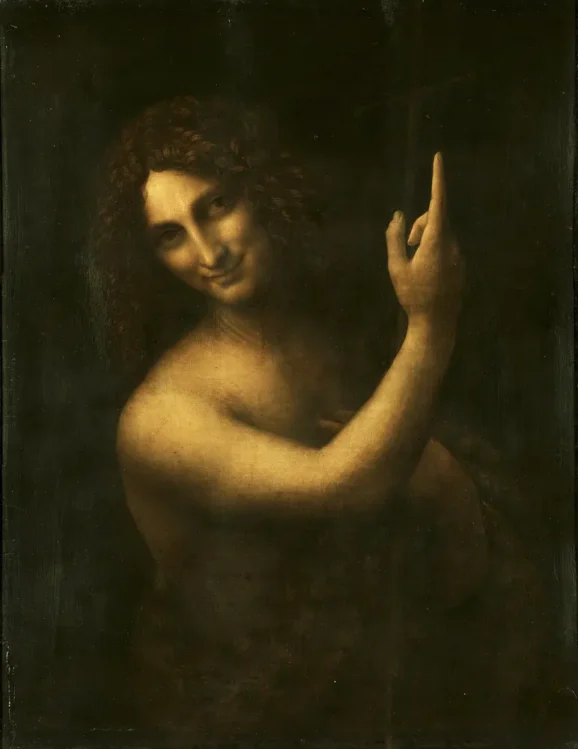
Image via Wikimedia Commons. Public Domain.
Believe in the Priory or not, the clues keep pointing in the same direction. Painting after painting, finger after finger – it’s as if Leonardo is winking at us across the centuries, daring us to ask the question others won’t.
And if he was John XIII in this alleged order, then his art may contain something far more radical than we thought: a hidden Christian tradition in which John the Baptist – not Jesus – was supreme.
This is just a glimpse of a much bigger story. The full picture is revealed in my new book, Leonardo da Vinci’s Penultimate Supper.
Whether or not you agree with my conclusions, The Last Supper is still serving food for thought…five centuries later.
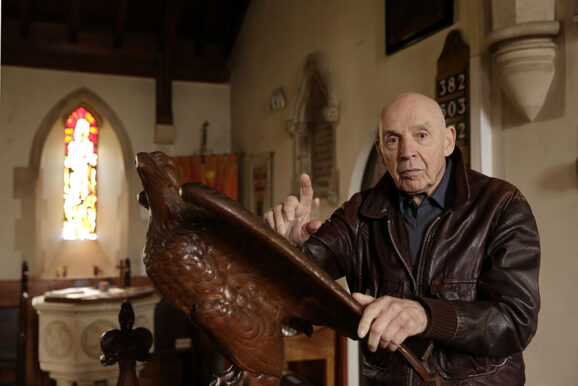
Julian Doyle is a British filmmaker best known for his work with Monty Python (The Holy Grail, Life of Brian, The Meaning of Life). He is also a long-time researcher of biblical history, and the author of The Gospel According to Monty Python, The Secret Life and Hidden Death of the Galilean, and Who Killed Jesus?
Main image: Leonardo da Vinci’s The Last Supper (1495–1498). Image via Wikimedia Commons. Public Domain.