From Playboy covers to arrests and international controversy, Belgian model Marisa Papen has spent much of her career challenging religious authority, censorship and attitudes towards the female body. Now, in an exclusive interview with Mike Leidig, she reveals a deeply personal side to her work, explains the thinking behind her latest project and recounts an extraordinary incident in an Italian sculpture garden
Marisa Papen is accustomed to making headlines without wearing very much. The Belgian model and artist has been arrested, faced criminal proceedings and attracted international condemnation for posing naked at some of the world’s most religiously sensitive locations.
Her photographs have taken her from the pyramids of Egypt to Jerusalem’s Western Wall, Istanbul’s Hagia Sophia and the Vatican. Her supporters see her work as a challenge to censorship and the religious policing of women’s bodies, while her critics have accused her of deliberately disrespecting sacred places and religious communities.
Her latest project has attracted fresh attention following an unusual encounter at Sacro Bosco, a 16th-century sculpture garden in Italy. What happened inside one of its most famous sculptures has since become the subject of another of her controversial photographic works.
But behind the publicity photographs and international controversy is a woman whose work has taken an increasingly personal direction. Over the past six years, Papen has explored her relationship with her body, the experiences that have shaped her and what she describes as ancestral memory. Her latest project, Flow of Life – A Revelation of the Inner Cycles, brings together photography, paintings, poetry, textiles and film.
In this exclusive interview with The European, Papen reveals the deeply personal experiences behind her work, recounts what happened in Italy and explains why, despite years of arrests, criticism and controversy, she has no intention of putting her clothes back on.
You’ve become known around the world for your photographs, many of which have caused considerable controversy. What are you actually campaigning for, and what do you hope to achieve?
Fundamentally, I’m campaigning for freedom, particularly the freedom women should have over their own bodies. I want to challenge the shame and censorship surrounding nudity and question why something as natural as the human body can cause so much outrage.
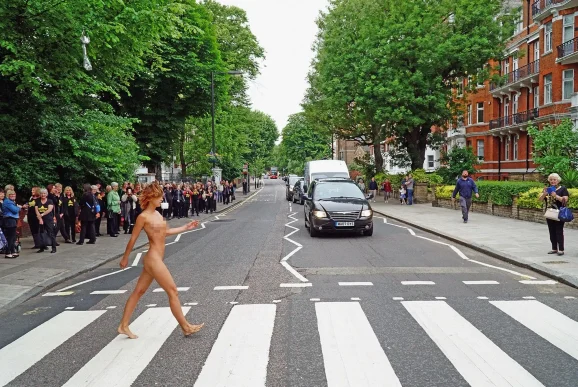
I’ve used my work to address several different issues, including women’s rights, religious restrictions and environmental destruction. They’re all subjects I feel strongly about, and photography gives me a way to bring them to people’s attention.
I don’t expect everyone to agree with me. If my photographs encourage people to question their beliefs or reconsider their attitudes, then they’ve achieved something.
Your photographs at religious sites in Egypt, Jerusalem, Turkey and the Vatican have attracted considerable attention. What inspired you to choose these locations, and how have you dealt with the reactions to your work?
I chose those locations because religion has such a powerful influence over people’s lives, particularly when it comes to attitudes towards women, sexuality and the human body.
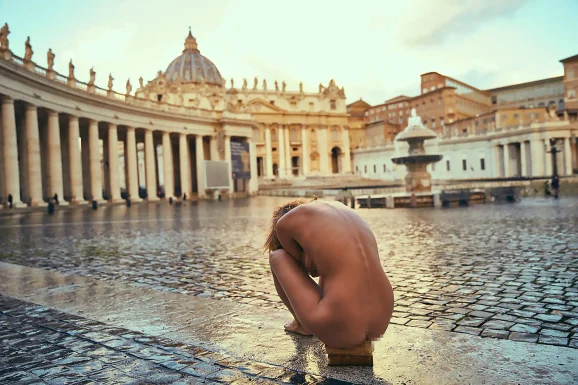
I wanted to explore the contradiction between something as natural as nudity and the strong reactions it can provoke in a religious setting. The photographs were intended to challenge those attitudes and encourage discussion.
I knew some people would find them offensive, although I didn’t necessarily anticipate all the consequences. Being arrested and facing the possibility of imprisonment are serious matters. They’ve made me very aware of the risks involved in what I do.
I still believe that challenging established beliefs and questioning authority are important. People are entitled to their religious convictions, just as others should have the freedom to question them.
Away from religious controversy, you’ve also campaigned against ocean pollution, highlighted climate change and used photography to support marine conservation. Tell us about your Plastic Sushi project and Earth Family. What have you achieved through this work?
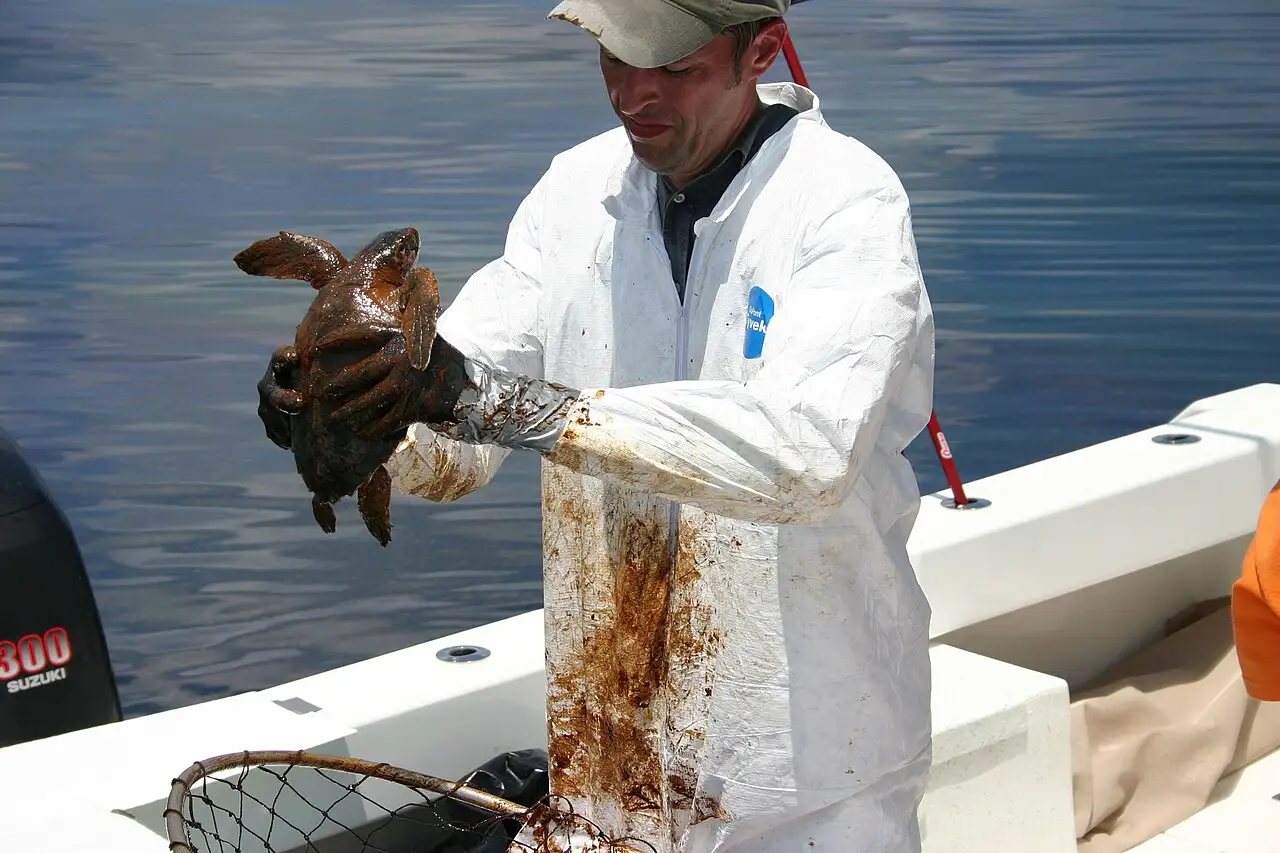
Plastic Sushi was one of my earlier environmental projects. I wanted to highlight the enormous amount of plastic entering our oceans and the damage we’re causing to marine life. We created photographs and a calendar to raise awareness, with proceeds supporting marine conservation.
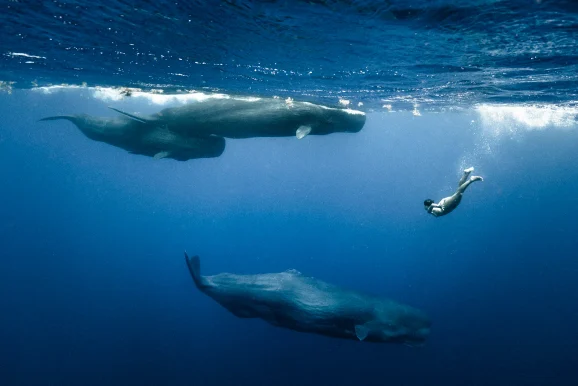
Environmental protection has continued to be an important part of my work. I’ve explored other issues through photography, including climate change and our relationship with the natural world.
I subsequently established Earth Family to bring together my interests in art, environmental awareness and our connection to nature.
I believe photography can reach people who might not otherwise engage with these subjects. My aim is to encourage people to think about the consequences of their actions and, hopefully, make changes in their own lives.
You have faced arrests, criticism and considerable personal and professional risks because of your work. Yet your latest project, Flow of Life, appears much more personal than your previous campaigns. What’s changed, and why do you continue?
Over the past six years, I’ve been trying to understand my own body, the experiences that have shaped me and the emotional pain we often carry without fully understanding it.
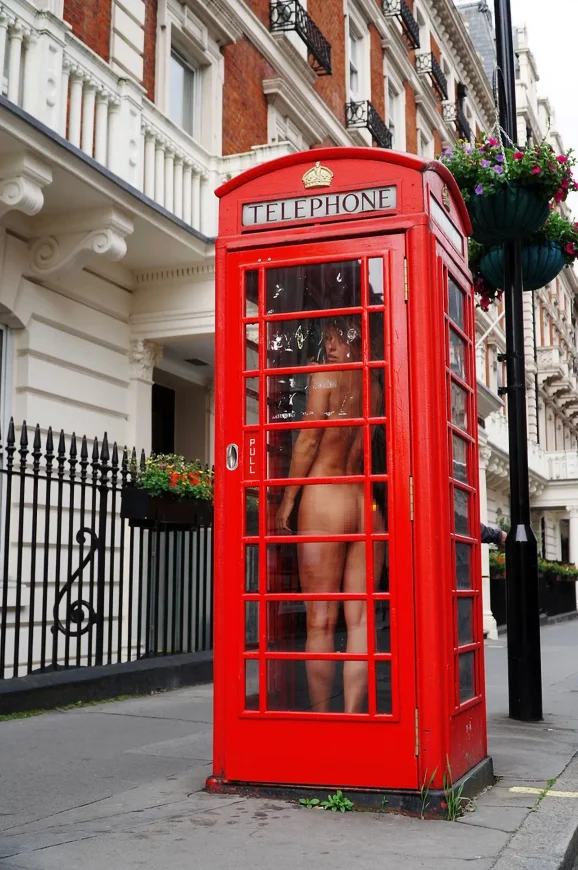
That journey has become the foundation of Flow of Life, a long-term project exploring menstruation, the female body and the connections between our personal experiences and those of previous generations. It’s my largest and most personal project to date and includes paintings, photography, silk works, poetry and two award-winning short films.
I’ve come to believe that healing means confronting experiences and emotions we might otherwise prefer to ignore. My work has gradually become less about creating a particular photograph and more about understanding myself and expressing what I’m experiencing.
That’s what motivates me to continue. I feel there’s still a great deal I want to explore, both personally and through my art.
Your latest project has taken you to Sacro Bosco, a 16th-century sculpture garden in Italy, where something rather unexpected happened during a photographic shoot. Can you tell us about the experience and how it relates to your work?
We hadn’t specifically planned a photoshoot, although Michael and I brought the camera in case an opportunity arose. We were travelling through Italy and felt Sacro Bosco would be an interesting place to visit, particularly because of its connection to some of the themes I’ve been exploring in Flow of Life.
We spent some time exploring the garden before entering the enormous stone sculpture known as the Orcus Mouth. There were quite a few visitors around initially, so we simply sat inside and enjoyed the atmosphere.
Eventually, we realised everyone had disappeared. We looked at each other and knew we had an opportunity to take some photographs.
What happened next was completely unexpected. Just as I removed my dress and stepped into position, my body decided to surprise me. It was an extraordinary coincidence, particularly given the themes of my latest project. Michael photographed me for about five minutes before I spotted another visitor approaching and quickly got dressed. We hadn’t obtained permission to take the photographs.
The experience has become part of Flow of Life.
My work has gradually become less about creating provocative images and more about exploring my own experiences and my relationship with my body. What happened at Sacro Bosco was entirely unplanned, which is perhaps why the photographs feel particularly significant to me.
Michael Leidig is a British journalist based in Austria. He was the editor of Austria Today, and the founder or cofounder of Central European News (CEN), Journalism Without Borders, the media regulator QC, and the freelance journalism initiative the Fourth Estate Alliance respectively. He is the vice chairman for the National Association of Press Agencies and the owner of NewsX. Mike also provided a series of investigations that won the Paul Foot Award in 2006.
READ MORE: AI firms are paying millions for journalism — so why are many reporters still skint? AI companies are striking multi-million-dollar licensing deals with some of the world’s biggest publishers, but as newsrooms scramble to monetise decades of reporting, many experts fear the AI boom could leave smaller publications and freelancers struggling to survive, write Michael Leidig and Rob Hyde.
Do you have news to share or expertise to contribute? The European welcomes insights from business leaders and sector specialists. Get in touch with our editorial team to find out more.
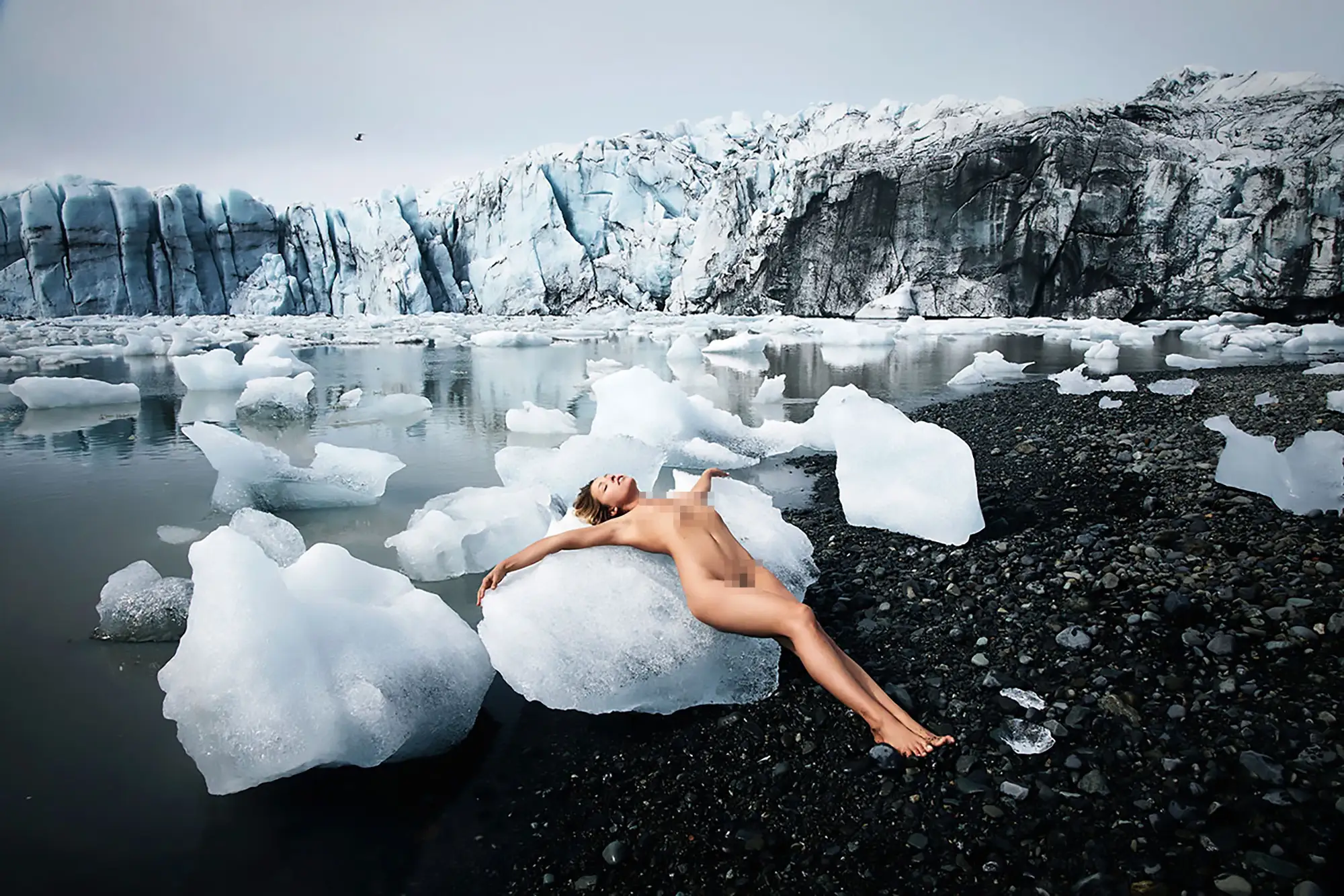
Main image: Papen poses among icebergs beneath an Icelandic glacier as part of her environmental photography. The image reflects her efforts to draw attention to climate change and the natural world. Credit: © Newsflash/supplied