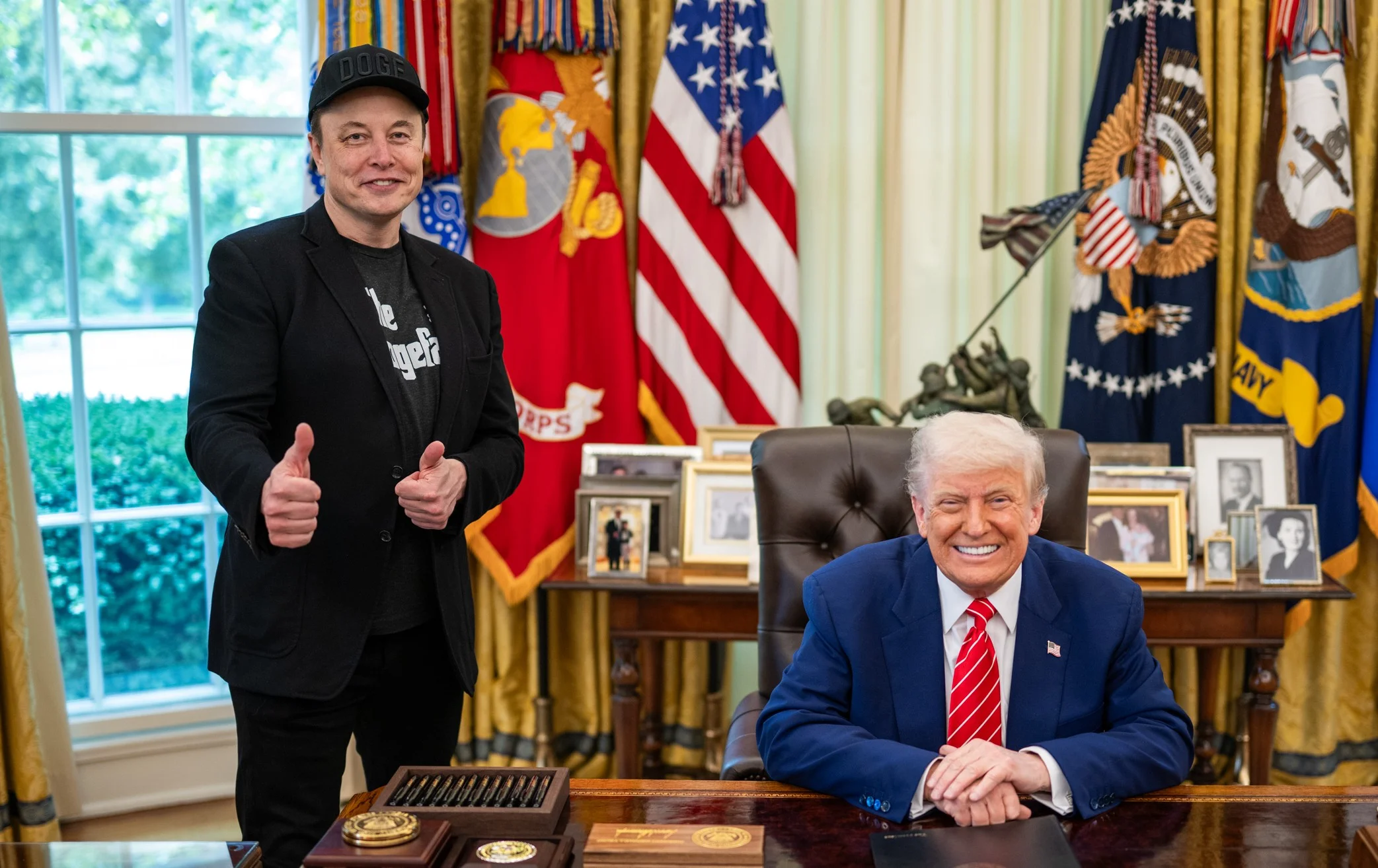
Spain and Portugal’s early World Cup shocks show how even star-filled squads can unravel under pressure. Here, former Manchester City head psychologist Dr Pete Lindsay explains why business leaders face the same problem when they hire talented people without building the trust, challenge and shared purpose needed to perform as a team
In the opening week of this World Cup, Spain, the European champions and the world’s second-ranked side, were held to a goalless draw by Cape Verde, a nation of half a million people, with no known stars, at their first World Cup. Quite the contrast to Spain, whose total squad value sits near €1.2 billion. In the same week, Portugal and Cristiano Ronaldo were pegged back to a 1-1 draw by DR Congo.
But neither draw was a complete fluke.
In both, a team made itself greater than the sum of its parts, against a richer side that never became more than the sum of its names. In short, the most talented group does not always win…the best team does.
When a giant falls, the response is almost always the same. Take Italy, four-time world champions, who have now failed to reach three World Cups in a row and are watching this one on television. After a humiliation like that, the instinct is to tear everything down and start from scratch with a new manager, new system, and new philosophy; the pendulum swings hard from one approach to its opposite.
Business can be tempted to do exactly the same after a bad period. The trouble is that the swing rarely fixes the real problem because the thing that was missing was almost never the talent but whether that talent ever became a team.
“Pressure does not build character so much as reveal it” – Dr Pete Lindsay
I have spent my career on both sides of that line, working with Premier League title-winning teams and global businesses including JP Morgan, Amazon and NatWest, and the lesson holds in either direction. Talent is only ever the raw material, and what turns it into performance is precisely the part a talent-first strategy ignores.
A World Cup makes this clearer than club football or business ever can, because no national manager can buy their way out of a problem. They get the players their country happens to have produced and a short period to make them coherent. Unlike league football, they don’t have the luxury of a transfer window, external consultancy or opportunity to hire to paper over the cracks. What they can build is what they have and nothing more.
In the club game and in business, you can buy talent, which is exactly why it disappoints so often. Real Madrid’s Galácticos policy, signing the most gifted and most famous player available year after year, became the textbook case of a squad that cost a fortune and won less than the sum of its parts. England’s so-called golden generation, with Beckham, Gerrard, Lampard and Rooney all world-class and all at once, never made the leap from gifted individuals to functioning team. It is not only football. The United States sent a roster of NBA stars to the 2004 Olympics and came home with bronze, beaten by sides with a fraction of the individual ability and far more of the collective kind. Leicester City winning the Premier League at 5,000-1 was the same lesson in reverse: a group of names nobody really knew, who together became far more than they ever could apart.
Underneath all of it sits a truth about the way teams work: a team is not the same thing as a group. A group is a collection of individuals who happen to share a badge, whereas a team shares information, solves problems together, knows what it is collectively trying to do, and trusts one another enough to depend on it.
Every team carries dysfunction. It is the norm, and it should be expected. Put a group of talented individuals together, all from different places, cultures and backgrounds, each with their own goals, beliefs and way of seeing the world, and how could it be otherwise? The only question is whether it gets surfaced and worked on or buried and ignored.
And you do not fix it by trying to change “the team”, because teams do not change, people do. The lever is always individual behaviour: how each person shows up, listens, challenges, and responds when things go wrong. The changes people make are the ones that ripple across a team.
So which behaviours matter most for leaders and CEOs?
My colleagues have studied medal-winning coaches who, between them, are responsible for at least 787 major honours, roughly seven-in-10 of them gold medals, world titles and major championships, the very pinnacle of the sport. The first thing those coaches built, rather than tactics, was a foundation of care, respect and trust, held in balance with real challenge.
The order matters, because trust is what earns a team the right to challenge each other, and challenge is where performance improves. Too much care and you lose the edge, but too much challenge and you lose the connection.
Get the balance wrong in one direction and you get false harmony, where everyone gets along, nobody says the hard thing, and small problems grow in the dark until they cost you a match or a deal. Get it wrong in the other and challenge with no trust beneath it simply reads as criticism and drives people into their corners. And pressure, the sort a World Cup applies, is exactly when most groups move apart rather than together.
The best teams do the opposite, coming together to problem-solve rather than point fingers.
So, what do the leaders who understand this actually do? A familiar answer is that they step back and trust their people. That is partly right, though it leaves out the harder work of building the clarity, judgement and confidence that allow them to step back safely.
The better and more accurate answer is that they build the relational foundation first. The best coaches then do two things in sequence. First, they build the system long before it is tested. They prepare so thoroughly that pressure feels familiar and manageable. They also agree the plan behind the plan – what everyone does when things go wrong.
Second, they lead the emotion. They understand that their own energy shapes the mood of the room. They notice tension before it becomes behaviour, and they absorb the noise so their people can focus on the performance.
Only then do they let go.
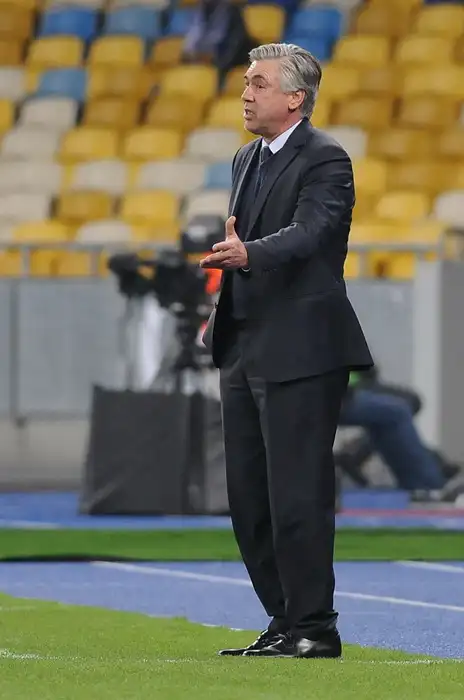
Watch Brazil’s coach Carlo Ancelotti on a touchline as a good example. Unlike many others, he looks on with a calm presence while his players solve the game in front of them. He leads from the balcony rather than the floor, intervening less but better. Because under pressure, words are weight; the fewer you use, the more each one lands (nobody takes in much when the load is that high).
The best coaches I’ve worked with are different. They prepare properly, give people a clear shape to work within, and then trust them to play what is in front of them. Too much structure becomes suffocating, and too much freedom becomes messy. Good coaching sits somewhere between the two.
Pressure does not build character so much as reveal it. A World Cup is a public, high-speed stress test of whether a group ever truly becomes a team, and sport is unforgiving in a way business rarely is: you get immediate feedback on your product from 70,000 users at once, with a scoreline everyone can read at the same moment you can. An organisation sits the same test, only slower and with more privacy, which is why it is so much easier to miss until something finally goes wrong.
Mauricio Pochettino has spent the better part of two years turning a gifted but inconsistent United States side into a team, and the 4-1 win over Paraguay that opened their tournament was the first real dividend. His way of describing the job is worth borrowing. Talent without commitment, he argues, collapses back into individuality, and “you do not win with individuality only”.
The leaders who pass this test treat the human side of performance – the trust, the quality of conversation, the speed at which a team adapts – as something they can deliberately build and measure, not something that turns up by luck. Anyone can buy talent but fewer know what to do with it once it is in the room, and the very best work out the human side.
So, ask yourself the harder question. Not “Do we have the best people?“, but “Have we built the thing that lets good people perform together when it counts?” Most dream teams never do, and that is why they fail.

Dr Pete Lindsay is co-founder and performance psychologist at Mindflick, the consultancy he founded with Dr Mark Bawden and former England cricket captain Andrew Strauss. A former head psychologist at Manchester City and consultant in Formula One, he works with elite performers and business leaders on team performance, behaviour change and performing under pressure.
READ MORE: ‘Explorer who pulled out of Titan sub dive says damning report proves disaster was inevitable‘. British adventurer Chris Brown, who withdrew from an OceanGate Titanic expedition over ‘slipshod’ safety fears, says he is ‘lucky to be alive’after investigators found the doomed sub’s carbon fibre hull had never been properly validated.
Do you have news to share or expertise to contribute? The European welcomes insights from business leaders and sector specialists. Get in touch with our editorial team to find out more.
Main image: Composite image using material by Alexis Doine/Wikimedia Commons, CC0; Kansas City FWC26, fair use; UKinUSA/Wikimedia Commons, CC BY-SA 4.0