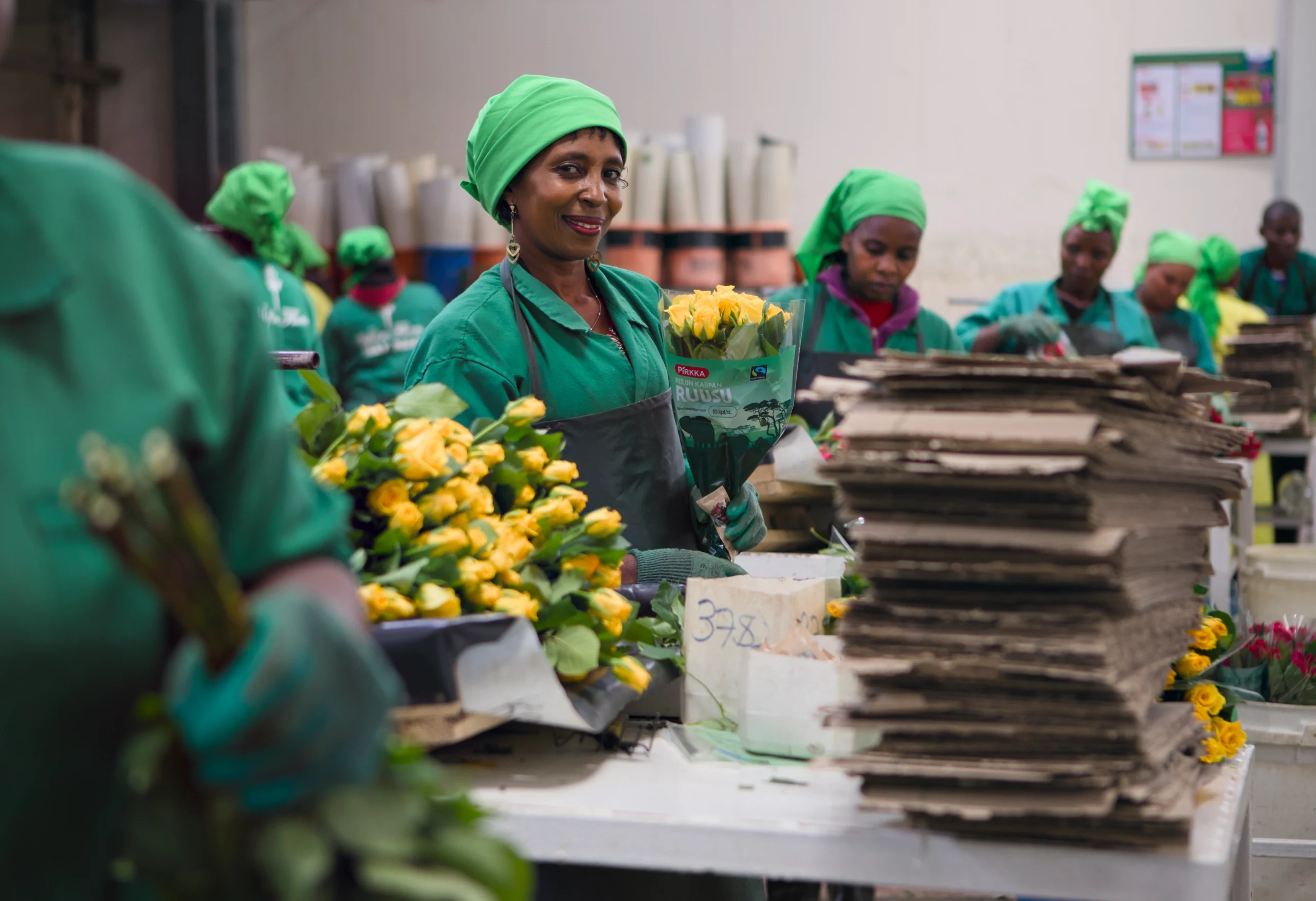
As Valentine’s Day gifts fill shops with chocolate and flowers, Tytti Nahi examines the human and environmental cost embedded in their global supply chains and argues for urgent, shared action on human rights and environmental due diligence
Chocolate and flowers are among the most popular gifts on Valentine’s Day because they symbolise love and affection. Yet the global supply chains behind many of these beloved products are marked by serious challenges, including human rights abuses and environmental harm.
For more than three decades, organisations including Fairtrade have worked to prevent, mitigate, and remediate human rights and environmental damage in global supply chains. Research shows that these efforts have made a meaningful difference for many farmers and workers, but I know that many wrongs still persist. Workers still face exploitation and the environment is still being degraded.
To address child labour and deforestation in cocoa production and poor working conditions, gender based violence and environmental pollution in flower industry, I am firmly convinced that we must move beyond blame and finger pointing and faster towards effective Human Rights and Environmental Due Diligence (HREDD), where companies from retailers to smallholder farmer cooperatives work together to identify and address the biggest problems in their value chains.
This approach and transformation depends on five key principles:
Dialogue with rightsholders. People must shape the decisions that influence their lives. The Organisation for Economic Cooperation and Development (OECD) states that every step of human rights due diligence needs to be guided by rightsholders. In areas where human rights or environmental problems are widespread, local stakeholders are often already working to address them, so companies can achieve more by supporting and strengthening these existing efforts.
Interdependent human rights. The fact is that human rights are indivisible and interdependent. If the right to a decent standard of living remains unfulfilled, many other human rights and environmental harms will persist in global supply chains. This means that to tackle issues such as child labour it’s important to address the lack of living incomes, living wages, and collective bargaining.
Fair cost sharing. The costs of implementing due diligence must be shared fairly. In many global supply chains, very little value goes to primary producers. The reality is that millions of farmers live in poverty and have limited or no means to invest in sustainable production practices. To invest in stronger due diligence measures, farmers need better prices, longer-lasting business relationships, and co-investment.
Collaboration. To tackle poverty and inequality, collaboration between suppliers, buyers, governments, and civil society actors is required. All companies must assess and reform their purchasing and pricing practices, as they often aggravate poverty and environmental harms in supply chains.
Continuous improvement. Ambitious regulation and continuous improvement in business practices are essential. The first steps to adopt fair and effective due diligence must be taken by retailers, brands and traders who hold the most power and resources.
This Valentine’s Day let’s remember that flowers and chocolates bring lots of joy – but their supply chains can also bring harm for people and the environment. I strongly believe that the farmers and workers need to be supported with fair prices, fair wages and contracts, training, and community development.
While many problems are systemic and complex and cannot be resolved simply, they can be addressed and remediated with time, effort, and commitment. That’s why I am calling on companies, governments, civil society organisations, and of course, rightsholders, to work on HREDD together and now.

Tytti Nahi is the Director of the Centre of Excellence on Business and Human Rights at Fairtrade International. She is based in Finland.
READ MORE: ‘Global leaders enter 2026 facing a defining climate choice‘. The climate and energy decisions taken during 2025 have limited the broad options now facing governments to two, setting up a decisive moment fo r global policy in 2026, writes Gary W. Yohe.
Do you have news to share or expertise to contribute? The European welcomes insights from business leaders and sector specialists. Get in touch with our editorial team to find out more.
Main image: Farm worker Veronica Koina at Wildfire Flowers in Kenya, a Fairtrade-certified farm employing 700 workers since 2012. Credit: Fairtrade International